
Reviewed · SELF-GUIDED TOURS
Western Approaches Self Guided Tour
Liverpool’s Western Approaches Museum takes you below the streets into the secret headquarters of the Battle of the Atlantic. This is not a polished modern attraction. It is a wartime bunker of corridors, offices, maps, phones, and work rooms, with the remarkable Map Room left much as it was when the doors closed in August 1945.
I like two things right away: you can explore without being pushed along by a group, and your admission becomes an annual pass, so you can come back free within 12 months. The main caution is that the museum is small and relies heavily on written displays, so visitors looking for a highly interactive presentation may find parts of it quiet and a little old-fashioned.
Key points to know before you go

- The Map Room is the main event: This was the bunker’s command center, where convoy routes and enemy positions were tracked across a huge map.
- You are walking through an original wartime workplace: Offices, telephones, desks, typewriters, teleprinters, and the telephone exchange help show how the bunker operated.
- The museum is close to Liverpool Town Hall: It is also about a five-minute walk from Albert Dock, though the entrance can be easy to miss.
- The visit is self-guided: Plan on roughly one to two hours, but you can stay longer if you read every panel and try the hands-on displays.
- The annual pass adds real value: A single admission includes free return visits for 12 months.
- Expect stairs and underground corridors: You need a moderate level of physical fitness, and there are steps down into the bunker.
Entering Liverpool’s wartime command center
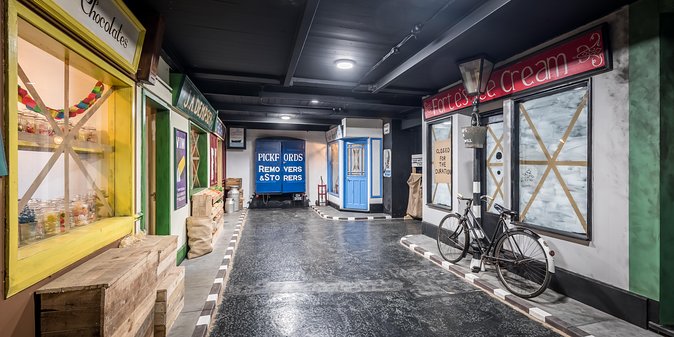
The Western Approaches HQ was built beneath central Liverpool, close to the Town Hall. Its job was to help protect the sea routes known as the Western Approaches, the waters through which vital ships entered and left Britain during World War II.
That location mattered. Liverpool was a major port, and the survival of Britain depended on keeping food, fuel, troops, and equipment moving across the Atlantic. The bunker gathered information about enemy submarines and convoys, then helped pass that information to the Royal Navy and the British government.
You begin at street level before descending by staircase into the bunker. The entrance is not always obvious, so give yourself a few extra minutes to find it, especially if you are approaching from central Liverpool. The museum is near public transport and within easy reach of Albert Dock, making it a sensible addition to a day in the waterfront area.
The first part of the visit includes a short film explaining the Battle of the Atlantic. It gives you the basic setting before you move through the rooms, which is useful because the museum expects you to follow the story through signs and objects rather than through a guide.
More self-guided tours in Liverpool:
- Liverpool Ghost Hunt: Paranormal Detective Self-Guided Game
★ 4.5 · 26 reviews - Private Liverpool Self-Guided Tour
★ 4.5 · 19 reviews - Private Self-Guided Dinky Door Hunt in Cambridge
★ 4.5 · 103 reviews
The Map Room and the Battle of the Atlantic
The Map Room is the strongest part of the experience. This was the nerve center of the headquarters, where commanders, WRNS personnel, and WAAF personnel worked around the clock to monitor shipping routes and enemy activity.
A huge map covered the main table. Staff used it to mark the locations of Allied convoys and enemy vessels. Accuracy was not a small matter here. A mistaken position could send naval forces in the wrong direction, leave a convoy exposed, or waste precious time.
The room has been preserved in the condition in which it was left when the bunker closed on August 15, 1945. That gives it a rare sense of direct connection with the wartime period. You are not looking at a modern reconstruction of a command room. You are looking at a working room that was simply shut and left behind.
The Map Room also helps you understand the scale of the operation. The war at sea was not fought only by ships and submarines. It depended on teams of people comparing reports, updating maps, sending messages, and making decisions under pressure.
Take your time here. Look at the tables, wall maps, ladders, and work stations. The displays are not always lively, but the room itself does much of the work. Its size and arrangement explain why so many staff were needed to keep track of the Atlantic.
Phones, typewriters, and the machinery of secrecy
The museum includes documents and equipment used to gather and pass on information while keeping it from the enemy. One of the most unusual objects is one of only two surviving wartime telephones with a direct connection to the War Cabinet in London.
That phone is a small object with a large story. It reminds you that information from this bunker could move quickly to the highest levels of the British government. It also shows how much depended on secure communication before modern digital systems existed.
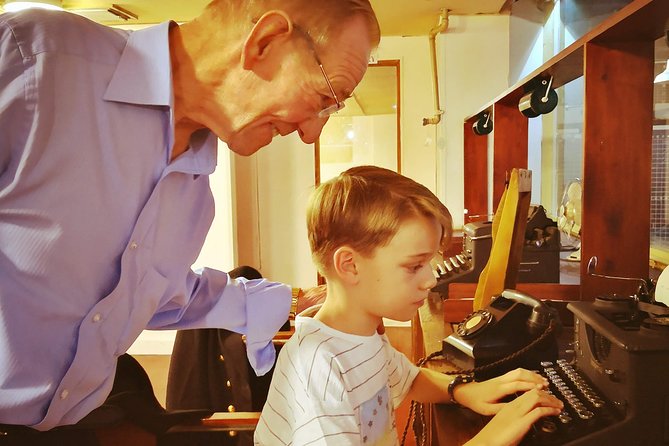
You can walk through corridors, sit at desks, use typewriters, and try teleprinter machines. These details are valuable because they turn an abstract account of wartime planning into a physical task. You can see where messages were prepared, imagine the constant work of updating records, and understand how much depended on accurate communication.
There is also a telephone exchange. It may not offer the instant drama of a modern museum exhibit, but it helps explain the network behind the command center. The bunker was a workplace filled with people passing information from one room to another, then onward to naval units and government offices.
Uniforms are available to try on, which adds a welcome hands-on element for families. Children may be more interested in the typewriters and machines than in the longer text panels, while adults can focus on the military planning and communications.
The people behind the operation

A useful part of the museum is its attention to the staff who kept the bunker running. The WRNS and WAAF personnel were not decorative background figures. They worked in the Map Room and other parts of the headquarters, handling information during long shifts.
The displays help show how much of wartime work depended on women serving in demanding operational roles. The separate material connected with the Wrens is an especially worthwhile part of the visit because it gives more space to the people who operated the systems, tracked information, and supported command decisions.
I would make a point of looking beyond the military equipment. The human side of the bunker is one of its strongest features. Desks, uniforms, telephones, and rooms can tell you what the work looked like, but the stories of the people who performed it explain what daily life inside the bunker required.
The museum also looks at Liverpool during the war. A film near the end of the route gives a sense of life in the city during those years. This broadens the visit beyond naval strategy and places the bunker within the city that supported it.
A few more Liverpool days out to weigh up
- Beatles Magical Mystery Tour
★ 5.0 · 9,266 reviews - Liverpool: “Blue Route” – City & Beatles Tour
★ 5.0 · 8,562 reviews - Liverpool City Sights Hop On Hop Off City Tour – 24hr Ticket
★ 4.5 · 2,555 reviews - The LFC Stadium Tour
★ 5.0 · 1,548 reviews
A self-guided visit with a quiet, old-school style

You do not join a guided group here. Instead, you move through the rooms on your own, reading the information and deciding how long to spend at each display.
That freedom is one of the best reasons to choose this experience. You can linger in the Map Room, return to an object that caught your attention, or move more quickly through text-heavy sections. Families can set their own pace, and history fans can spend longer with documents and maps.
The tradeoff is that the museum does not always explain its objects through sound, animation, or interactive technology. Several displays depend on written descriptions, and some visitors may wish for audio commentary or more visual material. The battle craft board and maps of vessel locations are interesting, but extra explanation would help you understand them faster.
I would approach this as a preserved working site rather than a large, high-tech attraction. Its power comes from the original rooms and equipment. If you enjoy reading signs and examining real objects, the format works well. If you prefer a constant stream of films and interactive exhibits, the visit may feel underdeveloped in places.
The self-guided format also means you should arrive with a little background interest in World War II or Liverpool’s port role. The opening film helps, but the experience rewards visitors who take time to connect the maps, telephones, staff roles, and convoy information.
What the one to two hours include

The stated visit time is about one to two hours. That is a fair estimate for a steady visit, but you can easily spend longer if you read everything, stop at the hands-on stations, and watch the film at the end.
A typical visit includes:
- The opening film about the Battle of the Atlantic
- The underground corridors and wartime work rooms
- The Map Room and its convoy tracking table
- Wartime telephones and the direct line to London
- The telephone exchange
- Typewriters and teleprinter machines
- Documents, maps, and operational displays
- Uniforms and hands-on activities
- A final room with hot drinks, wartime prices, traditional games, and a film about life in Liverpool during the war
That last room gives the visit a gentler finish. After the serious military material, you can pause for a hot drink and try traditional games. It is also a useful place for families to take a break before heading back upstairs.
The bunker has a compact layout, but the number of rooms makes it feel larger than the admission area suggests. You are not simply looking at one hall. You move through a series of spaces, each showing another part of the operation.
How good is the $24.26 price?

At $24.26 per person, the cost is reasonable if you have a clear interest in World War II, Liverpool’s port, or historic command centers. The price includes museum admission, and the annual pass means a second visit within 12 months costs nothing.
That return option changes the value calculation. If you live nearby, are staying in Liverpool for several days, or expect to return to the city, you can treat the first visit as an introduction and come back when you have more time. Even a short return visit to the Map Room can make the pass worthwhile.
For a single visit, the value depends on your expectations. You are paying for access to an original underground headquarters, not a large collection of elaborate attractions. The preserved Map Room, rare telephone, and wartime rooms give the museum substance, but the heavy use of text may make the price feel less attractive to visitors who want a more active presentation.
I think the admission works best as part of a Liverpool history day. Pair it with the waterfront and Albert Dock, then give yourself enough time to absorb the city’s wartime importance. The museum is close enough to central sights that it does not require a separate full-day outing.
Finding the entrance and preparing for the bunker

The museum is near Liverpool Town Hall and about five minutes from Albert Dock. It is close to public transportation, but the entrance can be hard to spot because street markings in the area are not always clear.
Look for the entrance at street level, then expect stairs down into the bunker. The museum recommends a moderate level of physical fitness, and the steps are the main practical issue. Service animals are allowed.
You do not need to rush through the visit. The doors are open daily from 10:00 a.m. to 6:00 p.m. during the stated operating period, from March 4, 2024, through March 3, 2027. Since the visit is underground and self-guided, arriving with enough time before closing matters more than choosing a precise tour departure.
The bunker setting may feel narrow in places. If you dislike enclosed corridors or have difficulty with stairs, consider that before booking. The provided information does not state that the site is step-free, so you should contact the museum directly if you need specific access details.
Who will enjoy Western Approaches HQ?
This is a good choice for:
- World War II enthusiasts
- People interested in naval history and the Battle of the Atlantic
- Families with older children who enjoy machines, uniforms, and real historic places
- Visitors who like self-guided museums
- Anyone exploring Liverpool’s wartime role
- Repeat visitors who can use the annual pass
The museum is less suited to someone seeking a polished theatrical attraction or a large museum with many interactive screens. The experience asks you to read, look closely, and build the story from the rooms and objects around you.
Children may enjoy sitting at desks, trying the typewriters, using the teleprinter machines, and putting on uniforms. The serious subject matter still needs some explanation from an adult, especially in the sections about convoy tracking and enemy locations.
History fans should allow the full two hours. If you have only a passing interest, one hour may be enough to see the main rooms and the Map Room, then finish with the film and refreshments.
Cancellation and booking flexibility
Free cancellation is available if you cancel at least 24 hours before the experience start time. Changes or cancellations made less than 24 hours before the start are not accepted for a refund.
Confirmation is provided at booking. Since the ticket is mobile, you do not need a printed ticket according to the tour details.
Should you book the Western Approaches Self Guided Tour?
Book it if you want to stand in an original Liverpool command bunker and understand how people tracked the Battle of the Atlantic from below the city streets. The preserved Map Room, direct War Cabinet telephone, wartime communications equipment, and stories of WRNS and WAAF personnel make the visit worthwhile.
I would not choose it for flashy presentation. Some displays are text-heavy, and the museum has fewer videos and interactive features than larger wartime attractions. But the real rooms give it a sense of place that a recreated exhibit cannot match.
The best plan is to allow up to two hours, combine the visit with Albert Dock or the Town Hall area, and return later if you have the chance. At $24.26, the annual pass is a useful extra, especially for local visitors. For anyone with a serious interest in Liverpool and World War II, this is a solid, focused stop that puts the city’s wartime work directly under your feet.
FAQ
Where is the Western Approaches Museum?
The museum is underneath Liverpool city center, close to Liverpool Town Hall and about a five-minute walk from Albert Dock.
How long does the self-guided tour take?
The visit takes approximately one to two hours, depending on how much time you spend reading the displays, using the hands-on equipment, and watching the films.
Is the visit guided?
No. This is a self-guided museum visit, so you explore the rooms at your own pace.
What are the museum’s opening hours?
The museum is open Monday through Sunday from 10:00 a.m. to 6:00 p.m. during the stated operating period of March 4, 2024, through March 3, 2027.
Are there stairs inside the museum?
Yes. The entrance is at street level, and there are steps down into the underground bunker. Visitors should have a moderate level of physical fitness.
Can I return after my first visit?
Yes. Admission includes an annual pass with free return visits within 12 months.
Just added around Liverpool
- Private Transfer from London & All London Airports to Liverpool★ 5.0 · 3 reviews
- Liverpool and The Beatles 2 Day Rail Tour from London with Hotel★ 4.0 · 10 reviews
- Beatles Magical Mystery Tour★ 5.0 · 69 reviews
- Beatles and Rock Superstars – Private Taxi Tour with Hotel Pickup★ 5.0 · 9 reviews
- Half Day Welcome to Liverpool Walking Tour★ 5.0 · 17 reviews
- LIVERPOOL: Yorkshire Adventure – Sightseeing Day Trip Tour★ 5.0 · 13 reviews
- Fun, Flexible Treasure Hunt Around Liverpool with Cryptic Clues & Hidden Gems★ 5.0 · 141 reviews
- Beatles Ticket To Ride Half Day Tour Small Groups★ 5.0 · 60 reviews
Self-Guided Tours, compared.
Private Self-Guided Dinky Door Hunt in Cambridge
Read our review →
Bristol Street Art: Banksy Exploration Game and Tour
Read our review →
Covent Garden’s Hidden Gems: A Self-Guided Walking Tour
Read our review →
Liverpool Ghost Hunt: Paranormal Detective Self-Guided Game
Read our review →

Browse the lists this tour appears in