

Reviewed · SELF-GUIDED TOURS
Private Liverpool Self-Guided Tour
Liverpool’s story comes in layers here: Roman-looking civic buildings, old trading streets, football memory, and the Beatles all fit into one walk. This self-guided route takes you from St George’s Hall through the city centre to the Three Graces and Royal Albert Dock, with audio commentary from Jenny guiding the way.
I like the three-week access period, which lets you split the route across several days if the weather turns wet. I also like the clear focus on local details, from the Liver Birds to the Hillsborough memorials and the controversies around Nelson’s monument. The catch is that this is an app tour, not a person walking beside you, and one poor experience involved trouble connecting to the tour.
Key points at a glance
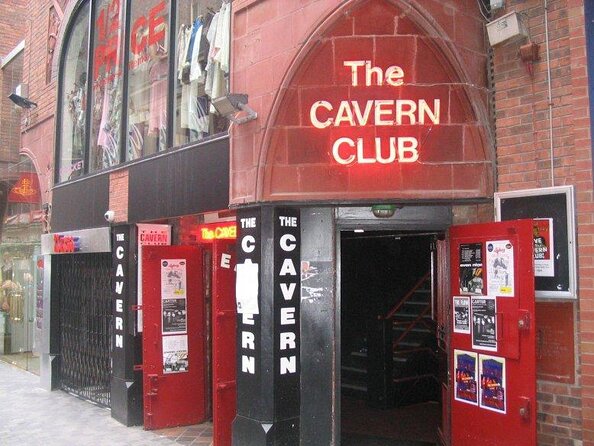
- Eighteen points of interest: The route covers civic buildings, theatres, Beatles sites, memorials, museums, and the waterfront.
- Jenny’s recorded commentary: Audio, pictures, videos, directions, and stories are delivered through the app, with no computer-generated voice.
- Three weeks of access: You can pause, repeat sections, or return to places at your own pace.
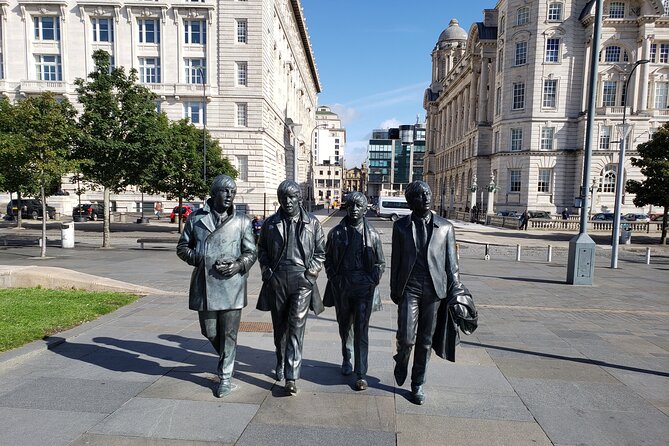
- Strong Beatles coverage: The Cavern Quarter, Cavern Club, Pier Head Beatles monument, and Liverpool’s live music scene all receive attention.
- A useful start and finish: Begin at St George’s Hall and finish at Royal Albert Dock, where museums and restaurants are close by.
- Low price, extra costs: At $12.35 per person, the tour is inexpensive, but admission to the Cavern Club, museums, and other attractions is not included.
From St George’s Hall to Liverpool’s civic quarter

The tour begins at St George’s Hall, a fitting place to get your bearings. This Grade I listed building sits on a broad podium, designed to make it dominate the surrounding streets. Its architecture draws on ancient temples, but the audio also takes you further back, to Liverpool’s beginnings beside a tidal pool on the River Mersey.
That opening matters because it gives the rest of the walk a frame. Liverpool is not only a Beatles city. It grew as a port, a commercial centre, and a place of public ambition. St George’s Hall puts that civic pride right in front of you.
From there, you move along William Brown Street, Liverpool’s principal cultural quarter. This short stretch gathers an unusual number of major public buildings: the Walker Art Gallery, World Museum Liverpool, Central Library, the former County Sessions Court, the old North Western Hotel, Empire Theatre, Steble Fountain, and Wellington Memorial.
I would allow extra time here if you enjoy architecture or museums. The route gives you an introduction rather than a full museum visit, so you can decide which buildings deserve a closer look. The free admission at the library and World Museum makes this part especially good value, although special events may charge a fee.
More self-guided tours in Liverpool:
- Western Approaches Self Guided Tour
★ 5.0 · 505 reviews - Liverpool Ghost Hunt: Paranormal Detective Self-Guided Game
★ 4.5 · 26 reviews - Private Self-Guided Dinky Door Hunt in Cambridge
★ 4.5 · 103 reviews
Central Library and the city’s public buildings
Liverpool Central Library and World Museum share a Grade II listed classical building. The audio explains the setting and points you toward rooms and exhibits worth seeing, which is useful when you have limited time and do not want to wander without a plan.
This is one of the tour’s practical strengths. You are not simply told what a building is called. You receive suggestions on where to go inside and what to expect. That kind of information can save time, especially if you are fitting Liverpool into a short city break.
The route also introduces the former Derby Museum collection, which began with the natural history holdings of the 13th Earl of Derby. That detail gives the museum a more personal beginning than a simple list of galleries would provide.
Keep in mind that the app cannot replace time inside the buildings. The stop is roughly 25 minutes, but that is enough for an introduction, not a proper museum visit. If you enter, pause the tour and use the three-week access period to return later.
Memorials, theatres, and the city centre
St John’s Gardens occupies land once known as the Great Heath. Today it is a formal garden beside St George’s Hall, with flower beds, statues, and memorials. The audio gives particular attention to the Hillsborough disaster, the 1989 football tragedy in Sheffield that remains a major part of Liverpool’s public memory.
This section calls for a respectful pace. The story is not a quick football anecdote, and the memorial meaning reaches beyond club loyalties. You can listen, look around, and take a little time before moving on.
Next comes Williamson Square, where the Liverpool Playhouse and the Radio Tower draw attention. The theatre opened in 1866 as the Star Concert Hall and later became the Liverpool Playhouse. Its long performing history gives you a different angle on Liverpool’s culture, away from the usual Beatles focus.
The Radio Tower, once called St John’s Beacon, has had a less straightforward public life. The audio explains how it was once abandoned and disliked by many local people before later finding a warmer reception. That sort of change is one reason I prefer a guided explanation to simply walking past a tall building and taking a photograph.
The Cavern Quarter and Liverpool’s Beatles story

The Cavern Quarter is the heart of the Beatles section. Its narrow pedestrian streets hold pubs, clubs, restaurants, and live music venues, and the area remains closely tied to Liverpool’s music identity.
The key stop is the Cavern Club, the venue linked with Merseybeat and the Beatles in the early 1960s. Admission is not included, so check the cost before you enter. The audio gives you context first, which helps you decide if the club visit is worth adding to your budget.
I like that the route does not treat the Beatles as a single photo stop. It explains the surrounding quarter and Liverpool’s continuing live music scene too. You get a sense of why the Cavern area matters, not just a fact about where the band played.
At the same time, you should set your expectations. This is not a live music tour and no in-person guide is included. One separate review refers to an informative guide named Paul, but this product is self-guided and uses Jenny’s recorded narration. If you want conversation, personal stories, or help with questions, choose a walking tour with a human guide instead.
A few more Liverpool days out to weigh up
- Beatles Magical Mystery Tour
★ 5.0 · 9,266 reviews - Liverpool: “Blue Route” – City & Beatles Tour
★ 5.0 · 8,562 reviews - Liverpool City Sights Hop On Hop Off City Tour – 24hr Ticket
★ 4.5 · 2,555 reviews - The LFC Stadium Tour
★ 5.0 · 1,548 reviews
Castle Street, commerce, and difficult history
Castle Street is one of Liverpool’s original seven streets, appearing on maps from the 13th century. It sits within the city’s former World Heritage area and includes the Grade I listed Town Hall and former Bank of England, along with many Grade II listed buildings.
The route continues to Exchange Flags Square, where the audio addresses Liverpool’s commerce, war, slavery, and the people involved in that past. It also explains Nelson’s bronze monument and the arguments surrounding its meaning.
This is an important part of the experience because Liverpool’s port wealth cannot be understood through grand buildings alone. The route connects those buildings with the systems and trade that helped finance the city. You are given a fuller picture, including uncomfortable subjects that should not be left out.
The Town Hall receives its own attention. It is a Grade I listed building often described as one of the finest surviving 18th-century town halls. The audio also points to the darker story behind the monument in its backyard, giving you something to consider rather than just another architectural detail.
Pier Head and the Three Graces
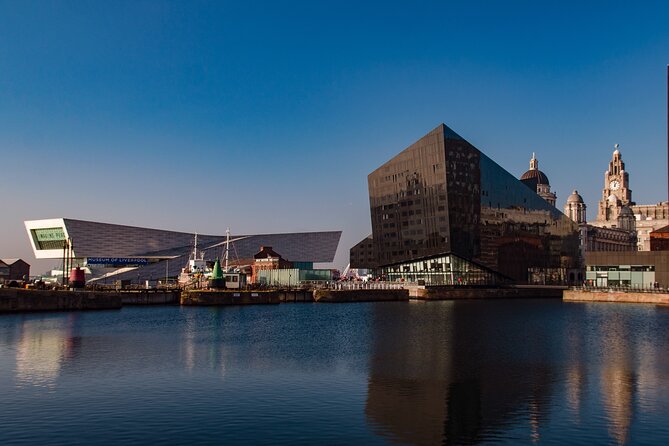
At Pier Head, the city opens toward the Mersey. The three famous waterfront buildings are the Royal Liver Building, Cunard Building, and Port of Liverpool Building. Together they form Liverpool’s best-known architectural group.
The Royal Liver Building is especially memorable for the two Liver Birds on its roof. The audio explains the legends around them, why the bird became part of Liverpool’s coat of arms, and how the building became an early reinforced-concrete structure.
The Cunard Building combines Italian Renaissance and Greek Revival influences, with design ideas drawn from Italian palaces. The Port of Liverpool Building, once the Mersey Docks and Harbour Board offices, is the oldest of the three. Its decoration reflects Liverpool’s importance to the British Empire and its maritime administration.
I appreciate the way this stop connects design with power. These are not just attractive waterfront facades. They tell you about shipping, empire, trade, and the city’s place in the wider world.
Pier Head also has a Beatles monument. The route adds a few stories about the Fab Four that may be less familiar than the standard Cavern Club facts. You can take your time here because the waterfront is an easy place to pause and use the map to confirm your next stop.
Royal Albert Dock and the practical finish

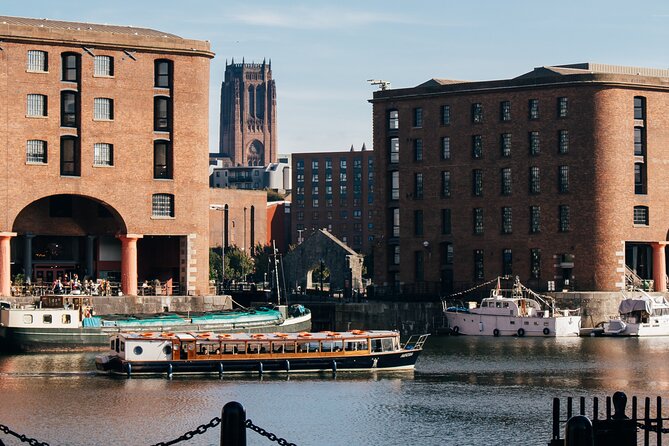
The tour finishes at Royal Albert Dock, about 30 minutes after the Pier Head section. The dock gives you another view of Liverpool’s connection with the Mersey, this time through warehouses, museums, and the modern cultural life around the water.
The commentary covers the dock’s use before and after the Second World War and explains why so many museums are located here. Nearby attractions include the Museum of Liverpool, The Beatles Story, and Merseyside Maritime Museum. Titanic connections are also discussed.
The Museum of Liverpool receives a short introduction of its own, including what to expect and where to go inside. Admission to the museum is not included, so treat the tour as an orientation rather than a complete museum ticket.
This ending works well. You finish close to places where you can continue exploring, eat, or stop for a drink. The final recommendations for museums, activities, and food are useful if you have not planned the rest of your day.
How the app works in real conditions
You receive instant confirmation and an email with instructions for activating the tour. The booking reference is not the activation code, so read the instructions carefully before setting out.
The app includes a map, GPS route, directions, stop markers, audio, images, videos, and written information. GPS guidance can help you follow the route without constantly checking a paper map, and one positive experience specifically praised the accurate map and clearly listed points of interest.
The audio is narrated by Jenny, not a computer-generated voice. That makes the commentary easier to follow than the flat delivery found in some automated city apps. You can pause at any stop, take shelter in bad weather, and read along while listening.
There is one practical risk: connection or activation trouble can spoil the start. A customer was unable to connect despite trying several times. Support is available by phone, chat, and email around the clock, but I would still activate the tour before leaving your accommodation and check that the first section plays.
The route is described as taking two to four hours. That range makes sense because you can either follow the stops briskly or pause for museums, photographs, food, and shelter. The three weeks of unlimited access are valuable here. You do not have to squeeze every building into one walk.
Price, value, and who should book
At $12.35 per person, this is a low-cost way to get a structured introduction to central Liverpool. The value comes from the combination of directions, commentary, local tips, and repeat access rather than from admission to attractions.
The extra costs are clear: the Cavern Club and any museums or special events require separate payment. If you plan to visit several museums, include those tickets in your overall budget. The tour itself remains inexpensive, but it is not an all-inclusive sightseeing pass.
I would choose this for:
- A solo visitor who wants a clear route without joining a group.
- A Beatles fan who also wants civic, maritime, theatre, and football context.
- A first-time visitor with two to four hours for the city centre.
- Anyone who likes stopping for photographs, coffee, museums, or rain breaks.
- A visitor staying several days who can use the app more than once.
I would look elsewhere if you want a live guide, spontaneous conversation, or a tour built around an individual group’s questions. You also need a working phone and enough confidence to manage an app. Service animals are allowed, public transport is nearby, and most people can take part, but the tour does not provide an in-person escort.
Should you book this Liverpool audio walk?
Book it if you want an inexpensive, flexible route that connects Liverpool’s main central sights. The best parts are the easy map, the broad subject range, Jenny’s human narration, and the chance to revisit the tour for three weeks.
Before booking, decide how much independence you want. You will get the most from this experience if you activate it early, bring headphones, allow time for pauses, and treat the audio as a guide to the city rather than a replacement for entering its museums and historic buildings.
The tour is non-refundable and cannot be changed after booking, so confirm your dates and phone access first. For a low price and a strong central route, it is a sensible choice for independent sightseers. For personal contact and live storytelling, pay more for a guided walk instead.
FAQ
Where does the Liverpool self-guided tour begin?
It begins at St George’s Hall, St George’s Place, Liverpool L1 1JJ.
Where does the tour finish?
The route finishes at Royal Albert Dock, Liverpool L3 4AD, near museums and restaurants.
How long does the tour take?
The expected duration is about two to four hours, depending on your pace and how long you spend at the stops.
How long can I access the tour?
You receive three weeks of unlimited access to the self-guided tour through the app.
Is there an in-person guide?
No. This is a private self-guided activity for your own group. Jenny provides the recorded audio commentary.
Is admission to the Cavern Club included?
No. Entrance to the Cavern Club is not included, and you must pay separately if you choose to enter.
Are museum entrance fees included?
No. Any entrance fees for attractions mentioned during the tour are separate. General admission to the library and World Museum is described as free, though some events may charge.
What does the app include?
The app provides a map, directions, GPS route, stop information, audio, pictures, videos, and written stories. Activation instructions are sent by email after booking.
Just added around Liverpool
- Private Transfer from London & All London Airports to Liverpool★ 5.0 · 3 reviews
- Liverpool and The Beatles 2 Day Rail Tour from London with Hotel★ 4.0 · 10 reviews
- Beatles and Rock Superstars – Private Taxi Tour with Hotel Pickup★ 5.0 · 9 reviews
- Beatles Magical Mystery Tour★ 5.0 · 69 reviews
- Half Day Welcome to Liverpool Walking Tour★ 5.0 · 17 reviews
- LIVERPOOL: Yorkshire Adventure – Sightseeing Day Trip Tour★ 5.0 · 13 reviews
- Fun, Flexible Treasure Hunt Around Liverpool with Cryptic Clues & Hidden Gems★ 5.0 · 141 reviews
- Beatles Ticket To Ride Half Day Tour Small Groups★ 5.0 · 60 reviews
Self-Guided Tours, compared.

Private Self-Guided Dinky Door Hunt in Cambridge
Read our review →
Bristol Street Art: Banksy Exploration Game and Tour
Read our review →
Covent Garden’s Hidden Gems: A Self-Guided Walking Tour
Read our review →
Liverpool Ghost Hunt: Paranormal Detective Self-Guided Game
Read our review →
Browse the lists this tour appears in