
Reviewed · UNIVERSITY TOURS
Oxford University Walking Tour With University Alumni Guide
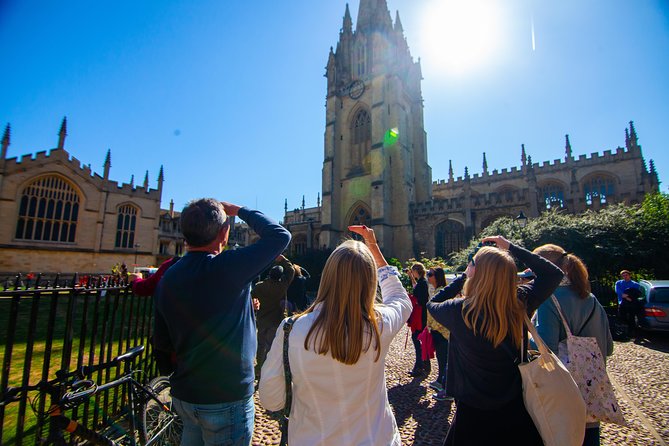
Oxford makes a fine first impression, but a student guide helps you understand what you are looking at. This two-hour walk links the Bodleian Library, Radcliffe Camera, Divinity School, and famous colleges with stories about admissions, college life, funding, ceremonies, and Oxford’s unusual traditions. Guides named Tom, Sam, Lucy, Alex, Aran, and others have led this experience, so the exact style depends on who takes your group.
I like two things in particular: the guide gives you an inside view of student life, and the route packs many of central Oxford’s big sights into a short visit. The small-group format also makes it easier to ask questions and keep pace with the guide.
The main caution is speed. Twelve listed stops in about two hours means roughly ten minutes at each place, and much of the tour is an exterior look. Access to the Divinity School can be limited from June through August, so do not book this walk solely for that interior.
Key points to know before booking
- Student guides make Oxford easier to understand: You hear about choosing a college, studying there, and daily university life, not just dates and building names.
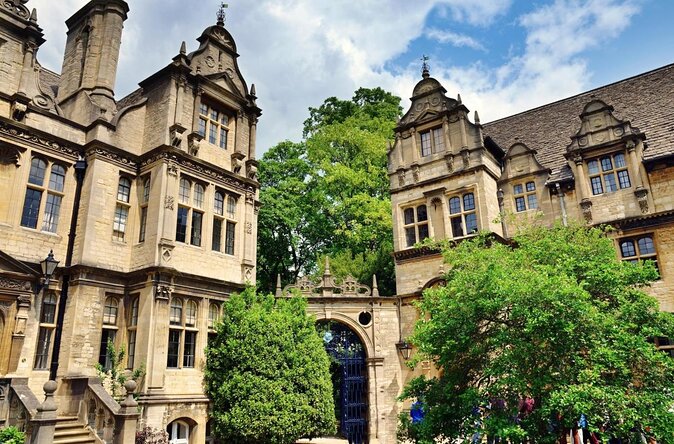
- The route covers the classic Oxford sights: Radcliffe Camera, Bodleian Library, Merton College, Trinity College, All Souls College, and the University Church all appear.
- The Divinity School is not guaranteed in summer: Closures and high demand can prevent entry, even though it is normally part of the experience when open.
- You can start in Oxford or London: The standard option meets at 15 Broad Street in Oxford, while the pricier pickup option starts at Gloucester Road Tube Station in London.
- The walk is fast but efficient: You see a broad slice of the university in two hours, though you will not have time for a slow look at every college.
- The price is reasonable for a short orientation: At $41.59 per person, the tour makes the most sense if you want context and several key interiors or entrances in one compact outing.
Why a student guide changes the Oxford walk

Oxford is not one single campus. It is a collection of 38 colleges, libraries, and faculty buildings spread through the city. A guide can help you make sense of that structure before the college names blur together.
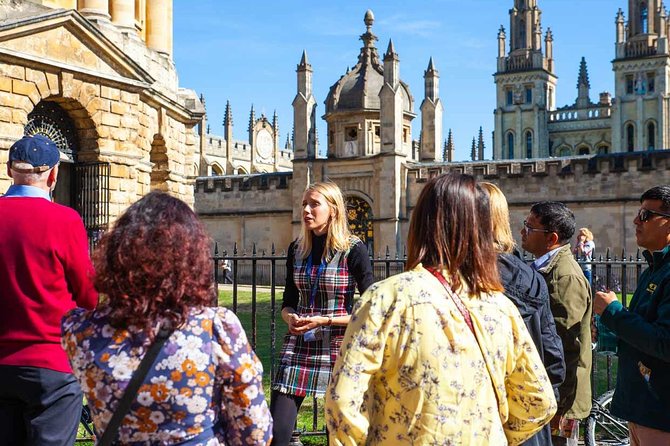
That is the strongest reason to choose this tour. Guides are current students, former students, or graduates, and their perspective reaches beyond architecture. You learn how a college fits into the university, how students choose where to apply, and how college life works. Guides such as Tom, Sam, Eloise, Lucy, Megan, and Alex have been described as funny, clear, and willing to answer questions.
The tone is meant to be lively rather than formal. Aran and Tom, for example, are noted for mixing jokes with solid explanations. Suzette and Antonia brought personal student details into the walk. That matters in Oxford, where a row of similar-looking stone buildings can otherwise feel like one long history lesson.
You should still expect different guide styles. One guide may pause for questions, while another may move quickly through a large amount of information. A two-hour route covering this many sights rewards attention, but it can feel rushed if you prefer long stops and quiet time for photographs.
More University Tours in Oxford
- 1.5-hour Oxford City and University Walking Tour
★ 4.5 · 1,383 reviews - Oxford Official University & City Tour
★ 5.0 · 1,134 reviews - Harry Potter Walking Tour of Oxford Including New College
★ 4.5 · 930 reviews
Starting at the University of Oxford
The opening stop gives you the basic frame: the University of Oxford has operated for nearly 800 years and includes more than 38 colleges, libraries, and faculty buildings. You are not touring every part of it. Instead, you are learning how the pieces fit together.
That introduction is useful because each college has its own identity, traditions, buildings, and rules. The student guide can explain the difference between the university as a whole and the individual colleges that make up its academic structure.
You will also get an early sense of Oxford’s architectural range. Medieval chapels, grand courtyards, ceremonial rooms, and newer library spaces appear close together. The experience works best when you treat this first stop as a map for the rest of the walk, not as a full visit in itself.
Merton College and the oldest-college argument
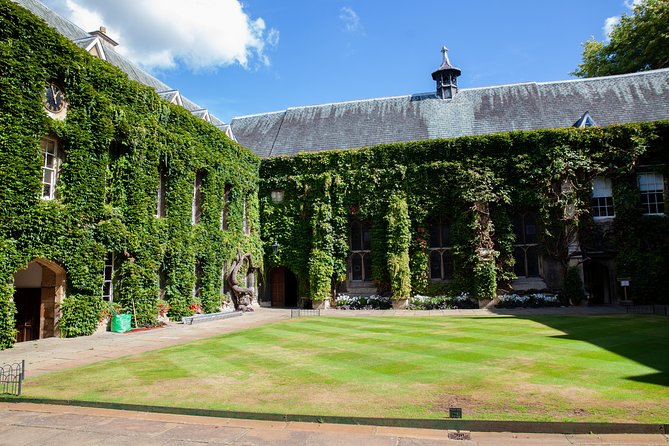
Merton College is presented through one of Oxford’s favorite debates: which college is actually the oldest? The answer is not as simple as a single date, since different foundations and definitions can support different claims.
That sort of question suits a student-led walk. Rather than giving you a bare fact to memorize, the guide can explain why the argument exists and how Oxford’s early institutions developed.
Merton is also known for an unusual chapel. The tour points out why it is considered one of the stranger chapels in Oxford, giving you a detail to watch for instead of simply passing another historic facade. The stop is short, so expect an explanation and an exterior look rather than a leisurely chapel visit.
The Bodleian Library and the Old School Quadrangle

The Bodleian Library is one of the tour’s main subjects. It is a copyright library with a huge collection, including more than 12 million books across its facilities. The guide discusses the Old School Quadrangle and explains how the broader library complex works today.
This is where the student perspective is especially useful. You hear how students use the buildings, how the older spaces relate to modern study, and why the library is more than an attractive background for photographs.
Do not assume that the walk includes a full library tour. One clear point to keep in mind is that the library itself is not generally entered as part of the standard experience. You may see and discuss important areas of the Bodleian complex, but the route is primarily a guided orientation around Oxford’s university buildings.
The Old School Quadrangle is still worthwhile from the outside. It gives you a strong sense of Oxford’s ceremonial side, while the guide supplies the practical explanation that a photograph cannot provide.
More Walking Tours in Oxford
- Inspector Morse, Lewis and Endeavour Oxford Walking Tour
★ 5.0 · 574 reviews - Oxford University Walking Tour by Alumni™ & Optional New College
★ 5.0 · 323 reviews - 90 Minute Classic Walking Tour of Oxford
★ 5.0 · 237 reviews - Oxford Harry Potter Film Locations Walking Tour by Alumni™
★ 4.5 · 100 reviews
St. Mary the Virgin and Oriel College
The University Church of St. Mary the Virgin is described as a historical center of Oxford University. Its importance is tied to the university’s early public and academic life, making it more than another attractive church in the middle of town.
The stop helps connect the city to the university. Oxford’s institutions did not develop in a sealed-off modern campus. Religious, civic, and academic life grew together, and this church helps show that older relationship.
At Oriel College, the focus shifts to controversy. The guide discusses a statue connected with one of Oxford’s most disputed graduates. This is a good example of how the tour handles the university’s past without presenting it as a collection of perfect heroes and tidy stories.
You may find this section more memorable than a list of dates. It brings up the way institutions deal with difficult figures and public debate. The exact amount of time available depends on the group, since the entire stop is brief.
The Divinity School and the Harry Potter connection

The Divinity School is the most important interior on the route when access is available. Built as Oxford’s first purpose-built lecture room, it is also one of Europe’s major examples of medieval architecture.
Its ceremonial role matters as much as its appearance. The guide can explain how the room has been used for university events and ceremonies, giving the building a living function rather than treating it as a museum shell. Its connection with Harry Potter and other films adds a pop-culture hook, but the architecture is the real reason to see it.
Here is the practical warning: access is especially limited from June through August. Frequent closures and high demand mean the Divinity School may not be included. The operator makes this limitation clear, which is useful if this room is high on your list.
There is also a broader access warning. After long periods of closure, entrances may still change on the day. If sites cannot be opened in rare circumstances, the guide explains the situation at the start and a full refund may be available. I would treat any interior access as a bonus, not the sole reason to book.
Radcliffe Camera, Trinity College, and All Souls
Radcliffe Camera is Oxford’s most recognizable building, with its round form and pale stone facade. Built in 1748, it forms part of the Bodleian Library system. The tour gives you an external view from several angles and explains why this building became such a strong symbol of Oxford.
This is a good photography stop, but the guide adds the important context: Radcliffe Camera is a working library facility, not simply a grand landmark. You learn how it relates to the rest of the Bodleian complex.
Trinity College follows with another look at Oxford’s college system. It is often regarded as one of the most beautiful colleges, and the setting combines the visual appeal of courtyards and historic buildings with stories of college traditions and academic life.
All Souls College brings a different theme. The guide discusses its traditions and its unusual academic status. The stop is particularly useful if you want to understand that Oxford colleges do not all serve exactly the same role.
Do not expect to wander freely through every college courtyard. Entry rules change, and the walking route depends on what is open that day. The value here lies in seeing several institutions and learning how they differ.
Hertford College and the most photographed Oxford view

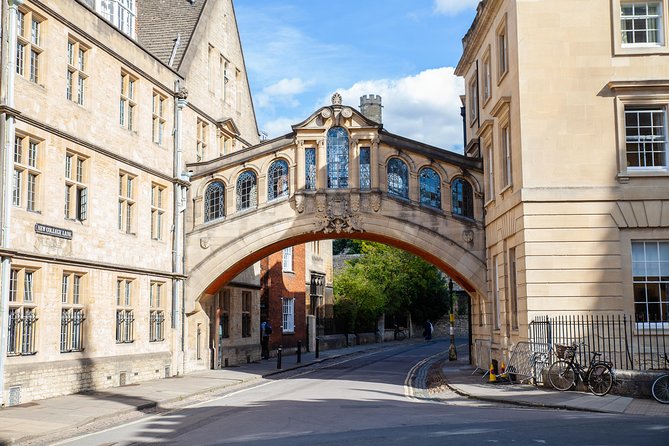
Hertford College is known for its progressive identity and for one of Oxford’s most photographed sites. The route uses the college to show another side of Oxford, one that is not limited to ancient customs and medieval buildings.
This stop is likely to appeal to photographers, but it also gives the guide a chance to discuss how colleges develop distinct reputations. The route moves quickly, so have your camera ready before the explanation begins.
Taken together, Hertford, Trinity, Merton, Oriel, and All Souls give you a useful comparison. You see that Oxford is not one uniform institution. Each college has its own story, traditions, architecture, and public image.
The Weston Library and old meets new
The Weston Library provides a contrast to the older Bodleian buildings. The tour enters its modern grand entrance hall and uses the space to explain how the university cares for a collection of more than 12 million books.
This is one of the most useful stops for understanding the library as a working institution. The architecture uses light in a more modern way, and the design feels different from the medieval and eighteenth-century spaces nearby.
You may appreciate this contrast if you are interested in how old institutions adapt. Oxford is not frozen in the past. Its libraries still need to store, protect, and provide access to enormous collections, and the Weston helps make that practical side visible.
What the two-hour pace feels like
The route lists twelve stops, with about ten minutes assigned to each. That is a lot for two hours, even before you account for walking between buildings, questions, photographs, and any entry delays.
In practice, you should arrive ready to keep moving. The guide may pause longer at a major site and shorten another stop. A family group or mixed-age party should allow for the pace, although guides are expected to give people time to keep up.
The compact format is a strength if Oxford is one part of a larger day. It gives you a clear introduction without requiring a full day on university history. It is less suitable if you want to sit in courtyards, study architectural details, or spend an hour inside one college.
The best way to use the tour is as a starting point. Afterward, you can return to the building or area that caught your attention, provided you have time and the site is open.
Is $41.59 good value?
At $41.59 per person, the standard tour is fairly priced for a two-hour guided walk through central Oxford. You are paying for a professional guide, a planned route, university context, and the chance to ask questions rather than simply following a map.
The value improves if this is your first Oxford visit or if you have only a short time in the city. The route covers many major sights that would otherwise take some effort to identify and connect. The student perspective is also hard to reproduce with a self-guided walk.
The price is less attractive if you want guaranteed entry into several interiors. Access can change, and the Divinity School is not assured in summer. Think of this as a guided introduction with possible interior access, not as a full college admission package.
A more expensive option includes round-trip transportation from London by luxury minibus. That can make sense if you want the convenience of a planned day trip and do not want to arrange the journey yourself. The pickup meeting point is Gloucester Road Tube Station in South Kensington, with an 8am departure. If you miss that departure for any reason, there is no refund.
If you choose the Oxford-only option, the meeting point is 15 Broad Street in Oxford. Check the option you select carefully, since the pickup details differ.
Who should book this Oxford walk?
I would choose this tour if you want a clear introduction to Oxford, care about university life, and enjoy hearing from someone who has studied there. It suits first-time visitors, families with older children, and anyone trying to fit the city into a short schedule.
It is also a good choice if you are curious about how Oxford works today. The guides can explain admissions, college choice, student routines, and the difference between the university and its individual colleges.
I would be more cautious if your main aim is interior access. Summer visitors should be especially flexible about the Divinity School, and the route does not promise a full Bodleian Library visit. Anyone who wants a slow architectural study may prefer a longer or more specialized tour.
The experience is offered in English, and a moderate level of physical fitness is expected. Service animals are allowed, and the route is near public transportation. Groups can be larger, with a maximum of 100 people, although the experience is generally presented in a small-group style. Ask at booking if group size is a deciding factor for you.
Free cancellation is available up to 24 hours before the start time. Changes or cancellations inside that window are not refunded.
My recommendation
Book this tour if you want the big Oxford sights tied together by a current or former student. The strongest features are the guide’s personal view, the range of colleges, and the useful explanation of how the university operates.
Skip it if you need guaranteed access to the Divinity School or want a quiet, slow visit inside the libraries. For most first visits, though, the $41.59 Oxford option offers a practical way to get your bearings, learn the college system, and leave with a short list of places worth seeing again.
FAQ
Where does the Oxford walking tour start?
The Oxford-only option starts at 15 Broad Street in Oxford.
Where does the London pickup option start?
The pickup option starts at Gloucester Road Tube Station, Gloucester Road, South Kensington, London SW7.
What time does the London pickup depart?
The London pickup departs at 8am. If you miss the departure, there is no refund.
How long does the tour last?
The walking tour lasts approximately two hours.
What language is the tour offered in?
The tour is offered in English.
Who leads the tour?
The tour is led by current or former Oxford students and university alumni. Guide names associated with the experience include Tom, Sam, Lucy, Alex, Aran, Megan, Eloise, Suzy, Michael, and Antonia.
Does the tour enter the Divinity School?
Access may be included when the building is open, but entry is not guaranteed. From June through August, closures and high demand make access especially limited.
Does the tour include the Bodleian Library?
The route discusses the Bodleian Library complex and the Old School Quadrangle, but it does not promise a full visit inside the library.
Is transportation from London included?
Transportation from London is available only with the more expensive pickup option. The standard option meets in Oxford.
Can I cancel for a refund?
You can cancel at least 24 hours before the start time for a full refund. Cancellations or changes made less than 24 hours before the experience are not refunded.
Just added around Oxford
- Bicester Village Private Vehicle Round Trip Service from London★ 4.5 · 3 reviews
- Westminster Abbey Private Tour Oxford PhD Historian Skip the Line★ 5.0 · 15 reviews
- From London: Oxford and Cambridge University Town Tour with Guide★ 4.5 · 23 reviews
- Oxford by Rail Day Tour with Harry Potter Insights Tour★ 4.5 · 4 reviews
- The City of Dreaming Spires: Oxford Private Day Trip from London★ 5.0 · 5 reviews
- Oxford and Blenheim Palace Private Car with Driver Guide★ 4.5 · 3 reviews
- Heathrow Airport To Oxford Private Transfer★ 5.0 · 4 reviews
- Medieval London Walking Tour Oxford PhD Historian Guide★ 5.0 · 5 reviews
University Tours, compared.
Cambridge University Walking Tour by Alumni™ Kings College Option
Read our review →
Cambridge University With Alumni: Optional Kings College Entrance
Read our review →
1.5-hour Oxford City and University Walking Tour
Read our review →

Harry Potter Walking Tour of Oxford Including New College
Read our review →
Cambridge Walking & Punting Tour by Alumni™ King’s College Option
Read our review →
Oxford Sightseeing River Cruise Along The University Regatta Course
Read our review →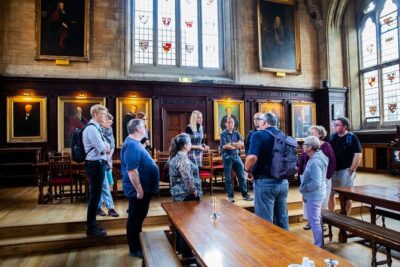
Extended: Oxford University & City Tour With Christ Church
Read our review →Browse the lists this tour appears in