
Reviewed · CANTERBURY TOURS
The Canterbury Classic Tour
Canterbury’s best stories are often tucked beside ordinary shops and streets. This 90-minute walking tour links Chaucer, Thomas Becket, Christopher Marlowe, Roman ruins, medieval gates, and a clock tower with a rather odd past. Guide Sam gives the city a human voice, mixing solid history with legends, jokes, and details you could easily miss.
I like the small cap of 10 people, which gives you room to ask questions instead of simply trailing behind a flag. I also like the price: at $19.44 per person, it offers a useful first look at Canterbury without asking you to commit half a day.
The main drawback is simple: you spend only about five minutes at each named stop, and admission to the Westgate Towers Museum and Canterbury Roman Museum is not included. This is an introductory city walk, not a museum tour or a detailed cathedral visit.
Key things to know before booking
- Thomas Becket gets the full Canterbury treatment: Learn why a man born elsewhere became the city’s defining figure.
- Sam brings a personal, story-led style: The tour mixes facts, fiction, architecture, art, and amusing oddities.
- The group is limited to 10 people: You should have a better chance to hear clearly and ask questions.
- The route links major sights with small details: Look for the bull’s head, the dove by Pope Gregory, and the curious clocks.
- It starts centrally at The Beaney: You can use the building’s facilities before meeting the guide.
- The walk suits first-time visitors: It ends in the city centre, close to shops and further sightseeing.
Why this short Canterbury walk works so well
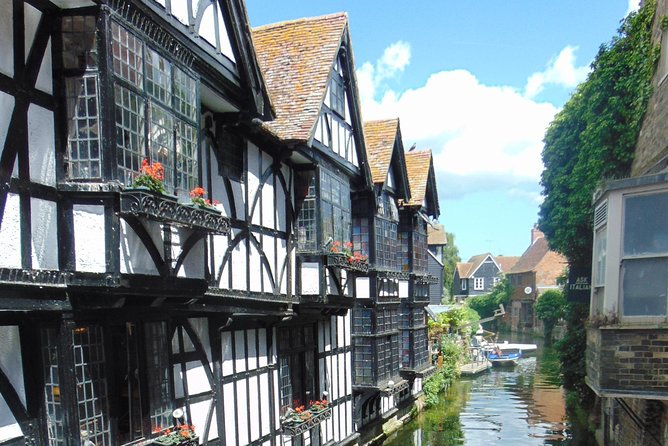
Canterbury can feel like several cities layered on top of one another. There is the Roman town, the medieval pilgrimage centre, the Tudor city, the literary Canterbury of Chaucer, and the modern shopping district. A good guide helps you see those layers without making you memorize a list of dates.
That is the strength of this tour. Sam’s approach is not limited to grand monuments. He points out details on buildings, explains how streets changed purpose, and connects famous people with places you can actually see. The result is less a march from sight to sight and more a guided reading of the city.
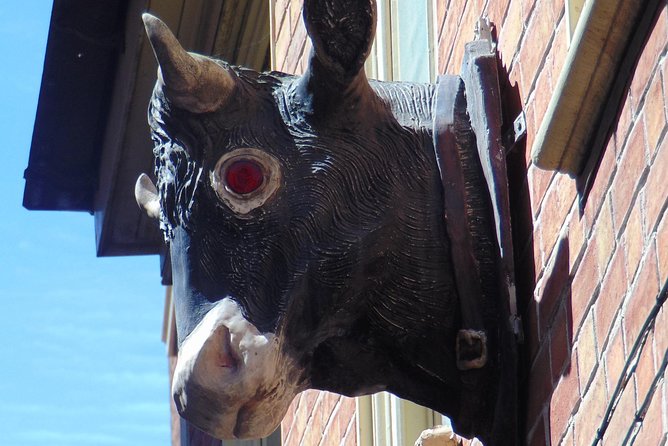
I especially like the balance between famous names and odd little clues. You hear about Chaucer and Becket, but you also look for a bull’s head near Butchery Lane and learn why Pope Gregory the Great has a dove flying toward his ear. Those details give Canterbury a sense of personality.
The tour has earned a perfect five-star rating from 100 submitted ratings, with every one recommending it. The praise focuses on Sam’s clear explanations, humor, warm manner, and ability to keep adults, teenagers, and younger children interested. One family specifically found that children aged six and eleven stayed involved, which is useful if you are planning a mixed-age outing.
A few more Canterbury days out to weigh up
- Leeds Castle, Cliffs of Dover and Canterbury Day Trip from London with Guided Cathedral Tour
★ 4.5 · 2,820 reviews - Canterbury Cathedral, Dover Castle & White Cliffs Guided Day Tour from London
★ 4.5 · 837 reviews - Leeds Castle, Canterbury, Dover & Greenwich Boat ride
★ 4.5 · 604 reviews
Meeting at The Beaney House
The walk begins outside The Beaney House of Art and Knowledge at 18 High Street. This is a practical starting point in the centre of Canterbury, and the building has facilities you can use before the tour begins.
The first stop is the statue of Geoffrey Chaucer. Chaucer wrote The Canterbury Tales, the book most closely tied to the city’s medieval pilgrimage tradition. Starting here makes sense because it establishes Canterbury as a place shaped not only by religion and politics, but also by storytelling.
You can expect a short introduction rather than a long literary lecture. The stop is listed at about five minutes, so it works as a scene setter. If you already know The Canterbury Tales, you will have a clear connection to the city. If you do not, Sam gives you a useful reason to understand why Chaucer still matters here.
Westgate Towers and Canterbury’s defensive past
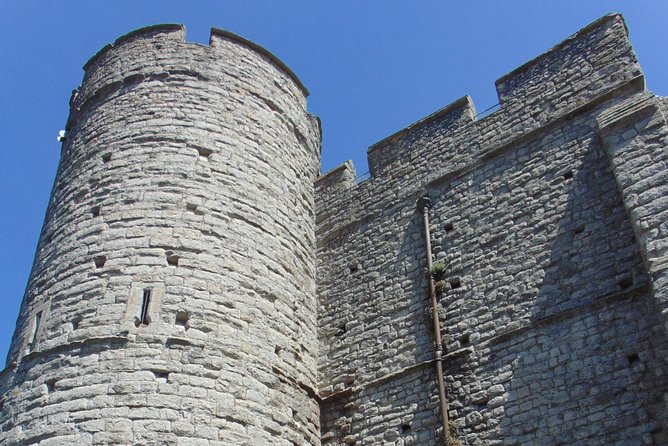
The route continues to Westgate Towers, described as the largest surviving medieval city gate in the United Kingdom. The towers were built during a troubled period when cities needed serious defenses, and the guide explains the methods of attack and protection that made this gate such an important structure.
This is one of the tour’s strongest stops for anyone interested in military history or medieval city planning. A gate was not just an opening in a wall. It controlled movement, protected the town, and could become a prison. The stories connected with Westgate include its later use as a jail, giving the building a life beyond its original defensive purpose.
The stop lasts about five minutes, and entry to the museum and viewpoint is not included. That is worth noting. You can hear the historical explanation from outside, but you will need a separate ticket if you want to go in and see the views.
I see this as a good arrangement for a first visit. The guide tells you why Westgate matters, then you can decide if the museum deserves more of your time later. If tower views are high on your list, plan to return with the admission cost in mind.
Christopher Marlowe at the modern theatre
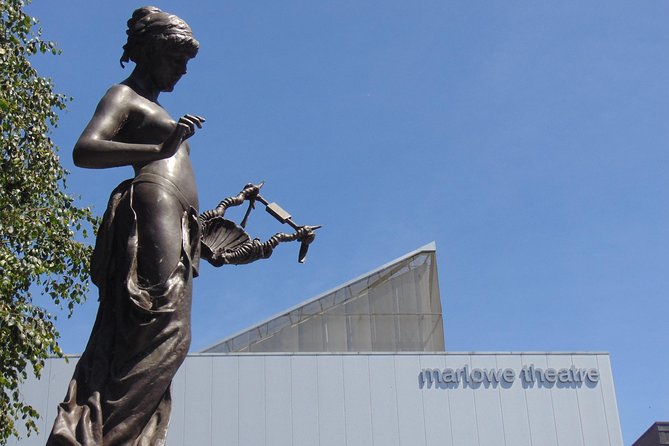
Next comes the Marlowe Theatre, a modern building with a name tied to one of Canterbury’s most colorful figures. Christopher Marlowe was a playwright, spy, and hard-partying character whose life ended violently at a young age.
The tour does not take you inside the theatre. Instead, you pass the building while Sam explains Marlowe’s eventful life and the role of writing in Canterbury’s identity. This is a clever contrast: a contemporary performance venue becomes a doorway into Elizabethan drama and political intrigue.
I like this part because it broadens the picture of Canterbury. The city is not only about pilgrims, saints, and stone walls. It also produced a major literary figure with a life full of danger and mystery. The stop should appeal to anyone who enjoys stories with a little edge.
Same part of England, a completely different sort of day:
- Leeds Castle, Canterbury Cathedral and Cliffs of Dover Day Trip
★ 4.5 · 487 reviews - Official Canterbury Guided Walking Tour – 11.00 Tour
★ 5.0 · 422 reviews - White Cliffs of Dover & Historic Canterbury Day Tour from London
★ 4.5 · 373 reviews - Leeds Castle, Canterbury, Dover & Greenwich Cruise from London
★ 4.0 · 369 reviews
Christ Church Gate and Tudor surprises
Christ Church Gate leads toward the cathedral precinct and commemorates a Tudor prince and his Spanish bride. The detail that the prince may not be the one you first expect is part of the fun, and Sam also explains how the gate changed over time.
This is a good example of why a walking guide adds value. You can pass through the gate, admire its decoration, and move on without knowing what it marks or how its role shifted. The tour pauses long enough to give the structure a place in the city’s political and religious story.
The stop is outside, and admission is not included. That keeps the walk inexpensive, but it also means you should not expect a cathedral interior visit as part of the experience. If you want to tour Canterbury Cathedral, treat this walk as preparation rather than a substitute.
Roman Canterbury near Butchery Lane
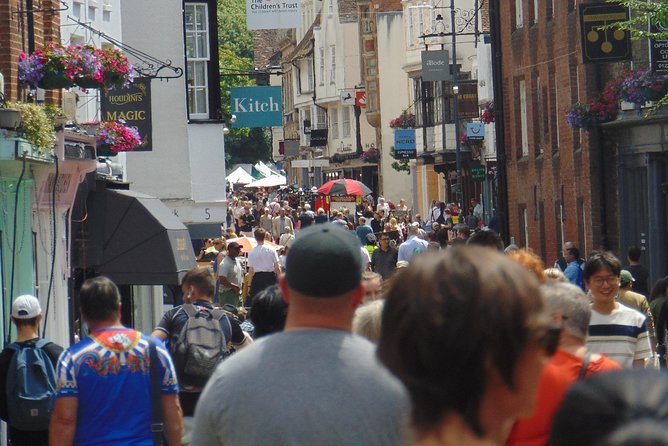
Outside the Canterbury Roman Museum, Sam explains how the Roman city was rediscovered after the Second World War. That point matters because Roman remains are not always obvious in a modern town. Archaeology often depends on chance, rebuilding, and the damage caused by war.
Again, the museum entrance is not part of the tour. You get a short explanation outside, then continue through Butchery Lane. This keeps the route moving, but you may want to return to the museum if Roman Canterbury interests you.
Butchery Lane adds several small visual clues. You can see the cathedral’s Bell Harry Tower, the city coat of arms, and a bull’s head that seems to belong to a different story altogether. These compact details are exactly the sort of thing I value on a city walk. They reward looking up, looking around, and not treating the street as mere pavement between major sights.
One especially useful feature is the way Sam explains connections between places. The route touches on the synagogue and its connection with the Knights Templar, the Buttermarket, and the way the river was once used as a sewer. Those subjects help you understand how people lived and worked in the medieval city, not just how its grand buildings looked.
Thomas Becket and the city’s central story
At St Thomas of Canterbury Roman Catholic Church, the focus turns to Thomas Becket. Becket is perhaps the most important figure in Canterbury’s public memory, even though he was not born in the city.
The guide tells the full story of the conflict surrounding Becket and explains why his murder transformed Canterbury into a major pilgrimage destination. You also hear about the knights who stayed in the city before killing him, adding a local setting to a famous national story.
This is likely to be the most significant historical section of the walk. It connects politics, religion, violence, pilgrimage, and the city’s economy. Canterbury’s fame did not grow by accident. Becket’s death changed the city’s fortunes and left marks across its streets and buildings.
The stop also includes an unusual question about Pope Gregory the Great and the dove flying into his ear. That image is a reminder that medieval art often tells stories through symbols rather than plain written explanation. Sam’s use of such details keeps the discussion from becoming solemn or heavy.
Saint George’s Tower and the final clock
The tour ends beneath Saint George’s Tower at 27 St George’s Street. The former St George’s Church is now part of a busy shopping area, but the clock tower preserves a visible link with the past.
This is a fitting final stop because it shows how Canterbury keeps changing around its old structures. The tower is not isolated in a museum setting. It sits among everyday shops and city traffic, making the past part of the present rather than something separated behind glass.
Sam explains how the tower became a reminder of earlier Canterbury. You finish in a useful central location, so you can continue shopping, find a café, visit the cathedral area, or make your way back to the station and other transport links.
What the small group changes
The maximum group size is 10 people. That is a meaningful advantage on a walking tour, especially when the guide is explaining details on a busy street or answering questions about buildings.
A small group also lets the tour adjust its tone. One person may ask about Roman archaeology, another about Marlowe, and someone else may want to know where to find the best architectural details. The feedback consistently points to Sam’s willingness to answer questions and keep the walk relaxed.
The group size does not guarantee a private tour. You may still be sharing the guide with other people, and the experience depends on who joins. But 10 is small enough that you are unlikely to feel anonymous.
One evening, only one person attended, and the tour still went ahead with the same enthusiasm. That suggests a personal guide-led format rather than a rigid presentation designed only for a large crowd.
Timing, pace, and weather
The advertised duration is about one hour and 30 minutes. One account describes the walk as lasting one hour and 45 minutes, so allow a little flexibility rather than booking something immediately afterward.
The route is described as a gentle wander through a flat, compact city. You will be on your feet for the whole experience, but the walk is not presented as strenuous. Most people can take part, and service animals are allowed.
Weather matters because the tour is outdoors. Sam has led the walk on freezing mornings and during changeable weather, but you should still dress for standing outside. Comfortable shoes, a waterproof layer, and something warm for cooler evenings are sensible choices.
The route is offered in English. Public transport is nearby, and the central start and finish make this a practical choice if you are arriving without a car.
Is $19.44 good value?
At $19.44 per person, I consider this good value for a first orientation to Canterbury. You receive about 90 minutes with a guide, a route through the central sights, and context that would be difficult to gather by simply following a map.
The value comes from the connections. You are not paying only to look at Westgate or Christ Church Gate. You are paying to understand why those places mattered, how they changed, and how they fit into the city’s wider story.
The price does not include admission to Westgate Towers Museum and Viewpoint or Canterbury Roman Museum. It also does not replace a visit inside Canterbury Cathedral. If you want extensive indoor sightseeing, your final day’s costs will be higher.
Still, the tour helps you choose where to spend that extra time. You can decide if the tower view, Roman displays, Beaney collections, cathedral, gardens, or city walls deserve a closer look.
Who should book this Canterbury tour?
I would choose this walk early in a Canterbury stay. It gives you a map in your head and points out places you may otherwise pass without noticing. Several people used similar city walks as their first activity, and that is exactly how I would use this one.
It is especially suited to:
- First-time visitors who want a clear introduction before exploring alone.
- Families with older children and teenagers who respond well to short stories, odd details, and humor.
- History and literature fans interested in Chaucer, Marlowe, Becket, Roman Canterbury, and medieval defenses.
- Visitors on a short stay who want a focused walk rather than a half-day excursion.
- People who prefer small groups and the chance to ask the guide questions.
- Dog owners because dogs were welcomed on at least one booking, and service animals are allowed.
I would look elsewhere if your main goal is a long cathedral visit, museum entry, or a quiet architectural study. This is a lively introduction, and its many short stops mean you will not spend long examining any single building.
Practical booking advice
The meeting point is outside The Beaney House at 18 High Street. Arrive with enough time to find the building and use its facilities before the walk.
The finish is beneath Saint George’s Tower at 27 St George’s Street. Since the end is different from the start, do not leave anything at a meeting point or assume you will return to the same spot.
Confirmation is provided when you book. Free cancellation is available up to 24 hours before the start time for a full refund. Changes or cancellations made less than 24 hours before the start are not accepted for a refund, and the cut-off uses Canterbury local time.
Should you book it?
Book this tour if you want a personable introduction to Canterbury, especially if you enjoy stories, local quirks, and a guide who can connect famous figures with ordinary streets. Sam’s relaxed style, strong command of the city’s past, and ability to involve children are major advantages.
The tour is short, affordable, and small enough to feel interactive. Just keep your expectations in line: museum and tower admission are extra, and the cathedral is seen as part of the city rather than toured in detail.
For a first morning or evening in Canterbury, I would book it. It gives you enough history to make the rest of your visit more rewarding without taking over your day.
FAQ
How long is The Canterbury Classic Tour?
The advertised duration is approximately one hour and 30 minutes. One account describes a duration of one hour and 45 minutes, so allow some extra time if you have another booking afterward.
Where does the tour begin?
The tour begins outside The Beaney House of Art and Knowledge at 18 High Street, Canterbury CT1 2RA.
Where does the tour end?
The tour ends beneath Saint George’s Tower at 27 St George’s Street, Canterbury CT1 2LE. The tower is the former St George’s Church clock tower.
Who guides the tour?
The guide named in the tour information and feedback is Sam. He leads the walk in English.
How many people can join?
The group is limited to a maximum of 10 people.
Is the tour offered in English?
Yes. The tour is offered in English.
Are museum admission fees included?
No. Admission to Westgate Towers Museum and Viewpoint and Canterbury Roman Museum is not included.
Are service animals allowed?
Yes. Service animals are allowed, and most people can participate.
What is the cancellation policy?
You can cancel up to 24 hours before the start time for a full refund. Cancellations or changes made less than 24 hours before the start time are not accepted for a refund.
Just added around Canterbury
- Luxury Private Day Hire from & to London via Dover & Leeds Castle★ 5.0 · 14 reviews
- Leeds Castle, Canterbury and White Cliffs of Dover – Driver Guide★ 5.0 · 13 reviews
- Leeds Castle Canterbury and Dover Private Tour from London★ 5.0 · 68 reviews
- Christmas in Canterbury, Dover and Greenwich with Christmas Lunch★ 4.5 · 6 reviews
- Canterbury Cathedral, Leeds Castle and Dover Castle Private Tour★ 4.5 · 10 reviews
- Canterbury Cathedral Hever Castle and Dover Castle Private Tour★ 3.5 · 3 reviews
- Dover Cruise Ship to Leeds Castle via Canterbury, Villages & back★ 5.0 · 5 reviews
- Dover Shore Excursion:Post-Cruise Tour to London via Canterbury and Leeds Castle★ 4.5 · 62 reviews
Canterbury Tours, compared.
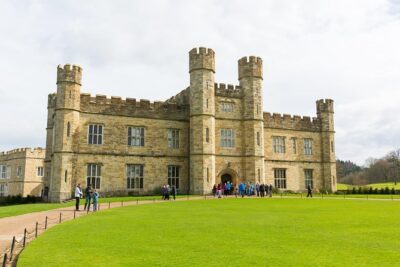
Leeds Castle, Cliffs of Dover and Canterbury Day Trip from London with Guided Cathedral Tour
Read our review →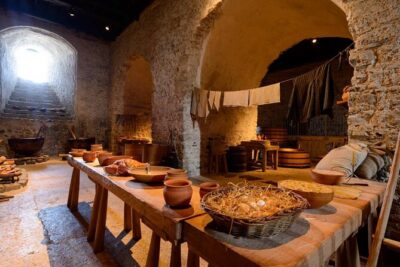
Canterbury Cathedral, Dover Castle & White Cliffs Guided Day Tour from London
Read our review →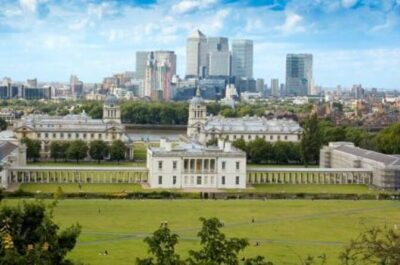
Leeds Castle, Canterbury, Dover & Greenwich Boat ride
Read our review →
Leeds Castle, Canterbury Cathedral and Cliffs of Dover Day Trip
Read our review →
Official Canterbury Guided Walking Tour – 11.00 Tour
Read our review →
White Cliffs of Dover & Historic Canterbury Day Tour from London
Read our review →
Leeds Castle, Canterbury, Dover & Greenwich Cruise from London
Read our review →
Leeds Castle Admission – Ultimate Explorer Tickets
Read our review →Browse the lists this tour appears in