
Reviewed · ROYAL PALACES
Tower of London Crown Jewels and English Royal History Tour
The Crown Jewels are the headline here, but the real pull is the setting around them: a fortress built after William the Conqueror seized England, later used as a palace, prison, armory, and execution site. A Blue Badge-qualified guide helps connect the glittering regalia with the power struggles and grim punishments that took place inside these walls.
I like the guaranteed timed entry, which matters at one of London’s busiest sights, and I like the range of sights packed into three hours. You get the Crown Jewels, White Tower, royal chapels, battlements, ravens, armor, and torture displays rather than a quick look at one famous room. The drawback is the price, $122.49 per person, and the walking can be tough if stairs, uneven ground, or inclines are a problem.
Key points at a glance
- The Crown Jewels are the star attraction: See the Imperial State Crown, the Koh-I-Noor Crown, and the Sovereign’s Sceptre with Cross among 100 objects and more than 23,000 gemstones.
- The White Tower anchors the visit: Enter William the Conqueror’s Norman fortress and see how it later became a royal residence, prison, and armory.
- A Blue Badge guide leads the history: You can ask questions and get help sorting fact from legend in stories such as the Princes in the Tower.
- The darker side is part of the tour: Lower Wakefield Tower includes torture instruments and stories connected to imprisonment and execution.
- You see more than the jewels: The route includes St Peter ad Vincula, St John’s Chapel, the battlements, Tower Armory, and the Raven House.
- Plan for a physical visit: Cobblestones, stairs, hills, inclines, and declines make comfortable shoes essential.
Why the Tower of London works best with a guide
The Tower can feel like several attractions packed into one fortified site. One corner recalls royal ceremony, another points to military power, and another tells a grim story of imprisonment or death. Without context, it is easy to admire the stonework and miss why each part mattered.
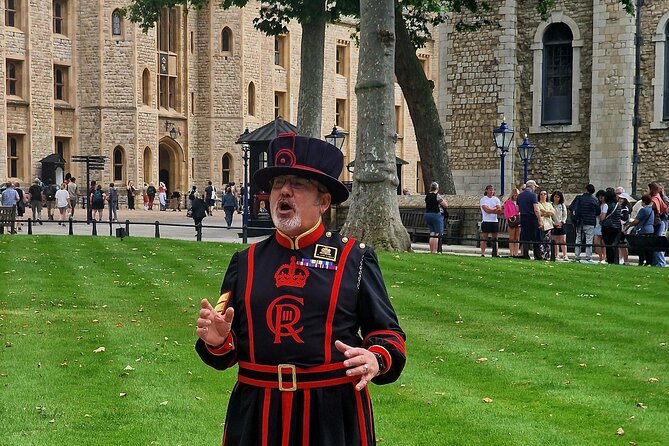
This tour gives you a three-hour guided framework for the visit. Your Blue Badge-qualified London guide begins outside the Tower, where the fortress’s scale and purpose become easier to understand. William the Conqueror began building the great stronghold in the 1070s, and the White Tower became the core of a complex that changed with each generation of English rulers.
I especially like the chance to ask questions. The Tower is full of disputed stories, famous prisoners, and royal decisions that can blur together. A guide can help you keep track of Henry III, Edward I, Richard II, Henry VI, Edward IV, Richard III, and Henry VIII without turning the visit into a list of names.
The group can include up to 30 people. That is large enough to keep the price from climbing even higher, but it may feel less personal than a private tour. Still, the guide-led format is useful here because the value comes from understanding what you are seeing, not just walking through old rooms.
More Historical Tours in London
- London Small Group Tour of Historical Pubs
★ 5.0 · 10,422 reviews - Soho Music & Historic Pubs Tour
★ 5.0 · 1,993 reviews - Royal Historic Pubs Walking Guided Tour in London
★ 5.0 · 803 reviews
The Crown Jewels: ceremony, power, and serious sparkle
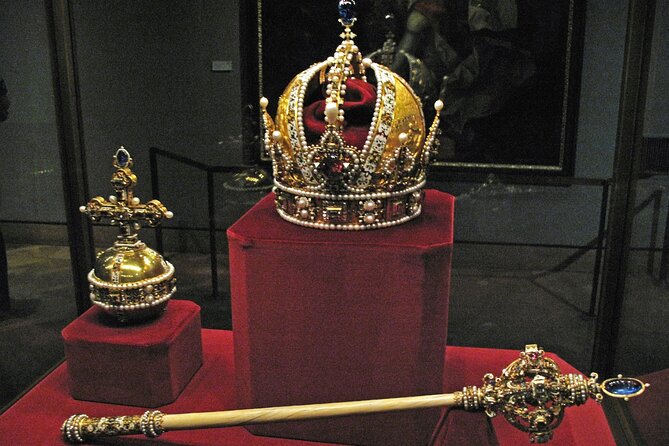
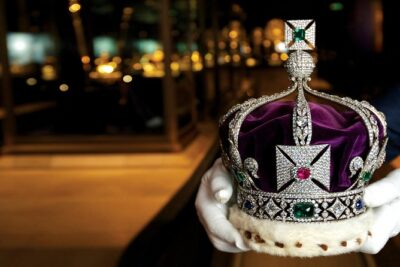
The Crown Jewels exhibition gives this tour its biggest visual payoff. You will see about 100 objects set with more than 23,000 gemstones, including the Imperial State Crown, the Koh-I-Noor Crown, and the Sovereign’s Sceptre with Cross.
These are not simply expensive objects behind glass. They represent the public side of monarchy: coronations, authority, ceremony, and the claim that a ruler holds power by a tradition larger than any one person. That makes the exhibition a useful counterpoint to the Tower’s prisons and execution stories.
The display is designed to impress, and it does so through scale as much as detail. The Imperial State Crown and the sceptre are the items most likely to draw your eye first. The Koh-I-Noor Crown adds another layer to the visit because its presence carries a complicated imperial history, even though the tour information does not promise a detailed discussion of that subject.
Timed entry is a real advantage. You are not paying only for an escort around the grounds. Your ticket includes access to the Crown Jewels exhibition, which is one of London’s most sought-after sights. If the jewels are your main reason for booking, stay focused during the guided route so you have enough time to appreciate the exhibition rather than rushing through it.
The White Tower and the making of a royal fortress
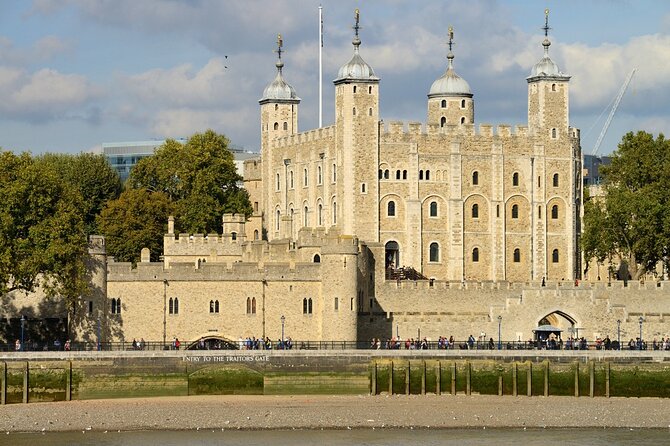
The White Tower is the physical heart of the visit. This 11th-century Norman building began as a statement of conquest and control. William the Conqueror did not build a quiet country residence here. He built a powerful stone fortress in London, a reminder that the new ruling order could defend itself and impose its will.
Later kings reshaped the Tower. Henry III turned parts of the fortress into a lavish royal residence, while Edward I added defenses and used the site as a strategic base. Those changes help you see the Tower as a living royal complex rather than a single monument frozen in the 1070s.
Inside the White Tower, you will also enter the armory. The display includes tournament armor connected with Henry VIII and other kings. Armor can seem remote when viewed in a glass case, but here it points to the public image of medieval and Tudor kings: physically protected, prepared for war, and eager to display status.
The White Tower includes stairs and uneven surfaces, so take your time. The route is not designed for a quick, flat walk. If you have limited mobility, the physical demands are an important reason to consider a different way of seeing the Tower.
Royal prisoners and the mystery of the Princes
The Tower’s royal stories are often more gripping than its architecture. Richard II was imprisoned here after Henry IV removed him from the throne. During the Wars of the Roses, Henry VI was held captive more than once and later met a tragic end in Wakefield Tower.
The story of the Princes in the Tower gives the visit its most famous mystery. Edward V and his brother Richard disappeared while under the care of their uncle, Richard III. The evidence and interpretations remain disputed, which makes the guide’s role valuable. You can hear the story in its setting without assuming that every dramatic version is proven fact.
The Tower’s royal prisoners show how quickly a residence could become a cage. A king or prince might occupy the same fortress that represented royal power, then lose freedom when political control changed hands. That contrast gives the Tower an edge that an ordinary palace tour cannot match.
You should expect the guide to move through several centuries in a short time. The history is dense, and three hours cannot give equal attention to every ruler. If one period interests you most, ask about it. The tour specifically encourages you to pick your guide’s brain, and questions can make the visit feel less like a lecture.
More Royal Palaces in London
- Tower of London and Crown Jewels Exhibition Ticket
★ 4.5 · 6,677 reviews - Buckingham Palace Entrance Ticket & Changing of the Guard Tour
★ 4.0 · 1,720 reviews - London’s Palaces & Parliament Tour (See Over 20+ London Top Sights)
★ 5.0 · 1,609 reviews - Walking Tour of London Westminster Abbey, Big Ben, Buckingham
★ 4.5 · 1,213 reviews
Henry VIII, Tudor power, and the darker side
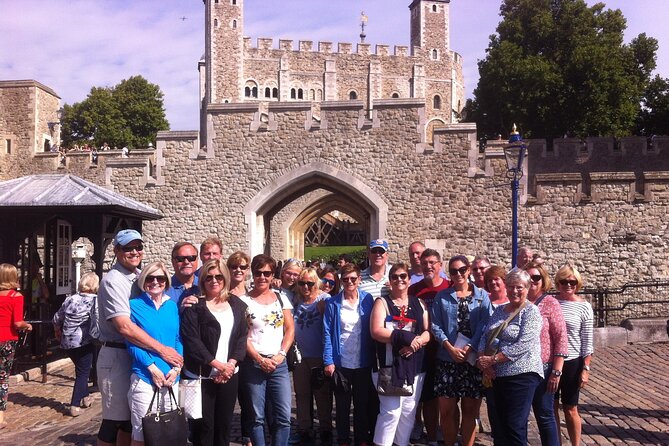
Henry VIII’s reign ties together many of the Tower’s roles. The site was still a royal residence, but it was also a prison for people who threatened the Tudor state or fell out of favor. The same complex could host ceremony, display weapons, and confine prisoners.
The Lower Wakefield Tower brings the darker material to the front. You can see instruments of torture and hear stories about the people held inside the fortress. This section is not a lighthearted stop, and the subject matter may not suit every child or every visitor. It is included because the Tower’s past is not just crowns and grand rooms.
The Church of St Peter ad Vincula adds another serious layer. It is associated with those who died at the Tower, while St John’s Chapel in the White Tower recalls the building’s earlier role within a royal and military complex.
These places help explain why the Tower has such a strong hold on the public imagination. The walls are impressive, but the human stories give them meaning. You are not simply looking at stone, armor, and jewels. You are seeing how the English monarchy used one site to project authority, protect itself, imprison enemies, and stage royal ceremony.
Battlements, ravens, and a more human Tower
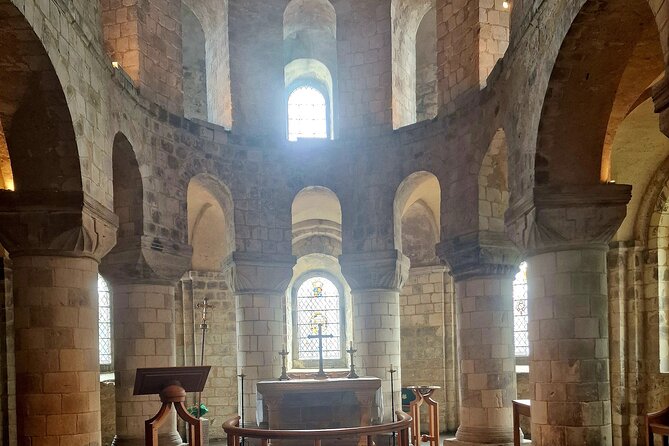
The battlements provide a change of pace from the indoor displays. You will see the defensive side of the Tower and understand how its walls helped protect an important royal base. The walk also gives the visit some breathing room after the concentrated displays in the White Tower and Crown Jewels exhibition.
The Raven House is another memorable stop. The Tower’s ravens are among London’s most familiar symbols, and seeing the birds in their home adds a living element to a site otherwise filled with stone and historic objects.
The ravens may be a small part of the overall tour, but they are useful for families and anyone who needs a break from royal succession and prison stories. They also make the visit feel less formal. The Tower is not only a museum of monarchy. It is still a working visitor site with animals, guards, chapels, walls, and busy paths.
What the three-hour schedule means for you
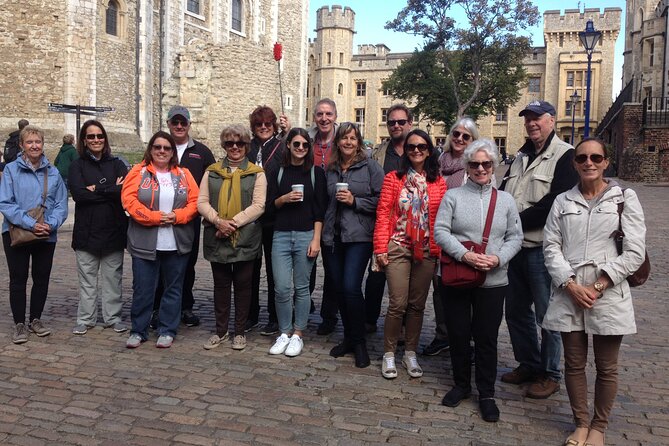
The advertised duration is about three hours. That is enough time for a strong first visit, but not enough for an unhurried examination of every room and story inside the Tower. You will get the broad structure of the place, the major highlights, and guidance through the most important historical points.
The first portion is listed as about two hours and includes entry to the Tower, Crown Jewels, White Tower, and armory. The White Tower history section is listed as about one hour, covering royal development, prisoners, and the mystery of the princes. In practice, expect the visit to involve movement between several areas rather than sitting in one place.
Wear shoes that can handle cobblestones, stairs, hills, inclines, and declines. The tour is not recommended for people with limited mobility, and the information specifically advises participants to be in good health. It operates in all weather, so bring clothing suited to London conditions.
The meeting point is Starbucks Coffee at 3 Tower Place, London EC3R 5BT. The tour ends at the Tower of London, EC3N 4AB, so you should not expect hotel pickup, transportation, food, or drinks to be provided. The start and finish are close to a major London attraction, which makes it simple to continue sightseeing afterward, but you must arrange your own way to the meeting point.
Anyone under 18 must be accompanied by someone aged 18 or older. The tour is near public transportation, and confirmation is provided at booking.
Is $122.49 a fair price?
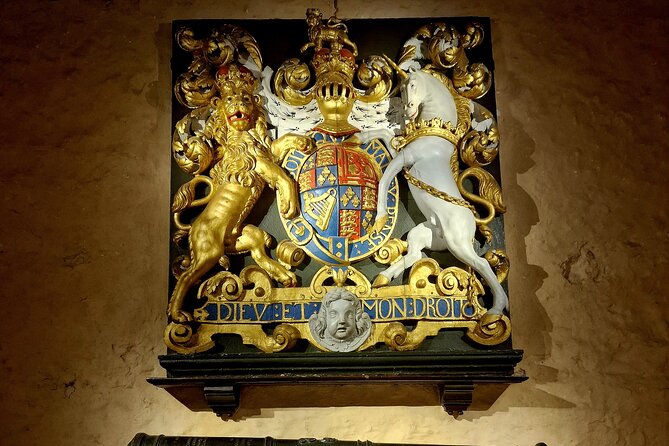
At $122.49 per person, this is not a budget admission ticket. I would judge the price by what it saves you from arranging yourself: timed entry, Crown Jewels admission, access to the White Tower and armory, and a Blue Badge guide who ties the pieces together.
The value is strongest if you want history explained as you walk. A self-guided visit may suit you better if you prefer to move at your own pace, spend a long time with the jewels, or return to favorite sections. The group size of up to 30 can also make the tour feel less intimate than a private guide.
Still, the Tower contains enough royal names and competing stories to justify help on a first visit. The guide’s knowledge is the feature that can turn the site from a grand old fortress into a clear story about conquest, monarchy, imprisonment, and public power.
The tour is booked an average of 82 days ahead, which suggests that planning early is sensible, especially if your London dates are fixed. Free cancellation is available until 24 hours before the start time. Changes or cancellations inside that window are not accepted for a refund. Poor weather or failure to reach the minimum number of participants can lead to a different date or a full refund.
Who should book this Tower tour?
I would choose this experience if you are visiting the Tower for the first time and want the Crown Jewels to fit into a larger story. It suits adults, families with older children, and anyone who likes royal history with a darker edge.
You should also book it if you enjoy asking questions. The guide is not just there to point out rooms. You can ask about the succession disputes, the prisoners, the princes, the Tudor period, or the Tower’s changing purpose.
I would hesitate if you dislike group tours, need a fully accessible route, or want to spend the entire visit at your own pace. The physical demands are real, and the price makes less sense if you plan to skip the guided explanations.
For most first-time visitors who want a structured look at London’s most famous fortress, I think the tour earns its place in a busy sightseeing plan. The Crown Jewels deliver the sparkle, but the White Tower, Lower Wakefield Tower, chapels, battlements, and royal stories give you the reason to stay.
FAQ
How long does the Tower of London tour last?
The experience lasts approximately three hours.
What is included in the ticket?
The ticket includes guaranteed timed access to the Tower of London, entry to the Crown Jewels exhibition, the White Tower, the Tower Armory, St Peter ad Vincula, St John’s Chapel, the battlements, Raven House, and Lower Wakefield Tower.
Which Crown Jewels can I see?
The exhibition includes the Imperial State Crown, the Koh-I-Noor Crown, and the Sovereign’s Sceptre with Cross, along with about 100 objects and more than 23,000 gemstones.
Is a guide included?
Yes. The tour is led by a Blue Badge-qualified guide, and you can ask the guide questions during the visit.
Where does the tour begin?
The meeting point is Starbucks Coffee at 3 Tower Place, London EC3R 5BT, United Kingdom.
Where does the tour end?
The tour ends at the Tower of London, London EC3N 4AB.
Is the tour suitable for people with limited mobility?
The tour is not recommended for people with limited mobility. It includes considerable walking over uneven surfaces, cobblestones, hills, inclines, declines, and stairs.
Can I cancel for a refund?
You can cancel up to 24 hours before the experience start time for a full refund. Cancellations or changes made less than 24 hours before the start time are not accepted for a refund.
Just added around London
- London Private Jack The Ripper Tour★ 5.0 · 9 reviews
- Private Spy Walking Tour of London★ 5.0 · 6 reviews
- Private Shoreditch Street Photography Workshop★ 4.5 · 4 reviews
- Private Sightseeing Walking Tour of The City Of London★ 5.0 · 3 reviews
- Private 2.5 Hour Taxi Tour of London – London’s Greatest Bits!★ 5.0 · 4 reviews
- Private Round Trip Transfer between London Airports and Hotel★ 3.5 · 56 reviews
- Shakespeare London Walking Tour★ 5.0 · 26 reviews
- Private Prison Van Escape Game – London Immersive Experience★ 4.0 · 15 reviews
Royal Palaces, compared.
Tower of London and Crown Jewels Exhibition Ticket
Read our review →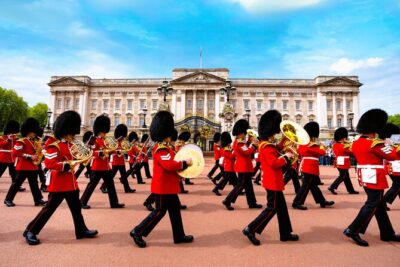
Buckingham Palace Entrance Ticket & Changing of the Guard Tour
Read our review →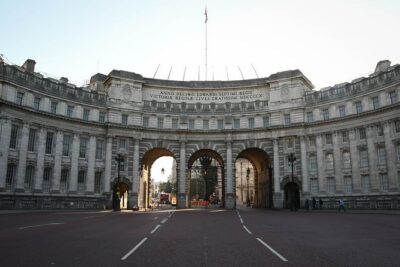
London’s Palaces & Parliament Tour (See Over 20+ London Top Sights)
Read our review →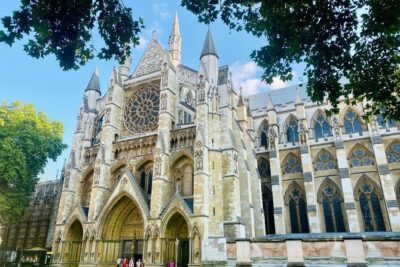
Walking Tour of London Westminster Abbey, Big Ben, Buckingham
Read our review →
Downton Abbey Village, Blenheim Palace and Cotswolds Day Trip from London
Read our review →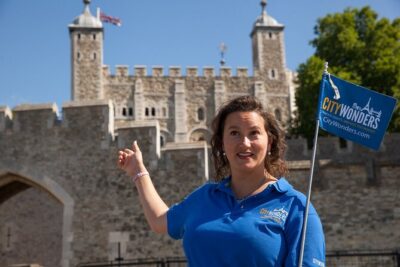
Tower of London: Crown Jewels & Beefeater Opening Ceremony
Read our review →
Changing of the Guard Guided Tour at Buckingham Palace
Read our review →
Browse the lists this tour appears in