
Reviewed · BIRMINGHAM TOURS
Digbeth, Public Art & Peaky Film
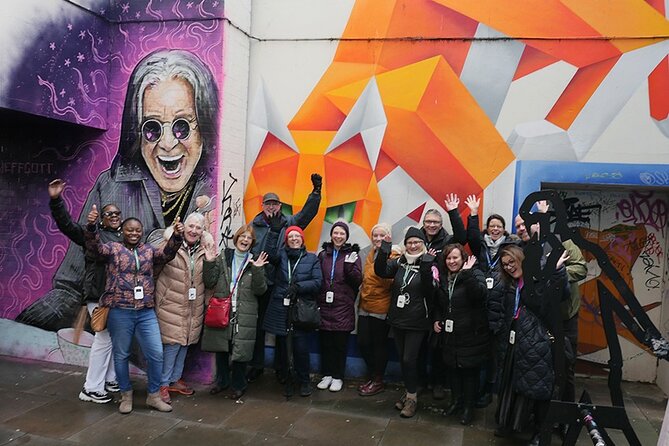
Digbeth is where Birmingham’s past and present collide. On this walk, local author Jonathan Berg leads you from the Bullring into streets covered with murals, graffiti, and public art, while explaining how the city grew from its early beginnings into the place you see today. The Peaky Blinders connection adds a bit of film-world fun, but the art and local history are the real draw.
I like two things in particular: the audio receiver, which lets you hear Jonathan on busy streets, and the way the tour reaches corners of Digbeth you could easily miss alone. I also like that the tour does not treat Birmingham as a museum piece. It shows an older industrial district that is still changing.
The main consideration is pace. You cover a fair amount of ground in about two hours, and Jonathan is described as a fast walker. Bring sensible shoes, and remember that this is an outdoor walking tour in all weather.
Key points at a glance
- Jonathan Berg’s local stories: Your guide is a Birmingham author who connects the city’s beginnings, public art, and modern changes.
- Digbeth’s street art: Expect murals and painted walls in unexpected places, with time to look at different artists and styles.
- A helpful audio system: The live receiver and earphones allow you to keep listening even if the group stretches out on busy streets.
- The Custard Factory: Spend time in the former home of Bird’s custard, now an artistic and bohemian part of Digbeth.
- A Peaky Blinders backdrop: Walk through atmospheric streets associated with filming for the Peaky Blinders feature film.
- Good value for a city introduction: At $19.43 for about two hours and 15 minutes, the tour offers a focused introduction to an area many people would not find easily on their own.
Why Digbeth is the right place to explore Birmingham
Many first visits to Birmingham begin around the Bullring, Grand Central, and the main shopping streets. Those areas are easy to reach, but they do not explain the whole city. Digbeth gives you a different view, with older streets, industrial traces, creative spaces, and public art layered together.
That contrast is the point of this tour. You begin beside the modern Bullring Shopping Centre, then walk toward an area that feels less polished and more visually unpredictable. Jonathan’s job is to connect those changes, so you are not simply looking at painted walls without context.
I like tours that help you notice a city after the guide has gone. This one gives you a way to read Birmingham’s public art, including the difference between graffiti and commissioned street art. You may not remember every artist’s name, but you should leave more alert to styles, murals, and the way art changes an ordinary street.
A few more Birmingham days out to weigh up
- Entry ticket to Hoo Zoo and Dinosaur World in Telford
★ 5.0 · 591 reviews - Cadbury World Entry Ticket
★ 3.0 · 524 reviews - Birmingham Walking Tour: Canals, Victorians & Today (1:30pm)
★ 5.0 · 346 reviews
Starting by the Bullring and St. Martin’s Church
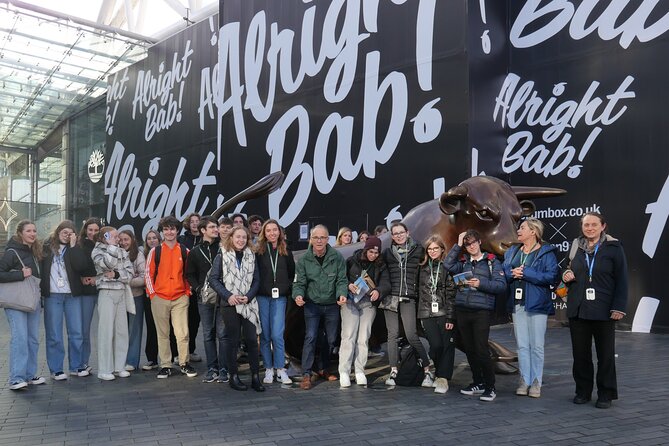
The meeting point is by the Bull statue at the Bullring, with a 10:30 am start. This is a practical place to meet because the Bullring is central and well served by public transport. Give yourself enough time to find the statue, particularly if you are coming through the shopping centre.
The opening walk takes in St. Martin in the Bull Ring, Birmingham’s historic church. The stop itself is brief, about five minutes, so do not expect a full church visit or an extended architectural lecture. Instead, it helps set up the larger story: the old city is still present beside the modern retail centre.
This short beginning also means you reach Digbeth fairly quickly. If you want a leisurely morning with long indoor stops, this is not that sort of outing. It is a moving walking tour, with the guide talking while you make your way through the city.
Entering Digbeth’s older streets
The main part of the tour lasts about an hour in Digbeth. Here Jonathan explains the origins of Birmingham and relates them to the district you are walking through. The experience works best if you pay attention to the surroundings as well as the commentary, since the streets themselves provide much of the setting.
Digbeth can feel atmospheric, particularly in areas where older buildings, painted walls, and newer creative uses sit close together. The tour presents the district as both historic and current. You learn how Birmingham began, then see how the area is being used and reimagined today.
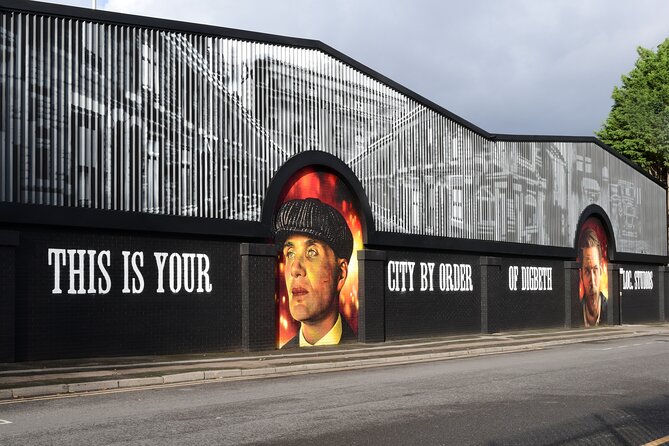
This is also where the Peaky Blinders connection comes in. Some of Digbeth’s streets will form the backdrop for filming the Peaky Blinders feature film. That does not turn the tour into a television-location pilgrimage, and you should not expect sets or actors. It is better understood as an extra layer of interest while you explore a district that already has its own character.
For fans of the series, the connection adds atmosphere. For everyone else, the streets, public art, and Birmingham stories still carry the tour.
Reading Birmingham’s public art
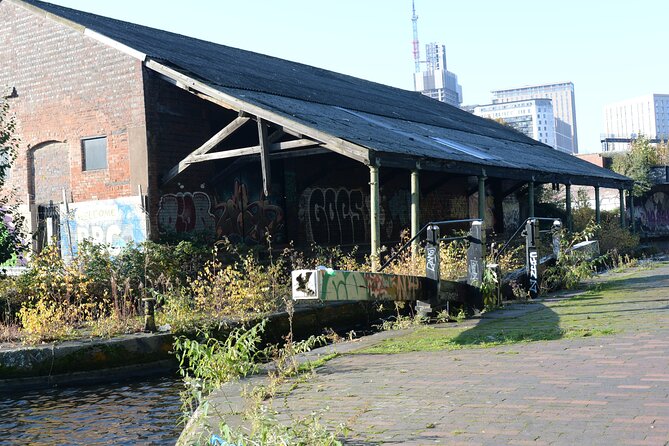
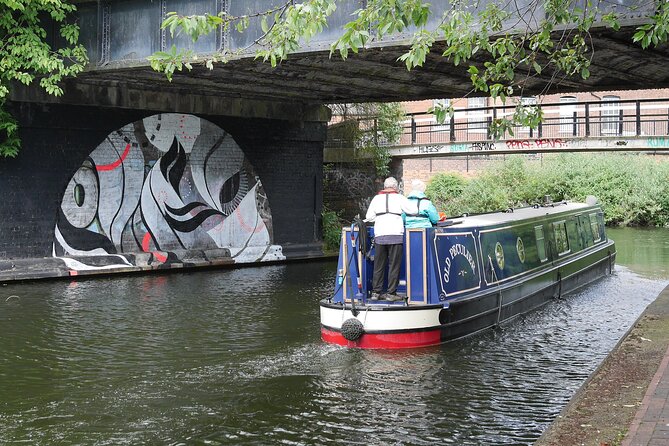
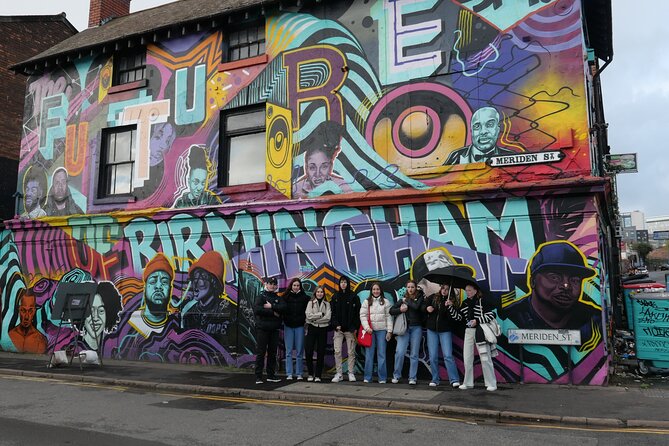
The art is the strongest reason to choose this experience. Murals appear in places you might walk past without noticing, including unexpected corners of Digbeth. Jonathan’s commentary helps you look more closely at the work and understand that street art is not all one thing.
The tour also covers Birmingham’s art scene from the Victorian era to the present day. That broad time span matters because it places today’s murals in a longer civic story. You are not just stopping for photographs. You are hearing how art has appeared in public spaces across different periods.
I especially like the practical effect of the walk. Digbeth is an area where you could wander for an hour and see plenty, but without knowing where to look, you might miss the best pieces. The route gives you a framework and points out work that is easy to overlook.
The art will not appeal to everyone. If you prefer formal galleries, historic interiors, or a fixed sightseeing route, the painted walls may feel less rewarding. This tour suits you better if you enjoy finding visual details outdoors and are willing to consider art in rougher, changing surroundings.
Same part of England, a completely different sort of day:
- Discovering Birmingham 2 hour Walking Tour to the Jewellery Quarter
★ 5.0 · 333 reviews - Birmingham Slogging Gangs Walking Tour with Edward Shelby
★ 4.5 · 306 reviews - Birmingham City Centre Daily Walking Tour (10:30am & 2pm)
★ 5.0 · 265 reviews - SEA LIFE Birmingham Admission Ticket
★ 3.0 · 218 reviews
The Custard Factory and Bird’s legacy
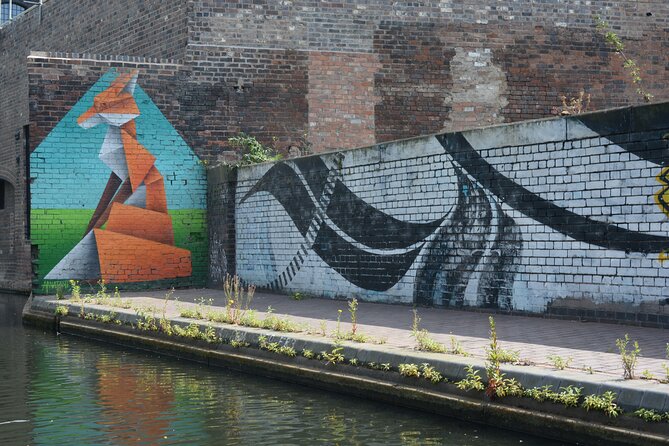
The Custard Factory is one of the clearest landmarks on the route. It was the home of Bird’s custard and is now a bohemian part of Digbeth with graffiti art in surprising locations. The stop lasts about 15 minutes, giving you time to look around while Jonathan explains its place in the area.
This is a good example of the tour’s mix. A product associated with Birmingham’s industrial past leads into a creative district shaped by art and new uses. The building’s identity is not presented as a sealed historical exhibit. It belongs to the ongoing story of Digbeth.
Do not expect a long guided visit inside a museum or a detailed food history of custard. The value is in seeing how a former industrial site fits into the modern district. If you enjoy places that show old and new uses side by side, this should be one of the more memorable stops.
Why the live audio receiver matters
A small but important feature is the live audio receiver. You listen through earphones while Jonathan speaks, so you can hear him on busy streets and set your own volume. This is especially useful when the group spreads out around a mural or when you stop to take photographs.
You need to bring earphones with a 3.5 mm jack. If you do not have a suitable pair, the tour can provide them for a donation or at a stated cost of £1. The information supplied is not entirely consistent on that point, so bringing your own pair is the simplest choice.
The system also gives you a little freedom. You do not have to remain shoulder to shoulder with the group to catch every word, though you still need to stay with the route and listen for instructions. It is a thoughtful setup for a walking tour that moves through open streets rather than quiet courtyards.
Pace, group size, and physical effort
The tour lasts about two hours and 15 minutes and can include up to 35 people. That is a moderate-sized group, not a private walk. The receiver helps keep the commentary clear, but you should still expect a shared experience with occasional pauses while the group gathers.
Several parts of the route involve steady walking, and the full tour covers a fair amount of ground. The stated requirement is a moderate level of physical fitness. You do not need to be an athlete, but comfortable shoes are sensible, and you should be prepared to keep moving.
The pace may be brisk. Jonathan has been described as a speedy walker, though the route also includes chances to stop, examine art, and ask questions. If you walk more slowly, tell the guide early and use the audio receiver to keep up with the commentary when possible.
The tour operates outdoors, so rain can affect your comfort. Bring weatherproof clothing rather than assuming the forecast will hold. The route is more enjoyable when you can focus on the walls and stories instead of worrying about wet clothes.
Grand Central, Centenary Square, and the wider city picture
The tour information highlights Centenary Square and Grand Central as parts of the Birmingham exploration, while the detailed route centres on the Bullring, St. Martin’s, Digbeth, and the Custard Factory. These central landmarks help connect Digbeth to the wider city.
Grand Central shows the modern side of Birmingham near the start and finish. Centenary Square adds another central civic setting to the route’s picture of the city. The result is not a single-neighbourhood walk in isolation. You get a sense of how the creative and older streets of Digbeth relate to Birmingham’s more formal central spaces.
The tour usually finishes back at the Bullring, at the same general area where it begins. That makes it easy to continue shopping, find lunch, or use public transport afterward. It also avoids leaving you in an unfamiliar part of the city at the end.
Is $19.43 good value?
At $19.43 per person, this is a reasonably priced way to spend a morning in Birmingham. You are paying for a live guide, a planned route, the audio equipment, and access to local context that would take effort to assemble yourself.
The value is strongest if you are new to Birmingham or curious about Digbeth but unsure where to start. The guide’s local authorship adds something beyond a standard orientation walk, particularly because the route combines the city’s origins with its present public art.
It is less compelling if you only want a quick list of film locations or a short photo walk. The Peaky Blinders link is one ingredient, not the whole meal. You are paying for a history and art walk that happens to pass through streets connected with the upcoming feature film.
The audio receiver and the amount of ground covered also improve the value. You can hear the commentary without crowding around Jonathan, and the route gives you access to art you might not locate alone.
Who will enjoy this walk most?
I would choose this tour if you like street art, local history, photography, or films with a strong sense of place. It also suits repeat visitors who have already seen Birmingham’s main central sights and want a less obvious side of the city.
It is a good option for locals, too. The route is designed to reveal parts of Birmingham that even long-term residents may not know well. You may already recognise the Bullring, but Digbeth can offer a fresh view of the city only a short walk away.
Families with older children may enjoy the visual side of the tour, though the brisk pace and two-hour-plus length may not suit young children. People using service animals can take part. The tour is offered in English, so you should be comfortable following spoken commentary in English.
I would hesitate to recommend it if you want indoor shelter, long breaks, or a relaxed stroll with little commentary. This is an active, information-filled walk with a strong focus on looking, listening, and keeping up.
Practical details before you book
The tour starts at 10:30 am beside the Bull statue at the Bullring, Birmingham B5 4BU. It usually ends back at the Bullring, which makes planning the rest of your day straightforward.
Bring 3.5 mm earphones for the audio receiver. If you need a pair supplied, the operator can provide them for £1 or a donation, depending on the arrangement on the day. Comfortable shoes and clothing suited to the weather are sensible choices.
Confirmation is issued at booking. The tour is near public transportation, allows service animals, and accepts up to 35 people. Free cancellation is available if you cancel at least 24 hours before the start time. Changes or cancellations inside that window are not accepted for a refund.
Should you book the Digbeth walk?
Book it if you want Birmingham explained through its streets rather than only through its big buildings. Jonathan Berg’s lively local commentary, the audio system, and the concentration of public art make this a strong introduction to Digbeth.
The main reasons to skip it are a need for a slow pace, indoor stops, or a tour focused only on Peaky Blinders. For everyone else, $19.43 buys a useful two-hour-plus orientation to a part of Birmingham that is easy to miss and rewarding to see with someone who knows where to look.
FAQ
Where does the Digbeth, Public Art & Peaky Film tour start?
The tour starts beside the Bull statue at the Bullring in Birmingham, B5 4BU.
What time does the tour begin?
The stated start time is 10:30 am.
How long does the walking tour last?
The tour lasts approximately two hours and 15 minutes.
Where does the tour finish?
It usually finishes back at the Bullring Shopping Centre, close to the starting point.
Do I need to bring earphones?
Yes. Bring earphones with a 3.5 mm jack for the live audio receiver. Earphones may be supplied for a donation or at a stated cost of £1.
Is the tour suitable for people with limited fitness?
The activity asks participants to have a moderate level of physical fitness. It is a walking tour covering Digbeth and other central Birmingham locations, so comfortable shoes are recommended.
Just added around Birmingham
- Heathrow Airport to Birmingham private taxi transfers★ 4.5 · 20 reviews
- Fun, Flexible Treasure Hunt Around Birmingham with Cryptic Clues & Hidden Gems★ 5.0 · 167 reviews
- Birmingham Gangs Nighttime Historical Walking Tour with Pub Stops★ 5.0 · 53 reviews
- Private Birmingham Ghosts and Gallows Walking Tour★ 5.0 · 5 reviews
- Pride History of Birmingham Tour★ 5.0 · 3 reviews
- Taste of Shrewsbury Food and Drink Tour with Guide★ 5.0 · 22 reviews
- On the Origins of Charles Darwin: A Self-Guided Audio Tour of Shrewsbury★ 4.5 · 16 reviews
- Birmingham Ghost Hunt: Haunted Self-Guide Tour & Quest★ 4.5 · 37 reviews
Birmingham Tours, compared.

Entry ticket to Hoo Zoo and Dinosaur World in Telford
Read our review →
Birmingham Walking Tour: Canals, Victorians & Today (1:30pm)
Read our review →
Discovering Birmingham 2 hour Walking Tour to the Jewellery Quarter
Read our review →
Birmingham Slogging Gangs Walking Tour with Edward Shelby
Read our review →
Birmingham City Centre Daily Walking Tour (10:30am & 2pm)
Read our review →
Fun, Flexible Treasure Hunt Around Birmingham with Cryptic Clues & Hidden Gems
Read our review →Browse the lists this tour appears in