
Reviewed · WALKING TOURS
Birmingham Walking Tour: Canals, Victorians & Today (1:30pm)
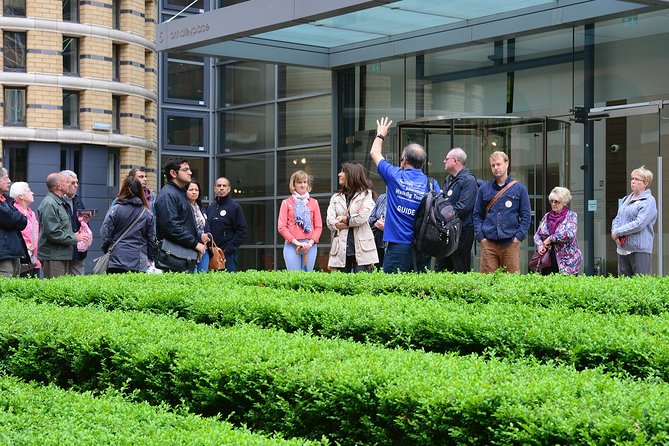
Birmingham’s story is easiest to grasp on foot, where old canals, Victorian civic buildings, postwar concrete, and shiny new developments sit within a short walk. This tour gives you that useful city-center overview, beginning at the Library of Birmingham and looping through Gas Street Basin, Victoria Square, the ICC, the Mailbox, and other key sights.
I like the clear city orientation and the way guides such as Jonathan and Michael connect architecture with Birmingham’s past and present. I also like the live audio receiver, which helps you hear the guide without pressing close to a group. The main drawback is that the canal section is fairly short, so you should not book this expecting a canal-focused walk.
- Gas Street Basin in 15 minutes: See the atmospheric center of Birmingham’s canal network and learn why waterways mattered to the city.
- A broad city-center route: Cover the Library of Birmingham, ICC, Brindleyplace, Victoria Square, the Mailbox, the Town Hall, and more.
- Guides with personality: Jonathan is known for fast-paced storytelling and humor, while Michael brings years of experience explaining Birmingham to students.
- A useful first-day tour: The route helps you get your bearings before exploring Birmingham on your own.
- Modern and Victorian Birmingham together: Compare grand civic buildings with converted industrial sites and new developments.
- Good value at $20.80: For about two hours of guided sightseeing, the price is modest, especially if you are new to the city.
Why This Walk Works as a Birmingham Introduction
Birmingham can take a little work to understand. Its center has canals, Victorian monuments, modern public buildings, converted industrial sites, and large redevelopment projects, but they do not always announce their connection to one another. A guide helps you read the city instead of simply passing through it.
This two-hour walk is designed as a broad introduction rather than a close inspection of one museum or neighborhood. You move through several central districts, stopping often for stories and explanations. That makes it a good first activity in Birmingham, especially if you have just arrived and want a sense of direction.
The tone depends partly on your guide. Jonathan is energetic, quick with facts, and fond of the occasional dad joke. Michael is also warm and engaging, with a long background explaining the city to students at Birmingham City University. Both bring more than dates and building names. You can expect discussion of how Birmingham developed, why parts of the city look as they do, and how older buildings fit into current plans.
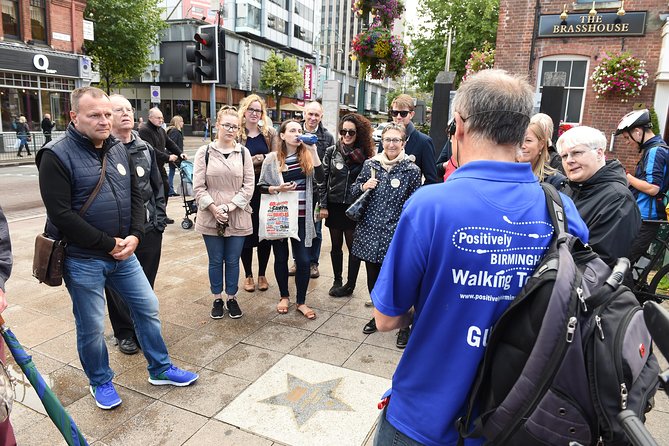
The route is limited to a maximum of 35 people, though some departures may feel much smaller. A small group makes it easier to ask questions and hear the commentary. The radio system is useful if the group is larger or the streets are noisy. You use your own earphones with a 3.5mm socket, or a new pair can be provided.
Starting at the Library of Birmingham
The Library of Birmingham is a sensible meeting point and an attraction in its own right. You begin in Centenary Square, then return here at the end, so you do not need to work out a new location after the walk.
The library provides an immediate lesson in Birmingham’s modern identity. It is a major public building and one of the city’s key attractions, not just a practical place to meet. Your guide uses it as a starting point for discussing the way Birmingham has changed and how the city presents itself today.
Allow a few minutes to arrive before the 1:30 p.m. start. The tour does not include an admission ticket to an interior attraction, so the value comes from the guide’s commentary and the number of central sights covered rather than from formal museum entry.
More Walking Tours in Birmingham
- Discovering Birmingham 2 hour Walking Tour to the Jewellery Quarter
★ 5.0 · 333 reviews - Birmingham Slogging Gangs Walking Tour with Edward Shelby
★ 4.5 · 306 reviews - Birmingham City Centre Daily Walking Tour (10:30am & 2pm)
★ 5.0 · 265 reviews
Symphony Hall, the ICC, and Brindleyplace
From the library, the walk heads toward the International Convention Centre and Symphony Hall. Here, the guide explains the role these buildings play in the city and how this part of central Birmingham has developed.
You then reach Brindleyplace, a modern mixed-use area with offices, restaurants, public spaces, and canalside connections. The stop is not just an architecture lesson. It helps you see how Birmingham has reused and reshaped former industrial areas for present-day city life.
I find this part especially useful because it sets up a contrast that repeats throughout the walk. Birmingham is not a preserved old town. It is a working city that has repeatedly replaced, adapted, and reimagined parts of itself. The guide helps you understand those changes instead of treating every new building as an isolated sight.
The ten-minute stops are brief. You get a clear explanation, but not an extended architectural tour or time to explore every building. If a particular site catches your eye, make a note and return later.
Gas Street Basin and the Short Canal Section
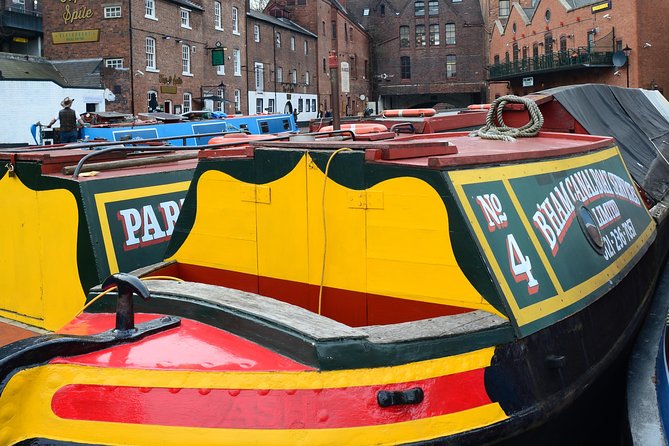
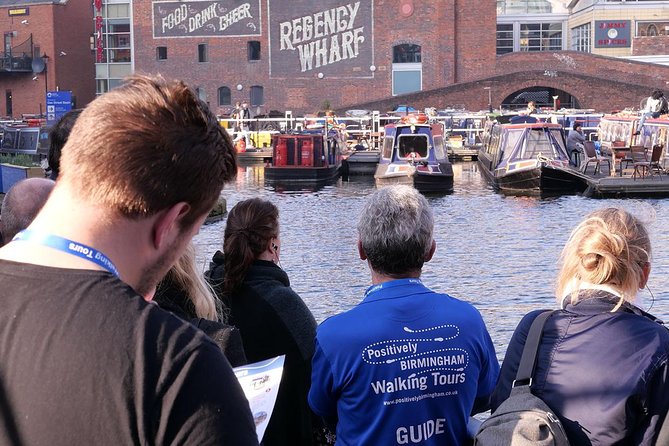
Gas Street Basin is the atmospheric center of the walk. It is where the canal network, modern development, and old industrial character come together in a compact area.
The tour spends about 15 minutes here, the longest stop listed on the route. You consider the arrival and importance of the canals and their part in Birmingham’s growth. The setting gives the history some physical meaning: instead of hearing only about transport and industry, you are beside the waterways that helped make the city what it became.
This is one of the strongest parts of the experience for anyone who wants a first look at Birmingham’s canals. You can see the water, bridges, towpaths, and nearby buildings while the guide explains their place in the city.
Keep your expectations in check, though. The walk does not spend most of its time beside the canals, and one participant felt the tour was not canal-focused enough. I agree that the title may suggest a longer waterside section than you actually get. Book it for a general Birmingham introduction that includes Gas Street Basin, not for an extended canal stroll.
Victoria Square and Birmingham’s Victorian Ambitions
Victoria Square shifts the focus to public art, civic architecture, and the growth of Birmingham during the Victorian period. This is one of the key places to understand the city’s ambition and public face.
The guide also links the square to Birmingham’s current development. That connection matters. You are not being shown a frozen Victorian scene. You are looking at an active central space where old buildings, public art, traffic routes, and new projects all meet.
Birmingham Town Hall is nearby. Dating from 1834, it is the oldest building in Victoria Square and an important reminder of the city’s nineteenth-century confidence. The stop lasts around five minutes, enough for the main story and a look at the exterior, but not an interior visit.
If you enjoy grand civic buildings, this section will be rewarding. If your main interest is street art, shopping, or canals, it may feel more formal. The guide’s stories help keep it lively, particularly when the discussion moves beyond dates and explains how the buildings were used.
Same part of England, a completely different sort of day:
- Entry ticket to Hoo Zoo and Dinosaur World in Telford
★ 5.0 · 591 reviews - Cadbury World Entry Ticket
★ 3.0 · 524 reviews - SEA LIFE Birmingham Admission Ticket
★ 3.0 · 218 reviews - Fun, Flexible Treasure Hunt Around Birmingham with Cryptic Clues & Hidden Gems
★ 5.0 · 167 reviews
Chamberlain Square and Birmingham Museum & Art Gallery

At Chamberlain Square, the emphasis turns toward the future. The guide considers how Birmingham is changing and how the city is planning for its next phase.
You also pass Birmingham Museum & Art Gallery, with its impressive 1880s double portico. The walk only pauses briefly at the entrance, so you will not see the museum collections on this tour. Think of this as an architectural preview and a useful place to mark for a separate visit.
This is a recurring pattern on the route. You see many important buildings from outside, hear why they matter, and decide later where you want to spend more time. That makes the walk efficient, but it also means you should not expect admission-based sightseeing.
The Mailbox, The Cube, and the Ikon Gallery
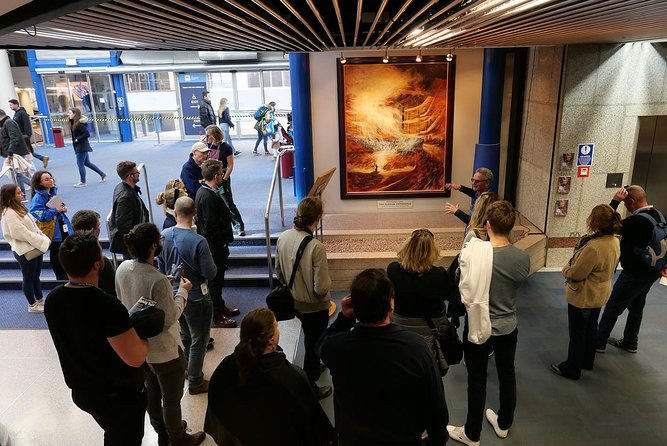
The Mailbox offers a clear example of Birmingham’s ability to reuse older structures. The former post office sorting office has been converted into a mixed-use development, including the BBC’s Birmingham headquarters.
The guide uses the site to explain how a former working building can gain a new role. You see restaurants, offices, and other modern uses occupying a place that once served a very different purpose. It is a practical example of urban change rather than a grand historical monument.
Nearby, The Cube forms another part of the modern skyline. The stop itself is short, but the building is associated with some of the best city views from its upper floors. The tour does not promise a visit to those viewing areas, so treat The Cube as an exterior sight and a suggestion for future exploration.
The Ikon Gallery adds another layer. It was originally built as a school and is one of more than 40 buildings designed by the architects Martin and Chamberlain. That detail gives you a sharper sense of Birmingham’s architectural character. A building that now serves contemporary art once had a very different public purpose.
This section is particularly good for people who like adaptive reuse and modern city planning. You get several examples close together, and the guide places them within the wider story of Birmingham rather than presenting them as unrelated photo stops.
The Hall of Memory and the ICC Mall
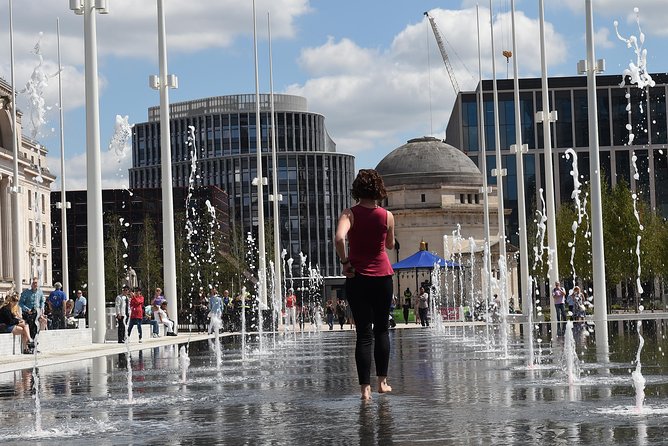
The Hall of Memory is an Art Deco memorial built in 1925 to remember those who died in the First World War. It now includes later conflicts as well. The building contains Art Deco features, including tablets by William Bloye.
This is a quieter stop than the squares and canals. Take a moment to look closely at the design, since the details can be easy to miss during a walking tour. The guide’s explanation adds context to the memorial and its changing role over time.
The route then passes through the ICC Mall, the main connection from Centenary Square toward the canalside. This is another practical orientation point. By now, you will have a better idea of how the library, convention center, canal district, and central squares fit together.
The return to the Library of Birmingham gives the walk a neat finish. You end where you began, which is convenient if you plan to visit the library, continue sightseeing in Centenary Square, or make your way to another part of the city.
Pace, Group Size, and the Audio System
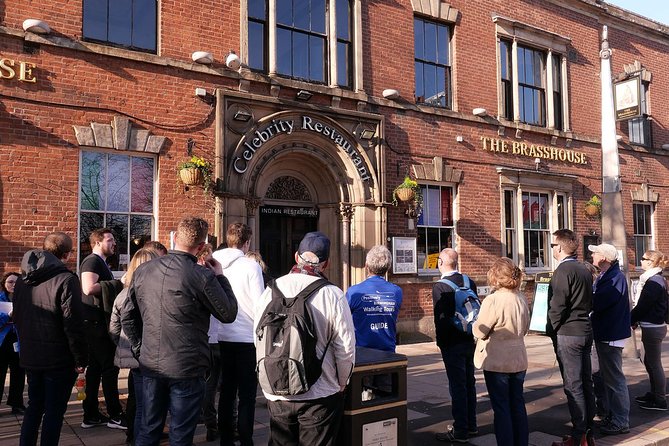
The tour lasts about two hours and requires a moderate level of physical fitness. You walk between stops and stand while the guide speaks, but the route is broken up by regular pauses.
The pace is generally steady. Some guides, especially Jonathan, speak quickly and cover plenty of ground. That suits you if you want to see a lot in a short time. If you prefer slow walks with long pauses, this may feel brisk.
The audio equipment is one of the practical strengths. Each person may receive a receiver, and the guide wears a radio transmitter. Bring earphones with a 3.5mm connection if you have them. New earphones may be supplied, and the system may not be used on every departure.
Service animals are allowed, and the meeting point is near public transportation. The tour is conducted in English. Since the activity depends on outdoor walking and requires reasonable mobility, check the weather before setting out and wear shoes suited to city streets.
Price, Timing, and Who Gets the Most Value
At $20.80 per person, the tour is fairly priced for a guided two-hour city walk. You are paying for a local guide, a planned route, commentary at a dozen central locations, and the convenience of returning to the starting point. No paid attraction is part of the experience, so the value depends on how much you want interpretation and orientation.
I think the price works best for first-time visitors, weekend guests, and people who want a quick overview before choosing where to return. It also suits Birmingham residents who know the streets but want more context about the buildings and redevelopment around them.
You may get less value if you already know central Birmingham well or want detailed interior visits. The tour moves past the museum, Town Hall, Ikon Gallery, The Cube, and other sights rather than taking you inside. It is also not the right choice if the canals are your only interest.
The 1:30 p.m. start gives you a useful half-day option. You can spend the morning at another attraction, have lunch, and use the walk to organize the rest of your afternoon. Since the experience is often booked around 16 days ahead, reserving in advance is sensible if your schedule is fixed.
You can cancel for a full refund up to 24 hours before the start time. Changes or cancellations inside that window are not accepted for a refund. Poor weather may lead to a different date or a full refund.
My Call: Book It for Stories and City Orientation
I would book this walk if I were arriving in Birmingham for the first time and wanted a lively introduction without spending a large amount. The combination of canals, Victorian civic buildings, memorial architecture, converted industrial sites, and modern developments gives you a useful map of the city.
The strongest reason to go is the guiding. Jonathan and Michael bring humor, personal experience, and a real interest in explaining how Birmingham works. The walk can also suit repeat visitors because it adds background to streets and buildings you may already have seen.
Book something else if you want a long canal walk, museum entry, or a slow architecture-only tour. For a fast, friendly overview with strong local character, this two-hour route is a sensible start.
FAQ
Where does the Birmingham walking tour begin?
The tour begins at the Library of Birmingham, Centenary Square, Birmingham B1 2ND, UK.
What time does the tour start?
The tour starts at 1:30 p.m.
How long does the walking tour last?
The tour lasts approximately two hours.
Where does the tour finish?
The activity ends back at the Library of Birmingham meeting point.
What language is the tour offered in?
The tour is offered in English.
How much does the tour cost?
The listed price is $20.80 per person.
What sights are included on the route?
The route includes the Library of Birmingham, the ICC, Symphony Hall, Brindleyplace, Gas Street Basin, Victoria Square, Chamberlain Square, Birmingham Museum & Art Gallery, The Mailbox, The Cube, the Ikon Gallery, the Hall of Memory, the ICC Mall, and Birmingham Town Hall.
Is the tour focused mainly on Birmingham’s canals?
No. Gas Street Basin receives a 15-minute stop, but the tour also covers Victorian buildings, public art, memorial architecture, modern developments, and city planning.
How many people can join the tour?
The maximum group size is 35 people.
Is an audio system provided?
A live audio system may be used. Each person can be loaned a receiver, and you may bring earphones with a 3.5mm socket. A new pair may be provided if needed.
Can I cancel for a refund?
You can cancel at least 24 hours before the start time for a full refund. Cancellations or changes made less than 24 hours before the start time are not refunded or accepted.
Just added around Birmingham
- Heathrow Airport to Birmingham private taxi transfers★ 4.5 · 20 reviews
- Fun, Flexible Treasure Hunt Around Birmingham with Cryptic Clues & Hidden Gems★ 5.0 · 167 reviews
- Birmingham Gangs Nighttime Historical Walking Tour with Pub Stops★ 5.0 · 53 reviews
- Private Birmingham Ghosts and Gallows Walking Tour★ 5.0 · 5 reviews
- Pride History of Birmingham Tour★ 5.0 · 3 reviews
- Taste of Shrewsbury Food and Drink Tour with Guide★ 5.0 · 22 reviews
- On the Origins of Charles Darwin: A Self-Guided Audio Tour of Shrewsbury★ 4.5 · 16 reviews
- Birmingham Ghost Hunt: Haunted Self-Guide Tour & Quest★ 4.5 · 37 reviews
Walking Tours, compared.
Oxford University Walking Tour With University Alumni Guide
Read our review →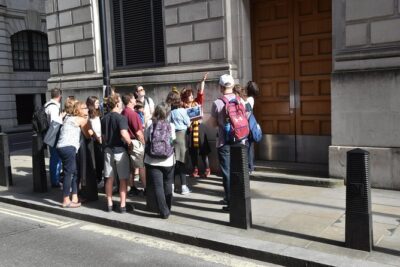
Tour for Muggles The Ultimate Harry Potter Walking Tour in London
Read our review →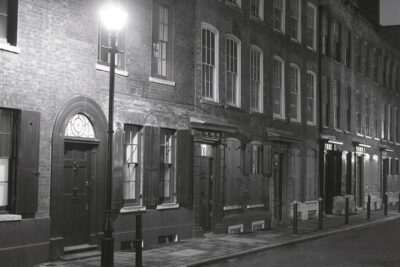
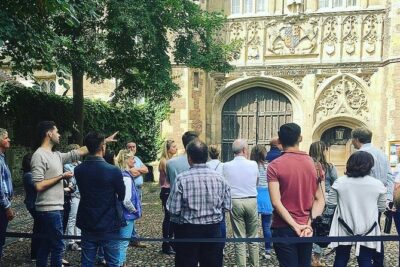
Cambridge University Walking Tour by Alumni™ Kings College Option
Read our review →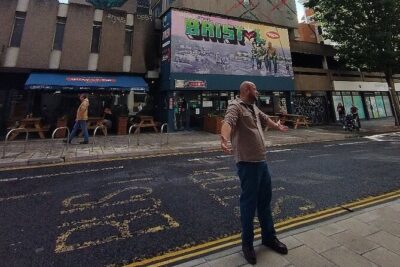
Blackbeard to Banksy – The Ultimate Walking Tour of Bristol
Read our review →
Air Raid Shelter + St. Nicholas Market Walking Tour
Read our review →
Walking Tour of Bath with Blue Badge Tourist Guide
Read our review →
Changing of the Guard Guided Walking Tour in London
Read our review →Browse the lists this tour appears in