
Reviewed · CITY TOURS
Money and Power in the City Sightseeing Tour
The most interesting thing here is the way London’s financial district becomes a story about people, not just buildings. In two hours, you follow money and power from Roman beginnings through medieval guilds, East India trade, coffeehouse speculation, and the modern stock market, with St Paul’s Cathedral watching over the route.
I like the small group of no more than eight, which gives Terry room to answer questions and adjust his explanations. I also like the clear historical thread: you are not simply ticking off the Royal Exchange and Bank of England, but seeing how coffeehouses, trade, politics, and finance grew together.
The main consideration is pace. Two hours covers a lot of ground, and the tour is built around outdoor sightseeing on foot. You will see important locations and hear their stories, but this is not a museum visit with long indoor stops.
Key points to know before booking

- A compact City of London walk: The route takes about two hours and links Roman, medieval, imperial, and modern financial London.
- A genuinely small group: The maximum is eight people, a useful size for questions and personal attention.
- Terry brings the story together: His explanations connect early London with the financial and political forces shaping the city today.
- Coffeehouse speculation gets its own moment: You see the site linked to the first stock market and walk through Exchange Alley.
- The route ends near St Paul’s: The final stretch pairs the modern stock market with one of London’s grandest churches.
- Good value for a history-minded visitor: At $41.14 per person, the price pays for focused guiding rather than entry to attractions.
Why this City of London tour works

London’s City is easy to misunderstand. Today, it can feel like a cluster of offices, banks, towers, and narrow lanes. Yet the streets hold several different Londons at once: Roman settlement, medieval guild life, overseas trade, government influence, and modern finance.
This walk gives those layers a sensible order. You begin with the Roman and medieval beginnings of the financial district, then move toward the places where commerce gained structure and influence. By the end, the stock market and St Paul’s Cathedral offer a useful picture of modern London beside its older institutions.
That structure matters. If you simply walk past the Bank of England or Royal Exchange, you may admire the architecture without understanding why those buildings are there. With Terry’s explanations, the route becomes a lesson in how a city creates power through trade, law, institutions, and access to money.
Terry is the guide named most often in the feedback, and his approach is clearly built around explanation rather than a fast list of dates. He is praised for making complex subjects understandable, answering questions, and using humor, gossip, and scandal to keep the financial story human.
The maximum group size of eight is another real advantage. A larger group can make a narrow City lane awkward and can turn questions into a nuisance. With eight or fewer, you should have a better chance of hearing clearly and asking about the people, businesses, and decisions behind the places you see.
A few more London days out to weigh up
- London Big Bus Hop-On Hop-Off Tour with Optional River Cruise
★ 3.5 · 10,803 reviews - London Small Group Tour of Historical Pubs
★ 5.0 · 10,422 reviews - Tower of London and Crown Jewels Exhibition Ticket
★ 4.5 · 6,677 reviews
Roman and medieval beginnings at the City’s core
The first section introduces the Roman and medieval roots of the district. That opening gives you a useful frame for everything that follows: London’s financial importance did not appear with glass towers or modern stock exchanges.
The City’s older foundations help explain why power gathered here. The route treats the financial district as an area shaped over centuries, rather than as a modern business quarter placed on an empty map.
You can expect the guide to focus on how the area developed and why its early role still matters. The supplied route does not promise archaeological interiors or museum access, so think of this part as an outdoor explanation of place, time, and urban growth.
I especially like this beginning for anyone arriving in London without much background. One family described the tour as meeting each person at their own level of knowledge, which is useful when a group includes both history enthusiasts and people who simply want to understand the city better.
The East India Company and the reach of trade

The route then turns to the East India Company, one of the major forces behind Britain’s overseas trade and political influence. You first pass other locations connected with the company before reaching its most important historic site on the walk.
That progression should help you see the company as part of a wider network, not as one isolated building. The East India Company linked commerce, government, shipping, and imperial power. Its story fits the tour’s main question: how did money become power, and how did power protect and expand money?
This is one of the sections where a good guide makes a major difference. A bare address tells you little. Terry’s role is to connect the physical places with the decisions made there and with the wider effects of trade.
The subject can also be uncomfortable, and that is part of its value. A tour about finance and power should not treat commercial success as a simple tale of clever business. The East India Company gives the route a chance to show how wealth, politics, and overseas control could overlap.
You should expect outdoor viewing rather than an extended visit inside an East India Company building. Still, the stop earns its place because it gives the modern City an international dimension.
Royal Exchange, Bank of England, and Mansion House

The route next brings you to three major City institutions: the Royal Exchange, the Bank of England, and Mansion House. Together, they offer some of the finest architectural evidence of London’s financial authority.
The Royal Exchange provides the grandest visual pause. Its neo-classical design reflects the importance that commerce wanted to project. This was not meant to look like an ordinary market. It was built to give trade an impressive civic setting.
The Bank of England adds another part of the story. Here, the focus shifts from commercial exchange to the management and protection of money. The contrast between the Royal Exchange and the Bank of England helps you see that finance depends on both buying and selling and on institutions that organize trust.
Mansion House brings civic power into the picture. Its presence reminds you that the City’s financial life has always been tied to local government and public authority.
This trio is a strong part of the walk for architecture lovers, but it is also useful if grand buildings usually leave you cold. Terry’s explanations give the façades a job in the story. You learn to read them as expressions of confidence, order, and institutional power.
One practical point: the experience is about seeing these locations from the street. If you want to tour the interiors of the Bank of England or Mansion House, you would need to make separate plans. The value here is the connection among the buildings and the context supplied while standing outside them.
More city sightseeing tours in London:
- City Sightseeing London Hop-On Hop-Off Bus Tour & Bookable Extras
★ 4.0 · 1,224 reviews - London Self Guided City Tour With an App
★ 4.5 · 21 reviews - Private London Kickstart City Tour
★ 5.0 · 12 reviews - Family Friendly London Private City Tour
★ 5.0 · 10 reviews
Exchange Alley and the coffeehouse birth of the stock market

One of the most distinctive stops is the site of the coffee shop where the stock market was first based. You also see Exchange Alley, a narrow passage connecting the area around the Royal Exchange on Cornhill with Lombard Street and the old Post Office route.
This is the sort of place that can be easy to miss on your own. It is narrow, practical, and not designed to announce its importance. Yet it served as a shortcut between key City streets and was linked with shops and coffeehouses.
The coffeehouse connection gives the financial story a surprisingly social setting. Modern markets can seem abstract, powered by screens and technical language. This stop points back to a time when information, speculation, and business talk gathered in public coffeehouses.
That detail makes the tour more memorable. You are not only hearing about a stock market in a formal institution. You are standing in the setting of a busy old neighborhood where conversation helped move money.
Exchange Alley is also a good reminder that London’s most important routes are not always broad avenues. Narrow lanes often reveal how people actually moved through the City. The passage may be brief, but it gives you a physical sense of the tight urban setting in which early finance developed.
If you are interested in markets, business, or economic history, this is likely to be one of the strongest stops. If those subjects sound dry, the alley, coffeehouse setting, and human gossip should help keep the explanation grounded.
Guildhall and the medieval guild buildings
The walk continues to Guildhall and nearby guild buildings. This part moves the story back toward medieval civic and commercial life, showing how organized trades shaped the City.
Medieval guild halls were used to store goods and hold celebrations. When guild members did not need them, the spaces could host entertainment for townspeople, including Passion plays. That mix of business, ceremony, storage, and public life is important because it shows how trade was never entirely separate from the community.
Guildhall is also a useful counterpoint to the grander financial institutions earlier in the route. The Royal Exchange and Bank of England suggest later systems of finance. The guild buildings show an older model in which craft, trade, status, and local authority were closely connected.
I like this stop because it broadens the tour beyond famous names. You are not only learning about bankers and wealthy merchants. You are also seeing how working organizations created rules, managed goods, marked celebrations, and shaped everyday city life.
The word medieval can make a place sound distant. Guildhall helps bring that period closer by showing how a building could serve as warehouse, meeting hall, civic space, and entertainment venue. It also makes clear that London’s commercial identity grew from institutions with social responsibilities as well as economic aims.
As with the other stops, the route is not presented as a long interior tour of every guild building. The focus is on selected buildings and the stories that make them meaningful.
The modern stock market beneath St Paul’s
The final section brings you to the modern stock market, with St Paul’s Cathedral towering over the area. It is a fitting finish because the two sights represent different kinds of authority.
The stock market points to modern capital, investment, and corporate power. St Paul’s represents religious and civic identity, with its place on Ludgate Hill and its long role as the mother church of the Diocese of London.
Putting them together creates one of the walk’s clearest visual ideas. London’s financial power does not exist apart from the city’s older religious and civic symbols. The modern market operates in the same historic center as one of the capital’s best-known cathedrals.
You will see St Paul’s from the outside as part of the route. The cathedral is Grade I listed and sits at the highest point of the City of London, so it gives the final stretch a strong sense of place. If you want to climb the dome, enter the cathedral, or attend a service, those are separate activities.
Ending at London Stock Exchange, 10 Paternoster Square, also makes practical sense. The finish is at Paternoster Square by the main column, close to St Paul’s and public transport. You can continue sightseeing afterward without having to cross the city.
Price, timing, and the small-group value

The price is $41.14 per person for roughly two hours. That is not the cheapest way to walk around the City, since you can see many façades without paying. The question is whether the explanations are worth the fee.
For me, the answer depends on your interests. If you want a guided framework for Roman beginnings, medieval guilds, East India trade, financial institutions, coffeehouse speculation, and the modern stock market, the price is reasonable. You are paying for a connected story and the chance to ask questions, not for admission to a paid attraction.
The small group improves the value. With a maximum of eight people, the guide can keep the pace flexible and deal with questions without stopping a large crowd every few minutes. That matters in a dense area with narrow lanes and many competing sights.
The tour begins at 2:00 pm at Emperor Trajan A100, London EC3N 4DR, and ends at Paternoster Square. The afternoon start works well if you want to spend the morning at another attraction, though you should allow enough time to reach the meeting point.
The tour is offered in English and includes a mobile ticket. Confirmation arrives when you book. It is close to public transportation, and most people can participate. Service animals are allowed.
The weather policy deserves attention because this is an outdoor walk. If poor weather causes cancellation, you are offered another date or a full refund. You can also cancel for a full refund up to 24 hours before the start time. A cancellation made less than 24 hours before the start is not refunded, and late changes are not accepted.
The tour is usually booked well ahead, with an average booking time of about 33 days. That does not guarantee that every date will sell out, but it is a sensible reason to reserve early if your London schedule is fixed.
Who will enjoy this tour most
This is a strong choice if you want to understand London through institutions and power. It suits adults, families with older children, and anyone curious about why a small area contains so many banks, guild buildings, lanes, churches, and grand civic façades.
You do not need a background in economics. The strongest praise for Terry centers on his ability to make difficult subjects clear and relevant. The route also includes enough gossip, scandal, and human stories to keep it from becoming a lecture about finance.
It is especially useful early in your London stay. One person who had just arrived from the United States found that the tour provided a foundation for understanding the city. That is exactly how I would use it: take the walk near the start of your visit, then recognize the institutions and connections as you explore farther.
You may want something else if your priority is entering famous buildings, seeing art, or spending long periods at one site. This is a moving, outdoor history walk. Its strength is breadth and explanation, not extensive interior access.
Should you book Money and Power in the City?
Book it if you want London’s financial district to make sense rather than simply pass by in a blur of stone façades and office towers. The tour links Roman beginnings, medieval guilds, overseas trade, coffeehouse markets, civic institutions, and modern finance in a compact two-hour route.
The strongest reasons to choose it are the maximum group size of eight, Terry’s clear storytelling, and the unusual Exchange Alley and coffeehouse material. At $41.14, it offers good value for a focused introduction to the City’s money and power.
Skip it if you want a cathedral interior, a museum visit, or a slow architectural tour. For everyone else, especially first-time visitors who want context, this is a smart way to see how London’s oldest business district still shapes the city around it.
FAQ
How long does the Money and Power in the City tour last?
The tour lasts approximately two hours.
Where does the tour begin?
It begins at Emperor Trajan A100, London EC3N 4DR, United Kingdom.
Where does the tour end?
The tour ends at London Stock Exchange, 10 Paternoster Square, London EC4M 7LS, at the main column in Paternoster Square.
What time does the tour start?
The scheduled start time is 2:00 pm.
How many people can join the tour?
The maximum group size is eight people.
What happens if bad weather cancels the tour?
Because the experience requires good weather, you will be offered a different date or a full refund if it is canceled for weather.
Just added around London
- London Private Jack The Ripper Tour★ 5.0 · 9 reviews
- Private Spy Walking Tour of London★ 5.0 · 6 reviews
- Private Shoreditch Street Photography Workshop★ 4.5 · 4 reviews
- Private Sightseeing Walking Tour of The City Of London★ 5.0 · 3 reviews
- Private 2.5 Hour Taxi Tour of London – London’s Greatest Bits!★ 5.0 · 4 reviews
- Private Round Trip Transfer between London Airports and Hotel★ 3.5 · 56 reviews
- Shakespeare London Walking Tour★ 5.0 · 26 reviews
- Private Prison Van Escape Game – London Immersive Experience★ 4.0 · 15 reviews
City Tours, compared.
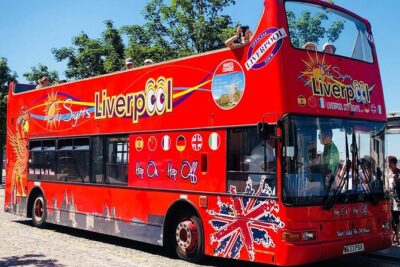
Liverpool City Sights Hop On Hop Off City Tour – 24hr Ticket
Read our review →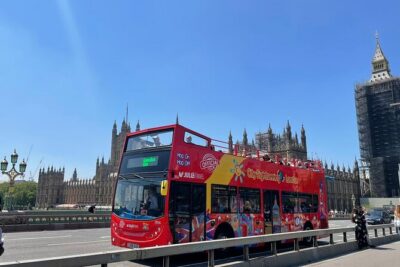
City Sightseeing London Hop-On Hop-Off Bus Tour & Bookable Extras
Read our review →
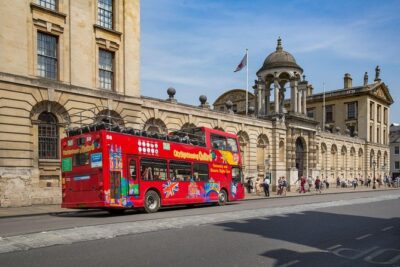
City Sightseeing Oxford Hop-On Hop-Off Bus Tour
Read our review →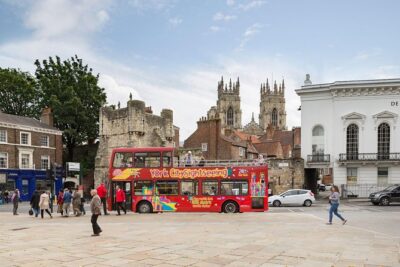
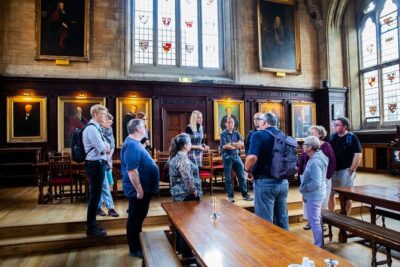
Extended: Oxford University & City Tour With Christ Church
Read our review →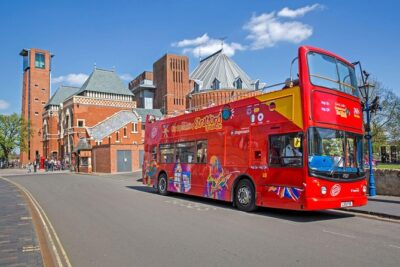
City Sightseeing Stratford-upon-Avon Hop-On Hop-Off Bus Tour
Read our review →
City Sightseeing Cambridge Hop-On Hop-Off Bus Tour
Read our review →Browse the lists this tour appears in