
Reviewed · GHOST TOURS
Private Ghosts and Gore Walking Tour of London
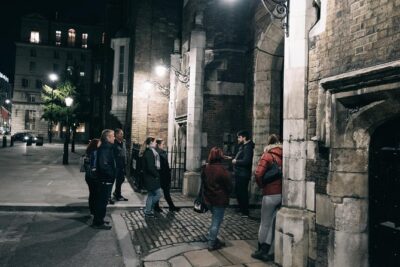
London’s oldest streets make a fine stage for a ghost tour, but this one goes well beyond spooky whispers. Over two hours, you follow a trail of execution sites, plague pits, haunted churches, cursed buildings, and pubs where the past refuses to leave. The stories range from a phantom monk to a ghostly black dog and a mummified body once known as Jimmy the Mummy.
I especially like the private format, since your group can settle into the pace and ask questions without being lost in a crowd. I also like the serious historical background supplied by Michael, a guide praised for bringing context to the darker tales. The main drawback is the sheer amount packed into two hours: you get 24 stops, but some receive only a few minutes.
Key points at a glance
- Twenty-four dark stops: The route links old churches, plague pits, execution grounds, prison sites, and haunted pubs.
- A private group of up to 15: You get a more personal walk than on a large shared tour.
- A strong history angle: The stories connect London’s ghosts with the Great Fire, the plague, Roman occupation, Dickens, grave robbing, and public executions.
- A point-to-point route: Begin at the Monument to the Great Fire of London and finish near the Elizabeth Line entrance at Farringdon Station.
- Nighttime orientation: The walk helps you get your bearings in the City of London after dark with a guide at the front.
- Moderate walking required: The route is wheelchair and stroller accessible, but you should still be comfortable moving through central London for about two hours.
Why this London ghost walk feels different
Many ghost walks rely on a handful of famous stories and plenty of theatrical suspense. This one takes a wider view of London’s grim past. You hear about spirits, but you also hear why the city produced so many tales of death, violence, disease, and unexplained events.
The route moves through the City of London, the oldest core of the capital. Here, medieval churches sit beside modern offices, old walls survive among busy streets, and underground stations occupy places once associated with prisons, plague burials, and public punishment.
That contrast gives the tour its appeal. One minute you are outside a church with centuries of worship behind it. A few minutes later, you are hearing about a body stolen from a grave for medical study or a prisoner condemned at Newgate.
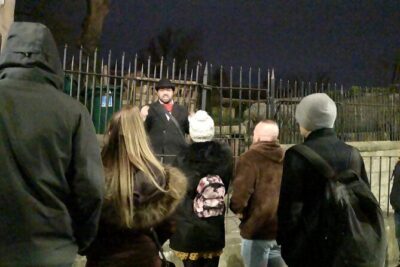
Guide Michael is a major part of the experience. The strongest praise centers on his ability to explain the historical setting rather than simply recite ghost stories. If you like your scares supported by dates, places, and cause-and-effect, that matters. The tour is still entertaining, but it is not just a collection of spooky claims.
More Ghost Tours in London
- Ghost, Ghouls and Gallows Tour : Guided Tour with Boat Ride
★ 4.5 · 3,212 reviews - Ghost Bus Tour of London
★ 4.0 · 961 reviews - Ghastly Ghost Walking Tour in London
★ 5.0 · 878 reviews
From the Monument to London’s banking ghosts
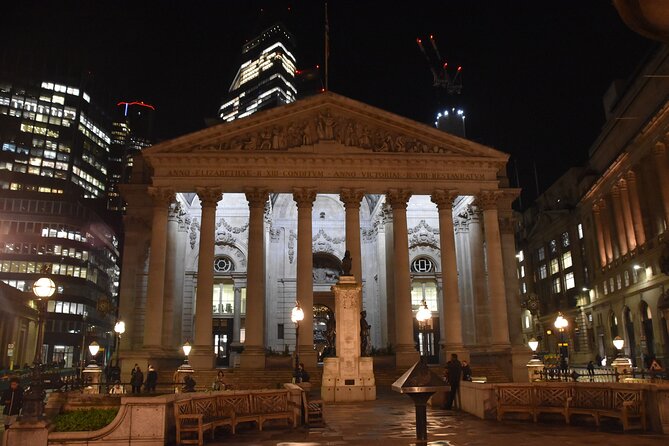
The meeting point is the Monument to the Great Fire of London, near Fish Hill. From there, the walk starts with St. Magnus the Martyr, where a shadowy figure is said to point toward a particular grave. A spiritual medium identified the ghost in 1951, adding a later chapter to an older church story.
At 54 and 55 Cornhill, look upward. Devils carved into the building replace the expected heavenly figures. The tale connects architecture, local religion, and a quarrel involving an architect and a vicar. It is a quick stop, but it shows how London’s odd details can hide in plain sight.
St. Peter-upon-Cornhill brings Dickens into the walk. This is linked with the churchyard where Ebenezer Scrooge sees his own grave in A Christmas Carol. The stop also places London’s ghost stories within the city’s literary tradition, showing how real streets and churchyards fed fictional nightmares.
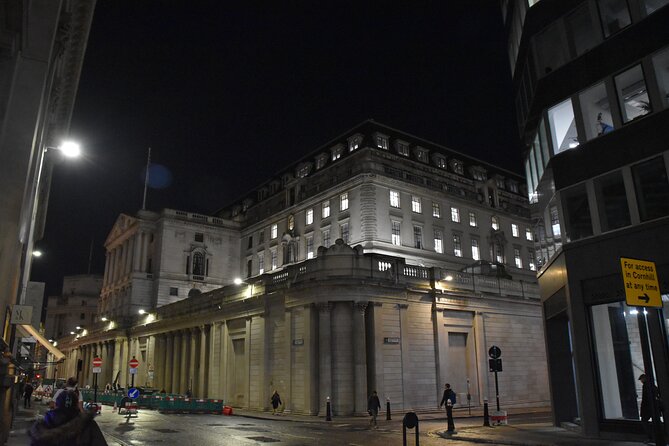
At St. Michael’s Cornhill, the subject turns to the devil visiting London during a storm. Then the route reaches St. Margaret Lothbury, close to the Bank of England, where a tall ghost supposedly rattled guards’ guns, stomped through the building, and frightened bank tellers.
St. Mary Woolnoth supplies one of the route’s best-known hauntings. The Black Ghost, also called the Bank Ghost, is tied to Bank Station, the Bank of England, and the surrounding streets. You also hear the dark story connected with the station’s booking hall. These stops work well because the financial district looks so polished by day, yet its streets carry centuries of fear and rumor.
Churches, a ghostly rat catcher, and Jimmy the Mummy
At St. Michael Paternoster Royal, the focus shifts to a famous Lord Mayor and his cat. The cat is said to travel between this church and the next stop, giving the walk a lighter, stranger turn after the banking ghosts.
St. James Garlickhythe has one of the tour’s most unsettling stories. Workers found a mummified body near the altar in 1835. The remains were displayed in a case for many years, and local children reportedly played with the body, calling it Jimmy the Mummy. The story is macabre because it blends old burial customs, public curiosity, and a remarkably casual attitude toward human remains.
Williamson’s Tavern adds a pub setting. It is linked with banging doors, footsteps, poltergeists, and phantom activity. Police dogs are said to refuse the premises, which gives the tale a memorable detail. With only one way out, the story encourages a little nervous humor, especially after dark.
St. Mary-le-Bow is less about one ghost than a long record of misfortune. The church is tied to the Cockney tradition, since a person born within the sound of its bells is considered a proper Londoner. Fires, collapses, accidents, murders, and deaths have given the church a reputation for being cursed.
These early stops are close together, but the five-minute schedule at each one can feel brisk. You will get the central story and its setting, not a long visit inside every church. Treat the walk as a moving history lesson rather than a series of extended church tours.
Roman walls, plague pits, and the ruined Greyfriars church
Noble Street brings the Roman and medieval city into view. The street lies near parts of the old Roman and medieval walls, and the area is associated with death from the earliest days of London’s development. It is also linked with strange photographs, orbs, and unusual occurrences.
At St. Anne and St. Agnes Garden, you hear about a plague pit beneath the church. The story provides a useful reminder that plague burials were not distant events in London’s past. People lived, worked, worshipped, and died within a compact city, and the ground beneath modern streets often carries that history.
Christchurch Greyfriars Church Garden is one of the most atmospheric locations on the route. The former church was once one of London’s largest. Its ruins are said to be haunted by several figures, including Queen Isabella, a quarrelling couple, a religious prophetess, a monk, and a greyhound.
This variety can feel almost theatrical, but it also reflects the way ghost traditions grow around ruined buildings. Broken walls and open churchyards leave more room for imagination than a complete, brightly used church. If you want photographs, this section gives you some of the most striking settings on the walk.
More Walking Tours in London
- Tour for Muggles The Ultimate Harry Potter Walking Tour in London
★ 5.0 · 4,684 reviews - London Jack The Ripper Guided Walking Tour
★ 5.0 · 3,131 reviews - Changing of the Guard Guided Walking Tour in London
★ 5.0 · 1,793 reviews - The Great British Rock and Roll Walking Tour
★ 5.0 · 1,371 reviews
Execution, Newgate Prison, and the Black Dog
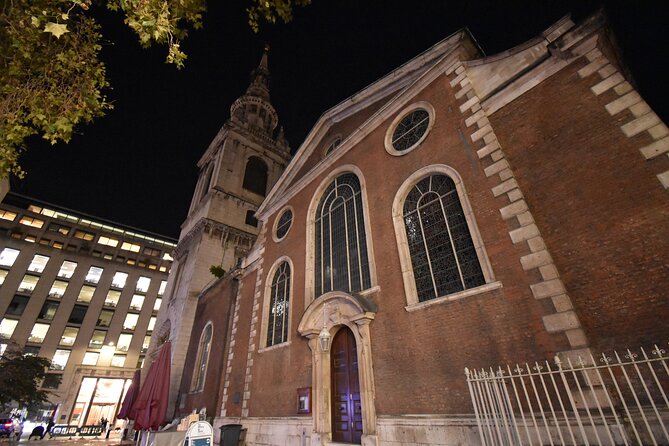
Temple Bar once marked the western entrance to the City. Designed by Christopher Wren, it also became associated with the public display of severed heads belonging to traitors and criminals. The condemned are said to haunt the gateway, which makes the stop a sharp reminder of how public and brutal justice once was.
At Amen Court, you can see remnants of Newgate Prison. The former prison had a reputation as Britain’s most notorious jail. The unsettling part of this stop is not only the prison itself, but the claim that people now live and children play above ground containing the bones of those sentenced to death.
The Viaduct Tavern is called the most haunted pub in London in the tour’s storytelling. Its ghost, Fred, is mischievous rather than murderous. He is blamed for harmless disturbances, including flushing the ladies’ toilets while they are in use. A medium later questioned the ghost’s identity, adding another twist to the story.
The Old Bailey occupies the site of Newgate Prison. Public hangings took place here until 1868, and the area is tied to the Black Dog of Newgate. If you see a large black dog in this part of the city, local folklore says you should put your affairs in order.
Holy Sepulchre Church contains an execution bell. It once sounded before executions at Newgate and the Old Bailey. The church clerk who rang it becomes central to the next tale on Cock Lane, where a young girl was said to channel the spirit of a murdered woman. The story drew in some of London’s leading minds as they tried to determine if a man had been wrongly accused.
This section is likely to appeal most to people interested in crime and justice. It is also the darkest stretch of the walk, with hanging sites, prison bones, murder allegations, and public punishment all packed into a small part of London.
Grave robbers, Smithfield, and the oldest surviving church
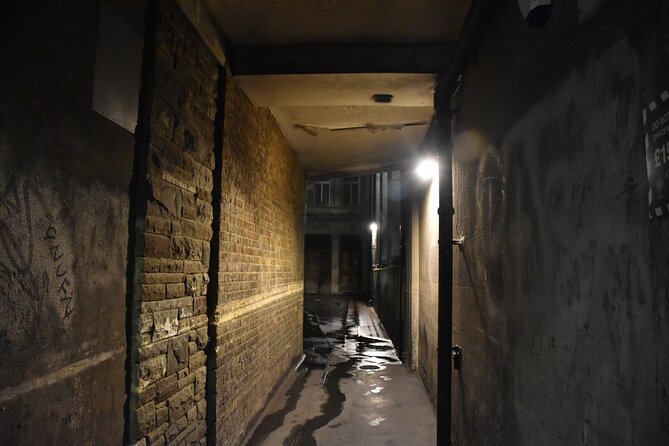
The Golden Boy of Pye Corner marks the western limit reached by the Great Fire of London. The statue once stood on a pub wall, near a site where stolen bodies were reportedly displayed for doctors at St. Bartholomew’s Hospital.
Here you learn why fresh bodies were so valuable to medical students and doctors, and how grave robbing led to the resurrection men. The demand for corpses became so strong that it helped drive a series of murders. This is one of the tour’s most useful historical sections because it explains the practical forces behind a frightening crime story.
West Smithfield was a major execution site. William Wallace and Wat Tyler were killed here, and people were hanged, drawn, and quartered. Others were burned at the stake or boiled alive. The adjoining meat market added the smell of blood and flesh to an already terrible setting.
Nearby St. Bartholomew’s Hospital is said to have its own ghosts, including poltergeists, a haunted lift, and strange activity reported by students and staff working late. The setting connects medicine with death, anatomy, and the supernatural.
At St. Bartholomew the Great, the focus turns to Rahere, the church’s founder. His ghost is said to hobble through the building after centuries of walking normally. The question is not simply why he limps, but who caused the injury.
The Rising Sun, another resurrectionist pub, brings a more uncomfortable story. A disturbing ghost is linked with unwanted attention toward women, and the tale explains why it has been difficult to persuade female staff to live on the premises. This is not a playful ghost story, so you should expect the tone to become more unpleasant here.
The Charterhouse gives the tour its final chill
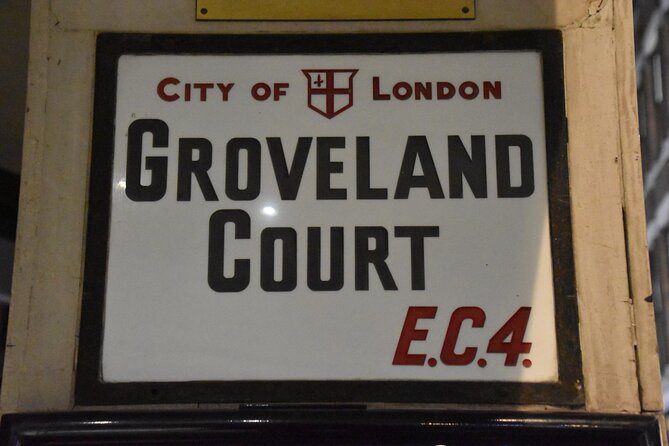
The last stop is the Charterhouse, close to Farringdon. Beneath the buildings is one of London’s large plague pits, with an estimated 50,000 people buried below. That number gives the final stop real weight, even if you do not accept every ghost story attached to the site.
The buildings were once home to monks executed during the Reformation. The most frequently seen apparition is said to be a praying monk. A headless duke is also linked with the area, and the tour ends by considering how modern psychiatry might explain some reports of strange activity.
That closing note is welcome. You are free to enjoy the folklore without being told to accept it as fact. The route allows room for old beliefs, eyewitness tales, urban legends, and possible medical explanations.
Is a private two-hour tour worth $247.70?
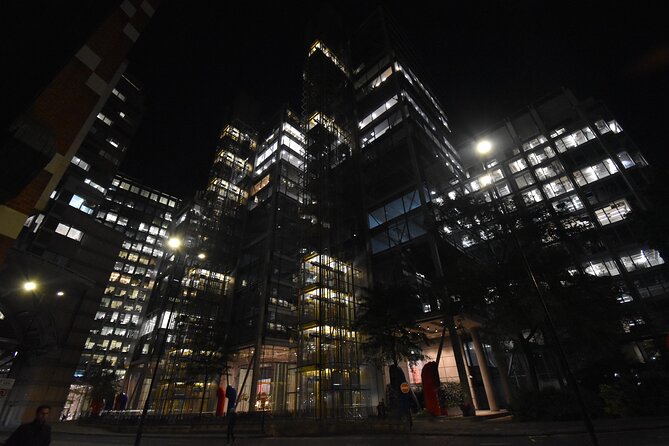
The price is $247.70 for your entire group of up to 15 people. For one person, that is high. For a full group, the cost works out to less than $17 per person, which is good value for a private two-hour walk with all guiding fees included.
The private format matters most if you have a family group, a group of friends, or several people with different interests. You can ask Michael to explain the historical side, focus more on the supernatural stories, or help your group keep a comfortable pace.
The tour is offered in English and includes a mobile ticket. It is wheelchair and stroller accessible, and service animals are allowed. Still, you should have a moderate level of fitness because this is a point-to-point walking route through central London.
The tour is usually booked about 45 days ahead, so advance planning makes sense if your dates are fixed. You can cancel for a full refund up to 24 hours before the start time. The walk begins at the Monument and ends near Farringdon Station, so it is easy to continue your evening from a different part of central London.
Who should book this London ghost tour?
I would choose this tour if you like historical context with your scares. It suits people who want more than actors jumping from doorways, and it gives you a fresh way to see the City of London after dark.
It is also a good pick for a private group that wants a shared evening activity. The large number of stops keeps the pace moving, though you should not expect long visits inside each church or pub.
You may want another tour if you prefer a short, theatrical ghost walk with one central neighborhood and fewer stories. Twenty-four stops in two hours means some tales will feel like quick introductions.
Should you book it?
Book this private Ghosts and Gore Walking Tour of London if you want a smart, macabre look at the capital’s oldest streets. Michael’s storytelling style appears best suited to people who enjoy facts, folklore, and historical detail in equal measure.
Skip it if you dislike walking, want a slow church-by-church visit, or prefer ghost stories without grisly material. For everyone else, the route offers a memorable way to connect London’s churches, prisons, plague pits, pubs, literature, and public executions. The private price is especially fair when shared by a larger group.
FAQ
How long is the Private Ghosts and Gore Walking Tour of London?
The tour lasts approximately two hours.
Where does the tour begin?
It begins at the Monument to the Great Fire of London on Fish Street Hill, London EC3R 8AH.
Where does the tour finish?
The walk finishes near the Elizabeth Line entrance to Farringdon Station on Cowcross Street.
How many people can join the private tour?
The price covers one private group of up to 15 people.
Is the tour offered in English?
Yes. The tour is offered in English.
Is the route wheelchair and stroller accessible?
Yes. The tour is listed as wheelchair and stroller accessible.
Are service animals allowed?
Yes. Service animals are allowed.
What is the cancellation policy?
You can cancel at least 24 hours before the experience start time for a full refund. Cancellations or changes made less than 24 hours before the start time are not accepted for a refund.
Just added around London
- London Private Jack The Ripper Tour★ 5.0 · 9 reviews
- Private Spy Walking Tour of London★ 5.0 · 6 reviews
- Private 2.5 Hour Taxi Tour of London – London’s Greatest Bits!★ 5.0 · 4 reviews
- Private Shoreditch Street Photography Workshop★ 4.5 · 4 reviews
- Private Sightseeing Walking Tour of The City Of London★ 5.0 · 3 reviews
- Private Round Trip Transfer between London Airports and Hotel★ 3.5 · 56 reviews
- Shakespeare London Walking Tour★ 5.0 · 26 reviews
- Private Prison Van Escape Game – London Immersive Experience★ 4.0 · 15 reviews
Ghost Tours, compared.
Ghost, Ghouls and Gallows Tour : Guided Tour with Boat Ride
Read our review →
Shadows of York: Ghost Walk and Horrible History.
Read our review →


The Original Jack the Ripper Coach Tour of Haunted London
Read our review →Browse the lists this tour appears in