
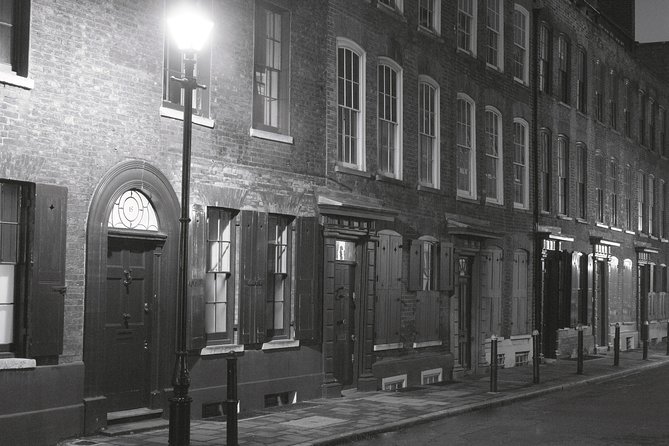
Reviewed · JACK THE RIPPER TOURS
London Jack The Ripper Guided Walking Tour
The most striking part of this walk is the way it puts the Jack the Ripper case back into its setting. You move through Spitalfields, Brick Lane, and Mitre Square, where Victorian streets, churches, markets, and cramped lanes help explain how the crimes unfolded.
I like two things here: the use of original photographs and police and press reports, and the attention given to the five victims and the wider life of Whitechapel in 1888. Guides such as Jeremy and Angie are praised for making a grim subject clear, engaging, and respectful.
The main drawback is the group size, which can reach 36 people. A large group may be harder to hear and move through narrow streets with, so arrive ready to stay close to your guide.
Key points to know before you go
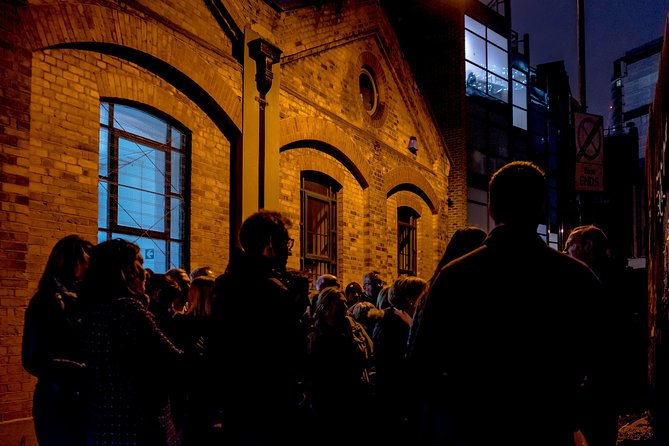
- You finish at Mitre Square: The walk begins at Aldgate East Station and ends near Aldgate Underground Station.
- The tour lasts about two hours: You will be on foot for the full experience, with stops around Spitalfields, Christ Church, Brick Lane, and the murder locations.
- The case is presented with source material: Original photographs, police reports, and press reports add substance beyond a simple ghost story.
- The guides bring different strengths: Jeremy is praised for storytelling and group management, while Angie is noted for her passion and detailed knowledge of the case.
- The streets matter as much as the crimes: Architecture, poverty, working life, and the changing East London setting receive useful attention.
- A free 194-page ebook is included: It gives you something substantial to read after the walk.
Why this East London walk works
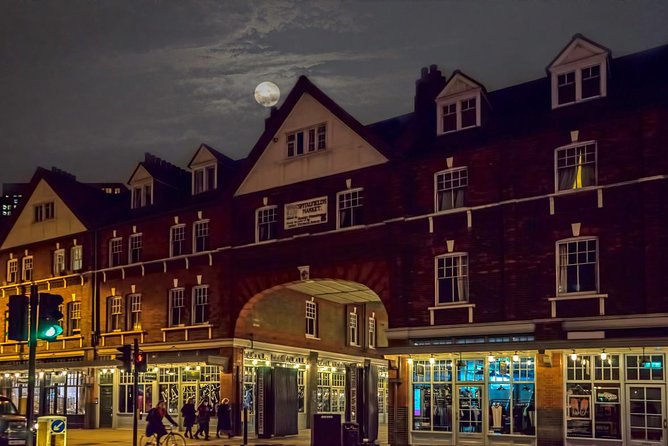
Jack the Ripper tours can easily become a parade of sensational crime stories. This one has a stronger sense of place. The route takes you through the streets where the 1888 murders occurred, then uses photographs and documents to show how the area looked at the time.
That matters because much of modern London has changed. Some original locations have been altered or lost under newer buildings and amenities. You should not expect every site to look frozen in Victorian London. Instead, the guide helps you compare the present street with the older image and understand what has vanished.
The case itself remains unsolved, and the walk covers the police investigation, leading suspects, press coverage, and competing theories. A good guide can keep these threads clear. Jeremy is especially praised for telling the story with energy, handling questions, and managing families with younger members. Angie is known for her long-standing interest in the subject and her enthusiasm for the details.
The tone is not purely grim. Philip, Jeremy, and other guides use light humor to keep the evening moving, but the strongest comments also point to care around the victims. That balance is important. You get the mystery and atmosphere without reducing the five women to plot devices in a murder puzzle.
The tour has a 4.9 out of 5 rating from 3,131 reviews and a 98 percent recommendation rate. Those numbers suggest a consistently strong experience, though the group-size concern is worth taking seriously.
More Walking Tours in London
- Tour for Muggles The Ultimate Harry Potter Walking Tour in London
★ 5.0 · 4,684 reviews - Changing of the Guard Guided Walking Tour in London
★ 5.0 · 1,793 reviews - The Great British Rock and Roll Walking Tour
★ 5.0 · 1,371 reviews
Starting at Aldgate East and Spitalfields Market
The meeting point is Aldgate East Station in London E1. From there, your guide leads you into the historic district around Spitalfields Market, the main setting for the two-hour walk.
Spitalfields is a useful starting point because it gives the story a physical frame. You are not simply hearing names and dates in a classroom. You are walking through the East London streets tied to the investigation and visiting locations connected with the murders.
This opening section covers the police response, the main suspects, the murder sites, and the wider story of the five victims. The guide also explains what life was like in Whitechapel in 1888, including the social conditions that shaped the area.
I particularly value that broader context. Without it, Jack the Ripper can seem like a lone villain moving through a theatrical fog. With it, you get a clearer sense of the people who lived and worked here, the pressures of the period, and the difficulty facing the police.
Spitalfields Market is also practical for orientation. The surrounding area has changed, but its location helps you understand how close the major points on the route are. You will hear the story in stages rather than standing in one place for the entire two hours.
Christ Church Spitalfields and the Victorian skyline
One stop takes about eight minutes at Christ Church Spitalfields. The church is known for its soaring spire, which dominates the area today much as it did when the Ripper’s crimes took place.
The value of this stop is visual. The church gives you a fixed landmark in a district that has otherwise changed greatly. Your guide uses it to explain the setting beneath and around the spire, helping you picture the streets as they appeared in the late nineteenth century.
Eight minutes is not a long stop, but it breaks up the walking and gives the group a clear point from which to look around. You can also expect discussion of local buildings and architecture. One guide was praised for explaining not only the murders but also the surviving structures and the way the neighborhood has developed.
Do not expect an extended church visit or an interior tour. Christ Church is part of the street-level route, not a separate attraction with a long admission stop. The interest comes from its place in the surrounding area and from the contrast between a major landmark and the less formal streets nearby.
Brick Lane and the streets that shaped the case
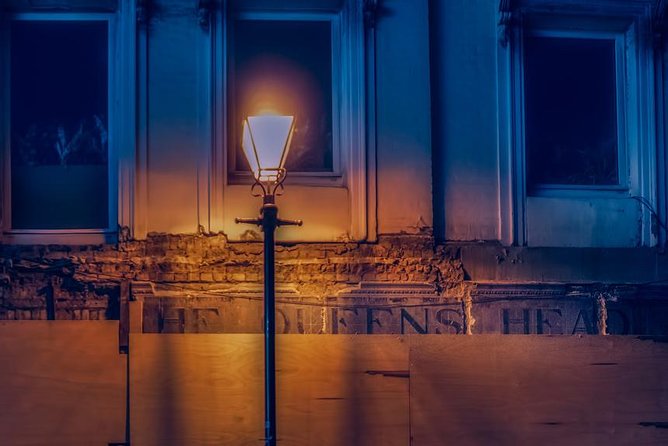
The route spends about 25 minutes around Brick Lane. The streets here are lined with sturdy eighteenth-century houses that have changed less than some other parts of the district. They help you picture the built environment that formed the backdrop to the Ripper story.
Brick Lane gives the walk a welcome change of mood. It is not only a murder-site location. It is also a living East London street with its own architecture and character. The guide connects the houses, lanes, and blocks around you with events from 1888, while showing how much of the physical setting remains recognizable.
This is one of the better reasons to choose a walking tour instead of a bus tour. A bus can cover distance, but it cannot take you as naturally into the smaller streets and close to the details of the buildings. Here, you can look up at the houses, compare the old images supplied by the guide, and see where modern London has replaced the old.
The limitation is that the area is not preserved as a museum. You will see ordinary current streets, modern businesses, and new construction alongside older buildings. If you want a perfectly restored Victorian setting, this may disappoint. If you want to understand how history sits beside present-day London, it works well.
More Jack the Ripper walks in London:
- London Jack the Ripper Guided Tour with Ripper-Vision
★ 4.5 · 4,840 reviews - Ultimate Jack the Ripper : Guided Tour of London
★ 5.0 · 1,495 reviews - The Original Jack the Ripper : Guided Tour
★ 5.0 · 1,264 reviews - London Jack The Ripper Small-Group Walking Tour
★ 5.0 · 1,013 reviews
Original photographs, police files, and press reports
The visual material is one of the tour’s strongest features. Your guide can show original photographs of locations as they appeared at the time of the murders, along with police and newspaper reports.
These sources help solve a common problem with historic crime tours: it can be hard to tell fact from later storytelling. The documents give you a clearer line between what was recorded, what was reported in the press, and what remains theory.
The old photographs are especially useful at locations that have changed. You can compare the image in front of you with the view from 1888 and see why some sites are difficult to identify today. This also keeps the tour grounded in actual places rather than relying only on atmosphere.
The press material adds another layer. Newspapers helped shape the public image of the case, and the guide explains how reporting affected the investigation and the legend that followed. You will still hear theories about the killer’s identity, but the documents give those theories a firmer backdrop.
The evidence is presented during the walk, so you need to stay close and pay attention when the guide holds up material. In a group of 30 or more, it may be harder to see or hear everything. Ask questions when the guide pauses, and do not hesitate to move closer if the space allows.
Mitre Square and the final part of the story
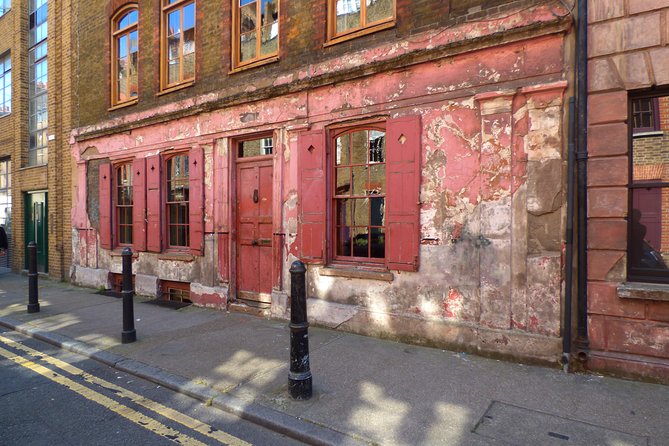
The tour ends at Mitre Square, London EC3A 5DE, close to Aldgate Underground Station. This is useful for your evening plans because you finish near a transport link rather than having to retrace the route to Spitalfields.
The final stop brings the investigation to one of its best-known locations. By this point, you have heard about the victims, the police work, the suspects, and the setting in which the crimes occurred. Ending at Mitre Square gives the route a clear finish instead of simply stopping wherever the time runs out.
The tour does not turn the location into a stage set. Modern London has changed the area, and some original elements are gone. That can feel anticlimactic if you expect a preserved crime scene. The guide’s old photographs and explanations are what make the stop worthwhile.
The end point also makes the walk easy to combine with other plans. Since the experience lasts around two hours, it fits well into an evening itinerary, although you should allow extra time if your group moves slowly or the guide spends longer on questions.
The guides make the biggest difference
The material is strong, but the guide determines how well the evening works. Jeremy receives repeated praise for storytelling, humor, friendliness, and control of the group. He is also noted for handling younger participants well, which makes him a good fit for families who want a serious subject presented in an accessible way.
Angie brings a different style. She is described as highly passionate about the case and particularly strong at explaining the details. Philip is praised for adding light humor to a dark subject while showing how the area has changed. Jackie is also noted for enthusiasm and clear interest in the story.
You may not be assigned a particular guide, so treat these names as examples of the range of hosts rather than a guarantee. The shared strengths are clear: solid case knowledge, lively delivery, willingness to answer questions, and care when discussing the victims.
A group size of up to 36 is the main practical issue. Some groups may be much smaller, but a full departure can create problems on narrow streets. The guide may need to raise their voice, and you may miss a point if you drift toward the back. Stay near the front, especially during document and photograph stops.
Price, timing, and what you receive
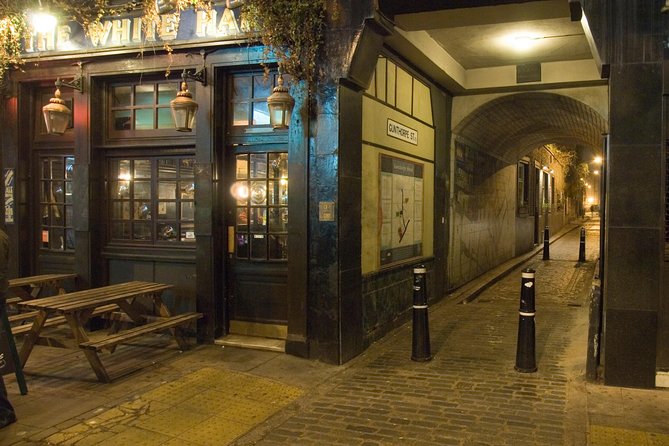
The listed price is $0.00, which makes this look like exceptional value if that price applies to your booking. The experience includes the guided walk, access to the guide’s visual material during the tour, the chance to ask questions, and a free link to a 194-page ebook.
The ebook adds more value than a short souvenir handout. You can use it to revisit the suspects, victims, reports, and theories after the walk, when you have more time to sort through the details.
The tour lasts about two hours, and admission to the listed stops is free. Your extra cost is getting to Aldgate East Station and away from the finish at Mitre Square. Travel costs are not included, so check your route across London before setting out.
Most people can take part, service animals are allowed, and the tour is near public transportation. You will be walking for the duration, so comfortable shoes make sense. The tour is not presented as a strenuous hike, but the length and standing time may feel tiring after a full day of sightseeing.
Free cancellation is available up to 24 hours before the local start time for a full refund. Cancellations or changes made inside 24 hours are not refunded or accepted.
Who should book this walk
I would choose this tour if you enjoy true crime, London social history, old photographs, and guided walks that connect evidence to real streets. It suits first-time visitors who want to see East London from a different angle, as well as people already familiar with the Ripper case who want help sorting fact from theory.
It also works for families with older children or teenagers who can handle the subject. Jeremy’s ability to keep younger participants involved is encouraging, but the crimes are serious and sometimes graphic in subject matter. You should decide based on your group’s comfort level.
This is less suitable if you dislike dark history, prefer small private groups, or want every murder site preserved exactly as it was. The possible 36-person group can affect sound and movement, and modern buildings mean that some locations require imagination.
Should you book the Jack the Ripper walking tour?
Book it if you want more than a spooky night out. The combination of real streets, old photographs, police and press reports, local architecture, and attention to the victims gives the case useful context. The free 194-page ebook is another welcome benefit, especially at the listed $0.00 price.
Go with realistic expectations. This is a two-hour walking tour through a changed part of London, not a preserved Victorian set. Stay close to the guide, prepare for a potentially large group, and choose an evening when you have enough energy to walk and listen.
For fans of the case, Jeremy, Angie, Philip, and Jackie represent the kind of passionate guides who can keep familiar material fresh. For everyone else, the real reward is seeing how an unsolved crime became tied to ordinary streets, old buildings, public fear, and the long memory of London.
FAQ
Where does the Jack the Ripper tour begin?
The tour begins at Aldgate East Station in London E1, UK.
Where does the tour finish?
It finishes at Mitre Square, London EC3A 5DE, close to Aldgate Underground Station.
How long does the walking tour last?
The tour lasts approximately two hours.
Which places are included on the route?
The route includes Spitalfields Market, Christ Church Spitalfields, Brick Lane, locations connected with the murders, and Mitre Square.
What is included in the tour?
The tour includes an expert guide, original photographs of the locations, police and press reports, time for questions and discussion, and a link to a free 194-page ebook.
Are transportation costs included?
No. You are responsible for travel costs to and from the tour.
What is the cancellation policy?
You can cancel up to 24 hours before the experience start time for a full refund. Cancellations or changes made less than 24 hours before the start time are not refunded or accepted.
Just added around London
- London Private Jack The Ripper Tour★ 5.0 · 9 reviews
- Private Spy Walking Tour of London★ 5.0 · 6 reviews
- Private Shoreditch Street Photography Workshop★ 4.5 · 4 reviews
- Private Sightseeing Walking Tour of The City Of London★ 5.0 · 3 reviews
- Private 2.5 Hour Taxi Tour of London – London’s Greatest Bits!★ 5.0 · 4 reviews
- Private Round Trip Transfer between London Airports and Hotel★ 3.5 · 56 reviews
- Shakespeare London Walking Tour★ 5.0 · 26 reviews
- Private Prison Van Escape Game – London Immersive Experience★ 4.0 · 15 reviews
Jack the Ripper Tours, compared.
London Jack the Ripper Guided Tour with Ripper-Vision
Read our review →
Ultimate Jack the Ripper : Guided Tour of London
Read our review →

London Jack The Ripper Small-Group Walking Tour
Read our review →

The Original Jack the Ripper Coach Tour of Haunted London
Read our review →
Browse the lists this tour appears in