

Reviewed · WALKING TOURS
90 Minute Classic Walking Tour of Oxford
Oxford reveals itself best on foot. The 90 Minute Classic Walking Tour threads through grand squares, narrow lanes, college courtyards, and old church precincts, giving you a useful first look at a city that can feel confusing when you first arrive. Guides such as Nick, Andrew, and Graham bring dates, student traditions, famous names, and local stories into the walk without turning it into a lecture.
I like the small maximum of 10 people, which makes it easier to hear and ask questions. I also like the route’s mix of major sights and quieter corners, from the Radcliffe Camera to Magpie Lane and Queens Lane. The main consideration is that this is primarily an outdoor walking tour, and access inside colleges or other buildings can vary. Bad weather can also lead to a cancellation.
Oxford in 90 minutes: the key points
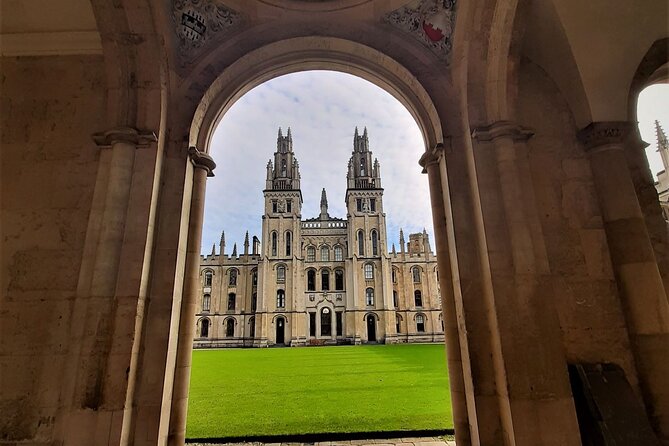
- Small groups of up to 10: You get a better chance to hear the guide and ask about the buildings that catch your eye.
- A strong first-time route: The walk connects Martyrs’ Memorial, the Bodleian Library, Radcliffe Camera, Carfax Tower, and several college areas.
- Guides with different strengths: Nick, Andrew, and Graham are praised for clear explanations, warmth, humor, and useful local suggestions.
- A balance of grand and tucked-away Oxford: You move from famous squares to Magpie Lane, Queens Lane, and the old church area near New College.
- Useful for planning the rest of your day: Guides can offer information about onward transport, accommodation, and things to do after the walk.
- Good value for a compact introduction: At $38.82 per person, the price is reasonable if you want orientation and context before exploring alone.
Starting at Martyrs’ Memorial on Magdalen Street

Your meeting point is the Martyrs’ Memorial at 13 Magdalen Street, Oxford OX1 3AE. Tours begin at 11 am and 2 pm daily, so you can fit the walk around a morning arrival, lunch, or an afternoon visit to one of Oxford’s museums.
The memorial recalls three Anglican clerics burned at the stake for heresy in the 16th century. It is not just a place to gather. It gives the guide an early chance to explain the religious conflict, political pressure, and university setting that shaped Oxford.
I appreciate this kind of start because it gives the city some weight right away. You are not simply looking at old stone. You are learning why Oxford’s buildings and institutions developed as they did.
From here, the walk moves into the central university quarter. The pace is described as comfortable, and the route is mostly easy walking without hills. Still, you should wear sensible shoes. Oxford’s central streets and lanes can be narrow, crowded, and uneven in places.
More Walking Tours in Oxford
- Oxford University Walking Tour With University Alumni Guide
★ 5.0 · 6,905 reviews - 1.5-hour Oxford City and University Walking Tour
★ 4.5 · 1,383 reviews - Harry Potter Walking Tour of Oxford Including New College
★ 4.5 · 930 reviews
The Bodleian Library and Christopher Wren’s Oxford
The next section takes you toward the Bodleian Library and the Scholastic Quadrangle. The Bodleian is one of the world’s famous research libraries, and the guide explains how it grew after the Reformation, when religious changes affected older collections and institutions.
You will spend only a short time at the library area, but the point is not to tour every interior. The guide helps you understand the library as part of Oxford’s larger story: scholarship, religion, power, books, and the long life of the university.
The route also brings you near one of Christopher Wren’s important early projects, built in 1669. Wren is often associated with the rebuilding of London churches after the Great Fire, so seeing his work in Oxford adds an architectural layer to the walk. You get to compare different periods and styles without needing to plan a separate architecture tour.
The experience works best if you enjoy looking up. Oxford rewards attention to doorways, towers, stonework, and small changes in style. The guide points out details you could easily pass without noticing.
A museum, a bridge, and Oxford’s famous High Street
The walk continues past the first purpose-built public museum, a place with major importance in Western cultural history. The information provided does not promise an interior visit, so think of this as an exterior stop and a brief explanation rather than a museum admission experience.
You also pass the Bridge of Sighs, built in 1913. Its name and delicate form give it a romantic air, but its real value on this tour is how it helps you see Oxford as a working university town, not merely a collection of ancient landmarks.
High Street is one of the most useful parts of the route. The street brings together colleges, historic buildings, and several centuries of architecture. You hear about people connected with Oxford, including C. S. Lewis, Percy Bysshe Shelley, Bob Hawke, and Bill Clinton.
The guide may also bring in student traditions, filming connections, and other details that make the buildings feel less remote. This is where a good guide earns the fee. A row of college walls can look impressive, but names, dates, and human stories give you a reason to care about what you are seeing.
Magpie Lane and the Radcliffe Camera

One of the pleasant changes in pace comes on Magpie Lane, a narrow and winding passage leading toward the High Street. It feels different from the broad ceremonial streets. This is the kind of route that can be difficult to appreciate on your own because it is easy to miss or walk through too quickly.
The walk then reaches Radcliffe Square and the Radcliffe Camera. The circular library building is one of Oxford’s most recognizable sights, and the surrounding square brings several layers of the university together in one view.
You spend about 10 minutes in this area. The guide explains why Radcliffe Square is so important to the university precinct and how the buildings around it fit together. This is a good place for photographs, but the explanation matters more than the picture. Without context, the square is beautiful. With context, it becomes a map of Oxford’s academic world.
Access to some college areas may be available during the walk, depending on conditions and opening arrangements. Past experiences have included glimpses of college life and visits to selected spaces, but you should not book this tour expecting a full interior tour of every college.
Same part of England, a completely different sort of day:
- Oxford Official University & City Tour
★ 5.0 · 1,134 reviews - City Sightseeing Oxford Hop-On Hop-Off Bus Tour
★ 4.5 · 1,042 reviews - Downton Abbey & Highclere Castle Tour from London, with Oxford
★ 4.5 · 716 reviews - Oxford Sightseeing River Cruise Along The University Regatta Course
★ 4.5 · 652 reviews
St Aldates, Christ Church, and the college precinct

Another section takes you through the St Aldates gate and past views connected with Christ Church. The route includes the Meadow Building, Merton Field, the Dean’s Garden, Dead Man’s Walk, and the Kissing Gate.
These names can sound like a list when read in advance, but they help you understand how much of Oxford is made up of linked paths, lawns, gardens, walls, and college entrances. The guide connects the spaces with stories from university life and local history.
Merton Field also has an unusual aviation connection. James Sadler became the first English aeronaut, and the guide places that event in the setting around you. Details like this keep the tour from being a simple parade of famous buildings.
You should expect the walk to remain mostly outdoors. If you want extended time inside Christ Church, the Bodleian, or another college, you will need to check separate admission arrangements. This tour gives you orientation and interpretation, not a guaranteed interior visit.
Carfax Tower and the city center

The route reaches Carfax Tower, a 23-meter bell tower that was once part of a 12th-century church. It is a useful central landmark, marking the meeting point of Oxford’s main streets.
The tour does not include the admission ticket for the tower. If you want to climb for city views, plan to pay separately. The stop itself is brief, around two minutes, so the guide is using it mainly to explain the site and orient you to the center.
This is a good example of how the tour handles major attractions. You see and understand many landmarks, but you are not spending long periods inside each one. That keeps the walk moving and allows you to cover more ground in about an hour and a half.
If you are keen on climbing towers, allow extra time before or after the tour. The activity ends back at the meeting point, so you can return to places that caught your attention.
Queens Lane, medieval halls, and New College

The final stretch turns into some of Oxford’s narrower back streets. Passing Queens College, you enter Queens Lane, described as one of the city’s most haunted sites. The guide then continues past St Edmund Hall, the last medieval hall in Oxford, and St Peter’s Church in the East.
New College adds another memorable detail: it was built on a plague pit. This is classic Oxford, where a beautiful college wall or quiet lane may conceal a difficult and surprising past.
This section is one of the strongest reasons to choose a walking tour rather than a bus ride. A vehicle cannot use these narrow lanes, and you would have little reason to seek out some of them without local direction.
The back streets also soften the grand scale of the earlier stops. You see that Oxford is not only Radcliffe Camera and famous college gates. It is also a network of lanes, old churches, halls, gardens, and working city streets.
What the guides add to the walk

The guide can make or break a history walk, and this experience has a strong record in that area. Nick is praised for his memory, enthusiasm, kindness, and ability to adjust the detail to the group. Andrew is often noted for his friendly style, clear explanations, humor, and willingness to answer questions. Graham is described as warm, informed, and accommodating.
You should expect a conversational approach rather than a memorized speech delivered at full speed. Guides have added facts beyond the main route, checked whether the group had time for extra sights, and offered suggestions for what to do afterward.
That flexibility is especially useful for a first visit. You can ask about college access, transport, museums, accommodation, or where to continue exploring. The guide is able to provide information about onward transport and places to stay, which adds practical value beyond the history.
The small group matters here. With no more than 10 people, you are less likely to be lost at the back of a crowd. Two people have even received what felt like a private tour when theirs was the only booking in the time slot, though you should treat that as a possibility rather than a promise.
Price, timing, and practical value
At $38.82 per person, this is not the cheapest way to see Oxford. You can walk through much of the city for free. The price pays for structure, local explanation, and the chance to cover important areas without spending your first hour trying to work out where everything is.
I think the value is strongest if you are visiting Oxford for the first time or have only a short stay. The route gives you a clear map of the center, and the guide’s suggestions can help you use the rest of your day well.
The advertised duration is about 90 minutes to two hours. One group completed the walk in just over 90 minutes, while other tours may run longer if questions or extra stops are added. Build in a little spare time rather than scheduling a train or timed admission immediately afterward.
The tour is offered in English and uses a mobile ticket. It is not suitable for infants or children under seven, though older children are welcome. Service animals are allowed, but dogs are not permitted on university and college property.
You can cancel for a full refund up to 24 hours before the start time. Changes or cancellations inside that window are not refunded. The experience requires good weather, and if poor weather causes cancellation, you are offered another date or a full refund.
Who should book this Oxford walk?
I would choose this tour if you want a clear introduction to central Oxford before exploring on your own. It suits first-time visitors, people with limited time, families with older children, and anyone who prefers stories and explanation over simply photographing buildings.
It is also a good match if large group tours put you off. A maximum of 10 people gives the guide room to respond to questions and adjust the pace.
You may want something else if your main goal is extensive interior access. This walk passes and explains major buildings, but admission is not included for Carfax Tower, and entry into colleges or other sites may depend on access at the time.
Should you book the 90 Minute Classic Walking Tour?
Book it if you want to get your bearings quickly, understand what makes Oxford important, and walk through both its famous squares and quieter lanes. The route is broad enough to cover the essential sights, yet personal enough for the guide to add odd facts, student traditions, literary connections, and practical suggestions.
At $38.82, I see it as a sensible orientation purchase, not a substitute for visiting Oxford’s museums and college interiors afterward. Choose the 11 am or 2 pm departure, wear comfortable shoes, and keep the rest of your day flexible. For a first look at Oxford with a small group and an engaging guide, this is a strong choice.
FAQ
Where does the Oxford walking tour begin?
The tour begins at Martyrs’ Memorial, 13 Magdalen Street, Oxford OX1 3AE, UK.
What time does the tour start?
Tours begin daily at 11 am and 2 pm.
How long does the experience last?
The tour lasts about 1 hour 30 minutes to two hours. It ends back at the meeting point.
What language is the tour offered in?
The tour is offered in English.
How many people can join the tour?
The maximum group size is 10 travelers.
Is the tour suitable for children?
Children are welcome, but the tour is not suitable for infants or children under seven years old.
Are dogs allowed?
Dogs are not allowed on university and college property. Service animals are allowed.
Is Carfax Tower admission included?
No. Admission to Carfax Tower is not included in the tour price.
What happens if the weather is poor?
The experience requires good weather. If it is canceled because of poor weather, you are offered a different date or a full refund.
Just added around Oxford
- Bicester Village Private Vehicle Round Trip Service from London★ 4.5 · 3 reviews
- Westminster Abbey Private Tour Oxford PhD Historian Skip the Line★ 5.0 · 15 reviews
- From London: Oxford and Cambridge University Town Tour with Guide★ 4.5 · 23 reviews
- Oxford by Rail Day Tour with Harry Potter Insights Tour★ 4.5 · 4 reviews
- The City of Dreaming Spires: Oxford Private Day Trip from London★ 5.0 · 5 reviews
- Oxford and Blenheim Palace Private Car with Driver Guide★ 4.5 · 3 reviews
- Heathrow Airport To Oxford Private Transfer★ 5.0 · 4 reviews
- Medieval London Walking Tour Oxford PhD Historian Guide★ 5.0 · 5 reviews
Walking Tours, compared.
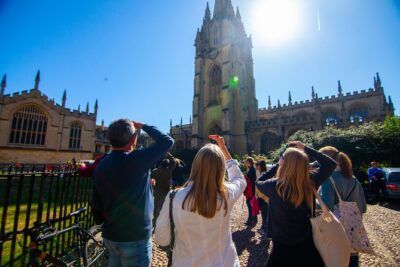
Oxford University Walking Tour With University Alumni Guide
Read our review →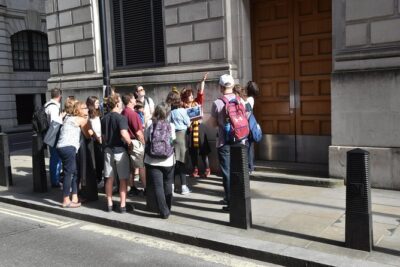
Tour for Muggles The Ultimate Harry Potter Walking Tour in London
Read our review →
Cambridge University Walking Tour by Alumni™ Kings College Option
Read our review →
Blackbeard to Banksy – The Ultimate Walking Tour of Bristol
Read our review →
Air Raid Shelter + St. Nicholas Market Walking Tour
Read our review →
Walking Tour of Bath with Blue Badge Tourist Guide
Read our review →
Changing of the Guard Guided Walking Tour in London
Read our review →Browse the lists this tour appears in