
Reviewed · WALKING TOURS
The Best of York on Foot in a Small Group
York’s great trick is that its past is not locked away in museums. Roman stonework, medieval lanes, ruined abbey walls, and a Gothic cathedral all sit within an easy walk. This tour gives you that story in about 90 minutes, with guides such as Alfred and Sarah using the streets as their classroom.
I like the small eight-person limit, since it keeps the walk personal and makes questions easy. I also like the iPad illustrations, which help you picture buildings that now survive only as ruins. The main drawback is speed: five stops in 90 minutes gives you a smart introduction, not a slow, detailed visit.
Key points at a glance
- York’s history in one compact route: Move from Roman foundations and medieval streets to the modern city center without spending half a day on the walk.
- A genuinely small group: The advertised maximum is eight people, making it easier to hear the guide and ask questions.
- Local guides with different strengths: Alfred, Sarah, Charlotte, and Ferah are among the guides, and the tour’s style depends somewhat on who leads it.
- Useful visual help: Guides carry iPads with multimedia images that can show how older buildings and ruins once looked.
- Outdoor sightseeing only: You see York Minster from outside, but admission to the cathedral and museums is not included.
- Good value at $27.74: You pay for a focused overview, not a string of entrance tickets or a long full-day program.
Why this short York walk works
York can be confusing in the best possible way. A narrow medieval street may lead to a Roman wall, a Victorian garden, or a cathedral built over earlier churches. You can wander happily on your own, but it is easy to see the stones without understanding how the pieces fit together.
This walk solves that problem quickly. It links five central sights in a sensible sequence and gives you a basic timeline for the city. You are not simply pointed toward pretty buildings. The guide explains how Roman, medieval, religious, and later civic York came to occupy the same small area.
That matters most if you have only one full day in York. The route gives you enough background to choose what deserves a longer visit later. I would take it near the start of a stay, then return to York Minster, the museums, or the Shambles with a better sense of what I am seeing.
The pace is generally an easy walk, but the format is still brisk. Each listed stop receives about 10 minutes, and the total experience lasts roughly an hour and a half. That is efficient, but it leaves little room for lingering, shopping, or entering buildings.
More Walking Tours in York
- Shadows of York: Ghost Walk and Horrible History.
★ 5.0 · 1,403 reviews - Private Historical Walking Tour of York
★ 5.0 · 1,324 reviews - Wizard Walk of York – WINNER Best Tour & Best of York Award
★ 5.0 · 918 reviews
St. Mary’s Abbey begins with atmosphere
The walk starts at the ruins of St. Mary’s Abbey, described as the largest abbey in northern England. Its broken walls and open setting make an immediate introduction to York’s religious past.
The important point is not just the size of the ruins. The remains let you see how a major religious complex once shaped the city around it. The guide can point out details that are easy to miss when you are taking photographs or simply passing through the gardens.
Admission to the stop is free, and the tour stays outdoors. That keeps the opening simple, but you should not expect an interior abbey visit or a long archaeological explanation. The stop is a visual beginning, designed to place York’s religious story on the map.
I particularly like the use of an iPad here. A ruin can be hard to read, especially when only sections of walls remain. Historical images and illustrations give you a better idea of the original structure and help turn fragments into something understandable.
Museum Gardens reveal where York began
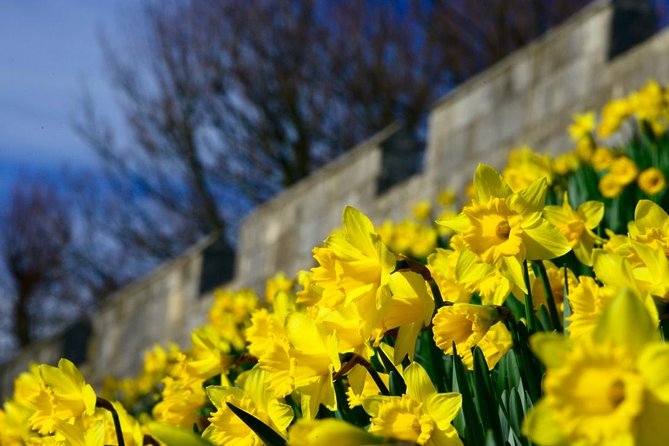
Next comes Museum Gardens, a Victorian botanic garden with the standing remains of the Roman fortress that marks the place where York began. This is one of the strongest stops for showing how the city’s earliest layer still sits inside its later life.
The garden setting makes the Roman remains easy to approach. You get greenery, old stone, and a clear sense that York was not built in one single period. The guide’s explanation connects the Roman foundation to the streets and buildings you see later in the walk.
This is also a good example of why a local guide adds value. Without context, Roman remains can look like isolated blocks of masonry. With a timeline and a few visual aids, you can understand them as part of a fortress and as the first chapter in York’s long urban story.
Again, admission is free, and you remain outside. If you want a longer visit to the museums or a closer look at the gardens, plan that separately. The tour uses the gardens as a history stop rather than as a full botanical or museum visit.
York Minster gives the route its grandest view
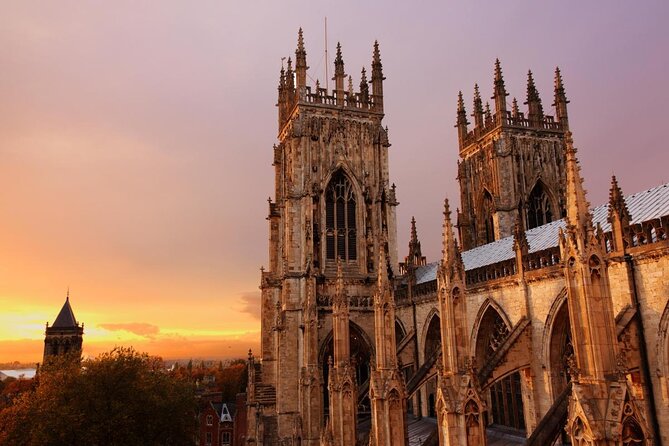
York Minster is the biggest architectural moment on the route. It is described as the largest medieval Gothic cathedral in northern Europe, and even an exterior view gives you a sense of its scale.
The tour spends about 10 minutes here, enough for the guide to explain the cathedral’s place in York and to point out features you might otherwise overlook. This is not a cathedral tour. The walk does not include admission, and the interior is not part of the experience.
That limitation is worth taking seriously. If York Minster is high on your list, you will need a separate ticket and extra time. The walking tour helps you understand what you are looking at, but it cannot replace a visit inside the building.
I like the way this stop fits into the wider route. After the Roman remains and abbey ruins, the Minster shows how York continued to express power and faith through enormous architecture. You see a change in style and purpose without needing a lecture in architectural terms.
Same part of England, a completely different sort of day:
- Mad Alice’s The Bloody Tour of York -Best Tour Award Europe
★ 5.0 · 2,749 reviews - Ghost Bus Tour of York
★ 4.5 · 2,404 reviews - Daytime Sightseeing Boat Cruise in York
★ 4.5 · 1,256 reviews - York Dungeon Entry Ticket
★ 4.5 · 1,108 reviews
Stonegate turns history into a walkable maze
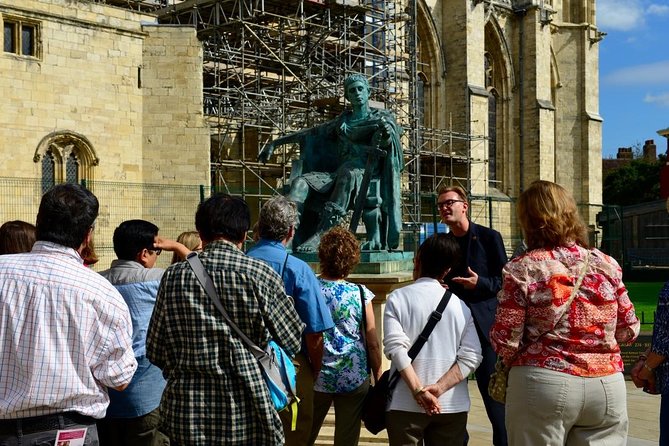
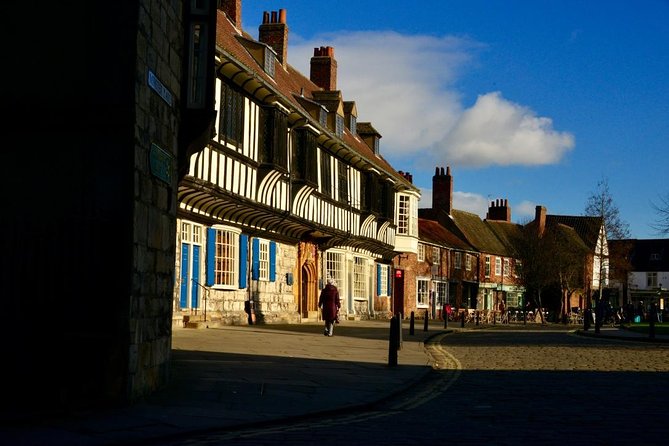
Stonegate introduces one of York’s most enjoyable features: the medieval shortcuts known as Snickelways. These narrow passages and lanes make York feel less like a planned modern city and more like a place shaped by centuries of use.
The guide’s job here is to help you notice how people move through the old center. A lane that looks too narrow for importance may once have been a useful route between larger streets. Stonegate also gives you a feel for the city at street level, after the grand views of the Minster.
This part of the walk is especially useful if you plan to explore on your own later. You will have a better idea of why York’s center rewards slow wandering. The route points you toward the smaller connections that are easy to miss if you follow only the main streets.
There is no entrance fee, but the walk takes place in the active city center. You should expect narrow spaces and a route shared with other people. The group stays small, which helps, but this is still a public urban walk rather than a quiet private site.
The Shambles finishes among medieval shopfronts
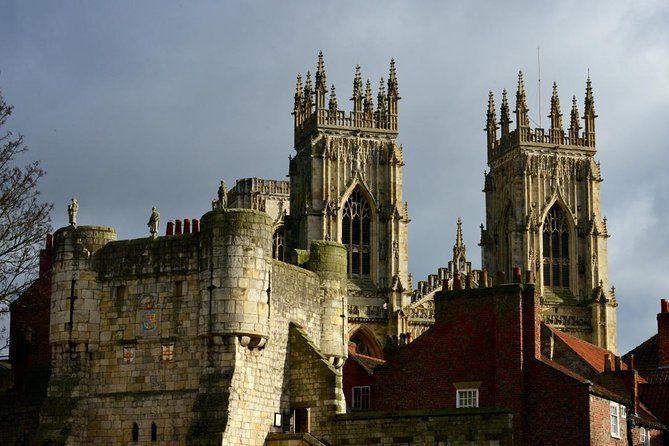
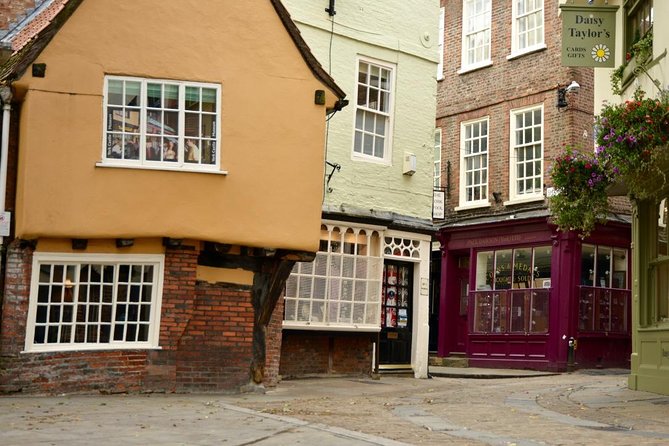
The final major stop is the Shambles, famous as one of Europe’s best-preserved medieval streets and widely associated with the inspiration for Diagon Alley. Its overhanging buildings and tight street plan make it an effective finale.
The Shambles is a place where the setting does much of the work. You can see why it captures the imagination, but the guide adds useful context by explaining how the street fits into York’s development. The point is not only that it looks old. It is that the street still shows the shape and scale of medieval urban life.
This stop can be busy, and the street is popular. The walk gives you an introduction rather than time to browse every shop or take photographs from every angle. That is a fair trade for a 90-minute route, but you may want to return later when you are not following a schedule.
The tour ends at Whip-Ma-Whop-Ma-Gate, in the heart of town at the end of the Shambles. That is a useful finish. You are left near the central sights, with plenty of options for continuing your day rather than being dropped far from the action.
The guide makes the difference

The experience depends heavily on the person leading it. Alfred is described through the tour’s feedback as an engaging storyteller with a strong command of local architecture and a lively sense of humor. Sarah is noted for clear historical explanations, a relaxed manner, and useful suggestions for meals and other activities.
Charlotte’s style is more customized, with attention to the interests of the people in the group. Ferah is also identified as personable and well informed. These details suggest a team that does more than recite dates. The guides aim to learn names, answer questions, and adjust the emphasis when the group shows interest in a particular period or building.
That personal touch is easier to provide with a small group. The tour is advertised for a maximum of eight people, so you should usually be able to hear without standing at the edge of a large crowd. One past group was allowed to reach 10 because of a delayed train, but the normal promise is eight.
The iPads are another useful feature. Older images can show how buildings appeared before damage, rebuilding, or decay changed them. This is especially helpful at St. Mary’s Abbey and around the Roman remains, where the surviving stone does not always explain itself.
What $27.74 gets you
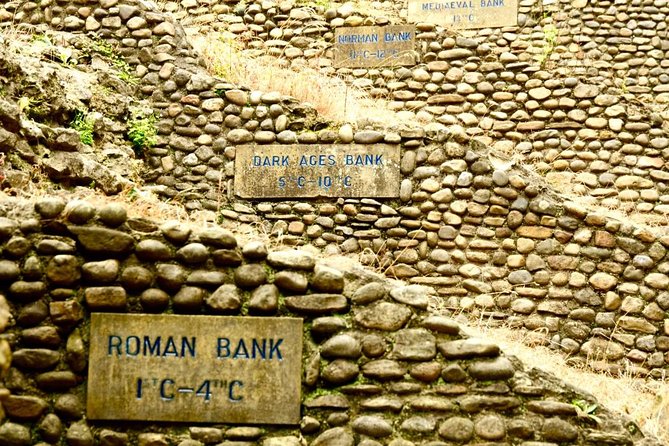
At $27.74 per person, this is a reasonable price for a focused introduction to central York. You are paying for a local guide, a planned route, a small group, visual material, and a complimentary map. You are not paying for cathedral entry, museum tickets, food, transport, or a full-day program.
I would judge the value by what you want from the walk. If you need a quick orientation and a clear story, the price is attractive. You can see five major areas without spending time working out the route or trying to connect unrelated facts.
If you want to tour York Minster inside, study museum collections, or linger at every stop, the value is less direct because those costs and time commitments come afterward. Think of this as a strong first chapter, not the entire York experience.
The map is a small but useful extra. York’s old center can feel like a tangle of lanes, and having a simple reference helps you retrace the route or plan your next stop. The map also makes the tour more useful after it ends.
Who should book this experience
I would recommend the walk to first-time visitors, people with only one day in York, and anyone who prefers a story to a list of monuments. It also suits mixed-age groups, since the route is short and the guide can adjust explanations and answer questions.
Teenagers may enjoy it if they respond to stories, unusual details, and visual material. Very young children may get less from the historical content, particularly because the tour is built around listening rather than hands-on activity.
It is also a good choice for people who want a human introduction to York before exploring alone. The guides can respond to questions and, in some cases, offer suggestions for food, reading, or further activities.
I would skip it if you want a slow photography walk, a private tour with no other people, or a detailed visit inside the Minster. The compact format is its strength, but also its limit.
The route is near public transport, and most people can take part. Service animals are allowed. The meeting point is in York, with the tour finishing at Whip-Ma-Whop-Ma-Gate. Wear comfortable shoes and remember that the experience is entirely outdoors.
Timing, booking, and cancellation
The experience lasts about 90 minutes and is offered in English. It is often booked around 33 days ahead, so reserving early is sensible if your dates are fixed, especially since the group is small.
You receive confirmation when booking, and the operator sends detailed meeting information. The tour includes a personalized greeting sign at the starting point, which should make the group easier to find.
Free cancellation is available up to 24 hours before the start time for a full refund. Changes or cancellations made less than 24 hours ahead are not accepted for a refund, and cut-off times follow local York time.
Should you book The Best of York on Foot?
Book it if you want York to make sense quickly. The route joins Roman remains, abbey ruins, a great cathedral, medieval lanes, and the Shambles into one clear story. The small group and strong local guides are the main reasons to choose it over a large general walk.
Just keep your expectations sensible. You will not enter the Minster or museums, and 90 minutes leaves only a short time at each stop. For $27.74, though, it gives you a friendly orientation, useful visual context, and a better set of eyes for the rest of your time in York.
FAQ
How long does The Best of York on Foot last?
The tour lasts approximately 1 hour and 30 minutes.
How many people can join the tour?
The advertised maximum is eight people.
Which York sights are included?
The route includes St. Mary’s Abbey, Museum Gardens, York Minster, Stonegate, and the Shambles.
Is entry to York Minster included?
No. The tour is outdoors, and admission to the cathedral is not included.
What language is the tour offered in?
The experience is offered in English.
Where does the tour finish?
It ends at Whip-Ma-Whop-Ma-Gate, in the center of York at the end of the Shambles.
Just added around York
- Multi-Day Tour from Brighton to Edinburgh & York including Scottish Highlands★ 4.5 · 3 reviews
- Romans, Vikings and Medieval York: An Audio Tour★ 4.5 · 118 reviews
- Chocolate Bar Making Workshop – York Cocoa Works★ 4.5 · 170 reviews
- Evening ‘Happy Hour’ Boat Cruise For All Ages In York★ 4.0 · 243 reviews
- Fun, Flexible Treasure Hunt Around York with Cryptic Clues & Hidden Gems★ 5.0 · 248 reviews
- York Witches and History Walking Tour★ 5.0 · 410 reviews
- Golden Tours York Hop-on Hop-off Open Top Bus Tour with Audio Guide★ 4.5 · 468 reviews
- York Forbidden Chronicles – Tales for the dark souls.★ 4.5 · 450 reviews
Walking Tours, compared.
Oxford University Walking Tour With University Alumni Guide
Read our review →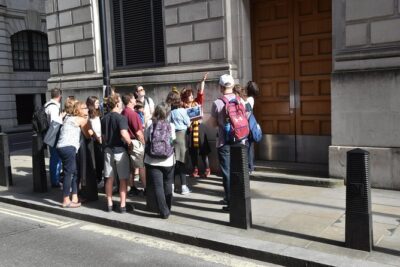
Tour for Muggles The Ultimate Harry Potter Walking Tour in London
Read our review →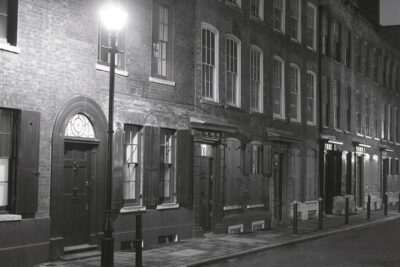
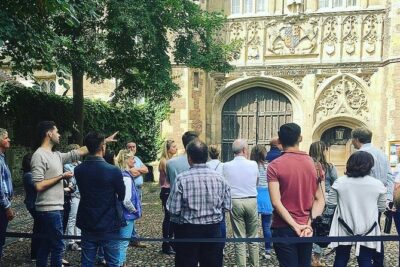
Cambridge University Walking Tour by Alumni™ Kings College Option
Read our review →
Blackbeard to Banksy – The Ultimate Walking Tour of Bristol
Read our review →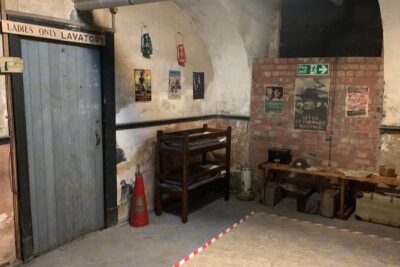
Air Raid Shelter + St. Nicholas Market Walking Tour
Read our review →
Walking Tour of Bath with Blue Badge Tourist Guide
Read our review →
Changing of the Guard Guided Walking Tour in London
Read our review →Browse the lists this tour appears in