
Reviewed · WALKING TOURS
Ilfracombe Seafront History Walking Guided Tour
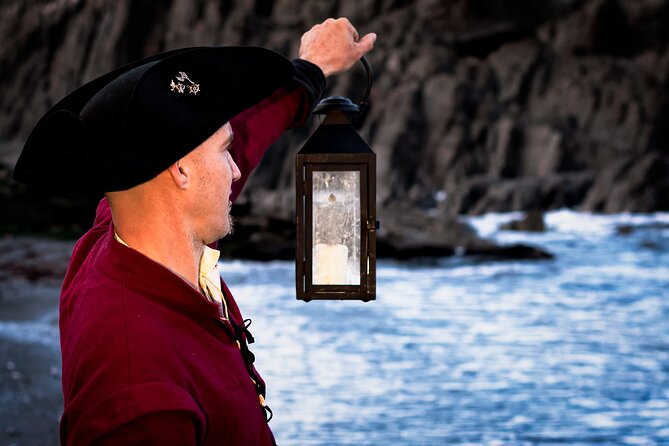
Ilfracombe’s seafront has more stories than its pleasant views suggest. On this 90-minute guided walk, you move from a Victorian luxury hotel to an old port and finally to St Nicholas Chapel, a medieval building that also served as a lighthouse. Along the way, guide Mark adds ghost stories, old photographs, and the odd tale of war, wealth, and seaside scandal.
I like the way the tour joins buildings to the sea rather than treating Ilfracombe as a collection of pretty views. I also like its small maximum of 15 people, which should make it easier to hear the commentary and ask questions. The main drawback is its short length: you get a lively introduction, not a full study of every corner of town, and the outdoor format depends on decent weather.
Key points to know before you book

- A compact route with a clear story: You walk from the Landmark Theatre to Ilfracombe Harbour and St Nicholas Chapel.
- Mark leads the tour: Expect spoken commentary, old photographs, questions, local mysteries, and ghost stories.
- The former Ilfracombe Hotel opens the tale: This Victorian building once welcomed wealthy visitors arriving by steamship.
- The harbour explains Ilfracombe’s purpose: Its sheltered position made it an important port and registered refuge on the Bristol Channel.
- St Nicholas Chapel is the unusual finale: It is a 14th-century seamen’s chapel, surviving beacon chapel, and lighthouse.
- Small groups and a relaxed pace: The maximum is 15 people, and friendly dogs on leads are welcome.
Start at the Landmark Theatre and meet Victorian Ilfracombe
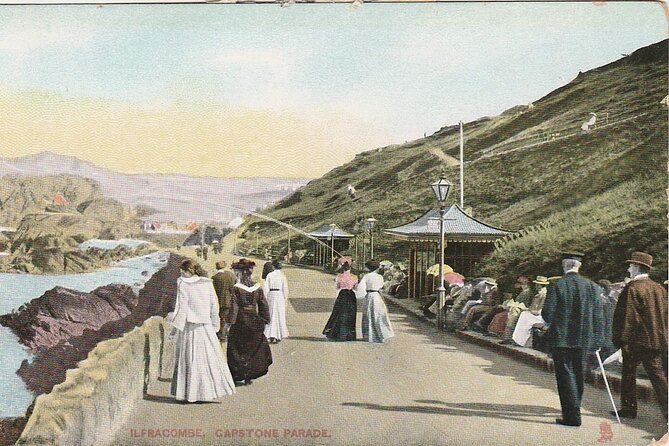
The tour begins at 2pm outside the Landmark Theatre on The Promenade. This is a useful starting point because you are immediately placed in the part of Ilfracombe shaped by seaside tourism, not just its older harbour life.
The first stop focuses on the former Ilfracombe Hotel. Opened on May 15, 1867, it was the town’s first purpose-built luxury hotel and occupied a prime position beside the sea, looking toward Capstone Hill and Wildersmouth Beach. That location tells you a great deal about Victorian Ilfracombe. The town was not simply a fishing settlement waiting for modern visitors. It was being packaged as a fashionable resort for people arriving to enjoy the coast.
I appreciate this opening because it gives the walk a social angle. You are not only hearing when a building was constructed. You are considering who came here, why the seafront mattered, and how a small coastal town changed when steamship travel brought wealth and visitors within easier reach.
The hotel was known as the Alexandra Hotel in the 1880s. Later, in the 1970s, a couple named Blackmore owned or managed it. The building also carries a darker reputation as one of the town’s most haunted pubs. Mark uses details such as these to shift the mood from Victorian grandeur to local mystery.
You should expect to spend about 10 minutes here. Admission is free, and the stop is mainly about exterior history and storytelling rather than a long visit inside. If you want a detailed architectural inspection, this may feel brief. If you like history delivered through people, changing names, and strange incidents, it is a strong beginning.
More historical tours in Devon:
- London Small Group Tour of Historical Pubs
★ 5.0 · 10,422 reviews - Stonehenge and Bath Day Trip from London with Optional Roman Baths Visit
★ 5.0 · 2,028 reviews - Soho Music & Historic Pubs Tour
★ 5.0 · 1,993 reviews
Walk the seafront with old photographs and local tales
The walk between the main stops is where the guide’s style matters most. Mark has been praised for keeping the pace relaxed while filling the route with stories about beaches, buildings, and the harbour. He also uses old photographs to help you picture Ilfracombe in earlier periods.
That visual aid is especially useful in a resort town. A present-day street can look ordinary until you see how it functioned when hotels, steamships, and seaside promenades drove the local economy. Old images give you a way to compare the town’s earlier appearance with what you see around you.
The commentary also reaches beyond safe, familiar heritage facts. You may hear about Ilfracombe’s development from an Iron Age hill fort settlement, the rise and fall of grand buildings, wartime connections, and an incident linked to the start of the First World War. The supplied details do not set out every part of those stories, so you should think of them as prompts for the guide’s wider commentary rather than a fixed lecture on military history.
The unusual tales are a major reason to choose this tour. If you are looking only for a scenic stroll, you can walk the promenade alone. The value here comes from learning why certain buildings mattered and hearing stories you would probably miss without a local guide.
Reach Ilfracombe Harbour, the town’s working heart
The second main stop is Ilfracombe Harbour, about 15 minutes. A port has existed here since the 12th century, with settlement in the area going back much further. The harbour’s natural shape gave ships shelter on the Bristol Channel, and Ilfracombe became a significant safe port and registered port of refuge.
This is the point where the town’s geography becomes easy to understand. The sea is not just scenery. It brought goods, visitors, danger, work, and news from elsewhere. A sheltered harbour could protect ships from rough Bristol Channel conditions, while also giving the town a reason to grow.
I like this stop because it links the grand hotel at the beginning with the older coastal economy. The hotel represents the age when Ilfracombe was selling leisure. The harbour represents the practical reason the settlement existed in the first place.
The stop also helps explain the town’s long relationship with shipping. You can look across the water while hearing how the harbour served sailors and local residents. The route later ends near the harbour pier by Verity, or at St Nicholas Chapel, so the harbour is not a passing backdrop. It is one of the main subjects of the walk.
There is no admission charge for this part. You remain outdoors, so bring a layer even on a mild day. The tour requires good weather, and the organiser may cancel if conditions are poor. That is a sensible policy for a walk by the sea, though it means you should keep some flexibility in your plans.
See St Nicholas Chapel, the unusual final stop

The walk finishes at St Nicholas Chapel on The Quay, or near the harbour pier by Verity. The chapel dates from the 14th century and was built for people who lived and worked around the harbour. It is described as a seamen’s chapel, so its purpose was closely tied to the daily risks of coastal life.
What makes it especially unusual is its double role. St Nicholas Chapel is the only surviving beacon chapel and lighthouse of its kind. It is known to have been used as a lighthouse during the time of Henry VIII, and its light still guides shipping into the harbour.
That detail gives the ending real weight. You finish not with a general view, but with a building that connects worship, navigation, and maritime safety. The chapel makes sense only when you understand Ilfracombe as a port exposed to the Bristol Channel.
The planned stop is about five minutes, so do not expect a long interior visit or an extended guided examination. The chapel’s value is in its setting and purpose. It is a compact final chapter that brings together the themes of faith, sailors, danger, and the sea.
If you enjoy old religious buildings, you may wish the visit lasted longer. Still, the short stop keeps the whole experience within roughly an hour and a half, which suits anyone who wants a focused introduction rather than a full afternoon commitment.
More walking tours in Devon:
- The Fawlty Tours walking experience
★ 5.0 · 42 reviews - Walking Tour of Exmouth in East Devon
★ 5.0 · 12 reviews - Oxford University Walking Tour With University Alumni Guide
★ 5.0 · 6,905 reviews - Tour for Muggles The Ultimate Harry Potter Walking Tour in London
★ 5.0 · 4,684 reviews
How Mark’s guiding shapes the experience

Mark is named as the guide in the available feedback, and his role is central to the tour. The route itself is straightforward, but the stories give it character. He answers questions, explains the history of the beaches and buildings, and uses mystery and ghost stories without turning the entire walk into a theatrical performance.
That balance matters. Ilfracombe has enough factual history to support a solid walking tour, but a list of dates would not make the seafront memorable. Mark’s approach adds human detail and a little suspense, while still explaining how the town developed.
The published score is 4.8 out of 5 from 18 ratings, with 94 percent recommending the experience. The strongest praise focuses on Mark’s enthusiasm, clear explanations, old photographs, relaxed pace, and ability to make the town feel more layered. Those are the qualities I would value most here because they cannot be reproduced by following a map alone.
The group maximum is 15 people. That is large enough to provide a social atmosphere but small enough that you should normally be able to hear the guide. A smaller group also gives you a better chance to ask about a particular building or local story.
What the 90-minute length means for you

An hour and a half is enough to cover the three main points without turning the walk into a tiring history lesson. You get a clear route, several distinct chapters, and time to look around as you go.
The short duration also makes this easy to fit into a day in Ilfracombe. A 2pm start leaves the morning open, and the finish at the chapel or harbour pier puts you in a useful place for continuing your own exploration afterward.
You should not book this expecting every historical period to receive equal attention. The route gives more space to the Victorian resort, harbour life, maritime history, and local mysteries. The Iron Age origins, war stories, and other parts of the town’s past appear as wider context rather than separate, detailed stops.
Wear comfortable shoes and plan for a walk beside the water. No special fitness level is stated, and most people can take part, but outdoor paths and changing weather are always worth bearing in mind. Service animals are allowed, and friendly dogs on leads are welcome.
Value, flexibility, and practical details

No tour price is provided in the supplied information, so I cannot judge the exact cost against similar experiences. The value is easiest to understand in terms of what you receive: a small-group walk, a local guide, historical commentary, old photographs, several unusual stories, and access to a route that links the seafront with the harbour and chapel.
That is good value if you want context quickly. You could see the harbour and chapel without paying for a guide, but you would miss the connection between the former luxury hotel, the port’s role as a refuge, and the chapel’s work as a beacon.
Confirmation is sent at booking. The experience is offered in English and uses a mobile ticket. It is near public transportation, and most people can participate.
Free cancellation is available up to 24 hours before the 2pm start for a full refund. Changes or cancellations within 24 hours are not accepted for a refund. The tour needs good weather and a minimum number of participants. If poor weather or low numbers cause cancellation, you are offered another date or experience, or a full refund.
Who should book this Ilfracombe walk?

I would choose this tour if you are visiting Ilfracombe for the first time and want a useful sense of place before exploring on your own. It also suits anyone who likes local legends, old buildings, maritime stories, and guides who can answer questions rather than simply recite dates.
Families with older children may enjoy the haunted hotel stories and lighthouse connection. Dogs on leads are welcome, which makes the walk practical for some holiday plans. The English-only format is fine for fluent English speakers, but it may not suit anyone who needs commentary in another language.
You may prefer to skip it if you want a private, in-depth architectural tour, a long chapel visit, or a route that stays entirely indoors. The weather requirement is another consideration. This is an outdoor experience, and the seafront is part of its appeal, but also part of its uncertainty.
Should you book the Ilfracombe Seafront History Walking Guided Tour?
I would book it for a short, story-led introduction to Ilfracombe. The best parts are the connections: the hotel shows the town as a Victorian resort, the harbour explains its older working life, and St Nicholas Chapel reveals how closely faith and navigation once belonged together.
It is not a full town history course, and the five-minute chapel stop may feel quick to serious heritage fans. But if you want a relaxed walk with a lively guide, old photographs, ghost stories, and a clear explanation of why Ilfracombe grew where it did, this is a sensible choice. The 2pm start, small group limit, and 90-minute length make it easy to add to a wider day by the coast.
FAQ
Where does the Ilfracombe history walking tour start?
The tour starts at the Landmark Theatre on The Promenade, Ilfracombe, EX34 9BZ.
What time does the tour begin?
The stated start time is 2pm.
How long does the walking tour last?
The experience lasts approximately 1 hour and 30 minutes.
Where does the tour finish?
It finishes at St Nicholas Chapel on The Quay, or at the harbour pier near Verity.
Is the tour offered in English?
Yes. The tour is offered in English.
What places are visited during the walk?
The route includes the former Ilfracombe Hotel area at the Landmark Theatre, Ilfracombe Harbour, and St Nicholas Chapel.
Is St Nicholas Chapel a lighthouse?
St Nicholas Chapel is a 14th-century seamen’s chapel and the only surviving beacon chapel and lighthouse. Its light still guides shipping into the harbour.
How many people can join the tour?
The experience has a maximum group size of 15 people.
Are dogs and service animals allowed?
Service animals are allowed, and friendly dogs on leads are welcome.
Can I cancel for a full refund?
Yes. You can cancel at least 24 hours before the experience start time for a full refund. Cancellations within 24 hours are not refunded.
Just added around Devon
- Wine Tasting Experience in Torquay★ 5.0 · 5 reviews
- Walking Tour of Exmouth in East Devon★ 5.0 · 12 reviews
- Wooden Duck Painting or Pottery Painting-Take item home same day★ 5.0 · 44 reviews
- Gliding Experience in Devon★ 5.0 · 4 reviews
- Half Day Sea kayak Guided Tour★ 5.0 · 15 reviews
- Ilfracombe Harbour Ghost Tour★ 5.0 · 75 reviews
- Guided Wildlife and Sea Cave Kayak Safari in English Riviera★ 5.0 · 121 reviews
- The Fawlty Tours walking experience★ 5.0 · 42 reviews
Walking Tours, compared.
Oxford University Walking Tour With University Alumni Guide
Read our review →
Tour for Muggles The Ultimate Harry Potter Walking Tour in London
Read our review →
Cambridge University Walking Tour by Alumni™ Kings College Option
Read our review →
Blackbeard to Banksy – The Ultimate Walking Tour of Bristol
Read our review →
Air Raid Shelter + St. Nicholas Market Walking Tour
Read our review →
Walking Tour of Bath with Blue Badge Tourist Guide
Read our review →
Changing of the Guard Guided Walking Tour in London
Read our review →Browse the lists this tour appears in