
Reviewed · WALKING TOURS
A Walk Through Time: History of Liverpool Walking Tour
Liverpool’s past is packed into a compact waterfront walk. In about 1 hour 50 minutes, you move from the Royal Liver Building and the city’s medieval roots to the docks, cotton trade, Atlantic slavery, wartime commerce, and modern Liverpool ONE. The tour’s strongest feature is its sense of cause and effect: you see how docks and trade shaped the city.
I like the local-history focus, especially the attention given to the Old Dock and the city’s less comfortable role in Atlantic trade. I also like the value: at $27.74, you get an English-language tour led by a historian, with no admission fees required at the stops listed. The main drawback is pace. There is a lot to absorb, and one person found the guide spoke too quickly. The open waterfront can also be cold and windy.
Key points about Liverpool’s past in 110 minutes
- The Royal Liver Building opens and closes the walk, giving you a clear view of Liverpool’s famous Three Graces.
- The medieval story begins at Liverpool Parish Church Gardens, near the site linked to the city’s 1207 origins.
- Old Hall Street and the Cotton Exchange explain Liverpool’s commercial rise, including its Atlantic trade and slavery connections.
- The Old Dock, built in 1715, shows why Liverpool became such an efficient port.
- John and Julio are named guides, with John receiving especially strong praise for clear storytelling, local knowledge, and Scouse humor.
- The route is mostly outdoors, so comfortable shoes and a warm, weatherproof layer matter.
Starting beneath the Three Graces

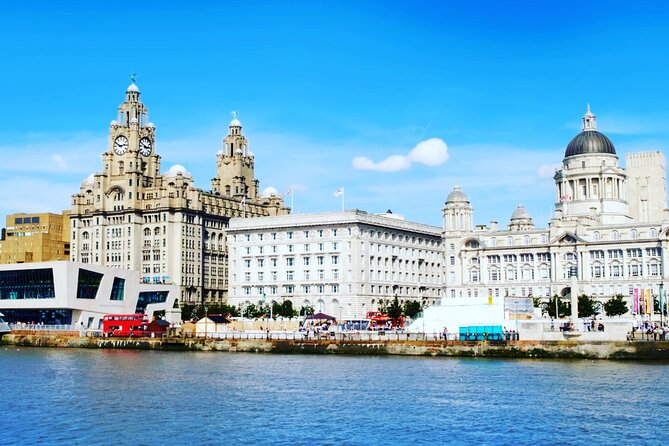
Meet at the Royal Liver Building on Pier Head. This is a practical starting point because you are immediately beside Liverpool’s most recognizable waterfront buildings, known together as the Three Graces: the Royal Liver Building, the Cunard Building, and the Port of Liverpool Building.
The first ten minutes set the tone. You receive an introduction to the tour and the story of the waterfront before moving inland. The Royal Liver Building itself is viewed from outside, and admission is not included. That is no hardship for a history walk, but you should not book this expecting an interior visit or tower experience.
This opening works well for first-time visitors because it places Liverpool’s identity in one frame: maritime trade, civic pride, and grand commercial architecture. Your guide may also use the Three Graces to explain how the waterfront reflects the city’s importance during the height of ocean shipping.
The meeting point is easy to identify, but allow enough time to find Pier Head. The tour is offered in English and uses a mobile ticket. With groups capped at 40 people, the walk can feel reasonably manageable, though this is not a private tour.
More Historical Tours in Liverpool
- Best Of Liverpool Heritage, History & Culture Guided Walking Tour
★ 5.0 · 539 reviews - History Guided Tour of Liverpool and the Beatles
★ 5.0 · 408 reviews - Liverpool Hidden History and Dead House Evening Walking Tour
★ 5.0 · 200 reviews
Finding medieval Liverpool at the parish church gardens
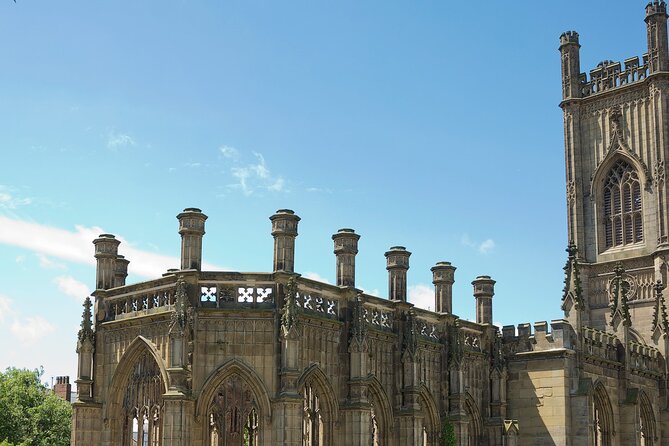
The walk crosses the Strand to Liverpool Parish Church Gardens, linked to the site of the former St. Nicholas’ Church. The church was named for St. Nicholas, patron saint of sailors, which fits Liverpool’s long connection with the sea.
This is one of the most useful stops because it shifts your attention away from the grand waterfront and toward the city’s beginnings. Here, your guide explains Liverpool’s medieval origins from 1207 and points to physical evidence connected with the town’s creation in the 13th century.
You should expect a short outdoor talk rather than a museum visit. The stop lasts about 15 minutes, admission is free, and the value comes from seeing the location while the story is explained around you. If you only associate Liverpool with the 19th century, ships, or the Beatles, this early chapter helps reset your view.
The gardens also offer a brief change of pace. The route is not simply a line of port buildings. It moves through layers of the city, from medieval settlement to Georgian commerce and modern redevelopment.
Old Hall Street and the uncomfortable story of trade
Old Hall Street brings you into the commercial story. The street dates from the 13th century, and the route passes listed buildings before reaching the site associated with the Cotton Exchange.
This is where the tour asks you to look honestly at Liverpool’s wealth. Cotton arrived through international trade, and the city became a major global port. The guide also covers Liverpool’s role in Atlantic trade, including its involvement in the transatlantic slave trade.
That subject is essential, not an optional footnote. Liverpool’s prosperity was connected to systems that caused immense human suffering, and the tour makes room for that difficult truth alongside the story of commercial growth. If you want a polished city tale with only grand buildings and success stories, this may feel more serious than expected. I consider that a strength.
The stop lasts about ten minutes, but the subject is broad. Pay close attention, and ask questions if the guide invites them. John is especially well regarded for making complicated connections understandable, though one person found the delivery fast. Standing near traffic can also make it harder to hear, so stay close to the guide.
Liverpool Town Hall and Georgian ambition
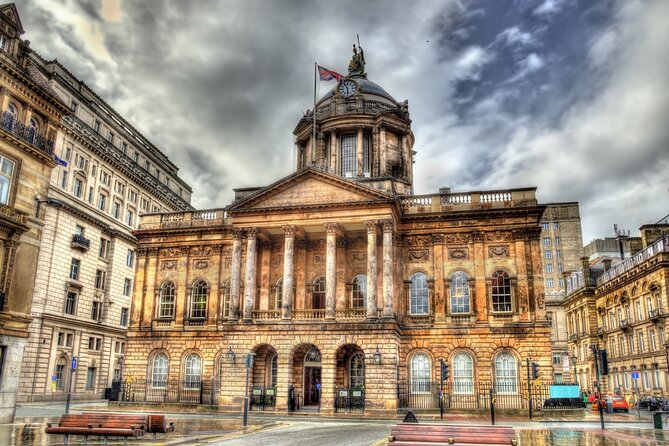
Liverpool Town Hall dates from 1749 and is presented as one of the finest surviving Georgian buildings in the United Kingdom. The tour uses it to explain how Liverpool developed into a port city and commercial center.
You see the building from outside, and admission is not included. The stop is about ten minutes, so this is not an architectural tour of the interior. Instead, the building serves as a visual marker for the wealth and confidence Liverpool gained through trade.
I like this part because it connects civic architecture to economics. A grand town hall is not just a pretty facade. It reflects who had money, who held power, and how a port city wanted to present itself.
More Walking Tours in Liverpool
- Liverpool Ghost Walking Tour
★ 5.0 · 862 reviews - Beatles Famous Walking Tour Of Liverpool- Fully Guided
★ 5.0 · 751 reviews - Downtown Liverpool Walking Tour – In Spanish
★ 5.0 · 591 reviews - Tales from the Necropolis – A Ghost Walk Through St. James Cemetery
★ 5.0 · 263 reviews
Castle Street, Liverpool Castle, and the city’s changing shape
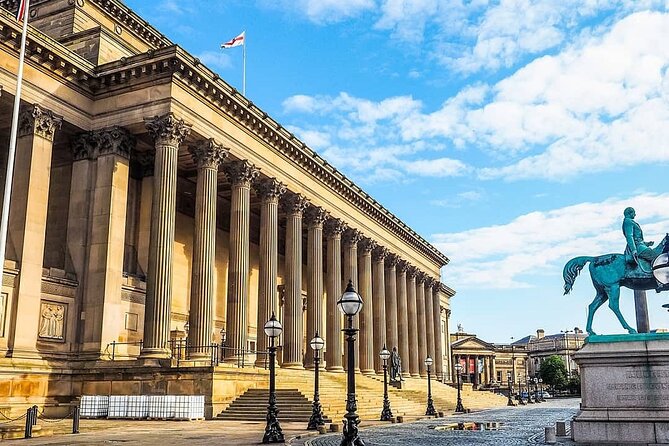
Castle Street offers one of the clearest visual transitions on the route. Its buildings show Liverpool changing through the 18th century, while the name points back to Liverpool Castle and an earlier phase of the city.
The guide discusses the castle site and the importance of Castle Street in Liverpool’s development. This is another outdoor stop, with free admission, and it gives you a chance to read the city’s layout rather than simply walk past it.
At the Queen Victoria Monument, the focus shifts to Liverpool’s rise as a major port. The tour presents the city as the largest port on the planet for global trade by 1800, then links that growth to the sites you have already seen.
The monument is also important for the route itself. The tour information gives the Queen Victoria Monument at One Derby Square as the end point, while the stop sequence later describes a return to the Royal Liver Building. That is a genuine inconsistency. Confirm the final meeting location before setting plans for a museum booking, train, or meal immediately afterward.
Liverpool ONE and the modern city
The walk then passes through Liverpool ONE, the modern shopping and entertainment district. This ten-minute section is less about old masonry and more about how the city has been renewed for present-day use.
You receive a guided look at the shopping destination, its stores, and its attractions. Do not expect a full shopping tour. The point is to see how a former commercial city has adapted its central area for modern retail and leisure.
Some history walks would skip contemporary Liverpool, but this brief stop gives the tour a useful final chapter. The city did not stop changing when the docks declined. Liverpool ONE represents a newer phase of urban redevelopment, placed within the same central area shaped by centuries of commerce.
The Old Dock and the machinery of port power
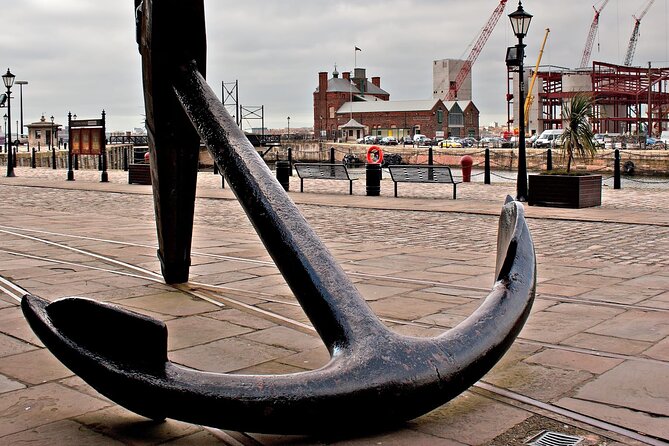
The Old Dock is one of the most important stops. Built in 1715, it was the first commercial wet dock on the planet, according to the tour’s presentation.
A wet dock allowed ships to remain in water regardless of the tide. That basic change had major consequences for loading, unloading, and scheduling. Your guide explains how the dock helped Liverpool become a more efficient port and supported its rise in world trade.
This is the kind of place that can be easy to miss without a guide. Modern streets and buildings do not always make the old dock’s importance obvious. The explanation gives the site meaning, especially if you are interested in engineering, shipping, or the practical reasons behind Liverpool’s success.
The stop lasts about ten minutes and is free. The main limitation is that you are learning about the dock through an outdoor explanation rather than entering a large preserved dock complex. Still, the location is central to understanding why Liverpool grew so quickly.
Royal Albert Dock and the 19th-century port
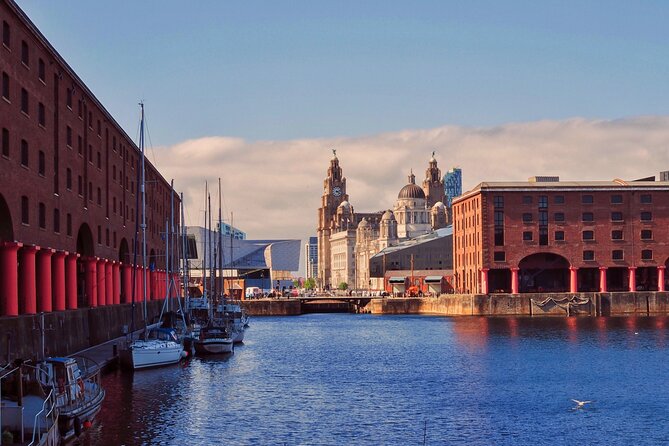
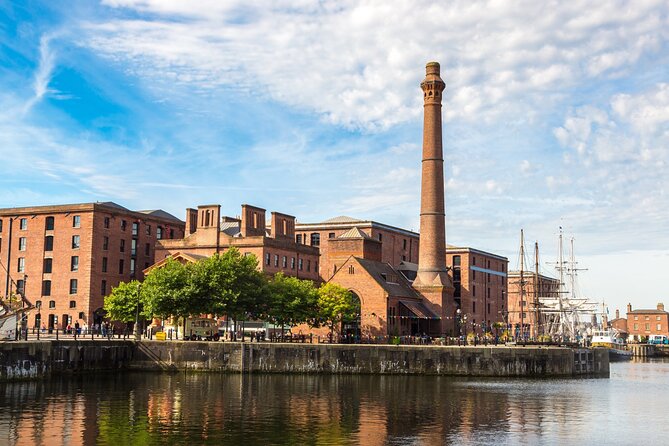
Royal Albert Dock brings you into the 1800s. Built in 1846, it became a major center of Liverpool’s commerce and remains one of the city’s most recognizable areas.
Here, the guide discusses the dock’s commercial role and Liverpool’s involvement in the First and Second World Wars. That adds another layer to the waterfront. The docks were not only places for cotton and cargo. They were tied to national supply lines, shipping, and wartime activity.
The ten-minute stop is enough for a broad explanation, not a full visit to the dock’s museums or attractions. If you want to explore the Tate Liverpool area, the Maritime Museum, or other nearby sights, plan to return after the walk. The tour helps you understand the setting, but it does not replace time inside those institutions.
Royal Albert Dock is also one of the better spots for photographs and orientation. You can see how the working port has become part of the public face of modern Liverpool, while the guide keeps attention on its original purpose.
Finishing with the Three Graces
The final stop is listed as another five minutes at the Royal Liver Building and the Three Graces. This brings the story back to where it began and gives the guide a chance to tie together Liverpool’s waterfront, commerce, architecture, and maritime identity.
The short closing is useful because the walk covers a large span of time. You have moved from a medieval settlement to a port shaped by docks, cotton, slavery, ocean traffic, war, and modern redevelopment. The final waterfront view gives that long story a clear physical ending.
Again, the stated end point needs checking. One part of the tour information says the walk finishes at the Queen Victoria Monument at the bottom of Castle Street, while the final stop says it reaches the Three Graces. Treat the Queen Victoria Monument as the official end point unless the operator confirms otherwise, but ask before booking if the exact finish matters to you.
What the guides add to the experience
The named guides are John and Julio. John receives the most detailed praise, especially for his enthusiasm, local connection, clear explanations, humor, and ability to answer questions. One person who had lived in Liverpool for decades still learned new facts, which tells you this is not only for first-time visitors.
Julio is described as engaging and well informed, and his tour was appreciated as a useful introduction for the rest of a stay. The guide makes a big difference here because many stops are ordinary streets or open sites. Without explanation, you might walk past them without seeing their importance.
You should expect a strong flow of facts. That is a benefit if you enjoy history, but it can be demanding. Wear a warm coat or jacket in cold weather, especially near the river, and stay near the guide if traffic or wind makes hearing difficult. Comfortable shoes matter, even though the walk is under two hours.
Is $27.74 a fair price?
At $27.74 per person, this is good value if you want a broad introduction to Liverpool without paying separate admission fees. The tour covers medieval origins, civic buildings, Atlantic trade, the Old Dock, Royal Albert Dock, and modern redevelopment in one compact outing.
The value is strongest on your first day in the city. You can use the walk to decide which places deserve a longer visit later. It also saves you from treating the waterfront as a collection of attractive buildings with no connection between them.
The tradeoff is depth. Ten minutes at a stop cannot provide a full museum visit or a detailed architectural lecture. You are paying for a guided framework, not access to interiors or a specialist tour of every building.
The tour is generally booked about 19 days ahead, so reserve early if your schedule is fixed. It requires good weather, and poor conditions may lead to a new date or a full refund. You can cancel for a full refund up to 24 hours before the start time. Service animals are allowed, public transport is nearby, and most people can take part.
Who should book this Liverpool walk?
Book it if you want to understand how Liverpool became a port city, especially if you care about docks, commerce, architecture, and social history. It is a strong choice for first-time visitors, history students, and people who want more than a Beatles-focused view of the city.
It also suits locals or repeat visitors who enjoy hearing the story behind familiar streets. John’s local perspective and the serious treatment of Atlantic slavery add value beyond a basic sightseeing circuit.
You may want something else if you prefer a small private group, a slower pace, museum interiors, or a tour centered mainly on music. A maximum of 40 people is allowed, and the amount of information can come quickly. If you have mobility concerns, check directly before booking, since the supplied details say most people can participate but do not give a full route-access statement.
Should you book it?
Yes, if you want a compact, affordable history lesson that connects Liverpool’s medieval beginnings with its port, docks, wealth, and modern city center. The best parts are the Old Dock, the discussion of Atlantic trade, and the guides’ ability to make overlooked sites matter.
Book with two cautions: dress for wind and rain, and confirm the actual finishing point because the supplied route details conflict. If you can handle a brisk pace and a lot of information, this is a useful first look at Liverpool before exploring the city on your own.
FAQ
How long does the Liverpool history walking tour last?
The tour lasts approximately 1 hour and 50 minutes.
How much does the tour cost?
The listed price is $27.74 per person.
Where does the tour begin?
It begins at the Liver Building, Pier Head, Liverpool L3 1HU, beside the Royal Liver Building.
Where does the tour end?
The tour information gives the Queen Victoria Monument at One Derby Square as the end point, but it also describes the final stop at the Royal Liver Building. Confirm the finish with the operator before booking onward plans.
What language is the tour offered in?
The tour is offered in English.
Which landmarks are included?
The route includes the Royal Liver Building and Three Graces, Liverpool Parish Church Gardens, Old Hall Street, Liverpool Town Hall, Castle Street, the Queen Victoria Monument, Liverpool ONE, the Old Dock, and Royal Albert Dock.
Is admission to the attractions included?
The listed stops are primarily outdoor locations. Admission is not included for the Royal Liver Building or Liverpool Town Hall, while the other listed stops show free admission.
Can I cancel for a refund?
You can cancel at least 24 hours before the start time for a full refund. Cancellations or changes made less than 24 hours before the start time are not refunded, and poor weather may lead to a new date or full refund.
Just added around Liverpool
- Private Transfer from London & All London Airports to Liverpool★ 5.0 · 3 reviews
- Liverpool and The Beatles 2 Day Rail Tour from London with Hotel★ 4.0 · 10 reviews
- Beatles Magical Mystery Tour★ 5.0 · 69 reviews
- Beatles and Rock Superstars – Private Taxi Tour with Hotel Pickup★ 5.0 · 9 reviews
- Half Day Welcome to Liverpool Walking Tour★ 5.0 · 17 reviews
- LIVERPOOL: Yorkshire Adventure – Sightseeing Day Trip Tour★ 5.0 · 13 reviews
- Fun, Flexible Treasure Hunt Around Liverpool with Cryptic Clues & Hidden Gems★ 5.0 · 141 reviews
- Beatles Ticket To Ride Half Day Tour Small Groups★ 5.0 · 60 reviews
Walking Tours, compared.
Oxford University Walking Tour With University Alumni Guide
Read our review →
Tour for Muggles The Ultimate Harry Potter Walking Tour in London
Read our review →
Cambridge University Walking Tour by Alumni™ Kings College Option
Read our review →
Blackbeard to Banksy – The Ultimate Walking Tour of Bristol
Read our review →
Air Raid Shelter + St. Nicholas Market Walking Tour
Read our review →
Walking Tour of Bath with Blue Badge Tourist Guide
Read our review →
Changing of the Guard Guided Walking Tour in London
Read our review →Browse the lists this tour appears in