
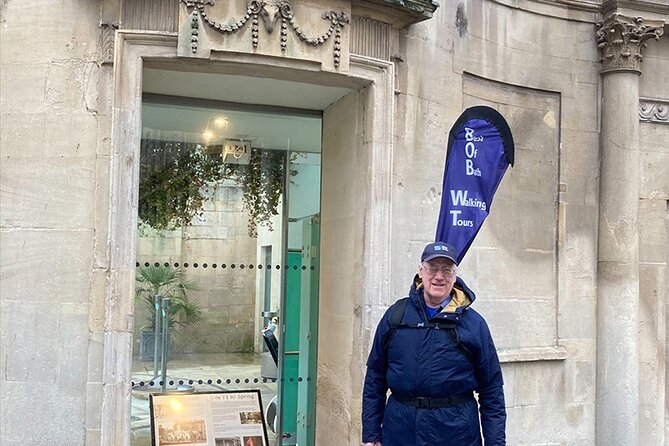
Reviewed · WALKING TOURS
Best of Bath Walking Tours – Georgian Tour
Bath’s Georgian architecture is best understood on foot, where grand façades, hidden paths, old walls, and social history fit together like pieces of one city plan. Bob’s walk takes you from Bath Abbey through Queen Square, the Circus, Royal Crescent, Pulteney Bridge, and the Guildhall Market, with plenty of attention to the people behind the buildings.
I like the small maximum group of 15, which makes it easier to ask questions, and I like Bob’s relaxed mix of architecture, humor, local detail, and stories about the people who shaped Bath. The tour also covers a lot without feeling rushed.
The main consideration is that this is an outdoor walking tour, not an interior sightseeing visit. Several stops, including the Roman Baths, Assembly Rooms, and No. 1 Royal Crescent, are viewed from outside, and separate admission is not included where entry is available.
Key points to know before you book
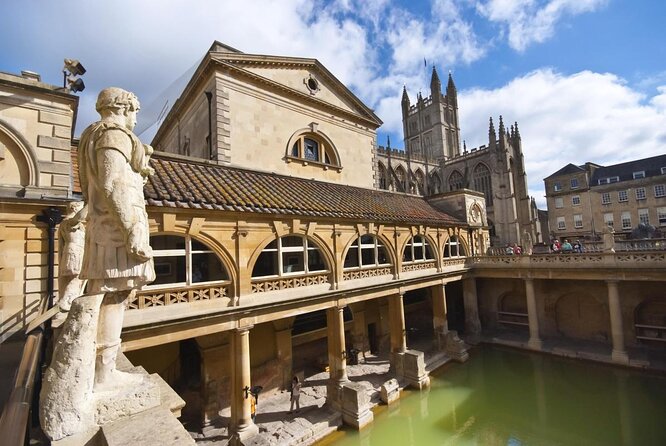
- Start and finish by Bath Abbey: The walk begins and ends in Abbey Churchyard, making it easy to fit into a day of sightseeing.
- A two-hour tour with broad coverage: You see Georgian landmarks, Roman remains, medieval traces, the river, and the market.
- Bob is the central strength: His humor, local knowledge, patience, and willingness to answer questions shape the experience.
- Limited to 15 people: The group size allows for a more personal feel than a large city walk.
- Mostly an exterior architecture tour: Paid attractions are pointed out, but admission fees are not part of the $27.73 price.
- Best for curious walkers: You need a moderate level of fitness and should be ready to walk outdoors in changing weather.
Why Georgian Bath makes a good walking subject
Bath can look almost too polished at first glance. Honey-colored stone, sweeping terraces, formal squares, and grand public buildings create a pretty picture, but the city becomes more interesting when you understand the ambition behind it.
The Georgian builders were not simply putting up attractive houses. They were shaping a fashionable spa city for wealthy visitors, with carefully planned streets and spaces for housing, entertainment, shopping, healing, and social display. John Wood the Elder and John Wood the Younger helped give Bath its distinctive order, while architects such as Robert Adam added their own touch.
That is why this tour works better than a quick stroll with a map. You are not only looking at façades. You are learning why a circle such as the Circus was designed with three entrances, why the Royal Crescent curves across the hillside, and how public buildings helped Bath compete as a resort.
Bob also brings the focus down from architecture to people. His style, as described by the many detailed comments about the tour, is informal and funny rather than stiff or academic. He explains the buildings, but he also talks about the characters who lived in them and the social world that made Georgian Bath fashionable.
More Walking Tours in Bath
- Walking Tour of Bath with Blue Badge Tourist Guide
★ 5.0 · 1,877 reviews - Roman Baths and Bath City Walking Tour
★ 4.5 · 762 reviews - Bad of Bath fun Walking Tour of Bath
★ 5.0 · 402 reviews
Starting in Abbey Churchyard

The meeting point is Abbey Churchyard, directly in front of Bath Abbey. The start time is 1:00 p.m., and the same spot serves as the finishing point.
Bath Abbey gives the tour a useful opening marker. The church began in the 7th century, was reorganized in the 10th century, and was rebuilt in the 12th and 16th centuries. It is a reminder that Bath was already an important place long before Georgian planners reshaped its streets.
You should arrive ready to walk rather than expecting a long introduction indoors. The tour remains outside, and the opening section helps you get your bearings in central Bath before moving toward the city’s architectural highlights.
At the end, you return to Abbey Churchyard and can continue discussing Bath with Bob. That is a practical touch if you have questions that come up late in the walk or want help deciding what to see next.
Roman Bath history without an included museum visit
The Roman Baths are one of Bath’s defining sights. A temple was built here around 60 to 70 AD, during the first decades of Roman Britain, around the natural hot springs.
On this walking tour, the Roman Baths are a short stop rather than a full museum visit. You see the setting and hear how the springs shaped Bath’s importance, but admission is not included. If you want to walk through the preserved bathing complex, you will need to arrange that separately.
This distinction matters when comparing prices. The tour gives you context and a citywide framework, but it does not replace a ticket to the Roman Baths. I would consider visiting the museum either before the walk or afterward, depending on your schedule and interest in Roman engineering and archaeology.
The short stop is still useful because it connects the ancient city to the later spa town. Bath’s Georgian success did not come from nowhere. The springs had been drawing people for centuries.
The Mineral Hospital and Queen Square

The Royal Mineral Water Hospital introduces the medical side of Bath’s appeal. Construction began in 1737, during a period when people placed increasing faith in both the healing powers of mineral water and scientific thinking.
Again, the tour uses the building as an exterior landmark. The value comes from the explanation around it. Bath was not only a place for balls and fashionable promenades. It was also a place where illness, treatment, charity, and belief in the springs shaped civic life.
Queen Square then shows you the early stage of the Georgian plan. Its houses form the first part of an architectural sequence that continues through the Circus to the Royal Crescent. All the buildings in the square are Grade I listed.
This is one of the better moments to pay attention to the relationship between individual buildings and the wider plan. Queen Square is not an isolated pretty space. It forms part of a deliberate progression through Bath, and Bob’s role is to help you see that connection rather than view each landmark as a separate photo stop.
Same part of England, a completely different sort of day:
- Fully Guided Bath Ghost Tours
★ 5.0 · 539 reviews - Bath Tootbus Hop-on Hop-off Sightseeing Bus Tour
★ 4.5 · 247 reviews - Fun, Flexible Treasure Hunt Around Bath with Cryptic Clues & Hidden Gems
★ 5.0 · 208 reviews - Bridgerton Walking Tour of Filming Locations & Storylines – Bath
★ 4.5 · 178 reviews
Assembly Rooms and the social life of Georgian Bath

The Assembly Rooms were built for the public life that made Georgian Bath fashionable. The upper rooms opened in 1771 with a grand ball and became a center for dances, concerts, gambling, and social meetings.
Jane Austen and Charles Dickens were among the well-known figures associated with Bath’s social world, along with members of the nobility. The building helps explain why Georgian Bath was more than a collection of elegant homes. It was a place where visitors came to be seen, make connections, find entertainment, and take part in the rituals of fashionable society.
The stop is brief, and entry is not included. That is fine if your main interest is the city’s exterior design and overall story, but you should plan another visit if you want to inspect the rooms inside.
I like this part of the walk because it gives the architecture a human purpose. A grand façade tells you what a building looked like. The story of balls and concerts tells you how the city was used.
The Circus and the logic of Georgian design
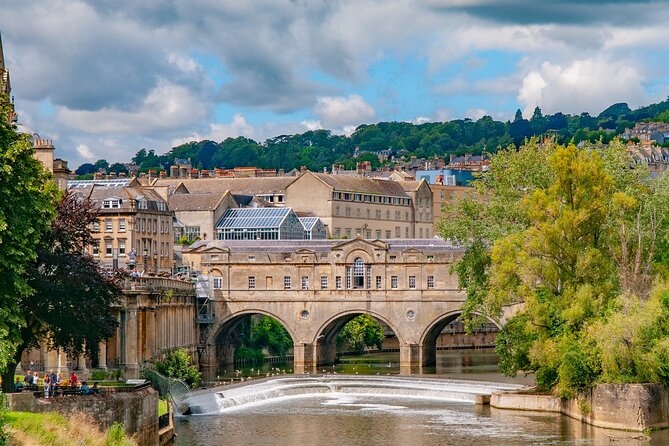
The Circus is one of Bath’s most memorable spaces. It is a ring of large townhouses, built between 1754 and 1768, with three entrances.
The design has a clever visual effect. Each section faces one of the three entrances, so a classical façade appears straight ahead as you enter. It is a planned display of symmetry and proportion, but it also feels like a real residential space rather than a museum piece.
This is where a guide earns the walking-tour fee. You can take a picture of the Circus on your own, but you may not notice how the entrances control your view or how the circular plan differs from a conventional square.
The stop lasts about ten minutes, enough time to hear the main story and look around without turning the tour into an architecture lecture. Bob’s humor is especially useful here, since the subject can otherwise become a list of dates and architects.
Royal Crescent and No. 1 Royal Crescent

The Royal Crescent is Bath’s signature view: 30 terraced houses arranged in a broad curve. John Wood the Younger designed it, and construction took place between 1767 and 1774.
The curve creates a sense of scale that a straight row of houses cannot match. The façade is grand and unified, while the individual homes behind it were separate residences. This blend of private living and public display says a great deal about Georgian society.
The tour stops at No. 1 Royal Crescent, but the admission fee is not included. The building can be visited separately if you want to see how one of these houses was furnished and used. On the walk, you focus on the crescent as part of Bath’s wider plan and on the architectural ideas behind it.
The open views and broad sweep of the crescent make this one of the strongest photo stops. It is also one of the places where the tour’s moderate pace matters. You have time to look up, compare the parts of the façade, and ask questions rather than being hurried through.
Gravel Walk and the smaller details
Gravel Walk adds a quieter section to a route filled with major landmarks. The itinerary includes it among the Georgian sights, and this is the kind of detail you could easily miss while moving between the headline attractions.
The value of a guided walk is often found in these in-between places. A guide can point out old routes, changes in the street plan, or features that do not appear in a standard list of attractions. One particularly interesting detail associated with the tour is a medieval path below street level that ran toward the river beside the old city walls.
You should not expect every stop to be a formal attraction with a ticket booth. Some are best understood as clues to how Bath grew. That makes the walk feel more like reading the city than checking off sights.
Pulteney Bridge and the River Avon
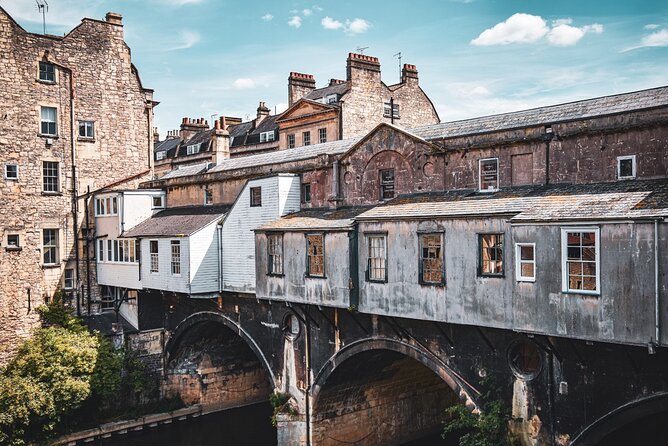
Pulteney Bridge crosses the River Avon and was completed by 1774. It connected Bath with land owned by the Pulteney family, which they hoped to develop.
Its most unusual feature is easy to miss if you are in a hurry: shops run across the full span on both sides. The bridge was designed by Robert Adam in a Palladian style, and the buildings make it feel like a street suspended over the river.
The stop lasts about five minutes, so you will not spend a long time inside the shops. You will have enough time to understand why the bridge matters and to take in the river setting. If you want extended shopping or photographs, plan to linger after the tour.
This is a good example of the tour’s broad scope. The focus is Georgian Bath, but the route keeps showing you how architecture, business, family ambition, and the river fit together.
Guildhall Market and the return to Bath Abbey
The Guildhall Market provides a change of mood near the end of the walk. It is an indoor market in a handsome building, with stalls to browse, and the market has existed since 1284.
You do not need to treat this as a major shopping stop. Five minutes gives you a quick look and a sense of Bath’s continuing commercial life. After grand crescents and formal squares, the market is a useful reminder that cities are also built around ordinary buying and selling.
The route then returns to Abbey Churchyard. That simple ending works well because you are back in a central location, close to the Abbey and the main sights. Bob allows time for further questions, which can be particularly helpful if you are using the tour as an introduction to a longer stay in Bath.
Bob’s guiding style and the pace of the walk
The strongest thread running through the available feedback is Bob himself. He is repeatedly described as friendly, witty, patient, and deeply familiar with Bath. The important point for you is not just that he knows dates. He explains why buildings look the way they do and connects them to the people who built, owned, or used them.
His approach also appears flexible. He answers questions, admits when he does not know something, checks that the group is keeping up, and adjusts the pace when needed. One walk lasted longer than the expected two hours because the group kept asking questions.
The listed duration is roughly two to three hours, with the main walk described as about two hours. You should allow some flexibility rather than scheduling a train or meal immediately after the advertised finish.
The pace is gentle, but you still need moderate physical fitness. You will be walking outdoors through the city, and poor weather can affect whether the tour operates. Service animals are allowed, and the meeting area is near public transportation.
Is $27.73 good value?
At $27.73 per person, this is a reasonable price for a small-group city walk that covers so many central sights. You are paying for a guide who can connect Roman Bath, medieval traces, Georgian planning, medical history, fashionable society, and local stories in one route.
The value is strongest if you are new to Bath or have limited time. A self-guided walk can show you the Royal Crescent and Pulteney Bridge, but it may not explain how Queen Square, the Circus, and the crescent form a planned sequence. It may also miss smaller details such as the old path near the city wall.
The price is less of a bargain if you want interior access to the Roman Baths, Assembly Rooms, or No. 1 Royal Crescent. Those admissions are not included, so budget for them separately if they are priorities.
Free cancellation is available up to 24 hours before the 1:00 p.m. start. The tour needs a minimum number of people and suitable weather, so a cancellation by the operator can lead to another date or a full refund.
Who should book this Bath walk?
I would choose this tour if you enjoy architecture but want the human stories too. It suits first-time visitors, solo sightseers, couples, and anyone with a free afternoon who would rather understand Bath than simply photograph it.
It is also a good fit if you have already walked around Bath on your own. A guide can reveal details you passed without noticing and make familiar buildings easier to read.
You may want something else if you dislike outdoor walking, need a fully indoor activity, or want extensive time inside each paid attraction. The tour is a city overview with strong Georgian focus, not a substitute for every museum in Bath.
Should you book Best of Bath Georgian Tour?
Book it if you want a clear, personable introduction to Bath’s architecture and city plan, especially if you value questions, humor, and stories about real people. Bob’s style appears to be the main reason this walk feels more personal than a standard fact-filled circuit.
Skip it only if your day is already built around long interior visits or if you cannot manage a moderate outdoor walk. For most visitors with two to three hours available, the route offers a practical way to see Bath’s major Georgian sights, understand how they connect, and leave with a better plan for the rest of your stay.
FAQ
Where does the Georgian Tour begin?
The tour begins in Abbey Churchyard, in front of Bath Abbey, in Bath.
Where does the tour finish?
The walk ends back at the meeting point in Abbey Churchyard.
What time does the tour start?
The scheduled start time is 1:00 p.m.
How long does the tour last?
The tour lasts approximately two to three hours. The main walking section is described as about two hours, but questions and conversation can sometimes extend the finish.
How many people can join the tour?
The maximum group size is 15 people.
Are admission tickets included?
Admission is free for several outdoor stops, but tickets for the Roman Baths, Royal Mineral Water Hospital, Assembly Rooms, and No. 1 Royal Crescent are not included where admission applies.
Is the tour suitable for someone with limited fitness?
The tour requires a moderate level of physical fitness because it is an outdoor walking experience. The pace is described as gentle.
Can I cancel for a full refund?
Yes. You can cancel at least 24 hours before the local start time for a full refund. Changes or cancellations made less than 24 hours before the start are not accepted for a refund.
Just added around Bath
- Heathrow Airport To Bath Private Airport Transfers★ 5.0 · 17 reviews
- Afternoon Bath City Tour – Private tour from Bristol with a local guide★ 5.0 · 7 reviews
- BATH: 2-Hour Bath Walking Tour of Bridgerton Filming Locations★ 5.0 · 99 reviews
- The Splendour of Georgian and Victorian Era Bath: A Self-Guided Audio Tour★ 4.0 · 3 reviews
- Wells, Cheddar Cheese and Cheddar Gorge – Private Day Trip from Bath★ 5.0 · 10 reviews
- Private Guided Ghost Tour of Bath★ 5.0 · 20 reviews
- Glastonbury, Wells Cathedral & Cheddar Gorge Day Trip from Bath★ 5.0 · 3 reviews
- Private Day Tour from Bath to Glastonbury and Wells with Pickup★ 5.0 · 14 reviews
Walking Tours, compared.
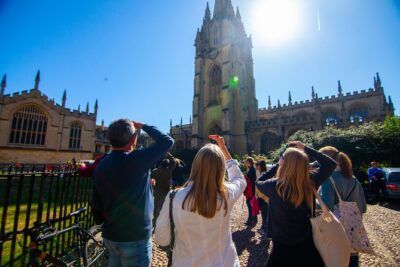
Oxford University Walking Tour With University Alumni Guide
Read our review →
Tour for Muggles The Ultimate Harry Potter Walking Tour in London
Read our review →
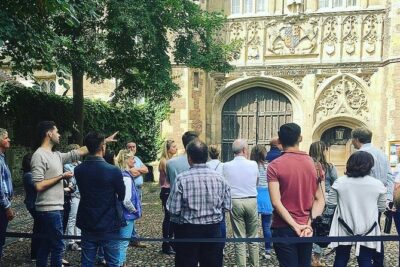
Cambridge University Walking Tour by Alumni™ Kings College Option
Read our review →
Blackbeard to Banksy – The Ultimate Walking Tour of Bristol
Read our review →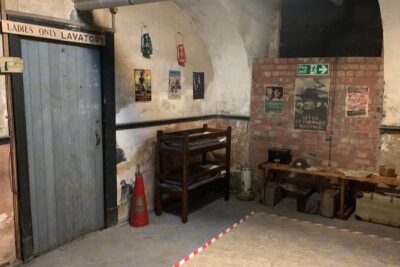
Air Raid Shelter + St. Nicholas Market Walking Tour
Read our review →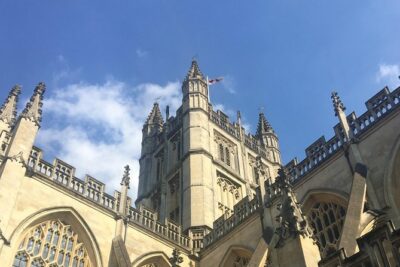
Walking Tour of Bath with Blue Badge Tourist Guide
Read our review →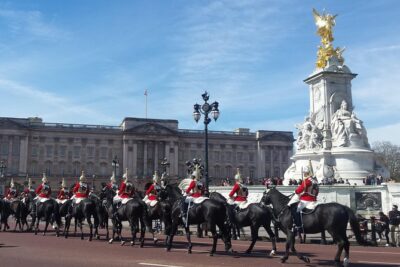
Changing of the Guard Guided Walking Tour in London
Read our review →Browse the lists this tour appears in