

Reviewed · ENGLAND
A Story of Discovery, Education and Remembrance
The International Bomber Command Centre tackles one of World War II’s most difficult subjects without reducing it to a simple story of heroes and villains. In Lincoln, you’ll move from personal accounts and interactive displays to the names of almost 58,000 people who died serving Bomber Command.
I especially like the Orchestra of Voices, which brings different viewpoints into the galleries, and the chance to search for an individual in the Losses Database. The quiet Peace Gardens and striking 31.09-metre memorial give the visit room to breathe. The main drawback is that the subject is serious and sometimes upsetting, so this is not a quick, light attraction.
Key points to know before you go

- The memorial rises 31.09 metres: You get broad views over Lincoln from the UK’s tallest metal war memorial.
- Three galleries tell personal stories: Interactive exhibits cover Bomber Command through the eyes of people on all sides.
- Almost 58,000 names are recorded: The Losses Database can help you find a relative or learn more about someone who served.
- Free guided tours add context: Guides lead tours of the memorial and gardens, subject to availability.
- The visit suits families: Hands-on displays appeal to children, while the subject offers plenty for adults to consider.
- Plan for two to five hours: Add time for the Hub Café, Peace Gardens, and a careful look through the exhibitions.
Why this Lincoln memorial matters
First, check the location carefully. The experience is described in one place as being in Nottingham, but the ticket redemption point and attraction address are in Lincoln: Canwick Avenue, Lincoln LN4 2HQ. That is the location you should use when planning your day.
The centre remembers the people who served in Bomber Command during World War II, along with the wider human cost of the bombing campaign. That wider view is important. Bomber Command’s story remains contentious, and the centre does not present it as a straightforward tale of military achievement.
You’ll hear about the people who flew, worked, supported, suffered, and died. You’ll also encounter the effect of the bombing campaign on those on the other side of the conflict. That approach gives the visit more weight than a collection of aircraft facts or military dates.
I like that the centre uses names and individual stories to keep the subject human. The memorial is large, but the experience repeatedly brings you back to particular people and their lives.
A few more England days out to weigh up
- Daily Nottingham City Centre Walking Tour (10:30am)
★ 5.0 · 81 reviews - Robin Hood’s Nottingham: Interactive Game & Walking Tour
★ 4.5 · 25 reviews - Fun and Flexible Treasure Hunt Around Nottingham with Hidden Gems
★ 5.0 · 10 reviews
Begin with the 31.09-metre memorial
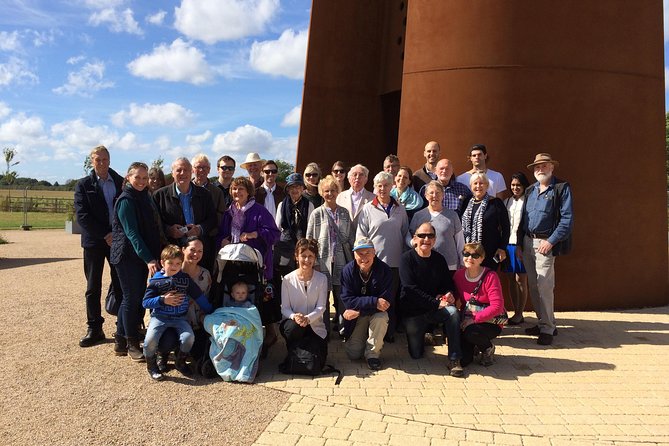
The outdoor memorial is the visual heart of the site. At 31.09 metres, it is an imposing metal structure and the tallest metal war memorial in the UK. Its height gives the site a strong presence, but the memorial is not simply a large object to photograph and leave behind.
A free guided tour can help you understand the design and the people being remembered. The guides also cover the surrounding gardens, so you get more than a quick explanation beside the structure. If a tour is running during your visit, I would join it before wandering through the grounds alone.
The views over Lincoln are another reason to spend time outside. The memorial gives you a different perspective on the city, and the open setting prevents the visit from feeling confined to an exhibition building.
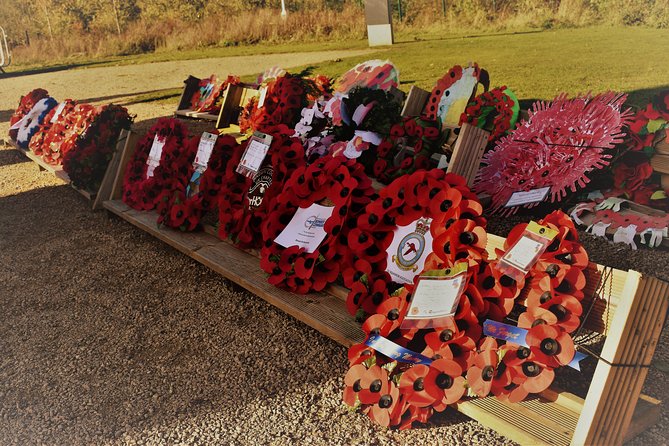
The memorial can be moving in a very direct way. Almost 58,000 names are recorded for those who lost their lives serving Bomber Command in World War II. If you have a family connection, allow time to search the commemoration panels and the Losses Database rather than rushing straight indoors.
One useful detail from the feedback is that a personal search for a relative became a central part of one visit. That possibility changes the experience. You are not only reading about a large organization. You may be standing in front of a name connected to your own family.
Walk through the Peace Gardens slowly
The centre has two Peace Gardens around the memorial. They provide a quiet pause between the outdoor memorial and the indoor displays.
I would not treat the gardens as a decorative extra. The subject matter can be heavy, and the open space gives you time to think about what you have seen. You can also use this part of the visit to take photographs of the memorial from different angles.
A free garden and memorial tour is available with experienced guides. The exact timing and group size are not stated, so ask on arrival. If you arrive early or at a quiet time, you might find that the guide can give more personal attention. One account describes an especially helpful personal tour when the visitor arrived before others.
That said, the outdoor portion depends on the weather. Bring suitable clothing if you want to make full use of the gardens and the views. The centre is best enjoyed as an outdoor and indoor visit, not as a museum stop where you remain inside the whole time.
Three galleries, three ways into the story
Inside, three interactive exhibition galleries present the history through the Orchestra of Voices. You hear from people connected to the conflict on all sides, which gives the exhibits a personal and sometimes uncomfortable edge.
The interactive design matters here. Static panels can give you facts, but the centre also includes hands-on material that helps younger visitors take part. Families have found enough to hold the attention of children aged eight and ten, while adults can spend longer with the historical detail.
You should expect a thoughtful visit rather than a fast sequence of dramatic displays. The galleries ask you to consider the decisions, responsibilities, and consequences connected with Bomber Command. This makes the centre useful for anyone wanting a clearer understanding of the bombing campaign, not just a memorial photograph.
A map showing where bombs were dropped is one detail worth seeking out. It helps place the campaign in geographical terms and gives you another way to understand its reach. The displays also include personal stories and historical facts, so the map works best as part of the wider exhibition rather than as a separate attraction.
The centre is especially effective when you take your time. A quick circuit may give you the main outline, but two or more hours allow you to listen, read, search the database, and return to displays that deserve another look.
Same part of England, a completely different sort of day:
- Stonehenge, Windsor Castle, and Bath from London
★ 4.5 · 18,662 reviews - London Big Bus Hop-On Hop-Off Tour with Optional River Cruise
★ 3.5 · 10,803 reviews - London Small Group Tour of Historical Pubs
★ 5.0 · 10,422 reviews - Beatles Magical Mystery Tour
★ 5.0 · 9,266 reviews
The Losses Database adds a personal focus

The list of almost 58,000 names can feel overwhelming. The Losses Database gives you a way to move from that large number to individual records.
If you know the name of a relative or someone connected with your local area, bring that information with you. The supplied details do not specify exactly what information each record contains, so I would see the database as a research aid rather than a complete family-history archive.
Even without a family connection, the database changes how you see the memorial. Each name represents a person, not simply a figure in a history lesson. That is one of the centre’s strongest features.
The commemoration panels also make the visit personal. Finding a relative’s name can be an emotional moment, and you may want to allow extra time afterward in the gardens.
A good family visit, with a serious subject

The centre works well for families because the galleries include interactive and hands-on elements. Children can engage with the displays while adults consider the moral and historical questions behind them.
Still, this is not a children’s attraction in the usual sense. The subject includes death, war, and the effects of bombing. You know your own children best, so consider their age and ability to handle serious material before booking.
The visit can also suit adults with little prior knowledge of Bomber Command. You do not need to arrive as a military-history expert. The galleries provide context, and a guided tour can help explain the memorial and gardens.
For anyone with a family connection to Bomber Command, the centre may carry a different emotional force. The names, database, and personal accounts offer several ways to connect with the past.
Allow time for the Hub Café
The Hub Café serves locally sourced food and drink, making it a practical part of the visit rather than an afterthought. If you plan to stay for four hours, as some visitors do, a café break will help break up the exhibitions.
The supplied information does not give a menu or prices, so I would not plan a meal around a specific dish. You can expect a useful place to pause, and the café has been singled out as a strong part of the overall experience.
This is also where the two-hour visit and the five-hour visit begin to differ. If you only want the memorial and a quick look at the galleries, you may finish near the shorter end. If you join a tour, search the database, take time in the gardens, and stop for food, your visit can easily occupy most of an afternoon.
Is the $15.94 admission good value?

At about $15.94 per person, admission is reasonable for a visit that can fill two to five hours. The ticket includes all admission fees and taxes, plus access to the memorial, galleries, Peace Gardens, and Losses Database.
The value is strongest if you use the full site. The free memorial and garden tour adds live explanation without an extra charge, and the interactive displays give the centre more depth than a simple outdoor monument.
Parking fees are not included, so add that cost if you plan to drive. The centre is near public transportation, which gives you another option. The ticket information does not provide transport routes or parking rates, so check those details before setting out.
The attraction is open Tuesday through Sunday from 9:30 a.m. to 4 p.m. The stated opening period runs from March 17, 2020, to February 3, 2027. Check the current schedule when booking, especially if your visit is close to the end of that published period.
Free cancellation is available if you cancel at least 24 hours before the start time. Cancellations or changes made later are not accepted for a refund.
Who should book this experience?
I would recommend the centre to anyone interested in World War II, remembrance, military history, or family research. It is also a strong choice if you want an attraction that combines an outdoor memorial, indoor displays, gardens, and a café in one stop.
Families can find enough interactive material to keep children involved, but parents should prepare them for serious themes. The centre also suits older visitors who want a calm, well-organized place to reflect.
You may want to skip it if you are looking for a fast, entertainment-focused attraction or if you have very little time in Lincoln. Two hours is the shortest realistic visit if you want to see the main parts, and the emotional subject matter deserves attention.
The site has a Changing Places Facility, service animals are allowed, and most people can participate. Those details make it more practical for a wider range of visitors, though the provided information does not specify every accessibility feature.
My recommendation
Book the International Bomber Command Centre if you want to understand the human cost of Bomber Command rather than simply look at military objects. The 31.09-metre memorial, personal accounts, and nearly 58,000 names give the visit a clear emotional centre.
Make it a half-day stop if possible. Join the free tour, search the Losses Database, walk through both Peace Gardens, and leave time for the café. The main reason to hesitate is not value or organization. It is the serious subject. If you are ready for a reflective visit, this is one of Lincoln’s most worthwhile places for remembrance and historical understanding.
FAQ
Where is the International Bomber Command Centre?
It is at Canwick Avenue, Lincoln, LN4 2HQ, United Kingdom.
Is the attraction in Nottingham?
The supplied booking information gives Nottingham as the location summary, but the ticket redemption point and full address are in Lincoln. Use the Lincoln address when planning your visit.
How much does admission cost?
The listed price is $15.94 per person.
How long should I allow for the visit?
Allow approximately two to five hours, depending on how much time you spend in the galleries, gardens, memorial area, database, tour, and café.
What are the opening hours?
The centre is open Tuesday through Sunday from 9:30 a.m. to 4 p.m.
What can I see at the memorial?
You can see the UK’s tallest metal war memorial, which is 31.09 metres high, enjoy views over Lincoln, and see the names of almost 58,000 people who died serving Bomber Command in World War II.
Are guided tours included?
Free tours of the memorial and gardens are available with experienced guides. The admission ticket is included, but the supplied information does not guarantee a tour at a specific time.
Is there a café?
Yes. The Hub Café serves locally sourced food and drink.
Is parking included?
No. Parking fees are not included in the admission price.
Is the centre accessible for service animals and visitors with additional needs?
Service animals are allowed, and the centre has a Changing Places Facility. The information also states that most visitors can participate and that the site is near public transportation.
Just added around England
- London Private Jack The Ripper Tour★ 5.0 · 9 reviews
- Private Spy Walking Tour of London★ 5.0 · 6 reviews
- Private Shoreditch Street Photography Workshop★ 4.5 · 4 reviews
- Private Sightseeing Walking Tour of The City Of London★ 5.0 · 3 reviews
- Private 2.5 Hour Taxi Tour of London – London’s Greatest Bits!★ 5.0 · 4 reviews
- Private Round Trip Transfer between London Airports and Hotel★ 3.5 · 56 reviews
- London to Southampton Cruise Port Including Stonehenge★ 5.0 · 13 reviews
- Shakespeare London Walking Tour★ 5.0 · 26 reviews