

Reviewed · PHOTOGRAPHY SESSIONS
Discover Photography
The most useful part of Discover Photography is its hands-on approach to camera settings. Instead of leaving you with a list of technical terms, the class has you test aperture and shutter speed so you can see how each one changes the image.
I like the small group of no more than 12, which gives you a fair chance to ask questions. I also like the practical focus, with guidance from photographers including Vehbi Koca and Pierre, who have helped participants work with different cameras and explain tricky settings in plain language. The main drawback is clear: you need a DSLR or compact digital camera with manual controls to get the full benefit.
Key points
- A practical route into manual photography: Learn aperture, shutter speed, ISO, exposure, and depth of field by using them.
- Small London class: The group is limited to 12 people, so personal help should be easier to get.
- Led by an award-winning photographer: Instruction is designed for beginners, with room for camera-specific questions.
- Useful lens lessons: Cover focal length, angle of view, perspective, and how each lens affects a picture.
- A class, not a sightseeing tour: You meet and finish at Westland Place Studios, with practical work included.
- Strict cancellation terms: The booking is non-refundable unless the provider cancels because too few people sign up.
Turning camera buttons into creative choices
Many beginners use a camera like a better phone: point, press, and hope the result looks good. Discover Photography is aimed at the next step. It shows you how to take control of the settings that shape a picture.
You’ll work through the relationship between aperture, shutter speed, and ISO. These three controls affect brightness, motion, sharpness, and the amount of the image that appears in focus. Once you understand how they work together, manual mode becomes far less mysterious.
That matters on a trip. A camera may choose an acceptable setting automatically, but it cannot know exactly what you want to emphasize. You may want a soft background behind a person, a sharp view across a broad scene, or a faster shutter speed to freeze movement. Manual and semi-automatic modes give you those choices.
The class lasts about two hours and 30 minutes. That is long enough to cover the basics and try them out, but short enough to fit into a London stay without consuming your whole day.
More photo shoots in London:
- Professional Photoshoot in London Photographer
★ 5.0 · 102 reviews - Private landmarks photoshoot for families and couples
★ 5.0 · 92 reviews - London: Private Landmarks with a Professional Photographer
★ 5.0 · 30 reviews
Starting at Westland Place Studios
The class begins at Westland Place Studios3, 11 Westland Place, London N1 7LP. The meeting point is near public transportation, and the activity ends back there.
This is not a walking tour built around famous London sights. The value is in the instruction. You should arrive ready to learn, adjust settings, take photographs, and ask questions rather than expecting a planned route through central London.
The location also gives the course a clear beginning and end. You are not left guessing where the lesson finishes or how to find your way back to your hotel from a distant final stop. Since no detailed sightseeing route is provided, check the meeting instructions carefully before you go and allow time to reach Westland Place Studios.
A mobile ticket makes the booking easy to carry. Confirmation is provided when you book.
Learning aperture, shutter speed, and ISO together
Aperture controls the opening inside the lens. It affects how much light reaches the sensor and how much of the picture appears sharp from front to back. This is often called depth of field.
Shutter speed controls how long the camera records the scene. A faster setting can help freeze action, while a slower setting changes how motion appears. It also affects the risk of a blurred image when the camera or subject moves.
ISO affects the camera’s sensitivity to light. It can help in darker conditions, but it also changes the look of the image. The important lesson is not simply what each setting does alone. You need to understand how changing one setting affects the others.
The course includes a practical exercise focused on aperture and shutter speed. That hands-on part is valuable because photography terms can seem simple until you try to use them. A short explanation is quickly forgotten. A picture that changes after you alter the aperture or shutter speed is easier to remember.
You will also learn how to set correct exposures. This is the basic skill behind getting a photograph that is not too bright or too dark. From there, the class moves toward creative decisions rather than leaving you with purely technical rules.
Moving between automatic and manual modes
You do not have to treat automatic mode as a failure. It can be useful when you need a quick picture, when the light changes fast, or when you are still learning.
The point of this course is to help you understand when to switch from automatic to semi-automatic or manual settings. Semi-automatic modes can give you control over one major choice while the camera manages another. Manual mode gives you control over the full exposure.
I like this approach because it is practical. You can use the camera’s assistance when speed matters, then take more control when the scene calls for it. The aim is not to make every photograph difficult. It is to help you know which setting fits the situation.
The class is designed for beginners, so you do not need to arrive as a camera expert. You do need a compatible camera and a willingness to change settings rather than leaving everything on automatic.
A few more London days out to weigh up
- London Big Bus Hop-On Hop-Off Tour with Optional River Cruise
★ 3.5 · 10,803 reviews - London Small Group Tour of Historical Pubs
★ 5.0 · 10,422 reviews - Tower of London and Crown Jewels Exhibition Ticket
★ 4.5 · 6,677 reviews - Thorpe Park Admission Ticket
★ 4.0 · 5,915 reviews
Understanding lenses, focal length, and perspective
A lens does more than bring a subject closer or farther away. Its focal length changes the angle of view and affects how objects appear in relation to one another.
The course covers focal length, angle of view, and perspective, along with how to make the most of each lens. This is useful if your camera came with more than one lens or if you have been unsure which lens to use.
A wider view can include more of a scene. A longer focal length can frame a smaller part of it. Your position also matters. Changing where you stand can alter the relationship between the foreground and background, not just the size of the subject.
These ideas are especially useful on holiday. Instead of swapping lenses at random, you can begin to choose one for a reason. You will have a clearer idea of how the lens affects the final picture before you press the shutter.
Composition, colour, and white balance
Good exposure does not automatically make a good photograph. Composition determines where the eye goes and how the elements in the frame work together.
Discover Photography includes composition, giving you a way to think beyond camera controls. You will consider what belongs in the frame, how the subject is positioned, and how different parts of the image relate to one another.
The class also covers colour temperature and white balance. Light can have different colour qualities, and a camera may not always interpret them as you expect. White balance helps you manage how warm or cool the image appears.
This is one of those small technical choices that can have a large effect. The same scene may look more natural after the white balance is corrected, or you may choose a warmer or cooler result for creative reasons.
The course does not promise a magic setting that fixes every photograph. Instead, it gives you the terms and controls needed to judge the result yourself.
Practical work with a small group
The maximum group size is 12. That is not private tuition, but it is small enough to make questions possible. In a photography class, this matters because people bring different cameras and get stuck at different points.
You may need help finding a setting in your camera menu. Someone else may be trying to understand why a shutter speed caused blur. A limited group gives the instructor a better chance to deal with those problems without rushing through every question.
The instruction has been led by award-winning photographer Vehbi Koca, and the experience also includes feedback from Pierre in an iPhone-focused photography session. Vehbi is described as using simple explanations and encouraging experimentation with different cameras. Pierre is described as making sure people kept up while answering questions about phone settings.
The supplied course information specifically says you need a DSLR or compact digital camera with manual settings. If you plan to use an iPhone, contact the provider before booking to confirm that the session and your device are suitable. The separate iPhone session suggests the teaching can adapt, but it does not replace the stated camera requirement for this course.
What you should bring and know before booking
Bring the camera you want to understand better. A DSLR or compact digital camera with manual settings is required to get the most from the class.
You should also expect to work with your own equipment rather than borrow a camera supplied as part of the booking. The course details do not list camera hire, accessories, or other equipment as included.
The minimum age is 18. Children must be accompanied by an adult, and both need paid tickets. Most people can take part, and the meeting point is near public transportation.
The booking is non-refundable and cannot be changed for any reason. That makes the date important. If the experience is canceled because the minimum number of participants is not reached, you will be offered another date or experience, or a full refund.
Is $95.80 a fair price?
The cost is $95.80 per person for about two and a half hours. At first glance, that may seem high for a short class, especially if you are comparing it with a free online tutorial.
The value depends on how much personal help you need. A video can explain aperture and shutter speed, but it cannot look at your camera, hear your question, and guide you through the setting. A small group and a working photographer make the paid class more useful for someone who has tried to learn alone and still feels unsure.
You are also paying for practice, not just information. The practical exercise gives you a chance to see how the controls affect your photographs. If the class helps you avoid months of leaving the camera on automatic, the cost may be reasonable.
It is less appealing if you already use manual settings with confidence. The course is aimed at beginners, so experienced photographers may find the material too basic for the price.
Who will get the most from this class?
I would recommend Discover Photography to a beginner who owns a suitable camera and wants clear instruction without committing to a long course. It should suit someone who knows that aperture and shutter speed exist but is not yet comfortable using them.
It is also a good fit if you want to improve holiday photos before a larger trip. You can learn how lenses, exposure, perspective, and white balance affect your results, then practise those choices on your own.
The class may suit you if you prefer asking questions in person. The reported teaching style is simple and experimental, with instructors willing to help people work through different camera types.
I would be cautious if you only use a phone, unless the provider confirms that your device is accepted for the specific class. I would also skip it if you already understand manual exposure, depth of field, and lens choice well. The material is built for the first stage of camera control.
Should you book Discover Photography?
Book it if you want a focused introduction to manual photography in London, own a compatible camera, and learn best by trying settings with an instructor nearby. The small group, practical exercise, and coverage of lenses and composition give the class more use than a talk that only lists definitions.
Think twice if the non-refundable policy creates a problem, if you need a phone-only course, or if you already take manual photographs comfortably. For a beginner who wants to stop guessing and start making deliberate choices, the $95.80 fee can be worthwhile.
FAQ
Where does Discover Photography take place?
The class starts and finishes at Westland Place Studios3, 11 Westland Place, London N1 7LP, UK.
How long does the photography course last?
The experience lasts approximately two hours and 30 minutes.
How much does the course cost?
The price is $95.80 per person.
What camera do I need?
You need a DSLR camera or a compact digital camera with manual settings to get the most from the course.
How many people can join the class?
The group has a maximum of 12 travelers.
What photography topics are covered?
The course covers lenses, composition, colour temperature, white balance, semi-automatic and manual modes, depth of field, aperture, shutter speed, focal length, angle of view, perspective, and exposure.
What is the minimum age?
The minimum age is 18. Children must be accompanied by an adult, and both must have paid tickets.
Can I cancel or change my booking?
The experience is non-refundable and cannot be changed for any reason. If the provider cancels because the minimum number of travelers is not reached, you will be offered another date or experience, or a full refund.
Just added around London
- London Private Jack The Ripper Tour★ 5.0 · 9 reviews
- Private Spy Walking Tour of London★ 5.0 · 6 reviews
- Private 2.5 Hour Taxi Tour of London – London’s Greatest Bits!★ 5.0 · 4 reviews
- Private Shoreditch Street Photography Workshop★ 4.5 · 4 reviews
- Private Sightseeing Walking Tour of The City Of London★ 5.0 · 3 reviews
- Private Round Trip Transfer between London Airports and Hotel★ 3.5 · 56 reviews
- Shakespeare London Walking Tour★ 5.0 · 26 reviews
- Private Prison Van Escape Game – London Immersive Experience★ 4.0 · 15 reviews
Photography Sessions, compared.
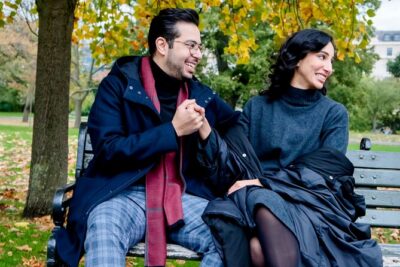
Professional Photoshoot in London Photographer
Read our review →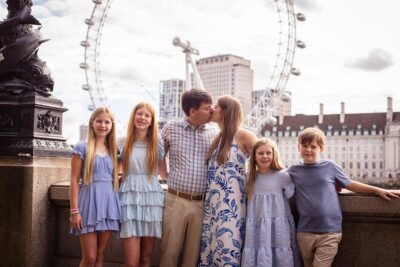
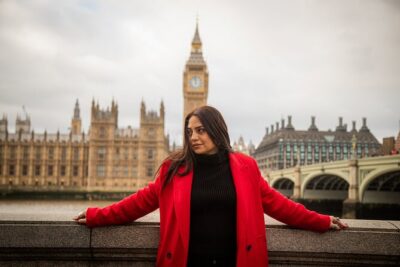
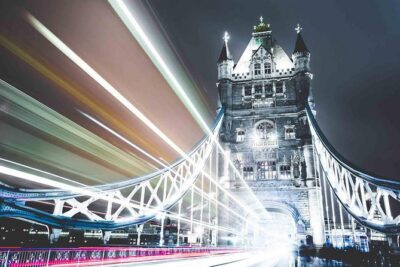
Iconic London Portraits Tour with Expert Local Photographer
Read our review →Browse the lists this tour appears in