
Reviewed · WALKING TOURS
Guided Walking Tour of Bristol Old City and Harbour
Bristol’s story is written across its streets, docks, churches, bridges, and street art. This small-group walking tour links the city’s waterfront with its Old City, giving you a useful first look at places that can otherwise feel scattered. Guide Mike brings old maps, pictures, dates, and local stories to the walk, including pointers to Banksy murals and the lives of Bristol residents.
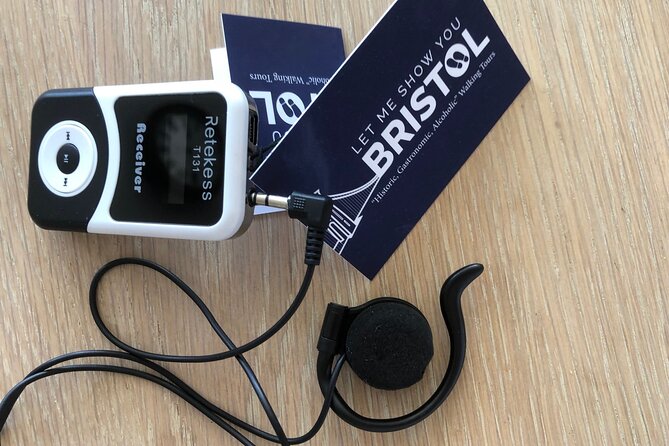
I like the audio receivers, which let you hear the commentary without crowding around the guide. I also like the group size, capped at eight, and the way the route mixes famous sights with less obvious corners such as St John on the Wall and Bathurst Basin. The main caution is pace: you cover a lot in about two and a quarter hours, and some people describe it as brisk. Comfortable shoes are not optional.
Key points to know before you book
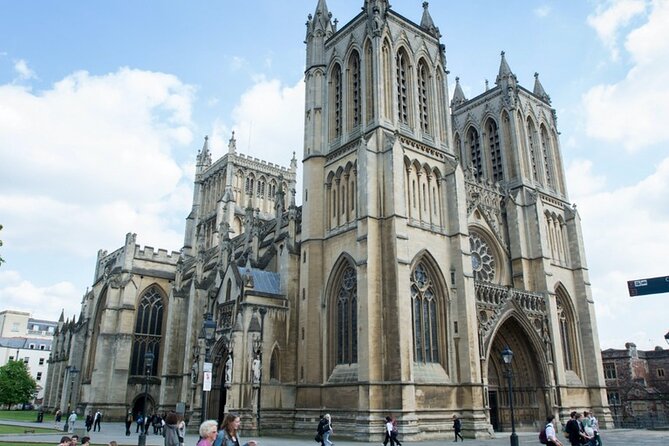
- A broad Bristol introduction: The route covers the cathedral, harbour, docks, Queen Square, Old Vic, Castle Park area, and Old City.
- Mike leads the walk: Expect local stories, visual aids, historical detail, and practical suggestions for the rest of your stay.
- Audio receivers are included: You can hear the guide in busy parts of central Bristol.
- Small group of up to eight: This makes it easier to ask questions and stay connected to the guide.
- A serious amount of walking: The pace is generally steady, but the route covers many sights and can approach 12,000 steps.
- Good value at $29.86: You receive more than a quick orientation, with history from Bristol’s Saxon beginnings through modern street art.
Why this walking tour works as a first look at Bristol
Bristol is not a city you understand from one postcard view. The centre shifts from grand civic buildings to working docks, from medieval gateways to Georgian squares, and from old churches to modern murals. This route makes those changes easier to follow.
The walk begins at the Bristol Marriott Royal Hotel on College Green at 2:00 pm. From there, you move through the central city and finish back at the same meeting point. That return is useful if you have luggage nearby, need a clear reference point, or want to continue sightseeing from the centre.
The route is especially helpful early in a stay. You learn where the harbour sits in relation to the Old City, where King Street and Welsh Back fit into the centre, and which areas are worth returning to at a slower pace. Several people have used the walk as a map in their heads for the rest of a weekend.
Mike’s approach also appears to be more personal than a simple list of dates. He asks questions, responds to interests, and can spend extra time on art or local stories when the group is keen. His use of photos and drawings helps explain how parts of Bristol have changed, which is useful when a modern street gives few clues about its past.
More Walking Tours in Bristol
- Blackbeard to Banksy – The Ultimate Walking Tour of Bristol
★ 5.0 · 1,961 reviews - Air Raid Shelter + St. Nicholas Market Walking Tour
★ 5.0 · 1,950 reviews - Ghosts, Ghouls & Gallows :The Original Bristol Ghost Walk
★ 5.0 · 262 reviews
Bristol Cathedral and the buildings around College Green
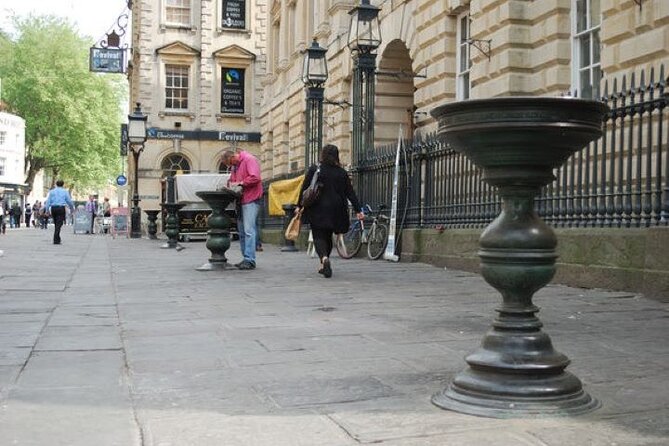
The first stop is Bristol Cathedral, where you have about 10 minutes to admire the exterior and the surrounding buildings. Admission to the cathedral is not included as a separate visit, but the tour does not charge an entry fee at any stop.
This opening section also takes in St Marks, the Council House, Park Street, and the street art piece called Well Hung Lover. The contrast is immediate. You see civic power, religious architecture, a major shopping and university street, and contemporary public art in a compact area.
The cathedral stop gives Mike a natural place to set out the city’s story before the route reaches the water. You are not simply looking at isolated buildings. You begin to see how the upper city connects with the harbour below.
Since the stop is short, anyone wanting a full interior visit will need to return independently. That is a common tradeoff on a city orientation walk: you see more of Bristol, but you do not spend long inside each building.
Canon’s Marsh and the working edge of the harbour
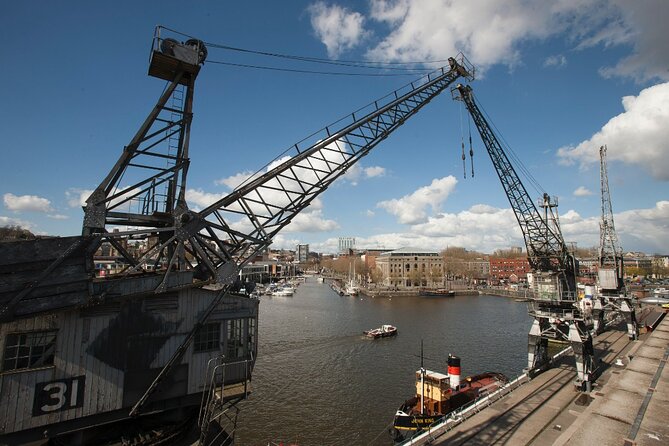
At Canon’s Marsh, the emphasis shifts from civic Bristol to the waterfront. You view Oporto Quay, Limekiln Dock, cranes, and shipping activity, with about 10 minutes at this part of the route.
This section helps you read the harbour as more than a pleasant place for a stroll. The docks were tied to trade, transport, and industry, and the cranes and dock structures make that practical history easier to picture. The stop is also a welcome change of scene after the city streets.
You should expect to keep moving rather than settle in for a long waterfront pause. If you want photographs, have your phone ready before Mike begins the next explanation. The route includes many short stops, so the tour works best when you listen first and save longer photo sessions for your return.
Pero’s Bridge, Arnolfini, and Bristol City Docks
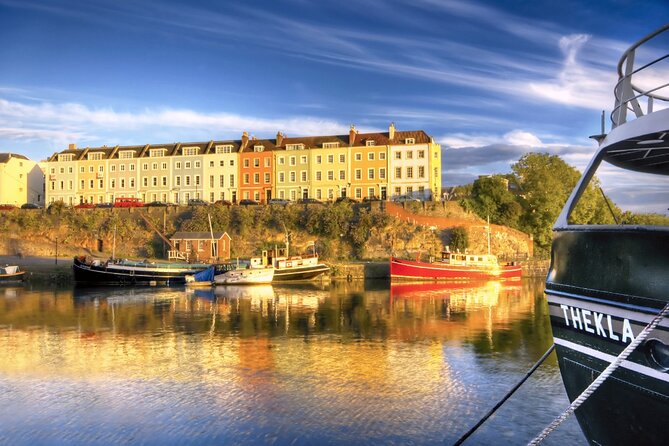
The walk continues through Bristol City Docks and toward the medieval trench. You cross Pero’s Bridge and reach the Arnolfini, a well-known arts venue on the harbour.
This is one of the more useful links in the tour. The docks are not treated as scenery alone. Their position in relation to the old city, bridge crossings, and cultural buildings helps you understand how Bristol’s waterfront has changed its role over time.
The stop lasts around 10 minutes. You can expect commentary about the area rather than a ticketed visit inside the Arnolfini. If contemporary art interests you, note the building as a possible return stop, but do not assume the walking tour includes entry or time for an exhibition.
The audio system matters here. Harbour areas can be open and noisy, and the receiver means you do not have to stand shoulder to shoulder with the guide to follow the story.
Same part of England, a completely different sort of day:
- (9pm) The House Magicians Comedy & Magic Show – Smoke & Mirrors
★ 5.0 · 356 reviews - West Country Games – the most popular group activity in the South West!
★ 5.0 · 315 reviews - The House Magicians’ Comedy Magic Show at Smoke & Mirrors in Bristol (Sat 7pm)
★ 5.0 · 296 reviews - The House Magicians Comedy Magic Shows
★ 5.0 · 263 reviews
Prince Street Bridge and the M Shed waterfront
At Prince Street Bridge, the group crosses or works around the bridge area to view the M Shed, the ship Matthew, Container Village, and the remains of the Old Prison. This is another short stop, listed at about 10 minutes.
The value here is the range of subjects in one view. You have museum culture, a historic ship, reused containers, and prison ruins close together. Mike uses these points to connect Bristol’s maritime past with its more recent public spaces.
The M Shed and Matthew may tempt you to stop for a longer visit. You can do that later, but the walking tour keeps its larger route moving. If you are choosing between a broad introduction and detailed museum time, this experience clearly favors breadth.
The waterfront also gives you some of the tour’s more open views. It is a good place to stay near the group, since the route can feel spread out and the next explanation may begin soon after the crossing.
Bathurst Basin, Redcliffe, and stories of Bristol’s residents
Bathurst Basin brings you to the Old Mill Pond, Guinea Street, and the area connected with the television program A House Through Time. You also see houses associated with slave captains and Redcliffe Church.
This part of the walk adds social and personal context to the city. You are not only hearing about grand buildings or well-known public figures. The route points toward the people who lived, traded, worshipped, and shaped Bristol, including those connected with the city’s difficult links to slavery.
That makes Bathurst Basin one of the more thoughtful sections of the walk. The itinerary does not turn it into a long specialist lecture, but it places uncomfortable parts of Bristol’s past alongside its architecture. You get a wider view of how wealth, trade, religion, and ordinary streets can sit close together.
The stop is again about 10 minutes. Redcliffe Church and the surrounding streets may deserve more time if you are interested in buildings, photography, or social history. Make a note and return later rather than trying to inspect every detail while keeping up with the group.
Queen Square and the waterfront’s literary connections
The route then works around the docks toward Queen Square, the King William statue, and the American Consulate. You also see the Spy Glass Inn, associated with Treasure Island. This section lasts about 15 minutes, making it one of the longer stops.
Queen Square gives the walk a different rhythm. Its open space and formal layout contrast with the tighter streets and industrial waterfront. The nearby references to literature and public figures add another layer to the city’s story without pulling the tour away from its main route.
I like this stop because it lets you see how Bristol’s identity is made up of more than port history. Civic monuments, international links, popular culture, and local streets all appear within a short walk.
Do not expect a dedicated literary tour. The Treasure Island connection is one thread in a wider city walk. That is useful if you want variety, but less suitable if you want a detailed study of Robert Louis Stevenson or Bristol’s literary life.
Bristol Old Vic, King Street, and Welsh Back
The Bristol Old Vic, King Street, and Welsh Back come next, in another 10-minute section. King Street is one of the most atmospheric parts of the route, with historic buildings and a strong connection to Bristol’s theatre and waterfront life.
The Old Vic gives Mike a chance to explain the city through performance and public culture. Welsh Back brings the route back toward the water, so the walk continues to alternate between inland streets and dockside spaces.
This part is easy to appreciate even if you are not a theatre specialist. You see how entertainment, trade, and public life developed close together. It is also a good area to revisit in the evening, when you can explore at your own pace and decide which buildings or pubs deserve a closer look.
The walk does not include a theatre performance or interior admission. Think of this as an informed introduction to the setting, not a backstage visit.
Baldwin Street and the entrance to the Old City
Baldwin Street marks the move into the Old City. The route refers to Bristol’s origins as a Saxon settlement, then continues toward Castle Park, old churches, the law courts, merchants’ trading haunts, the Corn Exchange, and the Nails and guild meeting places.
This is where the tour becomes especially useful for orientation. The city’s early beginnings, medieval trade, legal institutions, and commercial buildings are brought together in a short stretch. Mike uses dates, names, and supporting images to help you picture how the streets evolved.
The Corn Exchange and Nails are important because they point to the practical business of the old city. You are looking at places tied to buying, selling, and meeting, not just decorative façades. That kind of detail can turn a pleasant walk into a clearer understanding of how Bristol functioned.
The Old City section may feel dense. There are many names and subjects in a short time, so listen for the broad structure first. You can always ask Mike to repeat a detail, or return later with the guide’s suggestions in mind.
St John on the Wall and Bristol’s street art
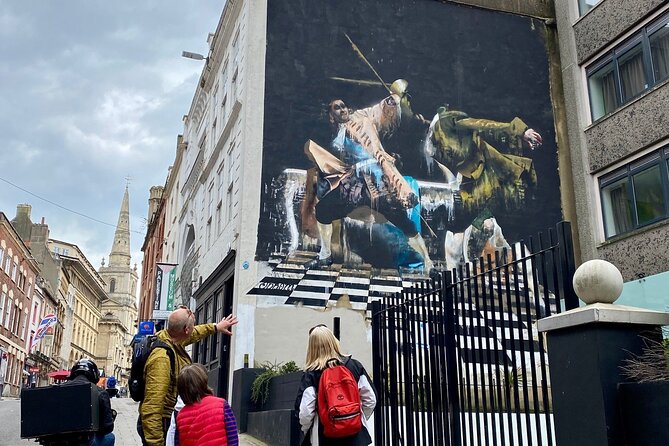
At St John on the Wall, you pass through one of the remaining old city gates. You also see the conduit and street art. This is one of the route’s more unusual stops because it brings you into a surviving piece of the old city’s defensive structure.
The gate provides a direct physical link to Bristol’s past. Instead of only hearing that the city once had walls, you walk through part of what remains. The nearby street art then brings you back to modern Bristol.
Banksy murals and other street art are part of the tour’s appeal, but you should not expect a dedicated Banksy crawl. Mike points out where to find notable works and can tailor some of the discussion to your interest in street art. If that is your main reason for booking, tell him early.
This stop also shows why a small group helps. Narrow historic spaces and busy streets are easier to manage when there are no more than eight people. The audio receiver lets you look around without losing the commentary.
Edward Colston’s statue and the return to College Green
The final section includes the statue of Edward Colston, the Cenotaph, and the return to the Marriott where the tour began. This is a fitting end because the route finishes with public memory and the way Bristol chooses to present, question, and discuss its past.
The Colston statue is a particularly important place to hear context rather than only take a photograph. The tour’s wider treatment of trade, slavery, civic power, and modern street art gives this final stop more meaning than it would have on a quick self-guided walk.
The route then returns to the starting point. In total, expect about 2 hours and 15 minutes, though the timing can stretch. One participant described a roughly two-and-a-half-hour experience, and Mike’s replies make clear that he may allow extra time when the group is engaged.
Pace, equipment, and practical comfort
You receive an audio receiver, and this is one of the tour’s strongest practical features. Bristol’s centre can be noisy, and the earpiece lets you hear Mike while standing at a reasonable distance. It also makes the walk feel less awkward than clustering around a guide at every stop.
The group maximum is eight people. That is small enough for questions and personal attention, but you still need to keep moving through public streets. The general pace has been described as steady and relaxed, though another description called it fast. Both can be true: the walking rhythm may be comfortable, but the number of sights makes the whole outing active.
Wear shoes you can walk in for more than two hours. Bring water and dress for the day’s weather. Coffee and tea are not included, so plan any refreshment stop for before or after the tour unless Mike changes the flow.
Most people can participate, and service animals are allowed. The walk is near public transport, though no specific transit instructions are supplied. Confirmation arrives when you book.
Is $29.86 good value?
At $29.86 per person, the tour is priced as an affordable orientation rather than a luxury experience. You get a small group, a local guide, audio equipment, and a route that covers far more than one district.
The value is strongest if you are visiting Bristol for the first time, have a weekend in the city, or want someone to explain how the harbour and Old City connect. It is also useful for returning visitors who want more context around architecture, local characters, and street art.
The price is less compelling if you prefer to spend 15 or 20 minutes inside every museum, church, or historic building. This is a moving overview. You pay for the guide’s route, interpretation, and local knowledge, not for admissions or extended interior visits.
The tour is often booked well ahead, with an average booking lead time of 76 days. That suggests you should reserve early if your dates are fixed, especially if you want the small-group format.
Should you book this Bristol walk?
I would book it if you want a lively introduction to central Bristol and prefer a local guide over a phone map. Mike’s strengths are his command of dates and names, his use of visual material, and his ability to connect old Bristol with modern art and daily life.
Choose it with realistic expectations. You will walk a lot, hear many stories, and make short stops rather than tour interiors in depth. If you have limited mobility, need frequent seated breaks, or want a slow photographic tour, this may not be the best match.
For most first-time visitors, the combination of harbour, Old City, churches, bridges, docks, public art, and social history makes the $29.86 fee worthwhile. Book it near the start of your stay, wear proper shoes, and keep a note of the places you want to revisit. That is when this tour gives you the most.
FAQ
Where does the Bristol walking tour start?
It starts at the Bristol Marriott Royal Hotel on College Green, Bristol BS1 5TA, UK.
What time does the tour start?
The scheduled start time is 2:00 pm.
Where does the tour finish?
The tour ends back at the Bristol Marriott Royal Hotel, the starting point.
How long does the tour last?
The stated duration is approximately 2 hours and 15 minutes. It may run closer to two and a half hours depending on the pace and questions.
How many people can join the tour?
The maximum group size is eight people.
Is the tour offered in English?
Yes. The tour is offered in English.
Are audio devices provided?
Yes. Audio receivers are included so you can hear the guide clearly during the walk.
Are admission tickets included?
The listed stops have free admission. The tour does not include paid entry to museums, churches, or other attractions.
What should I bring?
Wear comfortable shoes, bring water, and wear clothing suitable for the weather on the day. Coffee and tea are not included.
Can I cancel for a full refund?
Yes, if you cancel at least 24 hours before the scheduled start time. Cancellations or changes made less than 24 hours before the start are not refunded or accepted. If poor weather or insufficient bookings causes cancellation, you are offered another date or a full refund.
Just added around Bristol
- Heathrow Airport to Bristol private taxi transfers★ 4.5 · 14 reviews
- Guided Walking Tour Suspension Bridge Clifton Splendour & City.★ 5.0 · 100 reviews
- Wine & Cheese in the Somerset Valleys – with Michelin-star lunch!★ 5.0 · 12 reviews
- Brunel Guided Tour in Bristol★ 5.0 · 4 reviews
- Brunel’s Bristol: A Self-Guided Tour from SS Great Britain to Clifton Bridge★ 4.5 · 11 reviews
- Fun, Flexible Treasure Hunt Around Bristol with Cryptic Clues & Hidden Gems★ 5.0 · 101 reviews
- The Best of Bristol Bike Tour★ 5.0 · 39 reviews
- Avon Gorge Rock Climbing Experiences★ 5.0 · 21 reviews
Walking Tours, compared.
Oxford University Walking Tour With University Alumni Guide
Read our review →
Tour for Muggles The Ultimate Harry Potter Walking Tour in London
Read our review →
Cambridge University Walking Tour by Alumni™ Kings College Option
Read our review →
Blackbeard to Banksy – The Ultimate Walking Tour of Bristol
Read our review →
Air Raid Shelter + St. Nicholas Market Walking Tour
Read our review →
Walking Tour of Bath with Blue Badge Tourist Guide
Read our review →
Changing of the Guard Guided Walking Tour in London
Read our review →Browse the lists this tour appears in