
Reviewed · JACK THE RIPPER TOURS
Jack the Ripper Private Immersive Tour
Jack the Ripper’s crimes are only part of this walk. The real subject is Whitechapel in 1888, where poverty, crowded lodging houses, workhouses, drink, casual labor, and poor policing shaped daily life. You move from Aldgate through Brick Lane and Spitalfields, stopping at sites linked to the murders and the investigation.
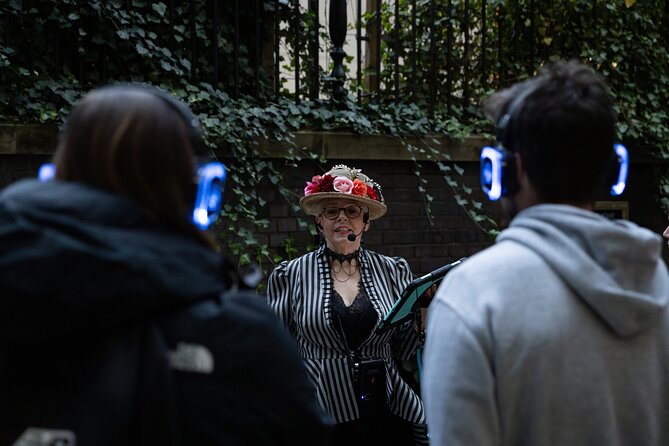
I like the private format, since you can ask Jenny as many questions as you wish. I also like the use of photographs, period sounds, newspaper voices, and headphones to give the walk more shape than a simple talk on a street corner.
The main caution is the audio setup. The tour includes high-tech headphones, but one experience had a microphone and speaker instead, with a participant who struggled to hear. Tell your guide at the start if hearing is difficult, and stand near the front.
Key details to know before you book
- Nearly every stop has a specific story: You visit 15 locations tied to murders, clues, suspects, policing, poverty, and Victorian journalism.
- Guide Jenny leads the walk: She brings a strong personal theory about who Jack the Ripper may have been, while also explaining the evidence behind competing suspects.
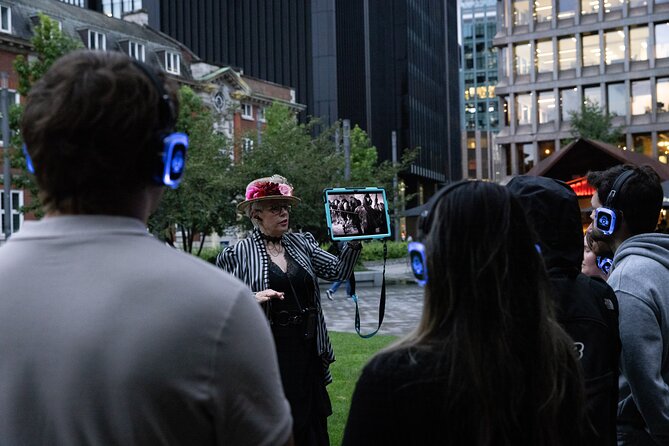
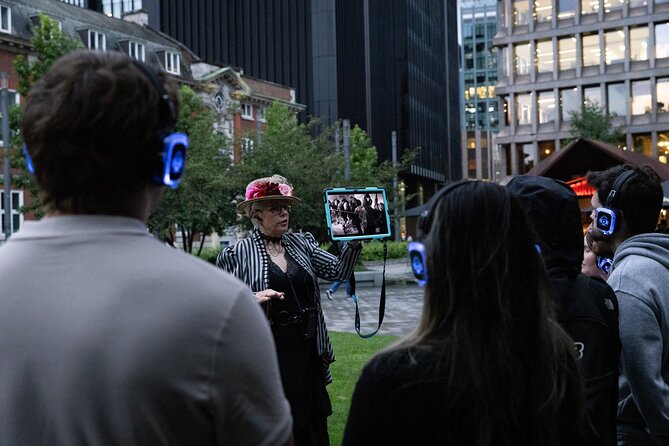
- Historic photos are part of the presentation: Jenny uses a 14-inch tablet and other visual material, which helps you connect modern streets with their 1888 appearance.
- The route lasts about two and a half hours: There is no planned break, so wear comfortable shoes and bring water.
- It is best for true-crime and social-history fans: The walk is graphic at points and spends as much time on poverty and policing as on the murders.
- The price is $47.52 per person: For a private experience with a guide, visual material, audio equipment, and a long East London route, that can be fair value for the right audience.
Why this Whitechapel walk feels different

Many Jack the Ripper walks rush from murder site to murder site. This one gives more time to the world around the crimes. Before you hear the details of the victims, you hear about homeless people, common lodging houses, workhouses, unemployment, and the daily struggle to find a bed.
That context matters. Without it, the murders can become a grim scavenger hunt. With it, you get a clearer picture of why women such as Polly Nichols were out late, why a few pennies could determine where someone slept, and why the killings caused such fear in the East End.
Jenny also uses a tablet with photographs of victims, streets, letters, and crime scenes. The screen is large enough to be useful in the dark, though you may want to position yourself where you can see it clearly. The audio element is another strong feature. Period music, newspaper sellers, and street sounds help you picture the streets as busy places filled with noise, fear, and rumor.
One practical point deserves attention. The description promises high-tech headphones, and several experiences praised the way the headphones kept everyone connected to the guide. But on one busy outing, the equipment was replaced by a microphone and speaker, which did not work well for someone with hearing loss. If you need clear sound, say so immediately and ask to stay close to Jenny.
More Immersive Experiences in London
- Frameless – Immersive Art Experience in London
★ 4.5 · 3,660 reviews - London West End Musical Silent Disco Walking Tour Top 1% Rated
★ 5.0 · 1,057 reviews - Drag Queen Disco Diva Tour – Silent Disco Walking Tour
★ 5.0 · 395 reviews
Starting at Aldgate with the social setting
The walk begins at Aldgate Station, near the Dorsett City Hotel. The opening introduction lasts about six minutes and places the murders within the area as it looked in 1888.
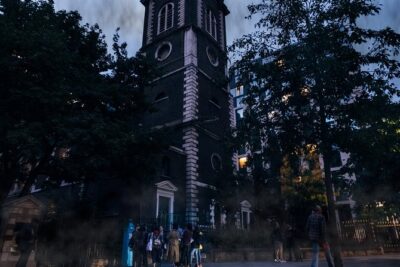
At St Botolph’s Aldgate, the subject expands beyond the killer. You spend time hearing about homelessness, common lodging houses, workhouses, and the lack of steady employment. Jenny uses photographs on the tablet to show what this part of London looked like and to make the social conditions easier to understand.
This is one of the most useful parts of the experience for anyone who already knows the basic Jack the Ripper story. You get less familiar material about the people who lived here, not just the police files. It also sets a serious tone before the walk reaches the murder scenes.
The first stops are short, usually between six and nine minutes. That keeps the route moving, but it also means you need to listen closely. There is no long pause for sitting down, and the tour asks you to remain on your feet.
Mitre Street and the double murder of September 1888
At Mitre Street, Jenny discusses Elizabeth Stride and the hours before her death. You hear how Louis Diemschütz discovered her body at the entrance to Dutfield’s Yard, with photographs helping you picture the location and the victim.
The next stop, Mitre Square, concerns Catherine Eddowes. This was the second murder within roughly an hour, and her body was found by Police Constable Edward Watkins during his beat. Jenny follows the police search and explains how the City of London Police pursued the available clues.
Mitre Square is important because it brings police boundaries into the story. The Metropolitan Police and City of London Police were separate forces then, and they remain separate today. That division affected the investigation and gives the walk a useful bit of civic history rather than another round of suspect speculation.
The route then reaches Goulston Street, where you see the doorway near numbers 108 to 119 linked to the only clue often discussed in the case. Jenny explains what happened after the writing was found and why the police response remains controversial.
You should not expect a dramatic surviving crime scene. Modern London has changed, and the value here lies in the explanation, the old images, and the route between the locations. The walk works best when you treat the streets as evidence of distance, timing, and police jurisdiction, not as preserved museum exhibits.
Wentworth Street and the wider list of victims
At Wentworth Street, the story returns to a woman who is not part of the traditional canonical five. Jenny discusses a possible victim recently linked to the case by Professor David Wilson, a criminologist. This section shows that the boundaries of the Jack the Ripper story are still debated.
It is a good reminder that the case is not a tidy solved puzzle. Some deaths are closely associated with the killer, while others remain uncertain. Jenny presents her own view, but you can ask questions and test the reasoning rather than simply accept one answer.
At Osborn Street, as the route turns toward Brick Lane, period music from pubs and music halls helps set the scene. It is a brief stop, only a few minutes, but the sound gives you a sense of how public and noisy the streets could be.
More Jack the Ripper walks in London:
- London Jack the Ripper Guided Tour with Ripper-Vision
★ 4.5 · 4,840 reviews - London Jack The Ripper Guided Walking Tour
★ 5.0 · 3,131 reviews - Ultimate Jack the Ripper : Guided Tour of London
★ 5.0 · 1,495 reviews - The Original Jack the Ripper : Guided Tour
★ 5.0 · 1,264 reviews
Brick Lane, Polly Nichols, and the cost of a bed
Opposite the Frying Pan pub on Brick Lane, Jenny tells the story of Polly Nichols, including her last drink there. The focus is not only on the murder. You hear how the need to find lodging money may have placed her on the street that night.
That detail brings the economic story back into view. For people without a secure home, a small amount of money was not pocket change. It could determine whether they found a bed, stayed outside, or moved through the streets late at night.
You then hear about the discovery of Nichols’s body in Berner’s Street and the attempt to alert police. Photographs of the victim and murder site accompany the account. The material is graphic, and you should be comfortable with frank descriptions before booking.
As you leave the area, street vendors and police questioning become part of the soundscape. Jenny describes police asking local people about suspicious men. The effect is not a staged performance, but an audio layer that helps you picture how the investigation spread through the neighborhood.
Hanbury Street and the case of Annie Chapman

At Hanbury Street, you stand near the site connected with Annie Chapman’s murder. Jenny covers Chapman’s life, the events before her death on September 8, 1888, and her meeting with a man seen by Mrs. Long less than an hour before the killing.
The account explains how Chapman was enticed into the backyard of number 29 with the promise of money. You hear about the brutal attack, the main suspect once considered in connection with the case, and why that suspect was later discounted.
This is one of the longer stops, at about ten minutes. That gives Jenny time to explain the sequence, but the subject matter is difficult. You are standing in an ordinary modern street, so the tablet photographs do much of the work of linking the present view with the old location.
Wilkes Street, newspaper fear, and the letters
On Wilkes Street, the subject shifts from individual murders to public panic. Jenny explains how local anger grew, how newspapers fed fear, and how some of the old houses in the area date to the 1700s. She also discusses who built them and why.
At Puma Court, you hear about one of the letters sent to the press during the case. More than a thousand letters were sent to police and newspapers, but only a small number are treated as especially important. Jenny uses one of those letters to explain how the press helped turn the investigation into a national sensation.
Newspaper sellers shouting lurid headlines form part of the audio presentation. It is a small detail, but it helps explain why the case became larger than the crimes themselves. The press shaped public fear, encouraged speculation, and gave the killer a name that still attracts visitors today.
Commercial Street and the Ten Bells connection
On Commercial Street, opposite the Ten Bells pub, Jenny discusses the area around Spitalfields Market and the long-running arguments over the identity of Jack the Ripper. The Ten Bells is linked with Mary Kelly, often described as her favorite pub, so it gives the final section of the route a recognizable reference point.
You also hear about Christchurch Graveyard and its importance to homeless people at the time. Details such as access to shelter, food, and basic services could cause arguments among people competing for scarce resources. This is another moment when the walk moves beyond murder stories and shows you the pressures of East End life.
The setting is now full of shops, traffic, and modern buildings. That contrast is part of the point. You are not walking through a preserved Victorian district. You are tracing old events through a living part of London, using Jenny’s explanations and images to bridge the gap.
The Lusk letter and Mary Kelly’s final stop
At the entrance to the London Fruit and Wool Exchange on Brushfield Street, Jenny explains the Lusk letter. It arrived in a box with a piece of human tissue that may have come from one of the victims. You see photographs of the letter and its recipient as Jenny explains why it remains one of the most discussed pieces of evidence.
The final stop is in the central courtyard of the London Fruit and Wool Exchange. It is the closest point on the route to the room where Mary Kelly was killed. Kelly was the youngest of the five canonical victims and the only one killed indoors.
Jenny covers the events leading to Kelly’s death, the murder itself, and the main suspects considered at the time and since. This is the longest stop, about 15 minutes, and also the most graphic. If you prefer a lighter historical walk, this section may be too explicit.
The ending gives the tour a clear shape. Jenny offers her own theory about the killer, explains why she thinks it is possible, and points you toward Liverpool Street Station by the shortest route. That practical finish is helpful, especially after a long walk through unfamiliar streets.
How much value do you get for $47.52?
At $47.52 per person, this is not the cheapest London walking tour. The price makes more sense if you value the private format, the long route, the visual material, and the chance to ask questions throughout the walk.
You are paying for about two and a half hours with a dedicated guide, not simply a large group following a flag. Jenny’s enthusiasm and command of the subject are central to the experience. The tablet photographs also add something you would not get from a standard spoken tour.
The value drops if you cannot hear clearly, dislike graphic crime details, or want a short sightseeing walk. It also drops if the audio equipment does not match what you expect. Confirm the headphone arrangement before setting out, and tell Jenny about any hearing issue so she can place you near the front.
There is no bottled water included. Bring your own, since the tour has no planned break and lasts 150 minutes. Wear shoes suited to continuous walking and standing.
Who should book this experience?
I would choose this tour if you have a strong interest in true crime, Victorian London, police work, newspaper history, or the social conditions of the East End. It also suits London residents who want a focused evening walk through streets they may know only from modern maps.
The private setup works especially well for couples, families with older children, or small groups who want to ask detailed questions. Service animals are allowed, and the route is near public transportation.
I would not choose it for anyone with walking or standing difficulties. The tour lasts about two and a half hours with no break, and the description specifically warns against booking if continuous walking is a problem. The graphic treatment also makes it unsuitable for people looking for a gentle sightseeing stroll.
The advertised operating period runs from February 26, 2026, through March 18, 2027, Monday to Thursday from 3:00 PM to 9:00 PM. Check your selected date carefully, since the available hours are limited.
Should you book the Jack the Ripper Private Immersive Tour?
Book it if you want a detailed, audio-led look at the murders and the world that produced so much fear around them. The strongest parts are Jenny’s personal guiding, the historic photographs, the social context, and the chance to follow the police clues on foot.
Skip it if you want a quick overview, dislike graphic descriptions, or need guaranteed private headphones without confirming the equipment first. For the right audience, $47.52 buys a focused and unusually detailed evening in Whitechapel. For everyone else, the long standing time and grim subject matter may outweigh the benefits.
Free cancellation is available up to 24 hours before the start time. Poor weather or failure to meet the minimum group size can lead to a different date or a full refund.
FAQ
Where does the Jack the Ripper tour start?
The tour starts at Aldgate Station in London, near the Dorsett City Hotel.
Where does the tour finish?
The route ends at Bell Lane, near the London Fruit and Wool Exchange. The guide also directs you toward Liverpool Street Station by the shortest route.
How long does the walk last?
The experience lasts approximately two hours and 30 minutes, with about 15 stops along the route.
How much does the tour cost?
The listed price is $47.52 per person.
Is this a private tour?
Yes. Only your group participates in the private activity.
Are headphones provided?
High-tech headphones are listed as included. Because one experience used a microphone and speaker instead, tell the guide at the start if you need especially clear audio.
Is the tour suitable for people with limited mobility?
The tour is not recommended for people with walking or standing difficulties because it lasts about two and a half hours without a break. A moderate level of physical fitness is advised.
Can I cancel for a refund?
You can cancel up to 24 hours before the experience starts for a full refund. Cancellations or changes made less than 24 hours before the start time are not accepted for a refund.
Just added around London
- London Private Jack The Ripper Tour★ 5.0 · 9 reviews
- Private Spy Walking Tour of London★ 5.0 · 6 reviews
- Private Shoreditch Street Photography Workshop★ 4.5 · 4 reviews
- Private Sightseeing Walking Tour of The City Of London★ 5.0 · 3 reviews
- Private 2.5 Hour Taxi Tour of London – London’s Greatest Bits!★ 5.0 · 4 reviews
- Private Round Trip Transfer between London Airports and Hotel★ 3.5 · 56 reviews
- Shakespeare London Walking Tour★ 5.0 · 26 reviews
- Private Prison Van Escape Game – London Immersive Experience★ 4.0 · 15 reviews
Jack the Ripper Tours, compared.
London Jack the Ripper Guided Tour with Ripper-Vision
Read our review →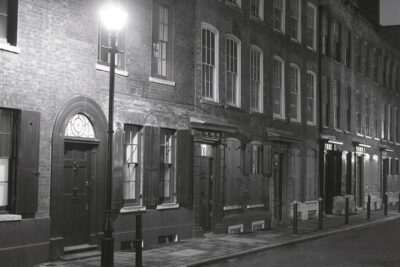
Ultimate Jack the Ripper : Guided Tour of London
Read our review →

London Jack The Ripper Small-Group Walking Tour
Read our review →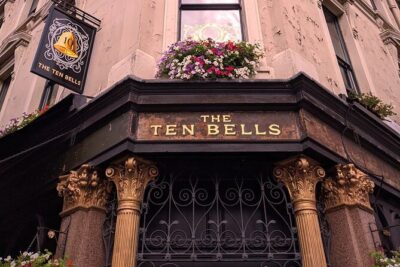
The Original Jack the Ripper Coach Tour of Haunted London
Read our review →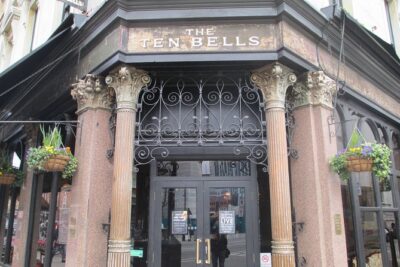
Browse the lists this tour appears in