
Reviewed · JACK THE RIPPER TOURS
London – Jack the Ripper Small Group Tour
Jack the Ripper’s murders are often sold as a grisly mystery wrapped in fog, top hats, and theatrical scares. This walk takes a more grounded route through Whitechapel and Spitalfields, looking at the women who were killed, the streets where they lived, and the evidence behind competing suspects. Richard Walker leads the tour with an iPad of historical images and a radio microphone so you can hear him above city noise.
I like two things in particular. First, the small group gives you a much better chance to ask questions than the huge Ripper walks that gather outside nearby pubs. Second, the route connects the crime scenes to Victorian poverty, lodging houses, pubs, and the geography of the neighborhood. The main drawback is that you spend a fair amount of time standing while Richard explains the case, and this is not the tour for anyone hoping for a scary, gory evening.
Key points at a glance
- Victim-focused storytelling: Learn about Emma Smith, Polly Nichols, Annie Chapman, Elizabeth Stride, Catherine Eddowes, and Mary Jane Kelly as people, not just names in a murder case.
- About 1.5 miles on foot: The route takes roughly two hours and 15 minutes, with several stops in Whitechapel and Spitalfields.
- Radio microphone and earphones: You can hear Richard clearly even on noisy East London streets.
- Historical images on an iPad: Visuals help you compare modern streets with Victorian scenes and buildings.
- Small group format: The advertised maximum is 15 people, with some departures much smaller.
- Ends at Liverpool Street Station: The final location is useful for the Central, Circle, Hammersmith and City, Metropolitan, and Elizabeth lines.
A serious Jack the Ripper walk, not a haunted-house show
The enduring appeal of this case comes from its unanswered questions. Five women were murdered in or near Whitechapel in 1888, yet the killer’s identity was never proved. That uncertainty gives a guide plenty of room for theories, but it also makes accuracy and restraint important.
Richard’s approach leans toward investigation rather than stage fright. He discusses how the murders may have happened, what witnesses actually knew, and how later writers shaped the popular story. You will hear about suspects, but the tour gives equal weight to the victims and to the harsh conditions in which they lived.
That choice will suit you if you enjoy social history and true crime with a critical eye. It may disappoint you if you want dramatic reenactments, sinister music, or a steady stream of gruesome detail. One past participant expected a darker, creepier experience and found the educational tone mismatched to those hopes. The description and the overall tone make the format clear: this is a history walk with theories, not a horror performance.
More Jack the Ripper walks in London:
- London Jack the Ripper Guided Tour with Ripper-Vision
★ 4.5 · 4,840 reviews - London Jack The Ripper Guided Walking Tour
★ 5.0 · 3,131 reviews - Ultimate Jack the Ripper : Guided Tour of London
★ 5.0 · 1,495 reviews
Meeting Richard Walker at Whitechapel Road
The tour begins at 7pm at 279 Whitechapel Road, opposite the London Hospital. Richard is easy to identify by his Indiana Jones hat, according to the tour details, and he supplies each person with an earpiece connected to his microphone.
That equipment is more useful than it may sound. Whitechapel Road is a working city street, and a guide speaking to a group outdoors can easily be drowned out by buses, traffic, and passing people. The radio system lets you keep moving or look at the surroundings without missing the explanation.
The first stop concerns Emma Elizabeth Smith, described as the first victim of the Whitechapel murders. She died after a brutal attack on April 3, 1888. This opening gives you an important warning about the case: the label Jack the Ripper is often applied broadly, but not every murder connected with Whitechapel can be treated as proven work by the same killer.
Richard uses the opening section to place the crimes in their setting. You begin not with a legend, but with a neighborhood, its streets, and a woman whose death helped create the chain of fear that followed.
Buck’s Row and the first confirmed crime scene
The walk continues to Buck’s Row, now associated with the murder of Mary Ann Nichols, commonly called Polly. Here, the tour shifts into a crime scene investigation. Richard explains when and where the body was found, what could have happened, and why the murder is often treated as the first of the canonical Ripper killings.
This section should appeal to anyone who enjoys testing evidence rather than accepting the usual story. The route asks you to think about timing, visibility, witnesses, and the speed of the attack. It also introduces the first suspect.
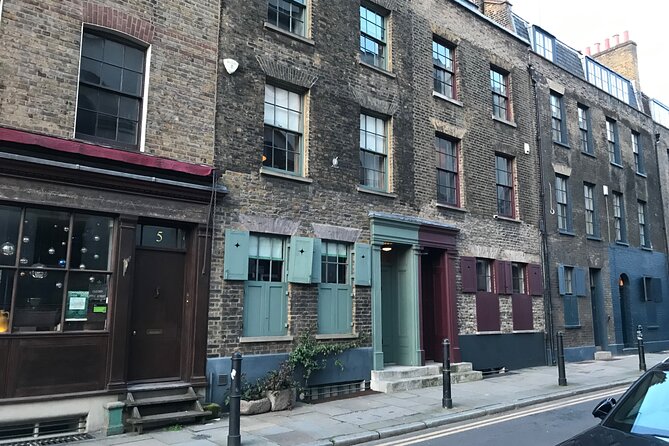
The site is not preserved as a museum display. You are walking through a modern district, using the street pattern and Richard’s images to picture the earlier scene. That can be less theatrical than a preserved crime site, but it gives you a better sense of how close the murders were to homes, lodging houses, shops, and ordinary daily life.
Brick Lane, lodging houses, and the geography of the murders
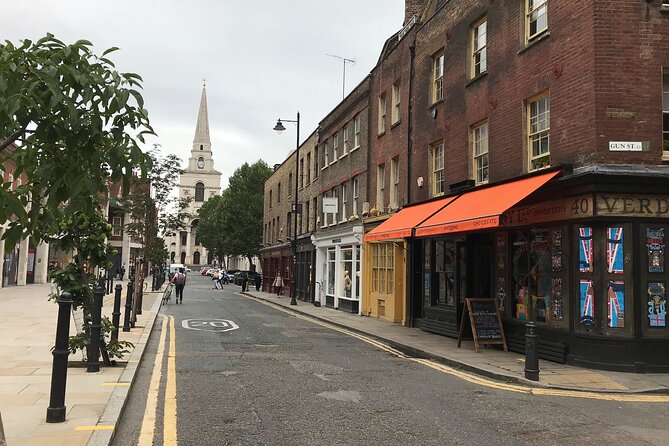
Brick Lane is now famous for curry, street art, and food. On this tour, it becomes a way to understand the geography of the case. The route follows the eastern boundary of the area where all five canonical victims lived at the time of the murders.
Richard points out the former paths of Thrawl Street and Flower and Dean Street. Polly Nichols stayed at Wilmott’s Lodging House, while other victims had connections to the same difficult district. The route also brings you close to the site where Annie Chapman was murdered.
This is one of the strongest parts of the walk because geography can reveal patterns that a book or podcast cannot. You see how near the victims’ lodgings were to one another and how a suspect might have moved through the area. Richard presents a second suspect who fits both a Scotland Yard geographical profile and a profile associated with FBI Special Agent John Douglas.
You should treat these profiles as theories, not verdicts. The killer was never conclusively identified, and the tour does not turn speculation into fact. For people who already know the standard suspect list, this analytical approach may offer more than another repeat of familiar names.
A few more London days out to weigh up
- London Big Bus Hop-On Hop-Off Tour with Optional River Cruise
★ 3.5 · 10,803 reviews - London Small Group Tour of Historical Pubs
★ 5.0 · 10,422 reviews - Tower of London and Crown Jewels Exhibition Ticket
★ 4.5 · 6,677 reviews - Thorpe Park Admission Ticket
★ 4.0 · 5,915 reviews
Christ Church and the Ten Bells pub
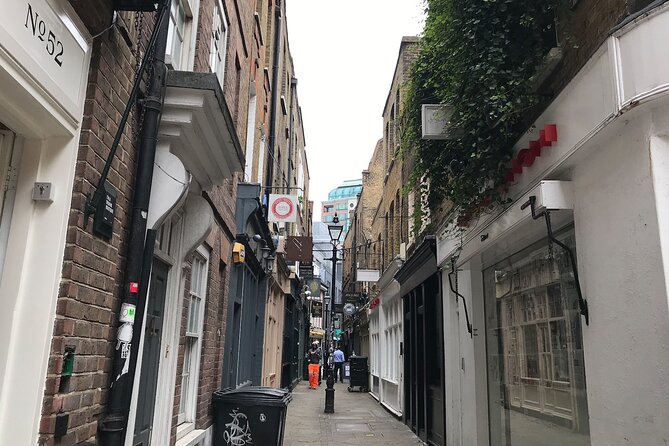
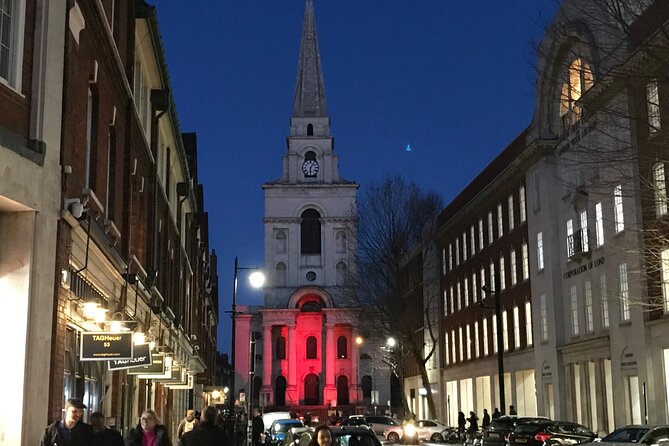
Christ Church Spitalfields provides a change of pace. This grand church, designed by Nicholas Hawksmoor, faces the Ten Bells pub, whose name refers to the church bells across the road.
The pub is linked with the victims because women associated with the case drank there. The stop helps connect the murders to real places where people worked, slept, met friends, and tried to get through the day. You do not need to enter the pub, and admission is not included.
This is also a good point to remember that the tour is outdoors. You will be on your feet, often listening in one spot rather than walking continuously. One past participant specifically wished for more chances to sit, while other comments praised the brisk pace and comfortable length. Wear supportive shoes and dress for the weather. The walk takes place at night, but no special equipment beyond the supplied earphones and iPad visuals is listed.
Old Spitalfields Market and Victorian poverty
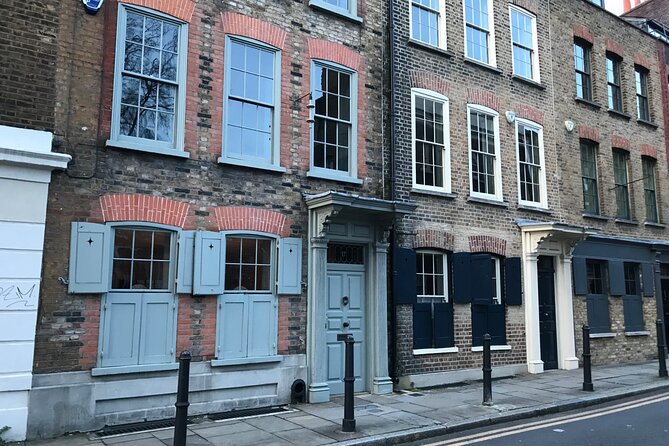
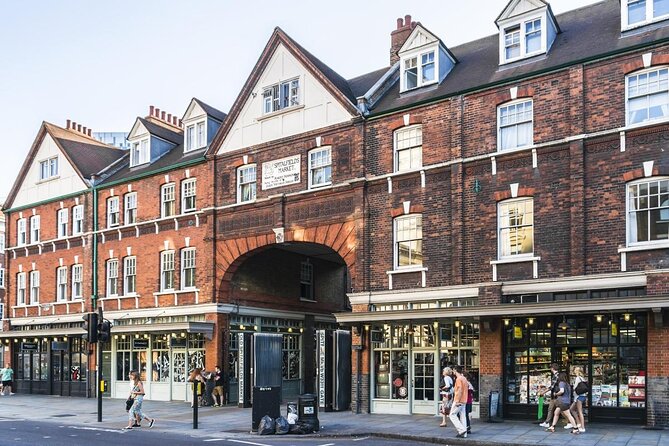
Old Spitalfields Market has served as a community market for centuries. The tour uses it to discuss poverty in Victorian London and the conditions witnessed by the American writer Jack London.
This stop broadens the story beyond the killer. Whitechapel was not just a backdrop for crime. It was a crowded district shaped by low wages, insecure lodging, poor sanitation, and limited choices. Those conditions affected how people moved, where they slept, and how much protection they could expect from the authorities.
I appreciate this context because it keeps the victims from becoming props in a mystery story. You learn not only how they died, but also something about the pressures surrounding their lives. Richard has also challenged the common assumption that every woman connected to the murders should automatically be described as a prostitute. That critical approach gives the walk a more careful tone than many popular accounts.
Spitalfields and the final murder sites
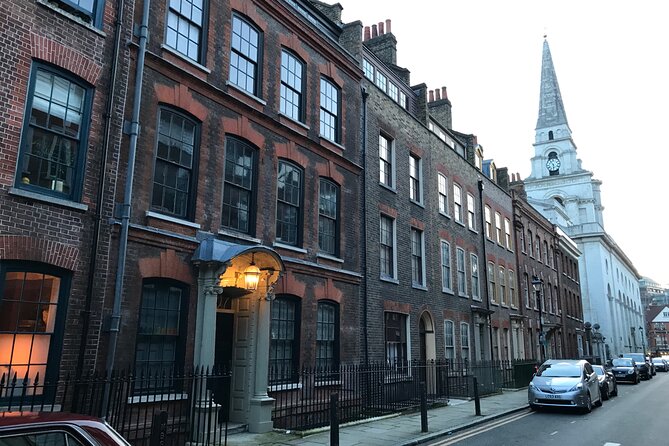
The final section explores Spitalfields, including the area once described as the worst street in London. Annie Chapman lived nearby until the night she was killed, and Mary Jane Kelly lived and died in this district.
Mary Kelly receives particular attention because her circumstances differed from those of the other victims. Richard uses her story to introduce a third suspect and to show why the case cannot be reduced to one simple pattern.
The route ends at 126A Middlesex Street, near Liverpool Street Station. This is practical after an evening walk. You can connect with the Central, Circle, Hammersmith and City, Metropolitan, or Elizabeth line without retracing the route through Whitechapel.
What the small group changes
The tour has a maximum of 15 participants, though some departures have been much smaller, including one reported group of only four people and a departure with two. Even at the full limit, that is a more manageable size than the large Ripper groups of 30 or 40 people seen around East London.
A smaller group matters most at the question-and-answer moments. Richard welcomes questions and uses the microphone so the whole group can follow the discussion. If you are shy about speaking in a crowd, the more personal format may feel easier.
Small does not always mean highly interactive. Richard’s style is often a sustained presentation at several stops. One participant wanted more movement and conversation, while many others enjoyed the detailed storytelling and the chance to listen closely. Think of this as a guided lecture conducted on foot, with questions along the way, rather than an improvisational walking game.
Price, timing, and practical value
At $41.67 per person, the tour sits in a reasonable range for a two-hour-15-minute guided walk in central London. You are paying for a focused route, a specialist guide, audio equipment, and visual material rather than entry to an attraction.
The value is strongest if you want interpretation. You could walk around Whitechapel independently, but it would be difficult to connect the sites, identify former streets, understand the victims’ living conditions, and compare suspect theories in one evening. The radio equipment and iPad images also solve two common problems with outdoor tours: poor sound and a lack of visual context.
The tour is offered in English and is booked, on average, well ahead of time, around 54 days in advance. It is a non-refundable experience, so choose your date carefully. Confirmation is provided when you book, and public transportation is nearby.
The walk requires a moderate level of fitness. It covers about 1.5 miles, includes standing, and is not suitable for people with walking difficulties. Tea and coffee are not included, so plan your refreshment before or after the tour.
Who will enjoy this evening walk
I would choose this tour if you:
- Already enjoy true crime, Victorian London, or unresolved historical cases
- Prefer facts, context, and competing theories over ghost stories
- Want to hear about the victims as individuals
- Value a small group and clear audio
- Are comfortable walking and standing for more than two hours
- Want to finish near a major rail and Underground station
I would choose a different format if you want a theatrical scare, graphic crime-scene detail, or frequent stops to sit. Families with older children may find the serious subject matter manageable because the tone is educational rather than frightening, but the murders themselves remain disturbing.
Should you book the Whitechapel walk?
Book it if you want the case explained through streets, evidence, and the lives of the women involved. Richard Walker brings strong preparation, a clear personal interest in the subject, and a willingness to question accepted assumptions. The microphone and iPad images are practical touches that make a night walk easier to follow.
Skip it if your ideal Jack the Ripper tour is spooky, gory, or heavily focused on the killer’s most sensational details. This experience is more thoughtful than lurid. For many people, that is exactly its value: you leave with a better sense of Whitechapel and the victims, not just another suspect theory.
FAQ
Where does the Jack the Ripper tour begin?
The tour begins at 279 Whitechapel Road, London E1 1BY, opposite the London Hospital.
What time does the tour start?
The scheduled start time is 7pm.
How long does the tour last?
The walk lasts approximately two hours and 15 minutes.
Where does the tour finish?
The tour ends at 126A Middlesex Street near Liverpool Street Station.
How far does the tour walk?
The route covers about 1.5 miles, or 2.5 kilometers.
What size is the tour group?
The maximum listed group size is 15 people. Some departures may be considerably smaller.
Is the tour suitable for people with walking difficulties?
No. The tour requires a moderate level of physical fitness and includes walking and extended periods of standing.
What equipment is included?
You receive a radio microphone and earphones, and Richard uses an iPad to display images.
Is admission to the Ten Bells pub included?
No. Admission to the Ten Bells pub is not included, and the tour does not list coffee or tea as included.
Just added around London
- London Private Jack The Ripper Tour★ 5.0 · 9 reviews
- Private Spy Walking Tour of London★ 5.0 · 6 reviews
- Private Shoreditch Street Photography Workshop★ 4.5 · 4 reviews
- Private Sightseeing Walking Tour of The City Of London★ 5.0 · 3 reviews
- Private 2.5 Hour Taxi Tour of London – London’s Greatest Bits!★ 5.0 · 4 reviews
- Private Round Trip Transfer between London Airports and Hotel★ 3.5 · 56 reviews
- Shakespeare London Walking Tour★ 5.0 · 26 reviews
- Private Prison Van Escape Game – London Immersive Experience★ 4.0 · 15 reviews
Jack the Ripper Tours, compared.
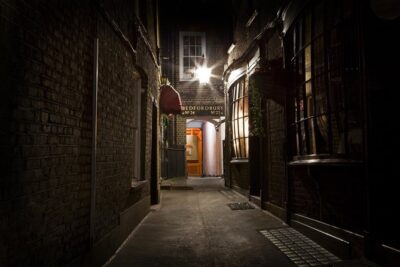
London Jack the Ripper Guided Tour with Ripper-Vision
Read our review →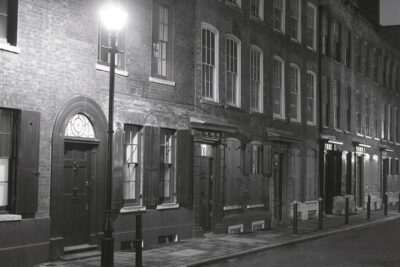
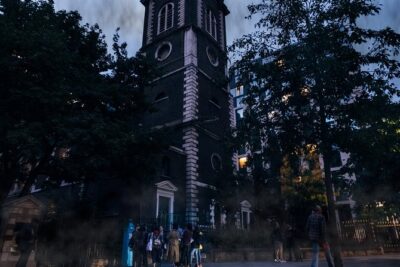
Ultimate Jack the Ripper : Guided Tour of London
Read our review →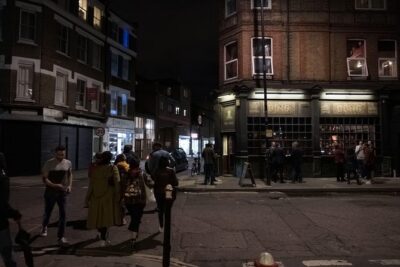

London Jack The Ripper Small-Group Walking Tour
Read our review →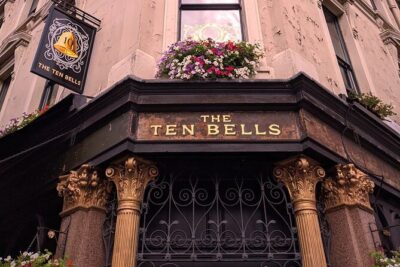

The Original Jack the Ripper Coach Tour of Haunted London
Read our review →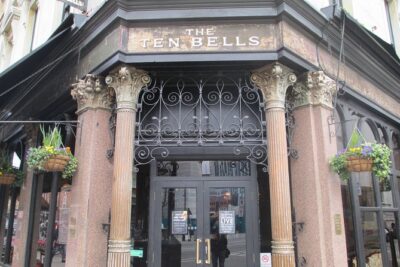
Browse the lists this tour appears in