
Reviewed · GHOST TOURS
London’s Ghosts & Gruesome Past Nighttime Walking Tour
London’s darkest stories come alive after sunset on this two-hour walk from Farringdon to the Old Bailey. You’ll hear about haunted stations, plague pits, public executions, and grave robbers, all while standing in the actual streets and churchyards tied to these tales.
I like the route’s mix of folklore and documented history, especially the stops at Smithfield, St. Bartholomew the Great, and the old hospital grounds. I also like the small group limit of 20, which matters when your guide is telling a story in a noisy city street. The main drawback is that this is a walking tour with no indoor attractions included, so rain, cold, traffic noise, and uneven old streets can affect the evening.
Key points
- Farringdon to the Old Bailey: A two-hour nighttime route through some of London’s oldest streets.
- Nine atmospheric stops: Hear stories about ghosts, executions, plague, William Wallace, body snatching, and medical history.
- Guides with strong storytelling skills: Matt is noted for his patient pace and detailed explanations, while Carolina brings clear enthusiasm to the subject.
- Small group format: The tour accepts a maximum of 20 people, making it easier to hear the guide.
- A practical evening activity: The tour starts at 6:00 pm and finishes near St. Paul’s Underground Station.
- Good value for history fans: At $49 per person, the price pays for a guided experience in some of central London’s most atmospheric historic areas.
Why this London ghost walk works
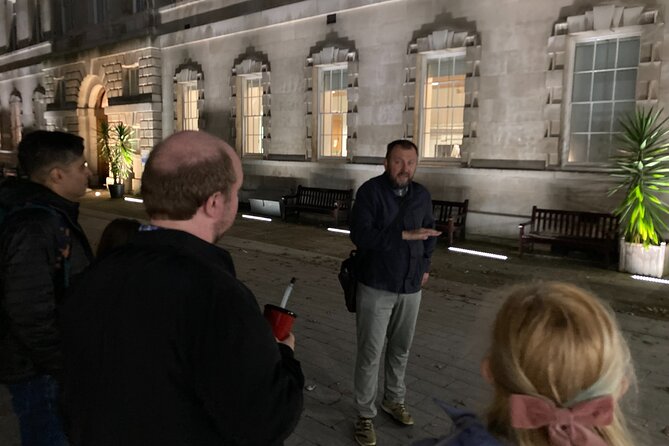
This is not just a string of spooky tales. The route links London’s grisly past to real places: a railway station, a meat market, a medieval church, a hospital, and a famous courthouse.
That gives the tour a useful sense of place. You are not hearing about plague pits in an abstract museum room. You are standing above the ground where victims were buried. You are not simply being told that public executions once drew crowds. You are near Smithfield, where those events took place for centuries.
The tone is designed for people who enjoy scary stories, but the content reaches beyond ghosts. You’ll hear about harsh punishment, disease, medical treatment, religious buildings, Scottish resistance, and the business of stealing corpses for medical study.
That blend is the tour’s strength. If you want serious academic detail at every stop, this may feel theatrical. If you like history delivered through memorable stories, the format should suit you well.
More Ghost Tours in London
- Ghost, Ghouls and Gallows Tour : Guided Tour with Boat Ride
★ 4.5 · 3,212 reviews - Ghost Bus Tour of London
★ 4.0 · 961 reviews - Ghastly Ghost Walking Tour in London
★ 5.0 · 878 reviews
Meeting at Farringdon at 6:00 pm
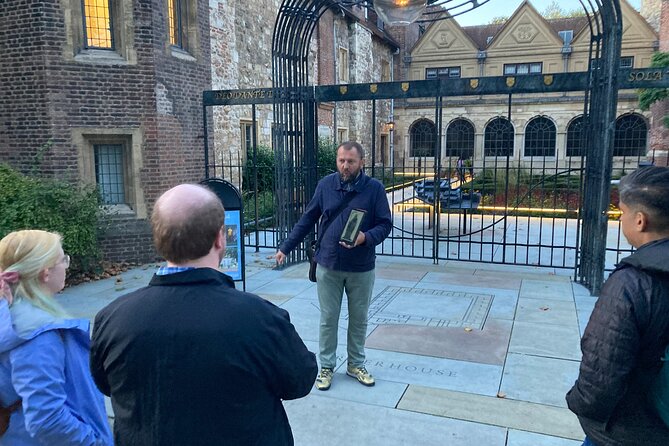
The tour begins outside Cafe ProntoFarringdon Station at 43 Cowcross Street. The start time is 6:00 pm, which gives you the useful shift from daylight into darkness as the walk develops.
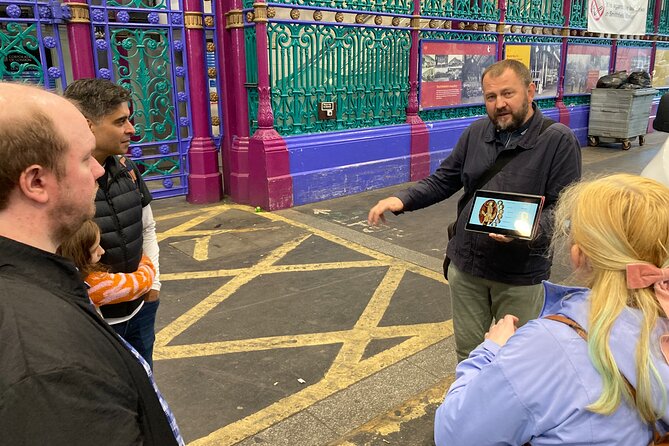
The first stop is close by, at Farringdon Station itself. Your guide introduces the ghost of a young girl said to haunt the station. Her story involves cruel treatment in life and an even worse fate after death. The guide also explains what happened to her in the 18th century and why some people claim she can still be seen or heard.
This is a clever opening. Farringdon is an active transport area, not a silent old ruin, so the story has to compete with city noise. That can make the scene less eerie, but it also shows how old stories survive in places that Londoners use every day.
The tour description suggests that the station is busy and colorful, and that you should listen closely. If you have trouble hearing in crowded places, move near the guide and avoid lingering at the edge of the group.
Smithfield Market and London’s public executions

The walk continues to Smithfield Market, a place still associated with meat trading. Here, the focus shifts from ghost folklore to the brutal public punishments once carried out in the area.
For centuries, Smithfield was linked with executions. Your guide asks you to picture the setting before modern London took shape, then explains how heroes, religious martyrs, criminals, and innocent people could be tortured and killed in public.
The details are deliberately grim. The stories cover the methods used to prolong suffering and the strange inventiveness of executioners. This section will appeal to anyone who prefers the hard facts of London’s past to a simple haunted-house story.
It may be too graphic for young children or anyone uneasy with descriptions of torture. The tour is advertised for fans of scary stories, and this stop makes clear that the fear comes from human behavior as much as from ghosts.
Charterhouse Square and the plague pits
Charterhouse Square offers a sharp change in mood. It is now a peaceful green space surrounded by the city, but the ground beneath and around London has a far darker story.
Here, the guide explains how plague outbreaks changed the city, how deadly they were, what doctors tried to do, and what happened to those who survived. The area is associated with plague pits, so the physical setting gives the discussion extra weight.
I like this stop because it connects public health to the ordinary spaces of modern London. You can look at a bench or a patch of ground and then consider how disease once shaped burial practices, medical thinking, and daily life.
The mention of snakes on the benches is part of the tour’s playful style. It lightens an otherwise serious topic, but it also signals that the guide may use humor between the darker details. The balance should help the evening avoid becoming relentlessly grim.
More Walking Tours in London
- Tour for Muggles The Ultimate Harry Potter Walking Tour in London
★ 5.0 · 4,684 reviews - London Jack The Ripper Guided Walking Tour
★ 5.0 · 3,131 reviews - Changing of the Guard Guided Walking Tour in London
★ 5.0 · 1,793 reviews - The Great British Rock and Roll Walking Tour
★ 5.0 · 1,371 reviews
Cloth Fair, a drink, and the road to execution
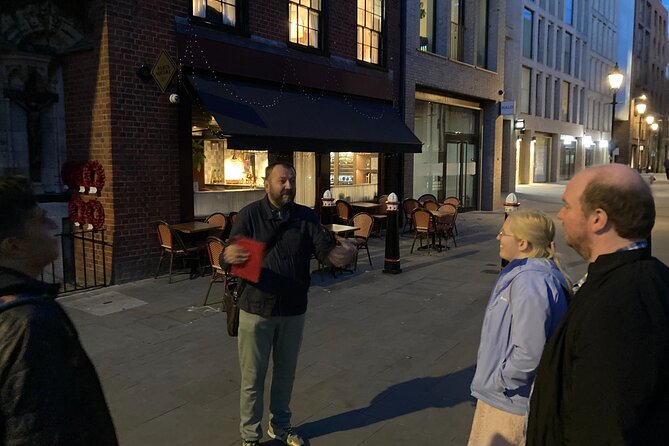
At Cloth Fair, the guide points out where you could get a drink before attending a public execution. It is a short stop, but it adds an uncomfortable detail about the social life surrounding punishment.
Public executions were not always private or solemn events. They could draw crowds, and the surrounding area served those crowds. The idea of stopping for refreshments before watching someone die says a great deal about how different public attitudes were in earlier centuries.
This part of the route also helps connect the major stops. You are not being moved randomly from one dark tale to another. The walk follows the old streets around Smithfield and the neighboring religious and medical sites, so the stories begin to feel like parts of the same city.
St. Bartholomew the Great and its haunted churchyard

St. Bartholomew the Great is one of the route’s most atmospheric stops. You reach it through narrow passages and old streets, then pause near a church that has served London for roughly 900 years.
The guide tells stories connected with the church’s founder, including the disturbance of his final resting place, what is missing from him, and how he allegedly sought revenge. You also hear other burial stories while standing among old tombstones.
This is likely to be one of the best spots for atmosphere. A centuries-old churchyard at night provides a stronger setting than a modern street corner, even before the guide begins speaking.
The stop is not only about ghosts. It also reminds you how closely medieval churches were tied to burial, community life, and the city’s growth. If you enjoy old buildings and religious history, you may find this part more rewarding than the more sensational stories.
William Wallace beyond the film version
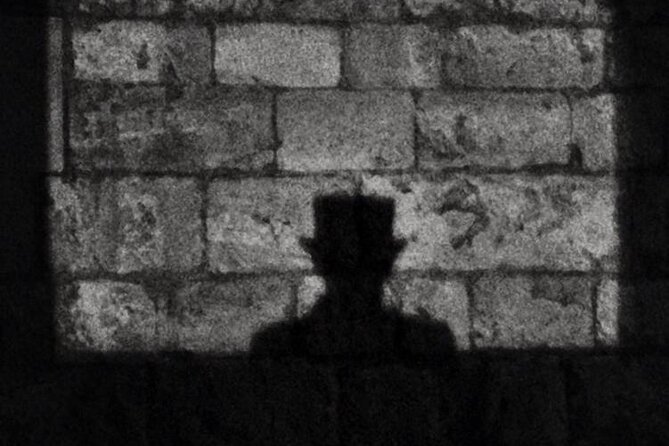
The William Wallace Memorial brings a different kind of gruesome story. The guide explains the Scottish freedom fighter’s conflict with England, the details of his execution, and the later consequences for the relationship between the two countries.
The stop also addresses inaccuracies in the film loosely based on Wallace’s life. That makes this a useful pause for anyone whose main exposure to Wallace comes from popular culture.
The execution details are graphic, but the historical context gives them purpose. You learn not just how Wallace died, but how public punishment could be used to send a political message.
This section broadens the tour beyond London’s own criminals and ghosts. It places the city within the wider conflicts of Britain and shows how a single memorial can carry several layers of memory.
St. Bartholomew’s Hospital and the history of medical care
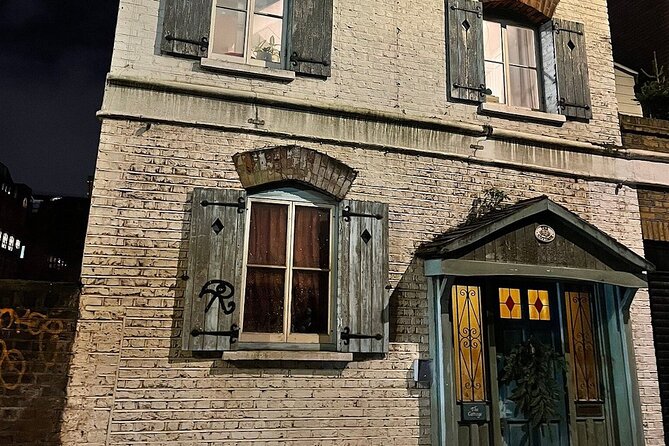
The hospital section may be the most unsettling stop for some people. You pass another church and enter the hospital yard, where the guide explains the medical practices once used at St. Bartholomew’s.
Expect stories about strange remedies, poor hygiene, shared beds, public surgery, and amputations carried out before modern anesthesia and infection control. You may also hear about the food, drinks, and substances people were told to consume or apply in the hope of getting better.
The tour points out that doctors did not always wash their hands, that patients could share beds, and that surgery could attract an audience. It also raises the grim possibility that simply watching a medical procedure could be dangerous.
This part gives the walk more substance than a standard ghost tour. You leave with a clearer sense of how much medical care has changed, and why modern hospitals feel so different from their predecessors.
You should also note the practical setting. The tour passes the hospital and museum area rather than promising a full museum visit. The attraction here is the guide’s interpretation of the surroundings, not an indoor exhibition included in the ticket.
Holy Sepulchre London and the body-snatching trade
At Holy Sepulchre London, the guide turns to empty graves and the people who made money by removing bodies from them.
The story explores the difference between taking a body and stealing one, a distinction that could have legal consequences. It also explains who bought the bodies and why the nearby hospital and pub matter to the story.
This is one of the route’s most coherent links. You have just heard about old medical practices, and now you learn how medical demand helped create a market for corpses. The walk connects the churchyard, the hospital, and the drinking places into one unsettling chain.
The subject is disturbing, but it has real historical value. Body snatching was not simply a tale of graveyard villains. It grew from the need for medical training and the shortage of legally available bodies for study.
The guide also explains how the practice ended and refers to a book with a disturbing cover. That detail adds a final touch of macabre humor without losing the historical point.
The Old Bailey and the final criminal story
The walk ends outside the Old Bailey at 19 Old Bailey. This famous courthouse occupies the site of a former prison, so the final setting is well chosen.
The closing story concerns a woman described as England’s worst serial killer, rather than the more familiar Jack the Ripper. The guide presents her as an ordinary-looking woman with a chilling method, a financial motive, and innocent victims. The story becomes even darker because she was caught twice and still allowed to continue, and because she had a daughter.
The final stop is built around escalating revelations. That structure gives the tour a strong finish, though the subject is particularly grim. You should expect a story focused on murder and exploitation rather than supernatural fear.
Finishing here also makes the route practical. The end point is within walking distance of St. Paul’s Underground Station, so you can continue your evening in central London without a long transfer.
What $49 gets you
The price is $49 per person. For a two-hour London walking tour, that is not the cheapest way to spend an evening, but it can be fair value if you want a guide to connect several historic sites into one narrative.
You are paying for:
- A local guide
- A two-hour route through central London
- Nine themed stops
- Stories about ghosts, executions, plague, medicine, and crime
- A small group capped at 20 people
- An evening experience that fits neatly before or after dinner
You are not paying for museum admission, food, drinks, or transport. All stops are viewed from the streets, churchyards, or outdoor areas described in the route.
The value depends on your interests. If you would otherwise walk through Farringdon, Smithfield, and the Old Bailey without knowing what happened there, the guide adds a great deal. If you prefer visiting historic buildings from inside, you may want to pair this with a separate museum or church visit.
Guides, pace, and group atmosphere
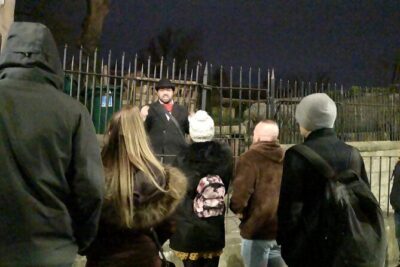
The guide is central to the experience. Matt is noted for a patient pace, clear communication, and the ability to answer questions with extra detail. One point worth knowing is that he has an accent that may take a little time to tune into, especially if English is not your first language.
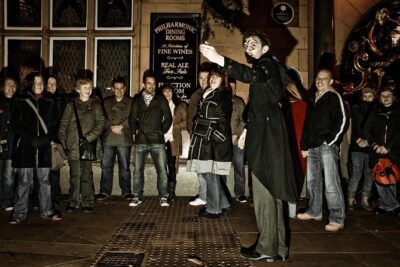
Carolina is also associated with an enthusiastic presentation style. On Halloween, one guide wore a mask and cape, adding a theatrical touch that suited the subject.
The group limit of 20 is helpful. London streets can be noisy, and some stops are outdoors near active roads or transport hubs. A smaller group makes it easier to stay close and hear the story, though you should still pay attention when the guide moves on.
The walk is described as safe with the group and tour leader. Service animals are allowed, and most people can participate. Since the route lasts about two hours and takes place outside, wear comfortable shoes and bring clothing suited to the evening weather. Those are simple precautions, but they matter more here than on a seated tour.
Who should book this tour?
I would choose this experience if you enjoy London’s darker side, historical crime, ghost stories, and old churches. It is especially well suited to adults and older children who can handle descriptions of execution, disease, murder, grave robbing, and medical procedures.
It also works well as an introduction to London’s oldest central districts. You do not need prior knowledge of the city, and the guide explains the background as the route unfolds.
You may want to skip it if you dislike horror themes, graphic historical detail, or outdoor walking at night. The tour does not promise jump scares or special effects. Its impact comes from storytelling and the knowledge that many of the places are tied to real events.
Booking is flexible because free cancellation is available up to 24 hours before the start time. The activity requires a minimum number of people, so a cancellation by the operator can result in another date, another experience, or a full refund.
Should you book London’s Ghosts and Gruesome Past?
Book it if you want a guided evening walk that blends real London history with ghostly folklore. The strongest parts are the route itself, the old churchyards, the medical stories, and the way the guide links plague, hospitals, body snatching, and executions.
At $49, the tour is best value for someone who wants context and storytelling rather than admission to indoor sights. Go prepared for a brisk two hours outdoors, city noise, and some very unpleasant details.
If that sounds like your kind of London evening, this is a focused and atmospheric way to see the city after dark. If you prefer a lighter sightseeing walk, choose another tour.
FAQ
How long does the tour last?
The tour lasts approximately two hours.
Where does the tour begin?
It begins at Cafe ProntoFarringdon Station, 43 Cowcross Street, London EC1M 6BY.
What time does the tour start?
The scheduled start time is 6:00 pm.
Where does the tour finish?
It finishes at 19 Old Bailey, London EC2A 9EA, within walking distance of St. Paul’s Underground Station.
How many people can join the tour?
The tour has a maximum group size of 20 people.
What places are included on the route?
The route includes Farringdon, Smithfield Market, Charterhouse Square, Cloth Fair, St. Bartholomew the Great, the William Wallace Memorial, St. Bartholomew’s Hospital Museum area, Holy Sepulchre London, and the Old Bailey.
Are service animals allowed?
Yes. Service animals are allowed.
Can I cancel for a full refund?
Yes. You can cancel for a full refund if you cancel at least 24 hours before the experience starts. Changes or cancellations made less than 24 hours before the start time are not accepted for a refund.
Just added around London
- London Private Jack The Ripper Tour★ 5.0 · 9 reviews
- Private Spy Walking Tour of London★ 5.0 · 6 reviews
- Private Shoreditch Street Photography Workshop★ 4.5 · 4 reviews
- Private Sightseeing Walking Tour of The City Of London★ 5.0 · 3 reviews
- Private 2.5 Hour Taxi Tour of London – London’s Greatest Bits!★ 5.0 · 4 reviews
- Private Round Trip Transfer between London Airports and Hotel★ 3.5 · 56 reviews
- Shakespeare London Walking Tour★ 5.0 · 26 reviews
- Private Prison Van Escape Game – London Immersive Experience★ 4.0 · 15 reviews
Ghost Tours, compared.
Ghost, Ghouls and Gallows Tour : Guided Tour with Boat Ride
Read our review →
Shadows of York: Ghost Walk and Horrible History.
Read our review →

The Original Jack the Ripper Coach Tour of Haunted London
Read our review →Browse the lists this tour appears in