
Reviewed · WALKING TOURS
Northern Lake District: Self Guided Walking Tour of Keswick
Keswick’s story unfolds best on foot, and this tour links its market square, museums, parks, churches, pubs, and lakeshore in one tidy route. The payoff comes at Friars Crag, where Derwent Water and the surrounding mountains provide a fine final view.
I like the clear GPS audio guidance, which helps you keep moving without staring at a map. I also like the route’s range: you get local history, a pencil museum, riverside paths, town life, and lake scenery rather than one long walk through a single type of place.
The main consideration is pace. The route is listed at about 90 to 105 minutes, while the full walk is described as roughly 5 kilometres. Add time for the Pencil Museum, cafés, photographs, or boat trips, and this becomes a longer outing. Bring your own smartphone and headphones.
Key points to know before you set out
- A 5-kilometre route with a strong finish: Start at Moot Hall and finish at Friars Crag beside Derwent Water.
- GPS audio rather than a live guide: Listen at your own pace, pause when you like, and retrace the route if needed.
- Keswick’s pencil-making past: The Derwent Pencil Museum gives the walk one of its most unusual historical stops.
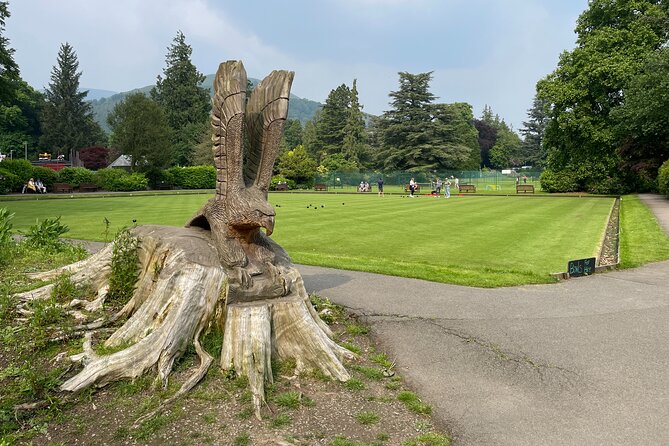
- Town and countryside in one outing: The route moves from the medieval marketplace through Fitz Park, Hope Park, and the lakefront.
- About $7.99 per person: The price is modest if you want a structured introduction without joining a group.
- Offline access is included: Download the audio, map, and route data before setting off, then walk without relying on a mobile signal.
From Moot Hall into Keswick’s past
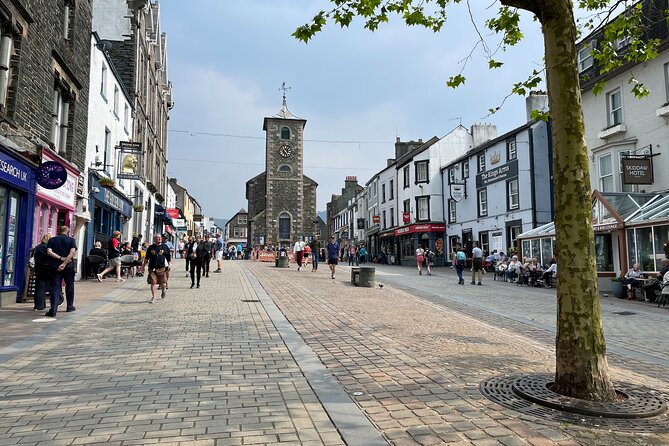
The walk begins at Moot Hall in Market Square, a useful place to start because it puts you in the center of Keswick’s old town. The building’s connection with local governance gives the opening some substance. You are not simply being pointed toward the next stop. You are being introduced to how Keswick functioned as a community.
From here, the route passes Keswick Ministries. This adds a religious and civic note early in the walk, showing that the town’s identity is not only about outdoor scenery and tourism. Keswick has long had a strong community life, and this stop gives the audio guide a chance to connect buildings with the people and institutions that shaped the town.
I like this opening because it helps you get your bearings quickly. The route begins with central streets and recognizable places, so the GPS format should feel manageable even if you do not know Keswick.
More walking tours in Lake District:
- Oxford University Walking Tour With University Alumni Guide
★ 5.0 · 6,905 reviews - Tour for Muggles The Ultimate Harry Potter Walking Tour in London
★ 5.0 · 4,684 reviews - London Jack The Ripper Guided Walking Tour
★ 5.0 · 3,131 reviews
The Pencil Museum and Keswick’s unusual claim to fame
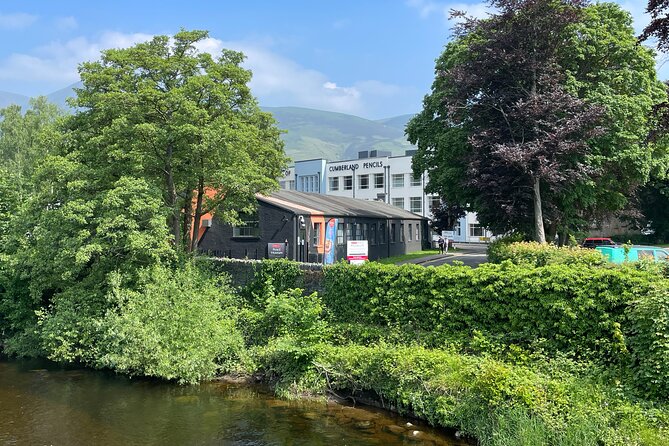
The Derwent Pencil Museum is the most distinctive stop on the first part of the walk. Keswick was once known as the pencil capital of the world, and the museum explains that industrial story through exhibits and displays.
This is the kind of place that can be easy to miss if you simply come to Keswick for the lake. The audio tour puts it on your path and gives the town a memorable detail beyond mountains, walking boots, and outdoor shops. You may want to allow extra time here if you enjoy museums, since the stated tour duration assumes a fairly steady walk rather than a long indoor visit.
The stop also shows the value of a route that mixes small local stories with major sights. You get a better sense of Keswick as a working town, not just a base for exploring the Lake District.
Fitz Park brings in river views and local culture
After the Pencil Museum, the route moves toward Lower Fitz Park and the River Greta. This section offers a change of pace. The market streets give way to open parkland and water, making the walk feel less urban without taking you far from town.
The park has a practical role in Keswick life, with space for leisure and recreation. The audio commentary helps you see it as part of the town’s daily rhythm rather than a patch of greenery between attractions.
The route then continues through Upper Fitz Park to Keswick Museum. Seasonal floral displays add interest in the park, though their appearance will naturally depend on the time of year. Keswick Museum gives the walk another cultural anchor, with objects and stories covering local life across several centuries.
I like this middle section because it avoids a common problem with town walks: too many buildings in a row. Here, you get a river, open park space, and a museum before returning to streets.
Cafés, churches, and Keswick’s social side
Café HNW provides a natural pause. The tour identifies it as a place to refresh yourself and possibly try local food. Since the route is self-guided, you can stop without holding up a group or worrying about a fixed departure time.
That flexibility matters. A live walking tour may move on when you want a drink. Here, you can pause the audio, sit down, and restart when ready. Just remember that a café stop adds to the advertised 90 to 105 minutes.
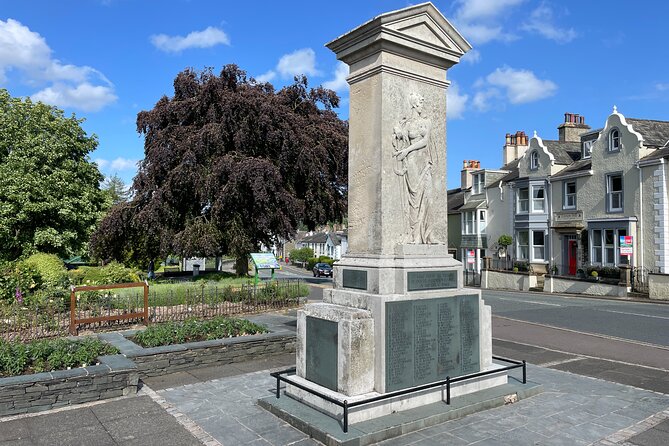
The next stretch includes Keswick War Memorial and Keswick Methodist Church. The war memorial offers a quiet moment to consider the town’s wartime contribution and the people it lost. The Methodist church adds architectural and community interest.
St John’s Church follows, giving you another chance to look at Keswick’s older religious buildings. These stops are useful for readers who want more than scenery. The route treats the town as a place with civic duties, faith communities, and public memory.
More self-guided tours in Lake District:
- Western Approaches Self Guided Tour
★ 5.0 · 505 reviews - Private Self-Guided Dinky Door Hunt in Cambridge
★ 4.5 · 103 reviews - Bristol Street Art: Banksy Exploration Game and Tour
★ 3.5 · 39 reviews - Public BucketRace – Scavenger Hunts with a Twist
★ 5.0 · 32 reviews
Historic hotels, pubs, and a living town center
The walk passes the Alhambra Cinema, a long-running local cultural venue, then the George Hotel, which has welcomed visitors since the Victorian era. You also pass the Royal Oak and the Dog & Gun, two traditional pubs with strong local associations.
These stops are not simply photo points. They show how Keswick’s center has served different purposes over time: entertainment, lodging, food, drink, and social life. I appreciate that the route includes places where local life still happens instead of focusing only on formal monuments.
The Dog & Gun and Royal Oak may tempt you to stop, but keep an eye on your timing if you want to reach Friars Crag within the stated duration. The tour works best as a flexible outline. You can follow it quickly, or use it to identify places for a later visit.
Art at Cook House Gallery and a pause at Café Hope
Cook House Gallery brings local creativity into the route. Its setting in Keswick connects art with the surrounding scenery, which has long encouraged painters and makers.
This is another nice break from the expected Lake District checklist. You are not only looking at views. You are seeing how the area has inspired people who live and work there.
Café Hope offers another possible refreshment stop. Its scenic setting and warm atmosphere make it a practical place to pause before the route turns toward Hope Park and Derwent Water.
Two cafés in one walk may sound excessive, but they make the route easier to adapt. You can skip both, choose one, or use them as rest points if you prefer a slower outing.
Hope Park and the story of Max the Miracle Dog
Hope Park is one of the route’s calmer sections. In season, its planting gives the area a botanical feel, while its position near town makes it an easy place to enjoy some quiet without committing to a long country walk.
The stop at the Max the Miracle Dog Statue adds a more personal note. The statue commemorates a local story of hope and perseverance, giving the route an emotional detail that differs from the formal history of churches and civic buildings.
I like this part because it shows the tour’s human scale. You are not rushing from one famous sight to another. You are also encountering the small symbols and local stories that can make a town feel familiar.
From Lakeside Car Park to Theatre by the Lake
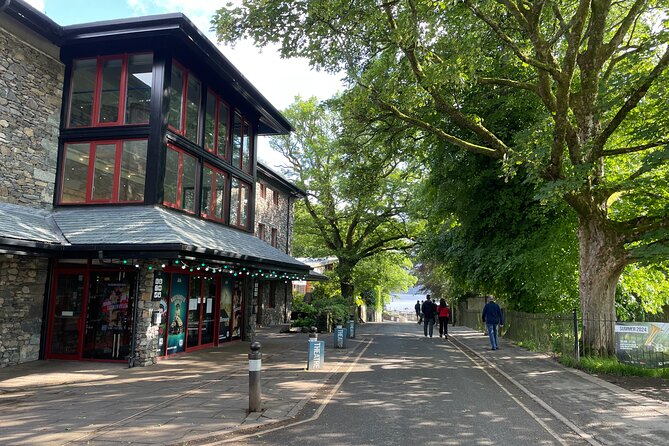
The route then passes Lakeside Car Park, a practical access point for Derwent Water and nearby attractions. This is not the most scenic stop, but it helps explain how the town connects with the lake.
Theatre by the Lake follows. The venue is known for performances with the water and mountains as a backdrop, and its location gives the walk a strong cultural link to the scenery.
This portion marks a clear shift from town history to lakeside recreation. You may notice more open views as you approach Crow Park, where the route introduces the area’s use as a recreational space. A stone plaque unveiled by Prince Charles in 2018 adds a specific modern detail to the park’s story.
The walking surface and route conditions are not described in detail, so sensible footwear is a good idea. The walk is not presented as a strenuous hike, but you are still covering about 5 kilometres, and parks or lakeside paths may feel different in wet weather.
Derwent Isle and the final stretch along the water
From Crow Park, you get views toward Derwent Isle. The island has its own history, including stories about eccentric inhabitants, and its position on the lake makes it one of the more atmospheric sights on the route.
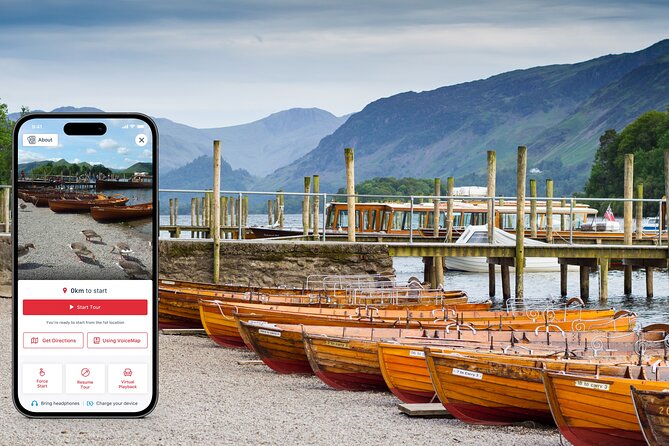
The Derwent Water Jetties are the next major point. This is where you can take in the lake at close range and, if you choose, arrange a boat trip. The audio walk itself does not include a boat ride, so treat that as an optional extra rather than part of the tour.
The jetties give you a useful choice. If you want to keep walking, continue toward Friars Crag. If you have more time, you can return later for a boat outing. The tour’s lifetime access means you can also use the route again after your booking date, or listen through the virtual playback option from another location.
Friars Crag gives the walk its reward
The tour ends at Friars Crag, one of the best low-level viewpoints in the Lake District. Derwent Water opens out before you, with mountains around it and the lake providing the wide final scene.
This is exactly the right kind of finish for a town walk. You begin with local government in the marketplace and end with open water and mountain views. The route gradually widens your view of Keswick, from its buildings and institutions to the natural setting that draws people here.
Allow time at the end. The official walk may take around 90 to 105 minutes, but Friars Crag deserves more than a quick arrival and an immediate departure.
How the self-guided format works
You receive directions to Moot Hall, the starting point, and use your phone to follow a GPS route. The audio, maps, and geographic data can be accessed offline, which is useful if you download everything before leaving a reliable connection.
The audio guide can also be used as a virtual playback experience from anywhere. That means you can listen before your visit, revisit the commentary later, or use it without physically completing the route.
The route is private in the simple sense that only your group takes part. There is no scheduled group departure and no guide waiting at each stop. You control the pace, the pauses, and the amount of time spent at museums, cafés, churches, and viewpoints.
The tradeoff is that you must manage your own navigation. The audio is designed to keep you on course, and one detailed account describes the route as easy to follow, with prompt correction after a wrong turn. Still, bring a charged phone, headphones, and the offline material.
Is $7.99 good value?
At $7.99 per person, this is a low-cost way to organize a first look at Keswick. You are paying for the route design, recorded commentary, navigation, offline access, and lifetime use rather than for admission to the museum or a boat ride.
The value is strongest if you want structure but dislike fixed group tours. You can walk alone, with family, or with your own small group, and you can pause whenever something catches your interest.
It is less useful if you want a live guide who can answer questions on the spot. It also will not replace a full day at the Pencil Museum, Keswick Museum, or Derwent Water. Think of it as a well-planned introduction that helps you decide where to spend more time.
Free cancellation is available up to 24 hours before the scheduled start time. Changes made inside that period are not accepted, so keep the local cut-off time in mind.
Who should choose this Keswick walk?
I would recommend it to first-time visitors who want to connect the town center with Derwent Water without planning every turn themselves. It also suits people who already know Keswick but want to find streets, parks, buildings, and local stories they might otherwise pass.
Families may like the freedom to stop, though the route’s value depends on children being willing to listen and walk for about 5 kilometres. History fans will appreciate Moot Hall, the churches, civic sites, and museums. Art lovers get Cook House Gallery, while people focused on scenery receive a strong finish at Friars Crag.
It is offered in English only. Service animals are allowed, and most people can take part. You must provide your own smartphone and headphones.
Should you book it?
Book this tour if you want an affordable, flexible route that covers both Keswick and the Derwent Water shore. Its best features are the clear audio guidance, the mix of unusual local details, and the final view from Friars Crag.
Skip it if you need a live human guide, a very short stroll, or included admission and transport. For most independent walkers, though, $7.99 is a sensible price for a route that turns a loose afternoon in Keswick into a coherent outing.
FAQ
Where does the Keswick walking tour start?
It starts at Moot Hall in Market Square, Keswick, England. The listed address is Keswick CA12 5JR, UK.
Where does the tour end?
The tour ends at Friars Crag, Keswick CA12 5DJ, UK, beside Derwent Water.
How long does the self-guided walk take?
The estimated duration is about 1 hour 30 minutes to 1 hour 45 minutes. The route is also described as roughly 5 kilometres, and stops at museums, cafés, or viewpoints can make it longer.
What language is the audio tour offered in?
The tour is offered in English.
Do I need to bring anything?
You need your own smartphone and headphones. Offline access to the audio, maps, and geographic data is included, so download the material before you start.
Is this a private activity?
Yes. Only your group participates, and you can explore at your own pace using the self-guided GPS format.
Can I cancel for a full refund?
Yes, if you cancel at least 24 hours before the experience start time. Cancellations or changes made less than 24 hours before the start time are not accepted for a refund.
Just added around Lake District
- Overnight Lake District with Cream Tea and Cruise from London★ 4.5 · 7 reviews
- Lake District – Rail Tour from London with Cream Tea and Cruise★ 4.0 · 75 reviews
- Lake District from Liverpool including Lake Cruise★ 4.5 · 49 reviews
- Shore Excursion: Lake District Adventure Sightseeing Day Trip from Liverpool★ 4.0 · 5 reviews
- The Beatrix Potter And Peter Rabbit Private Tour★ 5.0 · 4 reviews
- 3-Hours Via Ferrata Experience in Keswick★ 5.0 · 33 reviews
- Mountain Goat Full Day Tour: Ten Lakes from Oxenholme★ 5.0 · 46 reviews
- Paddle Boarding on Derwent Water★ 5.0 · 62 reviews
Walking Tours, compared.
Oxford University Walking Tour With University Alumni Guide
Read our review →
Tour for Muggles The Ultimate Harry Potter Walking Tour in London
Read our review →
Cambridge University Walking Tour by Alumni™ Kings College Option
Read our review →
Blackbeard to Banksy – The Ultimate Walking Tour of Bristol
Read our review →
Air Raid Shelter + St. Nicholas Market Walking Tour
Read our review →
Walking Tour of Bath with Blue Badge Tourist Guide
Read our review →
Changing of the Guard Guided Walking Tour in London
Read our review →Browse the lists this tour appears in