
Reviewed · WORKSHOPS
Private DJ Class
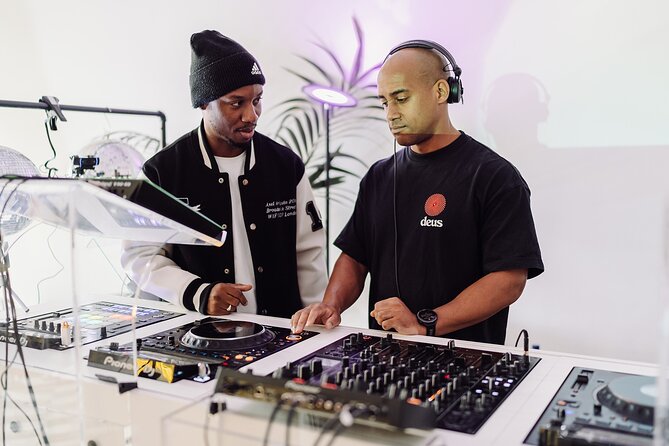
London’s private DJ class gets you behind Pioneer DJ decks for two focused hours of beatmatching, phrasing, EQ, filters, and harmonic mixing. You work privately with a trainer, so there is no crowd waiting for you to find the right button or rescue a rough transition.
I like the one-to-one format and the chance to learn on proper club-style equipment rather than a simplified home controller. I also like the practical focus: you are not just hearing about DJ culture, you are learning how tracks fit together.
The main consideration is simple: two hours goes quickly, especially if you are starting from zero. At $137.13 per person, this is a good-value introduction for someone keen to try DJing, but less useful if you want an advanced course or a full-day workshop.
Key points about the private London DJ class
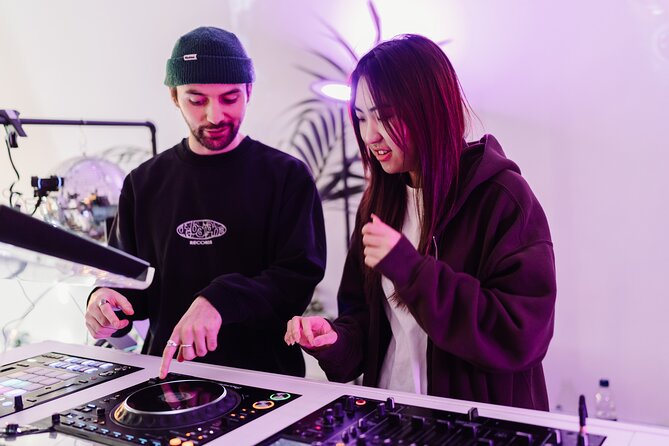
- Private lesson at 93a Bayham St: Only your group takes part, giving you direct time with the trainer.
- Two hours on Pioneer decks: You learn on industry-standard equipment rather than a basic demonstration setup.
- Core mixing skills covered: Beatmatching, phrasing, harmonic mixing, EQing, and filters are all part of the session.
- A comfortable place to make mistakes: You can practice without other students or an audience listening in.
- Practical London experience: The class takes place at a working DJ studio, not a sightseeing venue.
- Straightforward booking terms: You receive confirmation at booking, and cancellation is free up to 24 hours before the start time.
Getting started at 93a Bayham St
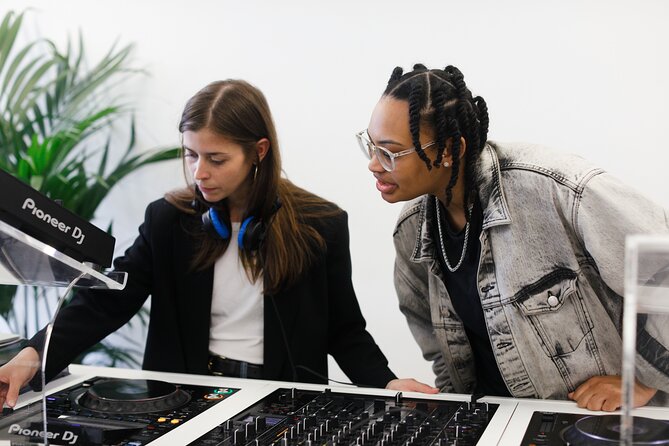
The class begins at London Sound Academy, at 93a Bayham St, London NW1 0AG. The meeting point is also the end point, so you do not need to arrange a second pickup or find your way across London after the lesson.
That simplicity matters. A DJ lesson is already a new experience, and arriving late or wandering around looking for a studio can cut into your practice time. The address is near public transportation, but the available information does not name a specific station or give walking directions. Check the route before you leave and allow a little extra time.
Once you arrive, the format is private. Only your group participates, which gives the trainer room to adjust the pace to your level. If you have never touched DJ equipment before, you can ask basic questions without holding up a class. If you already know a little, you can spend more time refining transitions instead of repeating the very first steps.
The trainer’s name is not provided, so you should not book this expecting a particular instructor. What is clear is the teaching setup: personal attention, a private studio, and equipment designed for serious mixing.
More Workshops in London
- Fully Guided Tour of Warner Bros Studio Tour London – The Making of Harry Potter
★ 4.5 · 722 reviews - London Traditional English Scone Making and Tea Workshop
★ 5.0 · 271 reviews - Pasta Making with Unlimited Prosecco in London’s West End
★ 5.0 · 264 reviews
Your first minutes on the Pioneer decks
The equipment is a key part of the class. You learn on industry-standard Pioneer DJ decks, so the controls and workflow are closer to the gear used in many professional DJ settings than the simplified controls found on some beginner devices.
That does not mean the class will make you club-ready in two hours. It does mean the lesson can introduce you to real equipment from the beginning. You will need to pay attention to the deck layout, track controls, mixer channels, and timing. For a first lesson, this can feel like a lot, but private instruction gives you someone to explain each part as it comes up.
The session is built around making a mix, not simply standing beside the trainer while they demonstrate. You can expect to work through the basic controls and then apply them to track changes. The exact music selection and lesson order are not specified, so do not assume you can request a certain genre or prepare a fixed set list.
A helpful approach is to arrive with a clear goal. You might want to understand how DJs keep two tracks together, learn how to make a smooth change, or find out if the equipment feels right for you. Two hours is enough to get a solid first look, but not enough to cover every style of DJing.
Beatmatching: keeping two tracks together
Beatmatching is one of the main skills covered. In plain terms, you learn to line up the beats of two tracks so they play together instead of drifting apart or clashing.
This is the part that often sounds easier than it feels. Your ear must notice timing, and your hands must make small corrections. Even with modern DJ software, you still need to understand what the music is doing. A private lesson helps because the trainer can point out the moment a track begins to slip and show you how to correct it.
You may spend a fair portion of the class practicing small adjustments. That can feel repetitive, but it is useful repetition. The goal is not to race through a list of buttons. It is to build enough confidence that you can hear the problem and respond.
For beginners, this is where the private format earns its keep. You do not have to worry about making a mistake in front of strangers, and there is no pressure to move on before the basic idea makes sense.
Phrasing and the timing of a good transition
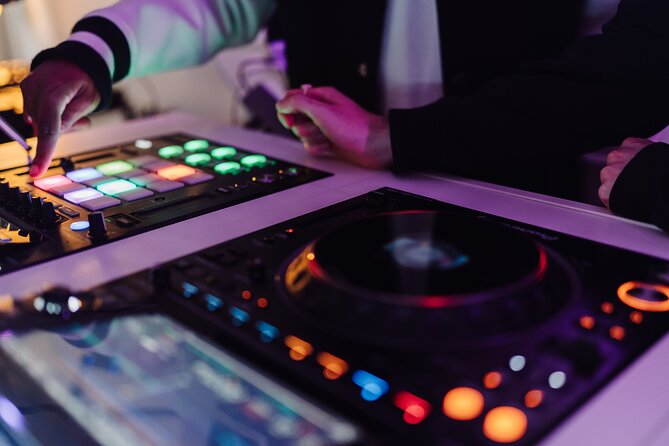
The class also covers phrasing, which is about bringing changes into the musical structure of a track at a sensible moment. A transition can be technically on beat and still sound awkward if it begins at the wrong point in the song.
This topic gives the lesson more depth than a simple equipment introduction. You start to think about how tracks are built and why a transition may sound natural in one section but forced in another. The available information does not promise advanced production theory, so expect a practical introduction rather than a music-school course.
I like this part because it connects the mechanics to the listening experience. You are not merely moving a fader or turning a knob. You are learning to notice when a change belongs in the music.
The exact tracks used are not listed. That means your experience may depend partly on the material selected during the session, but the stated skill list gives you a clear idea of the lesson’s foundation.
Same part of England, a completely different sort of day:
- London Big Bus Hop-On Hop-Off Tour with Optional River Cruise
★ 3.5 · 10,803 reviews - London Small Group Tour of Historical Pubs
★ 5.0 · 10,422 reviews - Tower of London and Crown Jewels Exhibition Ticket
★ 4.5 · 6,677 reviews - Thorpe Park Admission Ticket
★ 4.0 · 5,915 reviews
Harmonic mixing, EQ, and filters
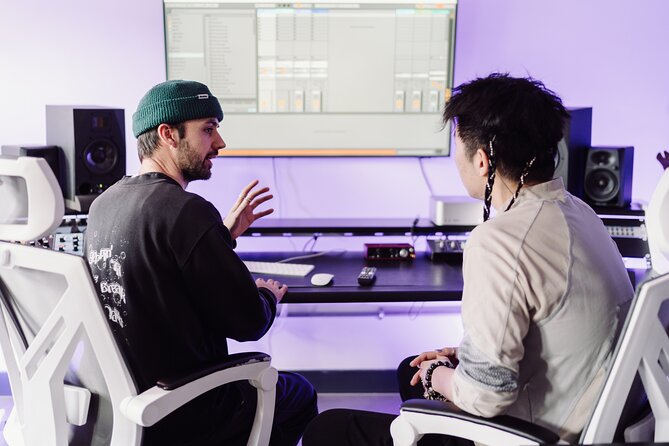
Harmonic mixing is another subject included in the class. This concerns how the musical keys of tracks work together, helping you avoid combinations that sound harsh or unsettled.
For a first lesson, harmonic mixing may be introduced at a basic level. You should not expect to master every key relationship in a single visit. Still, learning that song selection involves more than tempo can change the way you listen to DJ sets.
EQing and filters add the hands-on sound shaping. EQ controls help you manage the low, middle, and high parts of the tracks, while filters can change the feel of a transition. These are useful tools, but they can also create muddy or thin sound when used too heavily.
That is why direct feedback matters. In a group class, a trainer may need to move on while you are still unsure which control is doing what. Here, you can ask for another explanation and try the change again in a quiet, private setting.
Why the private format matters
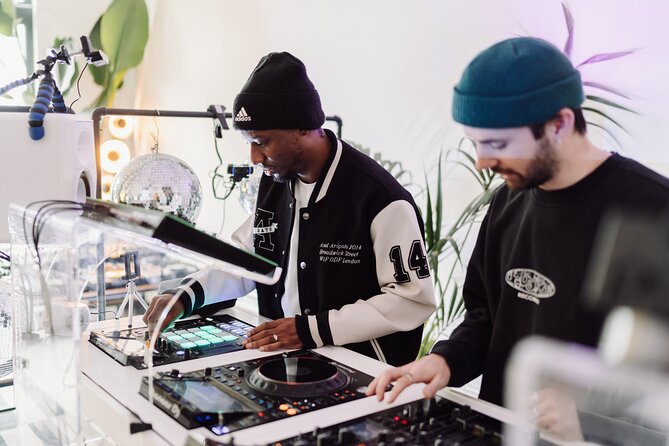
The strongest reason to choose this experience is the lack of an audience. You do not have to perform for other students, and only your group participates. That removes one of the biggest barriers for beginners: the fear of looking clumsy while learning unfamiliar equipment.
A private class can also adapt to your interests. The published details do not promise a custom playlist or a special lesson plan, so you should not assume every request can be accommodated. Still, one-to-one attention gives the trainer more room to respond to your questions and pace the instruction around your needs.
This is especially useful if you learn by doing. You can ask what a control does, try it, hear the result, and correct it. That cycle is more valuable than watching a long demonstration without touching the decks.
The tradeoff is that private instruction costs more than joining a shared session might. At $137.13 per person, you are paying for focused time rather than a cheap group activity. For two people booking together, the private setup may feel social as well as instructional, but the price is still calculated per person.
What two hours can realistically teach you
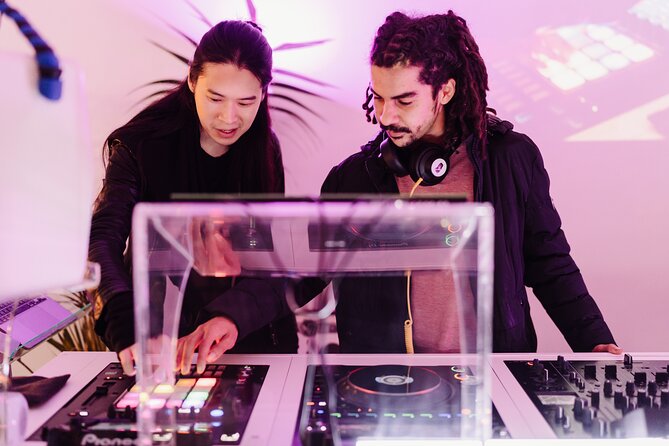
Two hours is a sensible length for an introduction. It is long enough to cover several key skills without turning into a full-day technical course. You should leave with a basic understanding of beatmatching, track phrasing, harmonic mixing, EQ, and filters.
You should also keep expectations in check. A single class will not turn you into a polished club DJ. Mixing requires practice, and the details of the lesson, such as the music used and the amount of time spent on each topic, are not specified.
I would think of this as a first test. You get to find out if DJing interests you, whether the equipment feels manageable, and which skills you want to practice next. The class can also help you decide if investing in your own equipment or taking further lessons makes sense.
A past participant described the experience as a one-to-one course that made high-end software and technology feel comfortable. That is a useful clue about the lesson’s character. The value is not just in learning terminology. It is in having someone guide you through equipment that might otherwise feel intimidating.
Who will get the most from this class
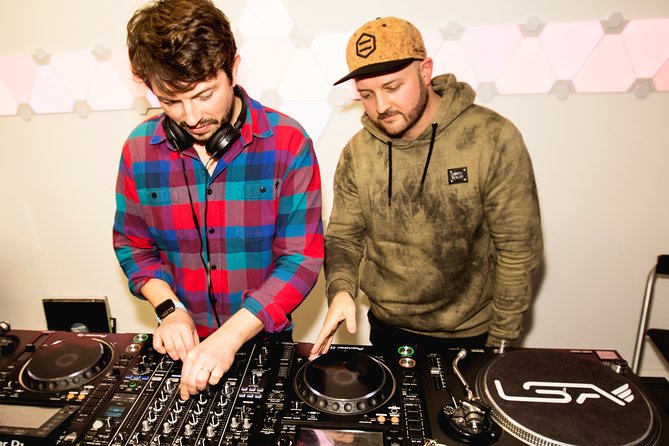
This experience suits several types of visitor:
- Complete beginners who want a patient introduction without a public performance.
- Music fans curious about what happens behind a DJ set.
- Aspiring DJs who want to test professional-style equipment before committing to more training.
- Couples or small groups looking for an unusual London activity that is active rather than purely observational.
- People who learn by practice and prefer personal correction over a large classroom.
It may be less suitable if you already mix confidently and want advanced subjects such as live performance, music production, set planning, or career advice. None of those are promised. The listed focus is the core technique needed to combine tracks.
It is also not the best choice if you want a flexible half-day activity with several London stops. This is a fixed two-hour studio session at one address. Its appeal comes from concentration, not sightseeing.
Price, timing, and practical value
The price is $137.13 per person for about two hours. That is not a casual drop-in price, but private instruction changes the calculation. You are paying for direct access to a trainer, a private setting, and Pioneer decks rather than simply watching a demonstration.
I would compare it with the cost of renting equipment or taking a longer course, but no competing prices are provided here. On the facts available, the class offers fair value if your main goal is a focused introduction and you care about privacy.
The activity is booked an average of 15 days ahead, so I would not leave it until the last minute if your London dates are fixed. Confirmation arrives when you book, and the ticket is mobile, which keeps the arrival process simple.
Free cancellation is available until 24 hours before the start time. If you cancel less than 24 hours ahead, you do not receive a refund, and changes within that same period are not accepted. The cut-off follows local London time, so keep that in mind if you are booking from another time zone.
Service animals are allowed, and most people can participate. The information does not describe the studio’s full physical accessibility, so contact the provider if you have access needs beyond the stated service-animal policy.
How to prepare for a better lesson
You do not need to bring special equipment. The decks and teaching setup are provided at the studio. Still, you will get more from the session if you arrive with a few practical questions.
Think about the kind of DJing that interests you. Do you want to mix dance tracks, understand club transitions, or simply learn what the controls do? You are not promised a particular genre, but knowing your goal helps the trainer spend the limited time wisely.
Wear something comfortable and arrive ready to listen closely. The class includes several ideas that sound similar at first, including beatmatching, phrasing, and harmonic mixing. Taking in one concept before moving to the next will help.
If you are booking with a friend, agree on what you both want from the lesson. A private class can work well for a shared activity, but two people may need to split hands-on time. The experience is still private, but private does not mean unlimited time on the decks for every person.
Should you book the Private DJ Class?
Book it if you want a focused, private introduction to DJing in London and like the idea of learning on Pioneer equipment. The class is practical, beginner-friendly, and free from the pressure of an audience. The one-to-one setting is its strongest feature.
Skip it if you want a long training course, advanced DJ coaching, or a detailed music-production session. Two hours gives you a useful start, not mastery. At $137.13, the price makes the most sense for someone who values personal instruction and wants to test the experience properly.
For a music fan seeking something different from London’s usual attractions, this is a worthwhile choice. You leave with a clearer sense of how DJs match beats, shape transitions, and use the mixer to make two tracks work together.
FAQ
Where does the Private DJ Class take place?
The class takes place at London Sound Academy, 93a Bayham St, London NW1 0AG, UK.
How long does the DJ class last?
The class lasts approximately two hours.
Is the class private?
Yes. Only your group participates in the activity.
What equipment will I use?
You will learn on industry-standard Pioneer DJ decks.
What skills are covered?
The class covers beatmatching, phrasing, harmonic mixing, EQing, and filters.
Is the experience offered in English?
Yes. The activity is offered in English.
Does the activity begin and end at the same place?
Yes. It starts at 93a Bayham St and ends back at the meeting point.
Is the meeting point near public transportation?
Yes. The meeting point is near public transportation.
Are service animals allowed?
Yes. Service animals are allowed.
Can I cancel for a full refund?
Yes, if you cancel at least 24 hours before the experience start time. Cancellations made less than 24 hours before the start time are not refunded.
Just added around London
- London Private Jack The Ripper Tour★ 5.0 · 9 reviews
- Private Spy Walking Tour of London★ 5.0 · 6 reviews
- Private Sightseeing Walking Tour of The City Of London★ 5.0 · 3 reviews
- Private 2.5 Hour Taxi Tour of London – London’s Greatest Bits!★ 5.0 · 4 reviews
- Private Shoreditch Street Photography Workshop★ 4.5 · 4 reviews
- Private Round Trip Transfer between London Airports and Hotel★ 3.5 · 56 reviews
- Shakespeare London Walking Tour★ 5.0 · 26 reviews
- Private Prison Van Escape Game – London Immersive Experience★ 4.0 · 15 reviews
Workshops, compared.

Fully Guided Tour of Warner Bros Studio Tour London – The Making of Harry Potter
Read our review →
Warner Bros. Studio Tour London – The Making of Harry Potter and Oxford Day Trip
Read our review →
London Traditional English Scone Making and Tea Workshop
Read our review →
Pasta Making with Unlimited Prosecco in London’s West End
Read our review →


Browse the lists this tour appears in