
Reviewed · MUSEUMS
The Postal Museum Admission Ticket
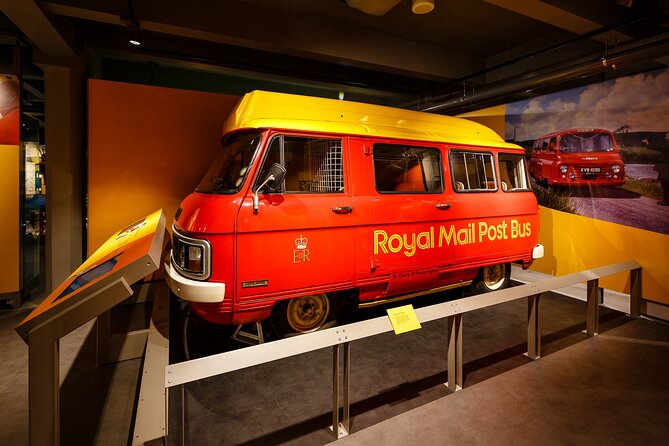
The most surprising part of The Postal Museum is not a rare stamp or an old postbox. It is the chance to ride Mail Rail, a small underground train that once carried post beneath London. The short journey combines moving images, sound, and preserved railway spaces, turning a practical postal system into a proper family attraction.
I like the museum for two clear reasons. First, the hands-on displays give children something to do while adults follow five centuries of communication history. Second, the train ride feels genuinely different from a standard museum visit. The main caution is that Mail Rail can be cramped, dark, and loud, and it may be unavailable during maintenance or poor weather.
Key points to know before you go

- Mail Rail is the main event: Ride through London’s former underground postal railway, with information and visual effects along the route.
- The museum has two parts: The Mail Rail building and the main exhibition are across the street from each other, so do not stop after the train.
- Plan for 90 minutes to 2.5 hours: Families who let children try the interactive models will need the longer end of that range.
- It suits a rainy London day: Most areas are indoors, though the experience can be affected by operating conditions.
- An audio guide is available: You can add one if you want more background while exploring.
- Extra children’s play space costs more: Sorted! The Postal Play Space is separate and is aimed at children aged 0 to 8.
Why London’s mail train is worth your time

The Postal Museum tells a story that touches nearly every part of daily life: how people sent news, maintained relationships, ran businesses, and connected distant communities. It does this through the development of postal services rather than through famous paintings or royal objects.
That makes the museum especially useful for families. A child may begin with a five-wheeled cycle, a pneumatic tube, or a strange piece of postal machinery, then begin to see how messages moved before phones and email. You can talk about how post workers served local communities, how stamps changed access to communication, and how much effort once went into sorting and moving letters.
The museum also gives the subject a human side. Displays about postal workers, their equipment, and the places where they worked help turn an ordinary envelope into part of a much larger social story. One especially memorable area recreates the atmosphere of the Mail Rail workplace, including workers’ lockers and the objects left behind when a station closed.
The train ride adds the physical sense of place that a display case cannot provide. You are not simply looking at a model of an underground railway. You are taken into the tunnels in a compact carriage and shown how the service worked across different periods.
More Attraction Tickets in London
- Tower of London and Crown Jewels Exhibition Ticket
★ 4.5 · 6,677 reviews - Thorpe Park Admission Ticket
★ 4.0 · 5,915 reviews - The London Eye Entry Ticket
★ 4.0 · 3,498 reviews
Start with Mail Rail, then cross the street
The experience is split between two buildings. This is the single most useful planning detail. The Mail Rail attraction and its related displays are in one building, while the main Postal Museum is across the street.
I would begin with the train ride. This follows the practical advice built into the layout: the rail experience can involve a wait, and it is easy to spend too long there if you let children test every interactive feature. Once you finish, cross to the main museum and work through the broader postal story.
The ride itself is short, but it is not just a quiet trip through a tunnel. The journey uses facts, images, and staged moments to explain how the underground system operated. You get a sense of the working railway as well as the unusual engineering behind it.
The carriage is one point to consider. The train can feel tight for taller adults, and anyone close to 6 feet may find the roof uncomfortably near. The ride is also dark and loud. That can be part of the fun for older children, but younger children or anyone sensitive to noise and low light may need warning first.
A service interruption can change the experience. Planned maintenance has closed the train at times, and the attraction can also be affected by weather conditions. Check the current operating information before setting out, especially if Mail Rail is the reason you are booking.
Interactive exhibits that work for mixed ages
The main museum is brighter and more open than the train section. Its displays cover five centuries of postal communication and show how the service shaped British society and links with the wider world.
You will find machines, postal equipment, cycles, stamps, and interactive models. The pneumatic tube displays are a particular hit because they make an old system feel like a hands-on game. This is the sort of museum where children can press, turn, send, and watch while adults read the explanation beside them.
The museum works best when you give it time. A quick circuit is possible, but you may miss the point of the interactive sections. With children, allow at least two hours if your schedule permits. One family visit took much longer than expected because the children wanted to try the displays rather than simply walk past them.
The content is not all light entertainment. The museum also explores the role of the postal service in communities and the ways it carried difficult stories. The exhibit Voices of Resistance: Slavery and Post in the Caribbean offers a more serious look at communication, power, and resistance. It gives the visit weight beyond machines and nostalgia.
The result is a good mix: practical technology, workplace history, social change, and activities that keep younger visitors involved. Adults who remember a time when local post workers were central to neighborhood life may find the displays especially useful for explaining that world to children.
The best way to pace a family visit

You do not need to rush through this museum, but you do need a simple plan. Start with Mail Rail, then allow time for the interactive displays attached to that experience. After crossing the street, continue through the main exhibition and finish with a café break if needed.
A visit of 90 minutes is possible if you focus on the train and the major displays. A two-hour visit gives you more room to read, let children play with the models, and stop for a drink. Families with young children may need around 2.5 hours.
The museum is family-friendly, but the age range matters. Children around six to ten are likely to get the most from both the ride and the activities. Younger children can enjoy the train and tactile displays, though the dark, noisy carriage may frighten some of them.
For children aged 0 to 8, the separate Sorted! Postal Play Space costs £4.50 per person. This is not included in the standard admission, so check the added cost before booking if you are planning a full children’s play session.
The museum also has an accredited family-friendly café. The café is useful for a break, but do not treat it as the main reason to visit. Food choices may be limited, and there has been criticism of the selection and service. If your group needs a proper meal, plan that part of the day carefully.
More museums and galleries in London:
- Chelsea FC Stadium Tours and Museum
★ 5.0 · 1,908 reviews - Official tickets: Moco Modern & Contemporary Art Museum
★ 4.5 · 1,157 reviews - British Museum London Guided Tour Semi-Private 8ppl Max
★ 5.0 · 984 reviews - The British Museum London – Exclusive Guided Museum Tour
★ 5.0 · 555 reviews
What the ticket includes, and what it does not

The admission price is listed at $25.55 per person. For a London attraction that combines a museum and a special transport experience, that can be fair value if you use the full visit. The train ride alone is unusual, while the main museum gives you enough content to fill a couple of hours.
The value drops if you only have time for a quick look. You are paying for more than a conventional museum entry, but the experience depends on seeing both sections. The two-building layout makes that especially important.
The basic ticket includes admission. It does not include annual entry to the museum’s exhibitions, which costs £2 per person, or the Sorted! Postal Play Space, priced at £4.50 per person. You can also upgrade with an audio guide if you want extra explanation as you move through the displays.
Time slots let you fit the visit into a London sightseeing day. Bookings are commonly made about 13 days ahead, so this is not usually a last-minute choice during busy school holidays. Your confirmation arrives at booking, and the ticket is mobile.
The experience is listed for groups of no more than seven people. That makes it feel more manageable than a large guided tour, though the museum itself is a public attraction rather than a private visit.
Access, sound, and practical limits

All spaces in The Postal Museum have step-free access. The Mail Rail building is also step-free apart from the ride itself. Accessible toilets include gender-neutral facilities, and a Changing Places facility is available.
There is one important physical requirement. You must be able to walk unaided for at least 100 metres over uneven surfaces in minimal lighting and climb at least 70 steep steps. This makes the experience unsuitable for some visitors even though the museum buildings themselves are step-free.
Service animals are allowed, and resources are available for autistic visitors. An audio-described introduction to the museum is also provided. If you need a particular accessibility arrangement, check the museum’s full guidance before booking.
The train section deserves special thought for sensory reasons. It is dark and loud, and the carriage has limited headroom. Deaf visitors may also find parts of the train presentation difficult if key information is delivered through spoken audio. An audio guide may help in the museum, but do not assume it solves every issue on the ride.
The attraction is near public transportation, which makes it easy to add to a central London day. Exact transport details are not included with the ticket, so use your preferred London route planner before you leave.
Rainy-day appeal, with one weather warning

This is a smart choice when London gives you gray skies. The exhibitions, train building, toilets, and café keep the visit largely indoors, and the displays offer more substance than a simple child-focused play attraction.
Still, do not assume bad weather has no effect on the day. The experience requires suitable operating conditions, and the Mail Rail ride has been closed during maintenance. If the activity is canceled because of poor weather, you are offered another date or a full refund.
The normal cancellation policy is strict. The ticket is non-refundable and cannot be changed for any reason by the customer. That makes it wise to check your schedule, the weather forecast, and the train operating status before committing.
Who will enjoy The Postal Museum most?

I would recommend it most strongly to families with primary-school children, railway fans, anyone interested in everyday social history, and adults looking for a different London museum. The attraction gives children a clear reason to pay attention, while adults get a thoughtful look at communication and working life.
It also suits grandparents visiting with children. The displays can open up useful conversations about how people once kept in touch, what post workers meant to a neighborhood, and how quickly communication systems have changed.
Rail enthusiasts will probably focus on Mail Rail, but the main exhibition is worth the extra time. The small train is the hook, not the whole meal. If you cross the street and explore the exhibits, the visit feels much better value.
I would be more cautious if you dislike enclosed spaces, have difficulty with steep steps, or need a quiet attraction. The train is noisy and dim, and tall adults may feel cramped. If the ride is closed, the museum remains worthwhile, but the admission may feel expensive if you booked mainly for the underground journey.
Should you book The Postal Museum?
Book it if you want a family activity with a real sense of place, not just another collection of objects behind glass. Mail Rail is the big reason to go, and the interactive exhibitions give the rest of the visit enough substance to justify the ticket.
Plan to spend at least two hours, start with the train, and remember that the museum has two buildings across the street from each other. Add the play space only if your children need it, and check Mail Rail status before you travel.
Skip it if you are looking for a quiet art museum, have limited mobility for the stated walking and stair requirements, or cannot accept the risk of a train closure. For most families and history-minded visitors, though, this is an inventive London stop with a useful lesson underneath the fun.
FAQ
How long does a visit to The Postal Museum take?
The estimated visit lasts about 1 hour 30 minutes to 2 hours 30 minutes. Families who spend time with the interactive displays may need closer to the longer estimate.
What is included with admission?
The ticket includes admission to The Postal Museum and the Mail Rail experience when it is operating.
Is the Mail Rail ride included?
Yes, the museum visit includes the Mail Rail experience. The ride may occasionally be unavailable because of maintenance or operating conditions.
Are the museum and Mail Rail in the same building?
No. The Mail Rail building and the main museum exhibition are across the street from each other.
Can I add an audio guide?
Yes. An audio guide upgrade is available.
Is the museum suitable for children?
Yes. The museum has family-friendly interactive exhibitions and is recommended for visiting families. Children must be accompanied by an adult.
Does the museum have a play area for young children?
Yes. Sorted! The Postal Play Space is for children aged 0 to 8. It costs £4.50 per person and is not included in standard admission.
Is The Postal Museum accessible?
All spaces in the main museum have step-free access. The Mail Rail building is also step-free apart from the ride. You must be able to walk unaided for at least 100 metres over uneven surfaces in low lighting and climb at least 70 steep steps.
Are service animals allowed?
Yes. Service animals are allowed.
What happens if the experience is canceled because of bad weather?
You will be offered a different date or a full refund. Customer cancellations and changes are otherwise non-refundable.
Just added around London
- London Private Jack The Ripper Tour★ 5.0 · 9 reviews
- Private Spy Walking Tour of London★ 5.0 · 6 reviews
- Private Shoreditch Street Photography Workshop★ 4.5 · 4 reviews
- Private Sightseeing Walking Tour of The City Of London★ 5.0 · 3 reviews
- Private 2.5 Hour Taxi Tour of London – London’s Greatest Bits!★ 5.0 · 4 reviews
- Private Round Trip Transfer between London Airports and Hotel★ 3.5 · 56 reviews
- Shakespeare London Walking Tour★ 5.0 · 26 reviews
- Private Prison Van Escape Game – London Immersive Experience★ 4.0 · 15 reviews
Museums, compared.

Tower of London and Crown Jewels Exhibition Ticket
Read our review →
Official tickets: Moco Modern & Contemporary Art Museum
Read our review →
British Museum London Guided Tour Semi-Private 8ppl Max
Read our review →
The British Museum London – Exclusive Guided Museum Tour
Read our review →
Skip the Line: Liverpool Beatles Museum – The perfect tribute to the Beatles
Read our review →
Browse the lists this tour appears in