Reviewed · LONDON TOURS
The women of London
London’s grand story often puts kings, generals, and prime ministers first. This walking tour shifts the focus to women who changed Britain, from Florence Nightingale and Emmeline Pankhurst to Edith Cavell and Agatha Christie. It links monuments and famous squares with the political fights that helped women gain a public voice.
I like the small group of no more than 10, which gives you a fair chance to ask questions. I also like the route’s range: royal London, the suffrage movement, wartime service, literature, and public memorials all appear in one afternoon.
The main consideration is that this is an outdoor walking tour with several stops, so you’ll want comfortable shoes and clothing suited to London weather. The tour is available in Spanish or French, but the specific guide and language should be confirmed when booking.
Key points to know before booking

- A women-centered route through central London: Visit Buckingham Palace, Parliament Square, Trafalgar Square, and several memorials.
- A very small group: The maximum is 10 people, a useful size for questions and conversation.
- A strong focus on suffrage: Learn about Millicent Garrett Fawcett, Emmeline Pankhurst, the WSPU, and the Black Friday protest.
- Spanish or French guiding: Carmen is praised for her warmth and command of the subject on the Spanish-language tour.
- Good value at $20.53: For about two and a half hours in central London, the price is modest, especially if you want context rather than a simple sightseeing walk.
- A one-way route: You begin near Buckingham Palace and finish near the Agatha Christie memorial in Leicester Square, so plan your next stop from there.
Why this London walk takes a different route through history

The appeal here is not simply seeing famous places. You can reach Buckingham Palace, Parliament Square, and Trafalgar Square on your own. What you cannot easily do alone is connect these locations to the women who fought for political rights, served during war, worked in public life, and shaped British culture.
I like tours that give familiar streets a new meaning. The royal route around The Mall becomes a place to discuss women and the monarchy. Parliament Square becomes a setting for the struggle for voting rights. Trafalgar Square brings together wartime memory and the campaign for women’s votes.
This is also a useful choice if you have already seen the main London sights. You get the city’s famous landmarks, but the guiding question is different: who was remembered, who was ignored, and who had to fight to be heard?
The tour lasts approximately 2 hours and 30 minutes. The listed stops add up to less than that, which suggests that time is also used moving between locations and explaining the wider setting. Since the route is outdoors, the pace and experience can be affected by weather, crowds, and the walking distance between stops.
A few more London days out to weigh up
- London Big Bus Hop-On Hop-Off Tour with Optional River Cruise
★ 3.5 · 10,803 reviews - London Small Group Tour of Historical Pubs
★ 5.0 · 10,422 reviews - Tower of London and Crown Jewels Exhibition Ticket
★ 4.5 · 6,677 reviews
Buckingham Palace and the women of the royal court
The tour begins at the Constance Fund fountain of Diana, close to Buckingham Palace, at 2:00 pm. This gives you an immediate introduction to London’s royal center and the ceremonial world along The Mall.
The Buckingham Palace stop lasts about 15 minutes. The focus is connected with Her Majesty the Queen and the role of women within Britain’s royal story. The palace itself is a major visual anchor, but the value of this stop comes from the guide’s interpretation rather than an interior visit.
Admission to Buckingham Palace is not included. In practical terms, that is not much of a problem because this experience is built as an outdoor walking tour, not as a palace tour. You should not expect entry into the building or time inside the royal residence.
The meeting point is worth checking carefully before you set out. The listing gives the Constance Fund fountain of Diana, London SW1A 1RD, as the starting location. Arriving a little early is sensible, especially since the group is small and may be easy to miss in a busy part of the city.
Florence Nightingale and the Crimean War Memorial
The next stop is the Crimean War Memorial, where Florence Nightingale becomes the central figure. You have about 10 minutes here.
Nightingale is often reduced to a familiar image of the Lady with the Lamp. A good guide can place her work in the wider story of nursing, military medicine, and public service. This short stop works best as a focused introduction rather than a full biography.
The memorial is also a reminder that London’s public spaces preserve some women through statues and plaques while leaving others far less visible. That question runs through the whole tour. You are not only learning about individual lives, but also looking at how the city chooses to remember them.
Parliament Square and the fight for the vote

Parliament Square is one of the most important stops because it connects the women’s movement directly to the heart of British government. The visit lasts about 20 minutes and focuses on Millicent Garrett Fawcett and the Black Friday protest.
Millicent Garrett Fawcett represents a more constitutional approach to campaigning for women’s voting rights. The mention of Black Friday points to the violence and political tension surrounding the suffrage cause. This is where the tour moves beyond famous names and shows how hard-won political change could be.
Parliament Square can be crowded and visually overwhelming, with statues, traffic, security barriers, and government buildings competing for attention. That is precisely why a guide helps. You can easily walk through the area without understanding which events took place there or why the location matters.
I would pay close attention here if your main interest is feminist history. The 20-minute stop is the longest listed visit on the route, and it gives the guide room to explain the difference between campaign methods and the pressures facing women who demanded political rights.
Same part of England, a completely different sort of day:
- Thorpe Park Admission Ticket
★ 4.0 · 5,915 reviews - London Jack the Ripper Guided Tour with Ripper-Vision
★ 4.5 · 4,840 reviews - Tour for Muggles The Ultimate Harry Potter Walking Tour in London
★ 5.0 · 4,684 reviews - Original Harry Potter Locations Tour – Guided Tour of London
★ 5.0 · 4,117 reviews
Emmeline Pankhurst and the WSPU memorial

The Emmeline Pankhurst Memorial is the next major point on the route, with approximately 15 minutes devoted to her life and the Women’s Social and Political Union, known as the WSPU.
Pankhurst is one of the best-known names in the British suffrage movement, but her public image can become simplified. This stop gives you a chance to understand the organization she helped lead and the more confrontational side of the campaign for votes for women.
The memorial is valuable because it gives the story a physical place. You are not just hearing about speeches, arrests, and protest tactics in the abstract. You are standing near a public marker honoring one of the people who helped force the issue into national politics.
There is also room here for a balanced view. The tour highlights the importance of Pankhurst and the WSPU, but the wider movement included different organizations, tactics, and opinions. The earlier stop on Millicent Garrett Fawcett helps show that the campaign was not one single effort led by one single style of activism.
Downing Street and the Women of World War II Memorial

The route then reaches Downing Street and the Women of World War II Memorial. This is a short stop of about five minutes, but it broadens the subject beyond suffrage.
The memorial honors women’s wartime work and offers a useful reminder that women’s public roles were shaped by more than political campaigning. War brought women into jobs and responsibilities that had often been closed to them, while also creating new dangers and pressures.
The location near Downing Street adds a political layer. You are close to the center of government while considering the work of women whose contributions were often practical, demanding, and less celebrated than military leadership.
Because the stop is brief, do not expect an extended account of every wartime role. Instead, treat it as a compact piece of the larger route. It helps keep the tour from becoming only a story about the suffragettes.
Trafalgar Square, World War I, and women’s votes

Trafalgar Square receives about 10 minutes on the itinerary. Here, the discussion turns to World War I and the campaign for women’s votes.
The square is one of London’s most recognizable public spaces, and its scale makes it a fitting place to consider public protest and national identity. The connection between wartime service and political rights is an important one, though it should not be treated as a simple bargain. Women’s political progress came through long campaigns, changing attitudes, and pressure from many directions.
This part of the walk may appeal to you if you enjoy the link between public space and political change. Trafalgar Square has long been associated with gatherings and demonstrations, so the guide can connect the physical setting with the larger question of who is allowed to speak in public.
The square can also be busy. You may need to stay close to the guide, particularly if the group is moving through crowds. The maximum group size of 10 helps, but you should still listen for meeting instructions as the walk progresses.
Edith Cavell and the cost of wartime service

The Edith Cavell Memorial is a short five-minute stop. The focus is Cavell’s life and her service during wartime.
Edith Cavell is a powerful addition to the tour because her story shows another form of women’s public courage. Her name is associated with nursing and wartime action, and the memorial offers a quiet contrast to the larger political scenes at Parliament Square and Trafalgar Square.
The short time here means the guide will need to keep the account focused. If Cavell’s life is a particular interest, this may be a moment to ask a follow-up question. The small group makes that more practical than it would be on a large coach tour.
Agatha Christie and a literary finish
The final stop is the Agatha Christie Memorial on Cranbourn Street, with about 10 minutes devoted to her life. The tour ends here, near the West End and Leicester Square.
Ending with Christie gives the walk a welcome change of direction. The route begins with royalty and political reform, passes through war and memorial culture, and finishes with one of Britain’s best-known writers. Her story reminds you that the women shaping London were not all activists or public officials.
The memorial is also a practical end point. From Cranbourn Street, you are well placed for the West End, though the tour does not include admission to a theatre or any other attraction. If you plan to continue sightseeing, you can use the area as a base for dinner, theatre, or a walk through Covent Garden, but those activities are not part of the tour.
What the small group and language choice mean
The group is limited to 10 people. That matters most on a subject-heavy walking tour. You can hear the guide more easily, ask questions without holding up a large crowd, and have a better chance of discussing a point that catches your interest.
The tour is offered in Spanish or French. Carmen is the Spanish-speaking guide associated with the experience, and her presentation is praised for warmth, enthusiasm, and strong command of the suffragette story. The exact guide may depend on the date, so check the language and guide details at booking.
This is not a silent audio tour or a self-guided route. The included guide is the main reason to book rather than simply walk from palace to palace with a map. If you prefer to explore at your own speed, stop for photographs whenever you like, or spend an hour at one memorial, a guided group may feel restrictive.
On the other hand, if you want the political background explained in Spanish or French, this format offers something a standard sightseeing tour may not. The route is designed around questions and context, not just quick photographs.
Is $20.53 a fair price for 2.5 hours?
At $20.53 per person, the tour is inexpensive by London standards. You are paying for roughly two and a half hours of guiding in central London, a maximum group size of 10, and a carefully chosen route that would take effort to research on your own.
The value is strongest if you care about women’s history or want a fresh angle on places you may already plan to visit. It is less useful if your priority is entering Buckingham Palace, visiting museums, or seeing as many attractions as possible in a short time.
No attraction admissions are included, although most stops are free public memorials or squares. Tips are optional. I would see the price as good value for a focused walking tour, particularly in Spanish or French, but remember that the experience is about explanation and discussion rather than paid entry to a major sight.
Free cancellation is available if you cancel at least 24 hours before the 2:00 pm start time. The minimum group requirement also means the operator may cancel and offer another date or a full refund if that minimum is not met.
Who should book this tour?
I would recommend it to you if you enjoy social history, women’s rights, political movements, biographies, or literary London. It is also a smart choice for Spanish- or French-speaking visitors who want a guided experience in their preferred language.
The route suits first-time visitors who want to see major landmarks with a less familiar focus. It also suits repeat visitors who have already taken a standard royal or Westminster tour and want something more specific.
You should think twice if you dislike walking, want extensive free time at each stop, or expect to go inside Buckingham Palace. The tour is also not ideal for someone seeking a broad survey of all London history. Its purpose is narrower, and that focus is part of its value.
Final verdict: book it for the stories behind the monuments
Book this tour if you want London’s famous streets explained through the lives of women who campaigned, served, wrote, and changed public life. The small group, Spanish or French options, and low price make it an easy addition to a London itinerary.
I especially like the balance between well-known figures such as Pankhurst, Nightingale, and Christie and the less familiar political details around Millicent Garrett Fawcett and Black Friday. You will see plenty of central London, but the lasting benefit is learning to notice who helped shape the city and who deserves a larger place in its story.
FAQ
Where does the tour begin?
The tour begins at the Constance Fund fountain of Diana, near Buckingham Palace, London SW1A 1RD.
What time does the tour start?
The scheduled start time is 2:00 pm.
Where does the tour finish?
The tour finishes at the Agatha Christie Memorial on Cranbourn Street, London WC2H 7AB.
How long does the tour last?
The tour lasts approximately 2 hours and 30 minutes.
What languages are available?
The guide is available in Spanish or French.
How many people can join the tour?
The maximum group size is 10 people.
Does the price include admission to Buckingham Palace?
No. Admission to Buckingham Palace is not included.
Are admission tickets needed for the other stops?
The other listed stops have free admission. They include public memorials and squares.
Are tips included?
Tips are not included. They are optional.
Can I cancel for a full refund?
Yes. You can cancel for a full refund if you do so at least 24 hours before the experience start time.
What happens if the tour does not meet its minimum group size?
If the experience is canceled because the minimum number of participants is not reached, you will be offered another date or experience, or a full refund.
Just added around London
- London Private Jack The Ripper Tour★ 5.0 · 9 reviews
- Private Spy Walking Tour of London★ 5.0 · 6 reviews
- Private Shoreditch Street Photography Workshop★ 4.5 · 4 reviews
- Private Sightseeing Walking Tour of The City Of London★ 5.0 · 3 reviews
- Private 2.5 Hour Taxi Tour of London – London’s Greatest Bits!★ 5.0 · 4 reviews
- Private Round Trip Transfer between London Airports and Hotel★ 3.5 · 56 reviews
- Shakespeare London Walking Tour★ 5.0 · 26 reviews
- Private Prison Van Escape Game – London Immersive Experience★ 4.0 · 15 reviews
London Tours, compared.
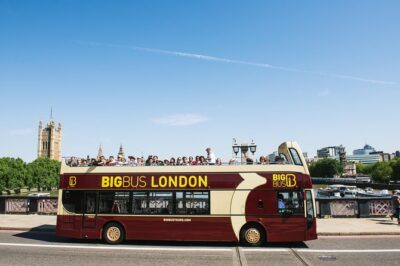
London Big Bus Hop-On Hop-Off Tour with Optional River Cruise
Read our review →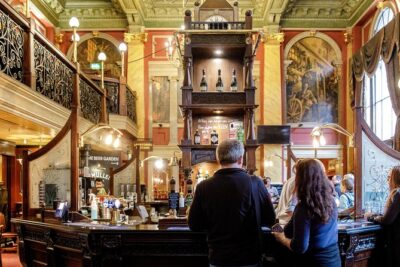
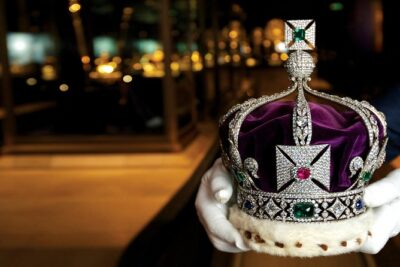
Tower of London and Crown Jewels Exhibition Ticket
Read our review →
London Jack the Ripper Guided Tour with Ripper-Vision
Read our review →
Tour for Muggles The Ultimate Harry Potter Walking Tour in London
Read our review →
Original Harry Potter Locations Tour – Guided Tour of London
Read our review →