

Reviewed · WALKING TOURS
Walking Tours – Sights of London- price includes upto 10 people
London’s literary past comes alive on this early morning walk through the City, where Shakespeare’s old home, his former playhouse, medieval churches, Roman remains, and grand civic buildings all sit within a compact area. You get more than a list of famous names: the walk connects writers to the streets and institutions that shaped London.
I like the private group format, which lets you ask questions and keep the pace suited to your party. I also like the guide’s academic angle: Sam is a Cambridge University literature graduate, and his talks cover Shakespeare, Chaucer, Wordsworth, and T.S. Eliot. The main consideration is that the tour begins at 7:00 a.m., and each named stop is brief, so this is better for context and storytelling than for long interior visits.
Key points at a glance
- Shakespeare in the City: See remnants of the 13th-century monastery at Blackfriars, along with places linked to Shakespeare’s home and playhouse.
- Five major City sights: The route includes St. Paul’s Cathedral, the Bank of England, Mansion House, and Guildhall.
- Literature beyond Shakespeare: Chaucer, Wordsworth, and T.S. Eliot also feature in the wider discussion.
- A private two-hour walk: Your group alone takes part, with space for questions and conversation.
- A compact, early start: Meet at the City of London Information Centre at 7:00 a.m. and finish back there.
- Good value for a group: The $388.19 rate covers up to 10 people, making the per-person cost much lower for a full party.
A literary walk through London’s oldest business district
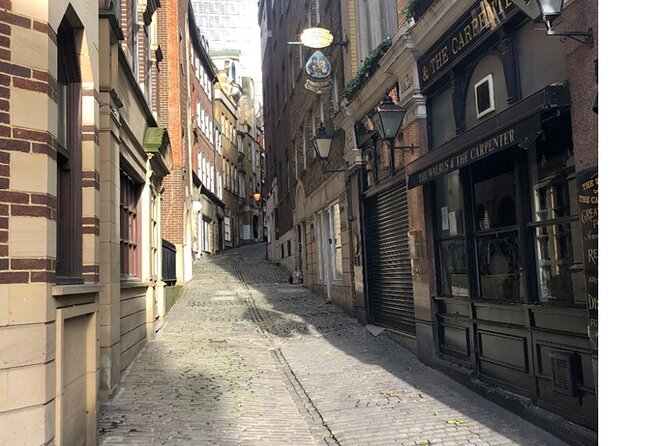
This tour works because the City of London gives you a tight mix of writers, power, faith, money, and civic life. You are not crossing the city to chase isolated literary plaques. Instead, you move through a small central area where churches, financial buildings, Roman remains, and Shakespearean connections sit close together.
The focus is literary, but the route is not limited to books. You will also hear how St. Paul’s Cathedral fits into London’s story, what the Bank of England does, why Mansion House matters, and how Guildhall has served the City for centuries. That wider frame helps explain the world in which London’s writers lived and worked.
Sam is presented as an engaging guide who combines solid information with wit. The available feedback describes him as easy to listen to, open to questions, and willing to adjust his approach to the people in front of him. That matters on a walking tour. A guide who can explain a complex point without turning the route into a lecture will make the two hours pass quickly.
The start time deserves attention. At 7:00 a.m., the City should feel calmer than it does later in the working day, though the early hour will not suit everyone. If you want to fit a major activity into the first part of your morning, it is useful. If you are recovering from a late arrival or prefer a relaxed breakfast, it may feel demanding.
More Walking Tours in London
- Tour for Muggles The Ultimate Harry Potter Walking Tour in London
★ 5.0 · 4,684 reviews - London Jack The Ripper Guided Walking Tour
★ 5.0 · 3,131 reviews - Changing of the Guard Guided Walking Tour in London
★ 5.0 · 1,793 reviews
Blackfriars and Shakespeare’s London
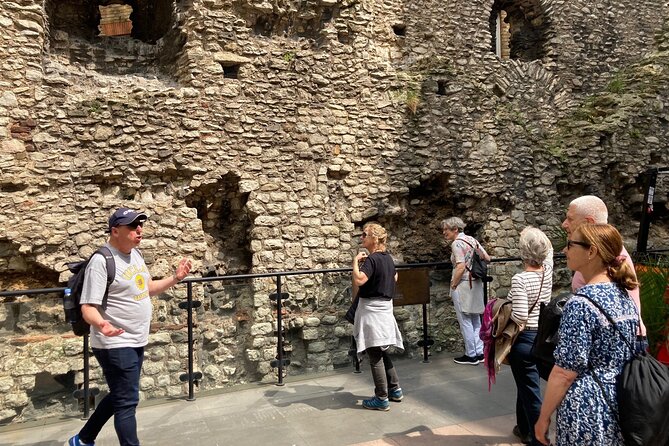
Blackfriars is the strongest opening section for anyone booking this walk for its literary theme. Here, you look at remains of a 13th-century monastery and discuss the area’s links with Shakespeare. The tour also points out where Shakespeare lived and where his playhouse was located.
The stop is listed as five minutes, so you should not expect a long archaeological visit or an interior theater experience. Its value comes from the guide’s explanation and from seeing how Shakespeare’s life fits into the physical City around you. A short pause beside a surviving fragment can be more useful than a distant museum display when the guide explains what once occupied the area.
You will also discuss Shakespeare’s plays and other sites connected to him in the City of London. This gives the stop some flexibility. If you already know the major plays, you can focus on the London settings and historical setting. If Shakespeare is new territory for you, the guide provides a compact introduction without requiring you to prepare beforehand.
The Blackfriars section also sets the tone for the rest of the walk. You are asked to look carefully at remnants and street locations, not just grand monuments. That makes the experience a good fit for readers who enjoy finding traces of the past in a modern city.
St. Paul’s Cathedral in five focused minutes
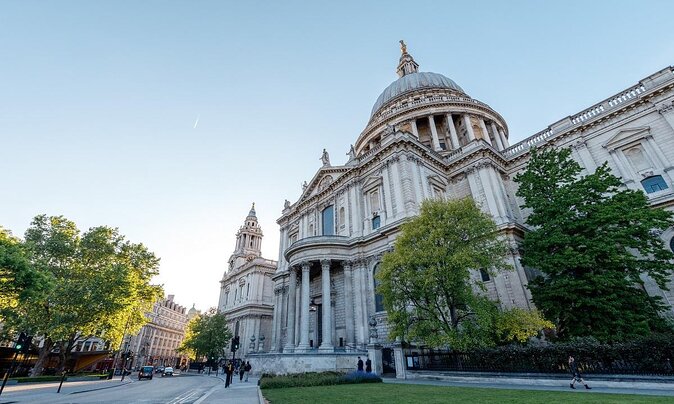
St. Paul’s Cathedral is one of the route’s major visual anchors. The stop centers on its striking Baroque architecture and its place in London’s story. You will view the cathedral as part of the city around it rather than take a full guided visit inside.
That distinction is important. Admission is not listed, and the itinerary gives only about five minutes here. You should not book this walk expecting a detailed tour of the dome, interior memorials, or galleries. Instead, you get a concise explanation of why the cathedral matters and how its architecture contributes to the City’s identity.
I like this approach for a first orientation. St. Paul’s can feel overwhelming when you first arrive, and a short explanation helps you see it as part of a larger network of civic and religious sites. You can then decide if you want to return later for a longer visit.
The location also makes St. Paul’s a practical meeting point. The walk begins at the City of London Information Centre in St. Paul’s Churchyard, so you start close to one of London’s best-known landmarks. Give yourself enough time to find the exact meeting point, especially for the early start.
The Bank of England and London’s money
The Bank of England introduces a different side of London. Here, the discussion moves from literature and religion to the central bank’s history and its role in the modern economy.
Again, the stop is short. You will see the building and hear an explanation of its importance, but the experience does not include private transportation or a long museum visit. The Bank of England Museum is listed as a stop, yet the tour description focuses on seeing the central bank and discussing its role rather than entering for an extended visit.
This section helps keep the walk from becoming too narrowly literary. Writers lived within a city shaped by money, trade, government, and institutions. Seeing the Bank of England after Shakespeare’s City connections gives you a better sense of London as a working capital, not simply a collection of old buildings.
I would especially value this part if you are traveling with a mixed group. One person may come for Shakespeare, another for architecture, and another for London’s civic and financial story. The route gives each interest some attention, though literature remains the main thread.
Same part of England, a completely different sort of day:
- London Big Bus Hop-On Hop-Off Tour with Optional River Cruise
★ 3.5 · 10,803 reviews - London Small Group Tour of Historical Pubs
★ 5.0 · 10,422 reviews - Tower of London and Crown Jewels Exhibition Ticket
★ 4.5 · 6,677 reviews - Thorpe Park Admission Ticket
★ 4.0 · 5,915 reviews
Mansion House and the City’s civic power
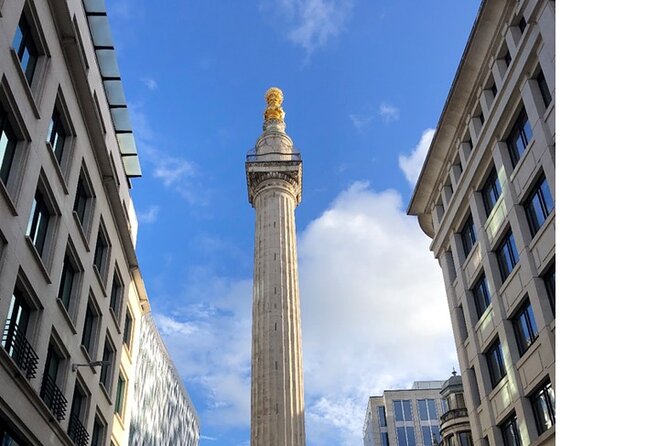
Mansion House is the official home of the Lord Mayor of London. The stop covers the building’s architecture and history, with about five minutes devoted to it.
That brief timing means you will mainly examine the building from outside and hear why it matters. The tour does not promise an interior visit, and no admission ticket is included. Still, Mansion House is useful because it shows a different kind of authority from the Bank of England. One represents central banking; the other connects to the ceremonial and civic leadership of the City of London.
The contrast between these buildings gives the walk a clear rhythm. You move from writers and theaters to religious architecture, then to finance and civic government. These shifts keep the route varied, especially if you are not looking for a pure literature seminar.
The guide’s role is especially important here. A grand facade can blur into the background when you are walking through central London. A clear explanation of who uses the building and why it was built gives you a reason to stop and look.
Guildhall, Roman remains, and St. Lawrence Jewry
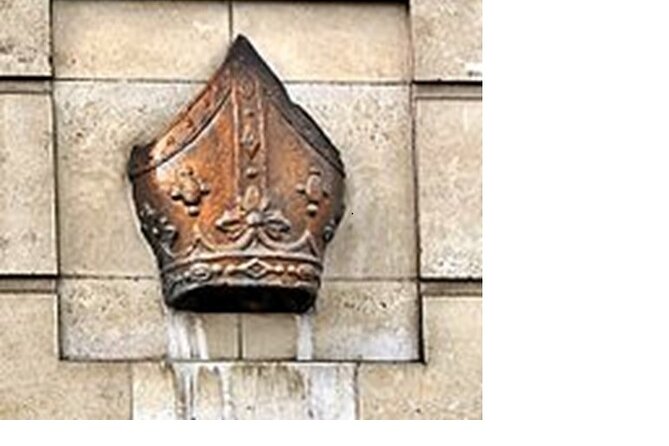
Guildhall is the most layered stop on the route. You will see the ancient seat of the Corporation of London, a medieval building, the remains of a Roman amphitheater, and the ornate Christopher Wren church of St. Lawrence Jewry.
That is a lot to cover in a short visit, so expect an overview rather than a full archaeological or architectural tour. The appeal lies in the range of eras visible in one place. Roman London, medieval civic life, and later church design come together within a few minutes of walking.
The Roman amphitheater is a particularly useful reminder that London’s story reaches far beyond the Tudor and Victorian periods most visitors know best. The medieval Guildhall adds another layer, while St. Lawrence Jewry brings Christopher Wren’s work into the route.
You will need to pay attention because the stop covers several separate points. If you like a leisurely pace with time for photographs and close inspection, the five-minute schedule may feel tight. If you prefer a brisk route with a guide selecting the most useful details, it works well.
Chaucer, Wordsworth, and T.S. Eliot beyond Shakespeare
Shakespeare is the clear headline, but the walk also includes Chaucer, Wordsworth, and T.S. Eliot. That broader selection makes the experience more appealing to anyone interested in English literature as a whole.
The information provided does not assign each writer to a separate stop, so you should expect their links to London to be woven into the commentary rather than presented as four long standalone lectures. This is one reason the guide’s background matters. A Cambridge literature graduate can connect different writers to the streets, buildings, and ideas discussed along the route.
You may also find this useful if your group has different levels of literary knowledge. You do not need to be a specialist. The walk is designed around places and stories, so the physical route gives you something concrete to follow while the guide explains the writers.
The format also leaves room for questions. Sam is described as welcoming questions and engaging with people equally, which is helpful if you want to ask about a particular author, play, poem, or London location. The private setup should make that easier than it would be in a large public group.
How the private price works for your group
The price is $388.19 per group of up to 10 people. For one or two people, that is a substantial cost for a two-hour walk. For a full group of 10, it works out to about $38.82 per person, which is much easier to justify.
The value comes from the private format. Your group does not share the walk with strangers, and you have more freedom to ask questions and keep the discussion relevant to your interests. A family, group of friends, or work team can all make good use of that arrangement.
The tour has also been used successfully as a team activity. Its two-hour length is long enough to create a shared experience but short enough to fit around other plans. The early start could be useful for a work group or an organized day, though it may be less appealing for a party hoping to begin with a slow morning.
You should also remember what the price does not cover. Bottled water is not included, and there is no private transportation. This is a walking experience, so bring your own drink and wear shoes suited to two hours on city streets.
Who will enjoy this walk most
I would choose this tour if you want London explained through people and places rather than viewed only from a sightseeing bus. It suits readers who enjoy literature, architecture, civic history, and small details that are easy to miss while walking alone.
It is also a good choice for repeat visitors. One piece of feedback came from someone who had lived in the area for nearly 30 years and still learned new facts. That suggests the route can reward people who already know central London, not just first-time visitors.
The tour may also appeal to local residents, work teams, and families with older children who can manage a two-hour walk. The private format gives Sam room to answer questions and adjust the talk to your group.
I would be more cautious if you want extensive indoor access, long photo stops, or a slow architectural study. The named stops are short, and the route depends on commentary while walking between them. It is a guided introduction, not a series of full museum visits.
Practical details before you book
You meet at the City of London Information Centre in St. Paul’s Churchyard, London EC4M 8BX. The activity ends back at the same meeting point, which makes it easy to continue sightseeing in the City afterward.
The tour is offered in English and uses a mobile ticket. Confirmation arrives when you book. Service animals are allowed, the route is near public transportation, and most people can take part.
Free cancellation is available if you cancel at least 24 hours before the 7:00 a.m. start time. Changes or cancellations made inside that 24-hour window are not accepted for a refund, and the cut-off follows London local time.
Should you book this London walk?
Book it if you want a private, story-led introduction to the City of London, especially with Shakespeare and English literature at the center. The route gives you a useful mix of Blackfriars, St. Paul’s, the Bank of England, Mansion House, and Guildhall, while Sam’s academic background adds depth beyond basic sightseeing.
For a full group, the price is fair. For just one or two people, it is harder to justify unless the literary focus and private guide are exactly what you want. The early start and short stops are the main trade-offs.
Choose this walk for context, connections, and lively explanation. Skip it if your priority is long interior visits or a relaxed late-morning outing.
FAQ
How long is the walking tour?
The tour lasts approximately two hours.
How many people can join the private tour?
The price covers one private group of up to 10 people.
What time and where does the tour start?
It starts at 7:00 a.m. at the City of London Information Centre, St. Paul’s Churchyard, London EC4M 8BX.
Where does the tour finish?
The activity ends back at the meeting point.
Is the tour focused only on Shakespeare?
No. Shakespeare is a major focus, but the commentary also covers Chaucer, Wordsworth, and T.S. Eliot, along with London’s architecture, civic institutions, and history.
What is the cancellation policy?
You can receive a full refund by canceling at least 24 hours before the experience starts. Cancellations or changes made less than 24 hours before the start time are not accepted for a refund.
Just added around London
- London Private Jack The Ripper Tour★ 5.0 · 9 reviews
- Private Spy Walking Tour of London★ 5.0 · 6 reviews
- Private Shoreditch Street Photography Workshop★ 4.5 · 4 reviews
- Private Sightseeing Walking Tour of The City Of London★ 5.0 · 3 reviews
- Private 2.5 Hour Taxi Tour of London – London’s Greatest Bits!★ 5.0 · 4 reviews
- Private Round Trip Transfer between London Airports and Hotel★ 3.5 · 56 reviews
- Shakespeare London Walking Tour★ 5.0 · 26 reviews
- Private Prison Van Escape Game – London Immersive Experience★ 4.0 · 15 reviews
Walking Tours, compared.
Oxford University Walking Tour With University Alumni Guide
Read our review →
Tour for Muggles The Ultimate Harry Potter Walking Tour in London
Read our review →
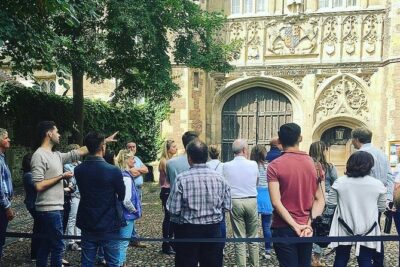
Cambridge University Walking Tour by Alumni™ Kings College Option
Read our review →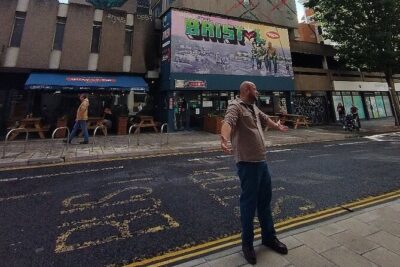
Blackbeard to Banksy – The Ultimate Walking Tour of Bristol
Read our review →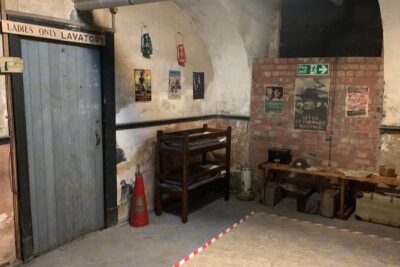
Air Raid Shelter + St. Nicholas Market Walking Tour
Read our review →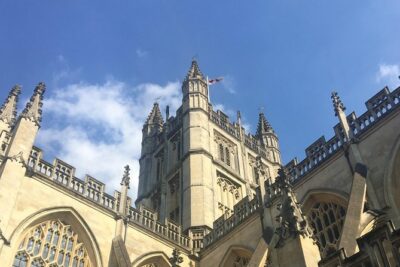
Walking Tour of Bath with Blue Badge Tourist Guide
Read our review →
Changing of the Guard Guided Walking Tour in London
Read our review →Browse the lists this tour appears in