

Reviewed · MUSEUMS
Marvels at the British Museum: Rosetta Stone, Parthenon, Mummies
The Rosetta Stone and Parthenon sculptures are the stars here, but the real benefit is having a guide connect them to the people, languages, and beliefs behind the glass. In roughly two hours, you get a focused route through some of the British Museum’s best-known rooms instead of trying to tackle eight million objects on your own.
I like the priority queue, which can save useful time, and I like the chance to ask questions rather than simply read display panels. Joe has led a particularly well-received small group, guiding people through crowded galleries and adding context about the major Egyptian and Greek pieces. The main drawback is the fixed pace: the British Museum is huge, so this tour gives you highlights, not a full visit.
Key points to know before booking
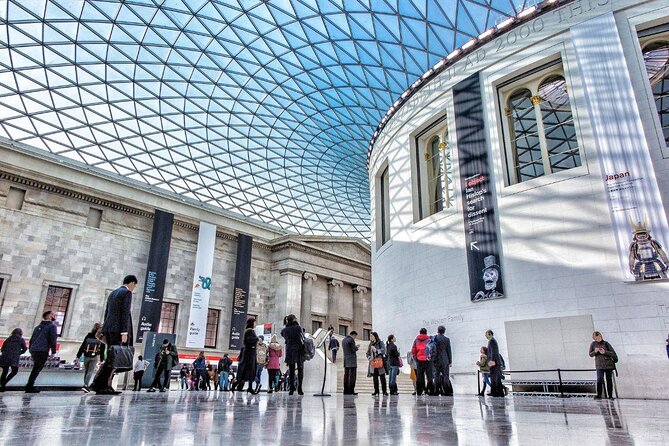
- Rosetta Stone and Parthenon sculptures: See two of the museum’s most famous collections with guidance that goes beyond the basic labels.
- A focused two-hour route: The tour helps you cover major objects without losing half a day deciding where to go next.
- Priority queue access: You use a faster entry line rather than the normal queue, though it is still shared with other priority-entry customers.
- Small shared group: The maximum group size is 25 people, so this is not a private tour but should be more manageable than a large crowd.
- Guide-led storytelling: Joe has led a praised visit, with particular attention to Ancient Greek and Egyptian objects.
- Bring comfortable shoes: The museum is large, and the route involves plenty of walking and standing.
Why two hours can work at the British Museum
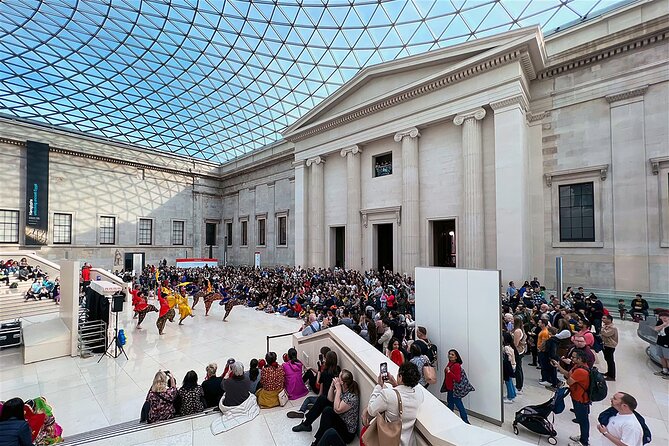
The British Museum can easily swallow an entire day. Its collection covers some eight million objects, spread across galleries devoted to Egypt, Greece, Rome, Mesopotamia, Anglo-Saxon England, and many other cultures. Without a plan, you can spend twenty minutes finding a gallery and another twenty wondering what deserves your attention.
This tour takes the opposite approach. You see a selected group of major objects and hear the stories that make them worth your time. That is useful if you are in London for a short stay, traveling with companions who do not want a full museum day, or visiting the museum for the first time.
I see the two-hour length as both a strength and a limit. It keeps the experience lively and practical, but it means you will not see every section. You should think of it as a guided introduction, not a complete survey of the museum.
The guide’s role matters here. A display label can tell you an object’s date and origin, but a good explanation can show why it mattered, how it was found, or what question it raises. The tour is designed to add that human layer while you stand in front of the actual object.
More museums and galleries in London:
- Tower of London and Crown Jewels Exhibition Ticket
★ 4.5 · 6,677 reviews - Chelsea FC Stadium Tours and Museum
★ 5.0 · 1,908 reviews - Official tickets: Moco Modern & Contemporary Art Museum
★ 4.5 · 1,157 reviews
Entering the British Museum on Great Russell Street
The meeting point is at the British Museum, Great Russell Street, London WC1B 3DG. You should arrive at least 15 minutes before your scheduled start time. That buffer matters in central London, where walking from a station, finding the correct entrance, and gathering a group can take longer than expected.
Your ticket is mobile, and admission to the British Museum guided tour is included. The activity begins and ends at the museum meeting point, so there is no hotel collection and no transport between stops.
Priority entry is helpful, but you should understand what skip the line means here. You are placed in a faster queue with other people who have chosen priority access. It is not a private entrance reserved only for your group, and it does not remove the need to arrive on time.
The museum is near public transport, which makes it easy to reach from other parts of London. Food and drinks are not included, so plan those separately. Since the tour lasts about two hours, you may prefer to eat before or after rather than interrupt the visit.
The Rosetta Stone and the power of translation
The Rosetta Stone is one of the museum’s essential stops. Its fame comes from the way it helped scholars compare the same decree written in different scripts, opening the way to the reading of Egyptian hieroglyphs.
That basic fact is easy to memorize, but the object has more force when you are standing near it and hearing how the scripts relate to one another. A guide can help you understand why one stone became a key to an entire writing system, rather than leaving you with only a short label and a crowded view.
This is also a good example of the tour’s value. You are not just checking off a famous object. You are given a reason to care about it. If you have children or first-time museum visitors with you, that kind of explanation can keep the stop from becoming a quick photograph followed by a search for the next famous item.
The exact time spent at each object can vary with crowd levels and the guide’s route. The museum attracts many visitors, so you should expect other people around the major displays. A guide who can position a group and point out key details is especially useful in this setting.
Parthenon sculptures and Ancient Greek art
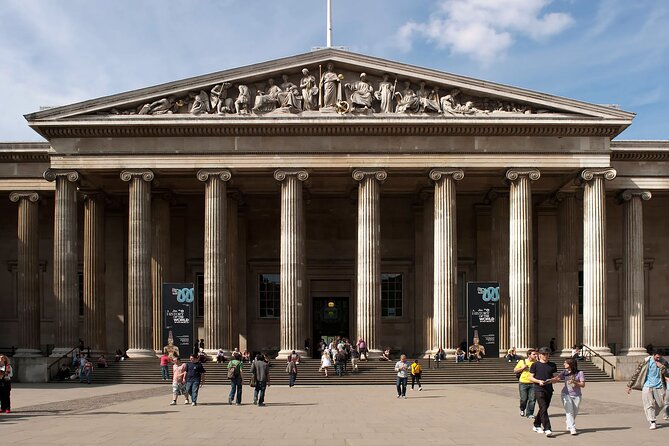
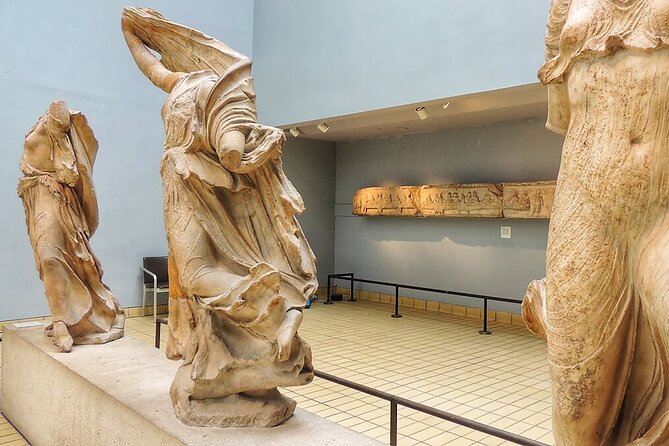
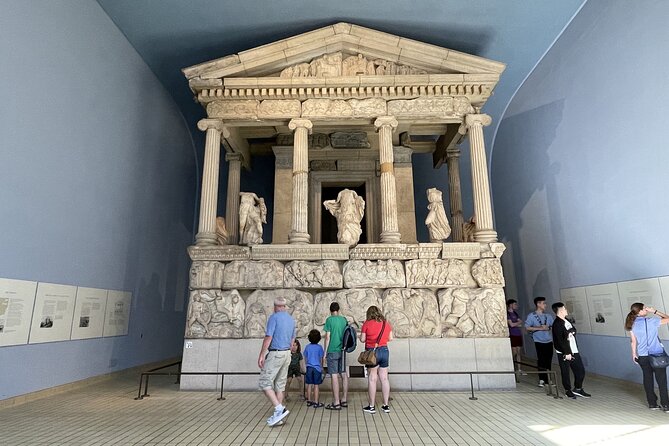
The Parthenon sculptures offer a different kind of museum experience. These carved figures and architectural pieces once formed part of the Parthenon in Athens, and their presence in London raises questions about ownership, removal, and cultural heritage.
The guide’s job is not only to identify the figures or explain their place in the building. You can also ask about what the sculptures show, how they fit together, and why they remain central to discussions about museums and national collections.
One particularly strong part of the tour’s focus is its attention to the major Ancient Greek pieces rather than treating them as background decoration. The sculptures are large, detailed, and designed to be seen as part of a building, so context helps you understand what has been lost when individual sections are displayed in a gallery.
The gallery can be busy, and you may not get a quiet, uninterrupted view of every piece. That is a normal tradeoff at the British Museum. The guide-led format helps you make sense of what is in front of you, even when the room is full.
A few more London days out to weigh up
- London Big Bus Hop-On Hop-Off Tour with Optional River Cruise
★ 3.5 · 10,803 reviews - London Small Group Tour of Historical Pubs
★ 5.0 · 10,422 reviews - Thorpe Park Admission Ticket
★ 4.0 · 5,915 reviews - London Jack the Ripper Guided Tour with Ripper-Vision
★ 4.5 · 4,840 reviews
Egyptian mummies and the people behind the cases

The Egyptian galleries bring the tour from monumental stone and royal inscriptions to the beliefs and daily lives of ancient people. Mummies and related objects can be striking, but they deserve more than a quick look at the case.
A guide can explain how these objects relate to Egyptian ideas about death, preservation, and the afterlife. You may also see associated objects that help place the mummies in a wider setting, though the exact route and time available depend on the group and the museum’s conditions that day.
I like the inclusion of Egypt because it gives the tour a different rhythm. The Rosetta Stone introduces writing and translation. The Greek sculptures raise questions about art and ownership. The Egyptian displays bring you closer to ancient belief and personal identity.
The subject is not light, and some visitors may prefer to know that the tour includes human remains. Still, the museum presents these objects as part of a serious historical collection, and the guide’s explanation can help you approach them with care rather than treating them as curiosities.
From Mesopotamia to Anglo-Saxon England
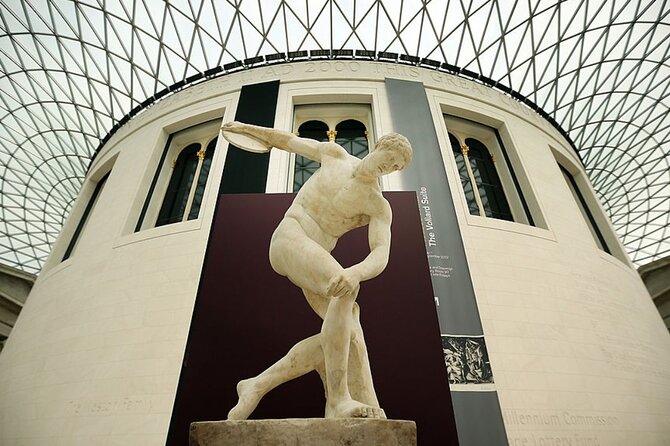
The visit is not limited to Egypt and Greece. The museum’s galleries cover civilizations from Mesopotamia through Rome and into Anglo-Saxon England. The available information describes a route that brings several periods and cultures together, so you should expect a broad selection rather than one narrowly focused collection.
That range is useful because it shows how different societies recorded power, religion, trade, and daily life. It also reminds you that the British Museum is not simply a room of famous objects. The celebrated pieces are entry points into a much wider collection.
At the same time, two hours cannot give every culture equal attention. If you have a particular interest in Anglo-Saxon objects, Mesopotamia, or another gallery, tell the guide early and ask what can fit into the route. The tour is built around highlights, so your personal priorities may not all be possible.
The chance to ask questions is one of the better reasons to choose a guided visit. You can test the guide’s knowledge, ask why an object matters, or request a little more time in a section that catches your attention. The group’s schedule still controls the pace, but questions make the tour more responsive than a fixed audio route.
What the guide adds to a crowded museum
A guide needs to do more than recite dates. At the British Museum, the practical challenge is moving a group through busy rooms while keeping everyone oriented. One praised visit was led by Joe, whose small group received clear details and historical context about the major Greek and Egyptian objects.
That does not mean every visit will follow the same route or have the same guide. The tour is shared, and the maximum group size is 25 people. You should expect company, not a private conversation at each display.
Still, a group of up to 25 is relatively workable for a major London museum. You may need to stay close to the guide, especially in crowded galleries. Listen for the meeting instructions, keep your phone available, and avoid wandering off for a photograph while the group moves to the next room.
The online support provided at the time of boarding is another practical feature. It can help if you are unsure where to meet or need assistance before the tour begins. It does not replace careful planning, so allow time to reach Great Russell Street and arrive before the start.
Is $102.43 a fair price?
At $102.43 per person, this is not the cheapest way to enter the British Museum. The value depends on how much you want help choosing what to see and understanding it once you arrive.
If you are comfortable planning your own route, reading labels, and spending several hours in the galleries, you may find the price hard to justify. The museum has an enormous collection, and a self-guided visit gives you more freedom to stop, leave, and return to the sections you prefer.
I see stronger value for a short London visit. The tour saves planning time, includes guided admission, uses a priority queue, and concentrates on objects that many people specifically want to see. Paying for direction can make sense when your museum time is limited and you do not want to lose it to navigation.
The price also buys access to questions and interpretation, not just entry. That distinction matters at a museum where the most famous pieces are often surrounded by crowds and short labels. If the guide is strong, the historical connections can make the cost feel more reasonable.
Keep your expectations in check. This is not private guiding, hotel pickup, food, or a full-day museum program. Those omissions are clear, so compare the price with what you actually need before booking.
Walking, timing, and the right kind of preparation
The tour is on foot, and comfortable shoes are recommended. That advice is worth taking seriously because the museum is large, and the route can involve considerable walking and standing even though the scheduled experience lasts only about two hours.
Arrive 15 minutes early, bring your mobile ticket, and keep your schedule flexible around the start time. A late arrival can be frustrating when the group has already entered the galleries.
The operator warns that a selected time may be changed to another available time on the same day. For example, a requested 10:00 slot could be moved to 14:00 if the first time is unavailable. Last-minute bookings made on the same day or from one day to the next may also be moved to the following day if no places remain.
That makes advance planning important. The experience is booked, on average, about 60 days ahead, so popular times may not remain open close to your visit. Check the confirmed time carefully and avoid building a tight plan around the original request until the booking is confirmed.
Free cancellation is available up to 24 hours before the start time. Cancellations or changes made less than 24 hours in advance are not accepted for a refund, with cut-off times based on London’s local time.
Who will get the most from this visit?
I would choose this tour if you want a fast, guided introduction to the British Museum and care most about the headline objects. It suits first-time visitors, short-stay visitors, and anyone who prefers explanations to wandering from case to case.
It also works well if your group has mixed interests. One person can get the Rosetta Stone, another can focus on the Parthenon sculptures, and someone else can look forward to the mummies. The shared route gives everyone a starting point.
You may prefer a self-guided visit if you want to spend an hour on one gallery, move at your own pace, or focus on objects outside the standard highlights. Art specialists and repeat visitors may also want a more tailored route.
The museum is accessible to most participants according to the supplied information, but the tour still involves walking through a large building. If standing or covering long distances is difficult for you, ask for specific arrangements before booking rather than assuming the highlights route will be easy.
Should you book the British Museum highlights tour?
Book it if you have about two hours, want the Rosetta Stone, Parthenon sculptures, and Egyptian displays, and would rather have a guide explain the objects than plan the museum alone. The priority queue and focused route are useful extras, particularly on a busy London day.
Skip it if you want an unhurried full-day visit or need a private itinerary. At $102.43, the tour makes the most sense as a time-saving introduction, not as the only possible way to experience the museum.
For a first visit, I think the format is practical. You get the famous objects, a chance to ask questions, and a guide who can turn a very large collection into a manageable two-hour story. Just arrive early, wear good shoes, confirm the final time, and remember that the British Museum will still have plenty left to see when the tour ends.
FAQ
How long does the British Museum tour last?
The tour lasts approximately two hours and ends back at the British Museum meeting point.
What objects are highlighted?
The tour focuses on major British Museum objects including the Rosetta Stone, Parthenon sculptures, Egyptian mummies, and other important pieces from civilizations including Egypt, Mesopotamia, Greece, Rome, and Anglo-Saxon England.
Is admission included?
Yes. The British Museum guided tour and admission ticket are included.
Does the tour skip the entire line?
The tour uses a priority queue instead of the normal queue. You enter through a faster line shared with other customers who have selected priority entry.
Is this a private tour?
No. This is a shared tour with a maximum of 25 participants.
What happens if my selected time is unavailable?
You may be transferred to another available time on the same day. For last-minute bookings, if no places are available, you may be placed on the day after the booked date.
Just added around London
- London Private Jack The Ripper Tour★ 5.0 · 9 reviews
- Private Spy Walking Tour of London★ 5.0 · 6 reviews
- Private 2.5 Hour Taxi Tour of London – London’s Greatest Bits!★ 5.0 · 4 reviews
- Private Shoreditch Street Photography Workshop★ 4.5 · 4 reviews
- Private Sightseeing Walking Tour of The City Of London★ 5.0 · 3 reviews
- Private Round Trip Transfer between London Airports and Hotel★ 3.5 · 56 reviews
- Shakespeare London Walking Tour★ 5.0 · 26 reviews
- Private Prison Van Escape Game – London Immersive Experience★ 4.0 · 15 reviews
Museums, compared.

Tower of London and Crown Jewels Exhibition Ticket
Read our review →

Official tickets: Moco Modern & Contemporary Art Museum
Read our review →
British Museum London Guided Tour Semi-Private 8ppl Max
Read our review →
The British Museum London – Exclusive Guided Museum Tour
Read our review →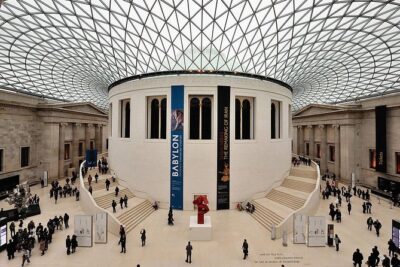


Skip the Line: Liverpool Beatles Museum – The perfect tribute to the Beatles
Read our review →Browse the lists this tour appears in