
Reviewed · WALKING TOURS
Birmingham City Centre Daily Walking Tour (10:30am & 2pm)
Birmingham’s story comes into focus when you walk it. This 90-minute route links the cathedral, grand Victorian buildings, war memorials, canals, music landmarks, and modern public spaces, giving you a quick sense of how an industrial city became today’s cultural center. I especially like the relaxed pace and the way the walk reaches places vehicles cannot.
I also like the local touch. Guides including Dee, Phil, Peter, Richard, and Carlos have brought humor, personal recommendations, and small details that make familiar streets easier to read. The main drawback is simple: you stay outside most buildings, and cold or wet weather can make the stops less pleasant.
Key points at a glance

- A useful 90-minute introduction: Cover 12 central Birmingham landmarks without spending your first day wrestling with a map.
- A strong mix of old and new: See the cathedral and Town Hall, then move through modern Centenary Square and the canals.
- Local guides add personality: Dee, Phil, Peter, Richard, and Carlos are among the guides praised for clear stories and a friendly manner.
- Easy city-center route: The walk is described as casual and manageable, though you should still expect to be outside for the full tour.
- Good value at $19.41: The price pays for orientation, context, and access to a route you could easily miss on your own.
- Useful starting point for a longer visit: The tour shows you which places deserve a return visit, since there is little time to go inside.
Why this short walk works so well
Birmingham can seem harder to read than smaller English cities. Its center mixes grand civic buildings, postwar spaces, shopping streets, modern arts venues, and surviving industrial canals. That variety is part of its appeal, but it can also leave you unsure where to begin.
This walk gives you a basic map in your head. You start at Birmingham Cathedral and finish at the Ikon Gallery, moving broadly through the civic center and toward Brindleyplace. Along the way, you hear why Birmingham mattered during the Industrial Revolution, how its people experienced the World Wars, and how the city’s cultural life now reaches from classical music to contemporary art and heavy metal.
The route has 12 listed stops, with roughly five minutes at each one. That does not mean you stand still for exactly five minutes every time. The guide has to keep the group moving, and some stops are mainly quick orientation points. Still, the structure helps you understand what you are getting: a brisk introduction rather than a series of lengthy building tours.
At $19.41 per person, I consider the tour good value if you are new to Birmingham or have only a short stay. You are paying for a route, a live explanation, and the chance to ask questions. If you already know the center well and prefer to explore at your own speed, you may find the coverage too broad.
More Walking Tours in Birmingham
- Birmingham Walking Tour: Canals, Victorians & Today (1:30pm)
★ 5.0 · 346 reviews - Discovering Birmingham 2 hour Walking Tour to the Jewellery Quarter
★ 5.0 · 333 reviews - Birmingham Slogging Gangs Walking Tour with Edward Shelby
★ 4.5 · 306 reviews
Cathedral Square and St Philip’s Cathedral

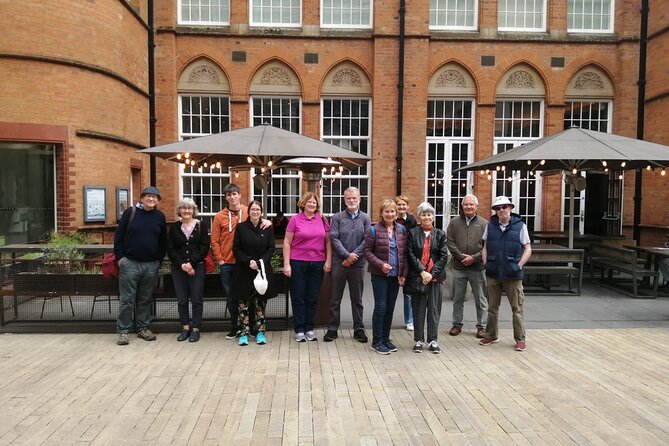
Meet at Birmingham Cathedral in Cathedral Square, on Colmore Row. The meeting point has caused some confusion because an old flagpole is no longer there. Look for the wheel in Cathedral Square instead, and the guide may be wearing a bright orange jacket.
The opening five minutes set the tone. Your guide introduces Birmingham’s past in the shadow of St Philip’s Cathedral, giving you a quick explanation of why this part of the city matters. The cathedral was built during the Industrial Revolution and is described as one of Britain’s smallest cathedrals.
You do not get a full interior visit here, so think of the stop as an introduction to the city and its religious and civic center. If you want to see the cathedral properly, plan to return after the walk.
The tour then moves into the cathedral garden. This is a pleasant early pause and a chance to look at the building without traffic getting in the way. The short timing means you will hear the main points, not every architectural detail.
Victorian Birmingham at Victoria Square
Victoria Square shifts the story from the cathedral to civic Birmingham. Here, the guide takes you back to the 1800s and explains how the city presented itself during its period of rapid growth.
This is one of the stops where a guide adds real value. You can see a square on your own, but it is harder to understand why its buildings, public art, and layout mattered without some context. The five-minute pause keeps things moving, though you will want to return if you enjoy architecture or civic history.
From here, the route reaches Birmingham Town Hall. The building was created to symbolize the city’s growing status, and its doors have welcomed figures ranging from Charles Dickens and Emmeline Pankhurst to Bob Dylan, the Rolling Stones, and the Beatles.
That list gives you a useful sense of Birmingham’s reach. This is not only an industrial center. It has also been a place for political voices, popular music, literature, and public performance. Admission to the Town Hall is not included, and the schedule does not allow for an interior visit.
Museum and civic squares
The Birmingham Museum & Art Gallery is the next major landmark. The guide points out the building and discusses artists connected with Birmingham. Again, you see the exterior rather than touring the collection.
That is both a strength and a limitation. The tour gives you a reason to put the museum on your own list, but art lovers will need extra time after the walk. If the museum is a priority, check its opening arrangements separately before planning your day, since no admission is included with the walk.
At Chamberlain Square, the subject turns to Birmingham during both World Wars. The guide explains the city’s role and the sacrifices made by its people. This adds weight to the route after the lighter material about famous performers and civic pride.
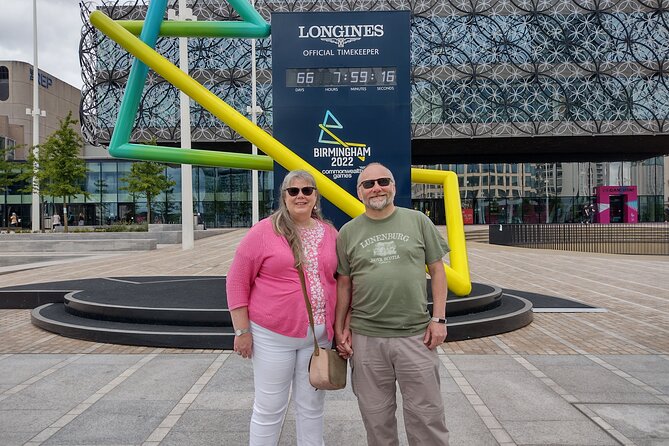
Centenary Square then brings you into modern Birmingham. The contrast is the point. You move from Victorian grandeur and older civic institutions into a more recent public space shaped by new architecture and present-day city life.
I like this sequence because it shows change rather than presenting Birmingham as a museum piece. The city is not only its industrial past. The walk keeps returning to how Birmingham has changed and how people use the center now.
Same part of England, a completely different sort of day:
- Entry ticket to Hoo Zoo and Dinosaur World in Telford
★ 5.0 · 591 reviews - Cadbury World Entry Ticket
★ 3.0 · 524 reviews - SEA LIFE Birmingham Admission Ticket
★ 3.0 · 218 reviews - Fun, Flexible Treasure Hunt Around Birmingham with Cryptic Clues & Hidden Gems
★ 5.0 · 167 reviews
The Hall of Memory and Baskerville House

The Hall of Memory gives the walk another quiet pause. It commemorates people who gave their lives for Birmingham and Britain, and the guide places it within the city’s wider wartime story.
Admission is not included, and the short stop means you should not expect a detailed memorial tour. Still, it is an important sight to include. It makes the route more than a parade of impressive buildings and famous names.
Next comes Baskerville House and the story of John Baskerville. This is one of the more distinctive stops because it introduces a person whose influence is easy to overlook when you are simply walking through the center.
The tour’s format works well here. A guide can point out a building, name the person connected with it, and give you enough information to recognize its importance later. If typography, printing, or Birmingham’s industrial development interests you, you may want to spend longer in this area after the group moves on.
Broad Street, music, and the canal route

Broad Street is described as Birmingham’s own walk of fame. This links nicely with the earlier references to Town Hall performances and the city’s musical identity. One of the small details highlighted during the walk is the Black Sabbath bridge, which gives the route a modern music connection.
The stop is short, so do not expect a full account of Birmingham’s music scene. What you get is a lively reminder that the city’s cultural influence is not limited to old civic buildings.
From Broad Street, the route reaches Symphony Hall and follows one of Birmingham’s industrial canals. This is where the walk’s pace may feel most rewarding. After several civic squares and formal buildings, the canal offers a different view of the city and its working past.
The tour does not include entry to Symphony Hall. Instead, you see the setting and learn about its place in modern Birmingham. The canal section also helps explain why Birmingham is often associated with waterways and industry without taking you far from the city center.
The route finishes at the Ikon Gallery in Oozells Square. Its Neo-Gothic exterior provides a striking final contrast with the contemporary art inside. The guide uses the building to show how old and new can sit together in the same neighborhood.
The end point is useful. You finish near Brindleyplace, the canal quarter, and other central attractions rather than being returned to the cathedral. That gives you a good chance to continue exploring, find a meal, or return to one of the places you only saw briefly.
Guides, group size, and the feel of the walk
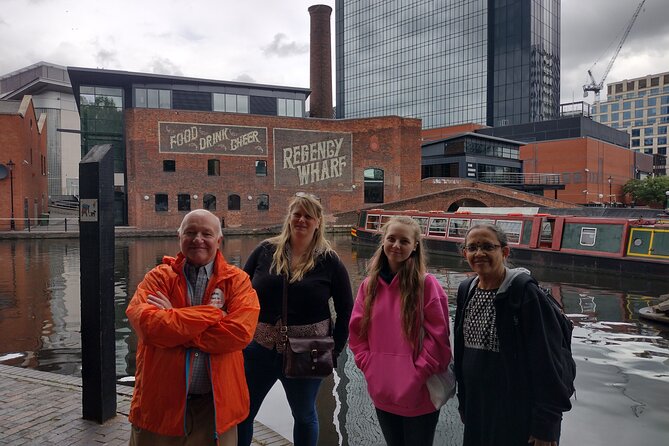
The maximum group size is 20 people, small enough for a personal feel without promising a private tour. Some sessions may be much smaller. One couple described being the only people booked, which turned the walk into something close to a private tour.
The guides are a major part of the experience. Dee is praised for a relaxed, informative approach and for caring about the comfort of older members of the group. Phil is noted for local recommendations and even took one group to a favorite city viewpoint. Peter is described as entertaining and well prepared, while Richard helped a Birmingham-born participant see the center differently. Carlos is praised for making the city’s importance clear and giving the walk a friendly tone.
The overall pattern is encouraging: expect a guide who mixes facts with local color rather than delivering a dry lecture. The best sessions seem to include humor, questions, and practical suggestions for places to see afterward.
There is one clear caution. The tour is offered in English, and one French-speaking group found that the guide spoke too quickly despite asking for a slower pace. If English is not comfortable for you, the amount of information may be harder to follow. It would be sensible to mention this need before the walk begins.
Timing, weather, and practical comfort

You can choose a 10:30 a.m. or 2 p.m. departure. The morning option is useful if you want the rest of the day for museums, shopping, or a longer canal walk. The afternoon option works well if you arrive late or prefer to start with your own plans.
The tour lasts about 90 minutes, but allow a little extra time for the walk between stops and questions. Wear comfortable shoes. This is not a demanding hike, and the pace is generally described as easy, but you will be on your feet outdoors for the duration.
Weather matters more than the short length might suggest. Birmingham rain and cold can make standing at open squares unpleasant, and one poor experience came from stopping in particularly cold corners. Bring a coat and check the forecast. The operator may cancel in bad weather, offering another date or a full refund.
The tour requires a minimum number of participants. If that number is not reached, you can choose another date or experience, or receive a full refund. Free cancellation is available up to 24 hours before the start time. Changes or cancellations inside that window are not accepted for a refund.
The tour is available as a mobile ticket, is near public transportation, and allows service animals. Most people can take part. Those details make it a practical choice for a first day in the city, though the outdoor format means you should plan around weather and your own walking comfort.
Who should book this Birmingham walk?
I would recommend it most strongly to first-time visitors, short-stay visitors, families, and people who want a clear introduction before choosing which buildings to enter. The tour is also useful if you have lived nearby but never looked at Birmingham as a visitor. Its mix of local stories and major sights can change how familiar streets feel.
It suits curious children better than a formal museum talk because the route keeps changing and includes music, famous names, canals, memorials, and unusual buildings. One guide made the experience work well for a 10-year-old, though younger children may find the history-heavy stops less engaging.
You should be comfortable with an outdoor walking tour in English. The route is easy, but it is not an indoor sightseeing experience. You will not tour the cathedral, Town Hall, museum, Symphony Hall, Hall of Memory, or Ikon Gallery interiors as part of the $19.41 price.
Should you book it?
Book this tour if you want a well-paced orientation to central Birmingham and like learning why ordinary-looking streets matter. The guides can add local character, the route covers a surprising range of subjects, and the final canal section gives the walk a welcome change of mood.
Skip it if you want long interior visits, specialist architecture detail, or a tour in a language other than English. You should also think twice on a very cold or wet day unless you are prepared for the weather.
For most first visits, I would book the 10:30 a.m. departure. It gives you a useful map of the center, then leaves the afternoon for the museum, cathedral, canal quarter, or any building that caught your attention. At this price, the tour earns its place as a sensible first step into Birmingham.
FAQ
How long is the Birmingham City Centre Daily Walking Tour?
The tour lasts approximately 1 hour and 30 minutes.
What time does the tour start?
You can choose a 10:30 a.m. or 2 p.m. departure.
Where does the walking tour begin?
It begins at Birmingham Cathedral in Cathedral Square, Colmore Row, Birmingham B3 2QB, UK.
Where does the tour finish?
The tour ends at the Ikon Gallery, 1 Brindley Pl, Oozells Square, Birmingham B1 2HS, UK.
Is admission to the buildings included?
No. The route shows several buildings from outside, and admission to places such as Birmingham Town Hall, Birmingham Museum & Art Gallery, Hall of Memory, Baskerville House, Symphony Hall, and Ikon Gallery is not included.
Is the tour offered in languages other than English?
The tour is offered in English.
What happens if the tour is canceled because of bad weather or too few participants?
You will be offered a different date or experience, or a full refund.
Just added around Birmingham
- Heathrow Airport to Birmingham private taxi transfers★ 4.5 · 20 reviews
- Fun, Flexible Treasure Hunt Around Birmingham with Cryptic Clues & Hidden Gems★ 5.0 · 167 reviews
- Birmingham Gangs Nighttime Historical Walking Tour with Pub Stops★ 5.0 · 53 reviews
- Private Birmingham Ghosts and Gallows Walking Tour★ 5.0 · 5 reviews
- Pride History of Birmingham Tour★ 5.0 · 3 reviews
- Taste of Shrewsbury Food and Drink Tour with Guide★ 5.0 · 22 reviews
- On the Origins of Charles Darwin: A Self-Guided Audio Tour of Shrewsbury★ 4.5 · 16 reviews
- Birmingham Ghost Hunt: Haunted Self-Guide Tour & Quest★ 4.5 · 37 reviews
Walking Tours, compared.
Oxford University Walking Tour With University Alumni Guide
Read our review →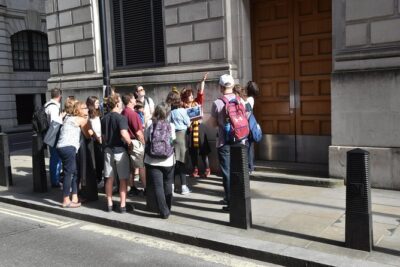
Tour for Muggles The Ultimate Harry Potter Walking Tour in London
Read our review →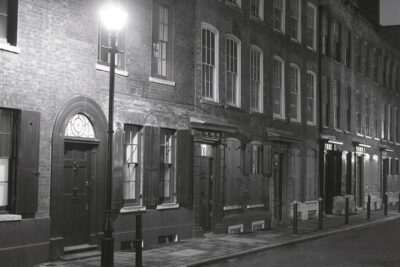
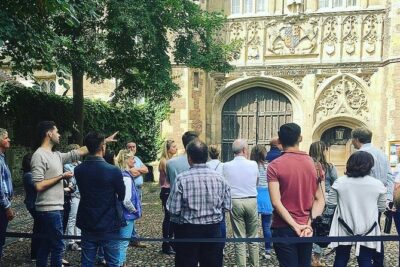
Cambridge University Walking Tour by Alumni™ Kings College Option
Read our review →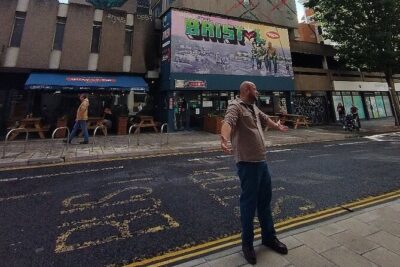
Blackbeard to Banksy – The Ultimate Walking Tour of Bristol
Read our review →
Air Raid Shelter + St. Nicholas Market Walking Tour
Read our review →
Walking Tour of Bath with Blue Badge Tourist Guide
Read our review →
Changing of the Guard Guided Walking Tour in London
Read our review →Browse the lists this tour appears in