

Reviewed · WALKING TOURS
Slavery and City of London Walking Tour
The most striking part of this walk is how it changes your view of ordinary City streets. A church, coffee house, bank, or office site becomes evidence of Britain’s long involvement with enslavement, colonial trade, and abolition. Guide Sam brings those links together with Roman and Victorian context, not just a list of dates.
I like the compact 90-minute format and the way it pairs major sights, including St. Paul’s Cathedral, with less obvious places such as Fen Gardens and the former Jamaica Coffee House. I also like Sam’s conversational approach, which includes architecture, images, and stories rather than a dry lecture. The main consideration is that the route deals with painful material, and the published end-point information is inconsistent, so confirm whether your walk finishes at Aldgate or near St. Paul’s.
Key points to know before booking
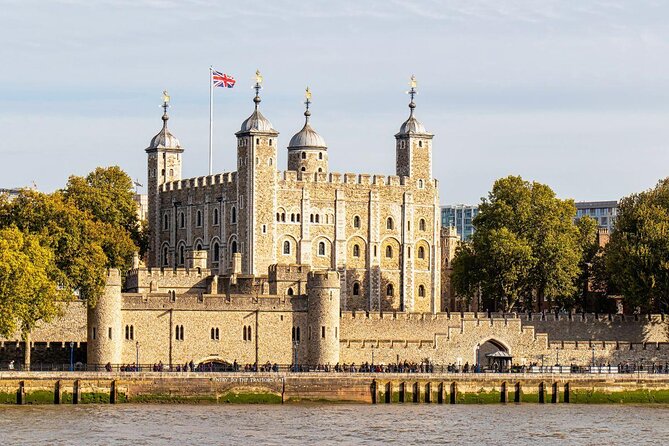
- Roman London begins the story: See part of the wall that helped define Londinium and learn about the enslavement of Britons by the Romans.
- The City’s familiar buildings carry uncomfortable links: The route connects the East India Company, the Bank of England, and the Royal Africa Company to slave labor and trafficking.
- Abolition is part of the walk too: Granville Sharp and John Newton provide important examples of British opposition to the slave trade.
- Sam leads the walk: His style is clear, humorous, and built around conversation, images, architecture, and oral history.
- The group is capped at 35 people: That keeps it from becoming a vast procession, though it is not a private tour.
- The price is modest for central London: At $27.43, the walk offers a focused history lesson without an admission charge at the stops.
Why this City of London walk matters

This is not a standard tour of London’s famous buildings. You will still see major landmarks, but the focus is on the money, institutions, and people behind Britain’s imperial growth.
The tour asks you to look at the City of London as a working financial district with a long memory. Its streets connect Roman rule, colonial commerce, sugar production, coffee culture, banking, municipal power, and abolition. That broad time span is one of the walk’s strongest features.
You will also hear an important point early on: Britain’s story of slavery did not begin only with the transatlantic trade. The Romans enslaved Britons, and the wall around Londinium was part of a settlement shaped by Roman military power. From there, the walk moves toward Britain’s later role in the trafficking and exploitation of people in Africa and the Caribbean.
That approach gives the subject more depth. You are not handed one simple story of villains and heroes. You see how institutions made money, how public figures supported the trade, and how some people later challenged it.
More Walking Tours in London
- Tour for Muggles The Ultimate Harry Potter Walking Tour in London
★ 5.0 · 4,684 reviews - London Jack The Ripper Guided Walking Tour
★ 5.0 · 3,131 reviews - Changing of the Guard Guided Walking Tour in London
★ 5.0 · 1,793 reviews
From Tower Hill to the Roman wall
The walk starts at Tower Hill, near the Tower of London, at noon. The first stop concerns the Ordnance Office, where Granville Sharp worked. Sharp became one of the leading British opponents of slavery in the 18th century, so the tour begins with a person who challenged the system rather than starting only with commercial power.
That is a useful choice. It puts resistance into the story from the beginning. You learn that the City was not simply a place of exploitation, but also a place where arguments against slavery developed and gained force.
The next stop is part of the Roman wall of Londinium. You are given about five minutes here, but the point is larger than the viewing time. The wall helped define the Roman city around 2,000 years ago, and some of it remains visible beneath or beside later buildings.
The Roman section also widens the meaning of slavery. Roman forces enslaved Britons and reportedly complained that the local people were lazy. That detail has a sharp, uncomfortable irony. It shows how enslavers often used insults to justify control over the people they had conquered.
The City of London is also presented as a distinct legal and civic area, with its own mayor and police force. That background helps explain why the wall still matters. You are not simply looking at old stones. You are seeing a boundary that helped shape the identity of the City.
East India House and the reach of empire
The route then moves to the former site of East India House on Leadenhall Street. This was once the headquarters of the East India Company, one of the most powerful commercial organizations in British history.
The company’s activities reached far beyond London. Its operations relied on slave labor and included trafficking in enslaved people from East and West Africa. Standing at the former headquarters gives you a direct link between a London office and events carried out across a huge distance.
This is one of the walk’s useful habits: it connects an ordinary-looking urban site to the wider system that made it important. You do not need to enter a museum to understand the point. The street itself becomes the evidence.
The building is no longer there in its original form, so this section depends on Sam’s explanation rather than a dramatic physical monument. If you want grand ruins at every stop, this may feel understated. If you like learning what used to occupy modern streets, it is a strong part of the route.
Fen Gardens and the Gilt of Cain
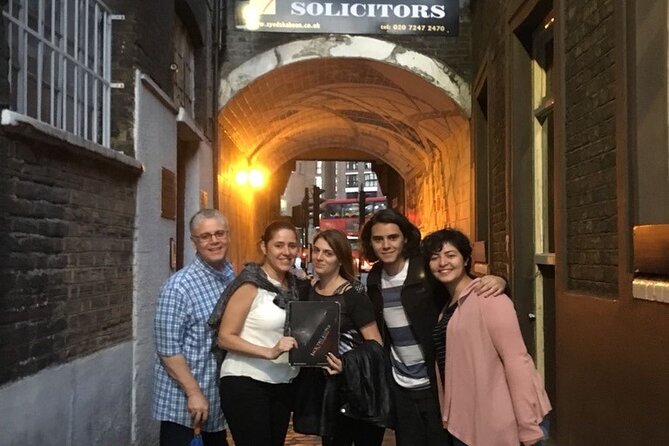
At Fen Gardens, the tour stops at the Gilt of Cain sculpture, which commemorates the abolition of the transatlantic slave trade. The stop lasts around ten minutes and adds a visual marker of remembrance to a walk that otherwise often deals with former offices, sites, and institutions.
The sculpture gives you a chance to pause and consider how London chooses to remember the trade and its abolition. It also creates a break in the chronology. The walk has shown the commercial structures that supported slavery, and now it points toward the campaign that ended Britain’s involvement in the transatlantic trade.
Do not expect a long museum visit here. The attraction is the sculpture itself and the explanation around it. The value comes from the way Sam links this public artwork with the nearby financial institutions.
Same part of England, a completely different sort of day:
- London Big Bus Hop-On Hop-Off Tour with Optional River Cruise
★ 3.5 · 10,803 reviews - London Small Group Tour of Historical Pubs
★ 5.0 · 10,422 reviews - Tower of London and Crown Jewels Exhibition Ticket
★ 4.5 · 6,677 reviews - Thorpe Park Admission Ticket
★ 4.0 · 5,915 reviews
Jamaica Wine House and the sugar trade
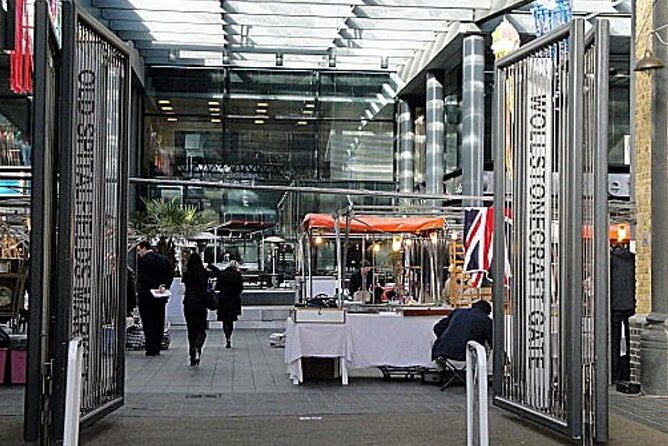
The Jamaica Wine House occupies the site of London’s first coffee house, the Jamaica Coffee House. This was a meeting point tied to the sugar trade and the plantations of the West Indies.
Coffee houses were places where business, news, politics, and finance mixed. In this case, the name and location point toward the commercial networks that depended on plantation labor. It is an effective stop because it shows how slavery entered everyday urban culture, not only official records or distant colonies.
You might pass this place without giving it a second thought. The tour asks you to notice the name and the setting, then connect it to the products and profits that shaped London. That is typical of the walk: familiar streets, different meaning.
The stop also sits near an important contrast. The walk later brings you to the church connected with John Newton, an abolitionist figure. The proximity of commercial activity tied to plantation slavery and places associated with opposition makes the route feel sharply connected rather than scattered.
John Newton at St. Mary Woolnoth
St. Mary Woolnoth is one of the more personal stops. John Newton, a prominent abolitionist, was rector of the church.
Newton’s presence adds a human voice to the story. The church is not treated only as an architectural object. It becomes a place linked to a man who had a role in the campaign against the slave trade.
The stop is scheduled for around ten minutes. That is enough time for context and explanation without turning the walk into a full church tour. The emphasis is on what the building and its former rector reveal about the moral debate taking place in Britain.
This part should suit you if you want the tour to include people and ideas, not just companies and money. Sam’s style, based on clear explanation and conversation, fits that purpose well.
The Bank of England and institutional responsibility
The Bank of England is another important stop. The institution has apologised for the involvement of some former directors and governors in the slave trade. It has also promised to remove statues and paintings of those figures from public display in its Threadneedle Street building.
That information makes this more than a stop for architecture or finance. You are encouraged to think about how institutions deal with their own past. The question is not only who profited from slavery, but how those links are acknowledged today.
The stop lasts about 15 minutes, the longest pause listed on the route. That makes sense. The Bank of England carries heavy symbolic weight, and the subject needs more than a quick sentence while walking.
You should expect to remain outside rather than take a full museum tour. The Bank of England Museum is named as the stop, but the experience is a walking tour, and no museum admission is included or required. Its value lies in the explanation of the institution’s connections and response.
The Royal Africa Company and civic power

Another stop focuses on the place where sheriffs, mayors, and aldermen of the City of London met as shareholders of the Royal Africa Company.
This is one of the clearest demonstrations that the slave trade was not a side issue handled by a few distant merchants. It involved people with civic standing and influence in London. The company’s shareholders included figures connected to the City’s government, which makes the link between commercial wealth and public power hard to miss.
The wording of the route suggests an important distinction: you are seeing the site of a former institution rather than entering a preserved trading hall. Sam’s explanation does the work here, helping you picture the meetings and understand why the location mattered.
For me, this is exactly the sort of detail that makes a themed walk useful. A general sightseeing tour might point out the street and move on. This tour explains who used it, what they were involved in, and how the effects reached far beyond London.
St. Paul’s, Aldgate, and the route’s practical details
The walk is advertised as lasting about one hour and 30 minutes, though some descriptions of the experience refer to two hours. Plan for roughly 90 minutes, but allow a little flexibility if the conversation runs long.
The listed start is Tower Hill Tram Trinity Square, London EC3N 4TH, at 12:00 p.m. It is near public transportation, which makes the meeting point fairly easy to reach from other parts of central London.
There is a small inconsistency about the end point. One description says the walk finishes by St. Paul’s Underground station on the Central line, while the meeting information gives Aldgate Station, Aldgate High Street, London EC3N 1AH. Since those are different parts of the City, check the final meeting instructions before setting your afternoon plans.
The route includes St. Paul’s Cathedral as a final landmark, but there is no admission to the cathedral. You should treat it as an exterior sight and orientation point, not a cathedral visit.
The walk uses a mobile ticket and is capped at 35 people. That is a reasonable size for a street tour, though it will not feel like a private conversation. Most people can take part, and the route is described as easy. Still, you will be on foot for the full experience, so comfortable shoes are sensible.
Is $27.43 good value?
At $27.43 per person, this is a fair price for a 90-minute guided walk in central London. You are paying for Sam’s preparation, interpretation, and ability to connect sites that would otherwise seem unrelated.
There are no major admission costs built into the route, so the value depends on the quality of the guiding. Here, the appeal is the subject and the structure. You get Roman London, colonial trade, slavery, abolition, churches, banks, company headquarters, and public memorials in one compact route.
I would not choose this tour if you want interiors, long museum visits, or a broad introduction to every period of London. I would choose it if you want a focused subject and a guide who can make overlooked corners of the City meaningful.
Sam is also an author of several books about the area, and his approach includes oral history and imagery gathered through his studies. That helps explain why the walk is described as a conversation about London rather than just a procession from one stop to another.
Who will enjoy this walk most?
This tour is a good fit for you if you:
- Want to understand Britain’s connection to slavery beyond the usual textbook account
- Enjoy city walks that focus on institutions, buildings, and civic power
- Have already seen the main London sights and want a different angle
- Like Roman and Victorian London alongside modern questions about memory
- Prefer a short, focused walk to a full-day historical tour
- Are comfortable discussing difficult parts of British history
It may be less suitable if you want a light sightseeing outing. The tone is described as positive and sometimes funny, but the subject remains serious. The tour also depends on listening closely, since several key locations are former sites rather than preserved buildings.
Should you book the Slavery and City of London Walking Tour?
Book it if you want a thoughtful way to read London’s streets. The strongest parts are Sam’s clear delivery, the links between Roman enslavement and Britain’s later slave trade, and the way major landmarks sit beside lesser-known evidence.
The $27.43 price is sensible, the walk is short enough to fit into a busy London day, and the group limit of 35 keeps it manageable. Confirm the end point before booking, especially if you plan to visit St. Paul’s or catch a train afterward.
This is not a conventional sightseeing tour. It is a focused lesson in how power, commerce, religion, and abolition shaped the City of London. If that sounds like the London you want to understand, it is a worthwhile choice.
FAQ
Where does the Slavery and City of London Walking Tour start?
The tour starts at Tower Hill Tram Trinity Square, London EC3N 4TH, at 12:00 p.m.
How long does the tour last?
The stated duration is approximately one hour and 30 minutes. Some descriptions refer to two hours, so allow a little extra time.
Where does the walk finish?
The supplied details give two different end points. One says Aldgate Underground Station, while another says the walk finishes near St. Paul’s Underground station. Confirm the final location before arranging onward plans.
What sights are included?
The route includes the Roman wall of Londinium, the former site of East India House, Fen Gardens and the Gilt of Cain sculpture, Jamaica Wine House, St. Mary Woolnoth, the Bank of England, the former Royal Africa Company site, and the St. Paul’s area.
Who leads the tour?
The tour is led by Sam of Sam’s Walks. He is described as an author of several books about the area and uses architecture, images, oral history, and conversation in his guiding.
How large is the group?
The tour allows a maximum of 35 people.
Can I cancel for a full refund?
Yes. You can cancel at least 24 hours before the start time for a full refund. Cancellations or changes made less than 24 hours before the start are not refunded or accepted. If poor weather or an insufficient number of participants causes cancellation, you will be offered another date or experience, or a full refund.
Just added around London
- London Private Jack The Ripper Tour★ 5.0 · 9 reviews
- Private Spy Walking Tour of London★ 5.0 · 6 reviews
- Private Shoreditch Street Photography Workshop★ 4.5 · 4 reviews
- Private Sightseeing Walking Tour of The City Of London★ 5.0 · 3 reviews
- Private 2.5 Hour Taxi Tour of London – London’s Greatest Bits!★ 5.0 · 4 reviews
- Private Round Trip Transfer between London Airports and Hotel★ 3.5 · 56 reviews
- Shakespeare London Walking Tour★ 5.0 · 26 reviews
- Private Prison Van Escape Game – London Immersive Experience★ 4.0 · 15 reviews
Walking Tours, compared.
Oxford University Walking Tour With University Alumni Guide
Read our review →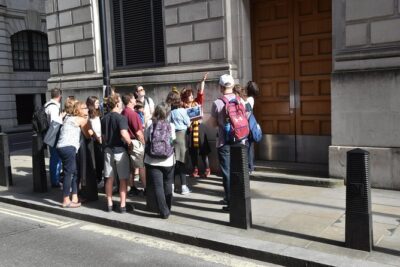
Tour for Muggles The Ultimate Harry Potter Walking Tour in London
Read our review →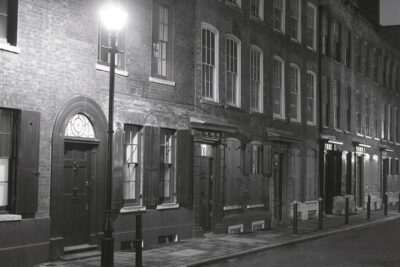
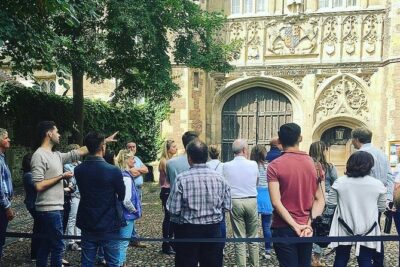
Cambridge University Walking Tour by Alumni™ Kings College Option
Read our review →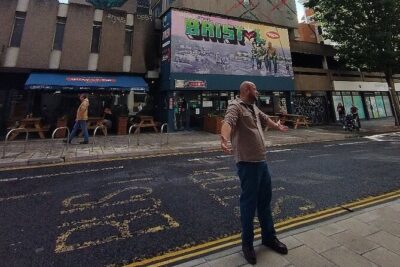
Blackbeard to Banksy – The Ultimate Walking Tour of Bristol
Read our review →
Air Raid Shelter + St. Nicholas Market Walking Tour
Read our review →
Walking Tour of Bath with Blue Badge Tourist Guide
Read our review →
Changing of the Guard Guided Walking Tour in London
Read our review →Browse the lists this tour appears in