
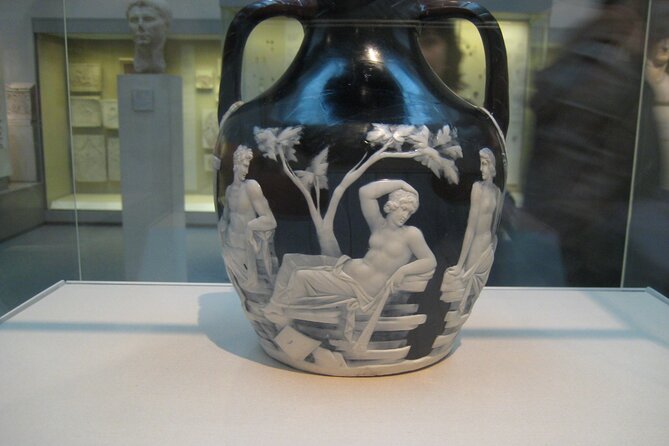
Reviewed · MUSEUMS
Private Guided Tour of the British Museum
The best thing about this British Museum tour is that it gives order to a huge collection. With Anthony Matthews, a Blue Badge guide and retired archaeologist, you move from the Rosetta Stone and Egyptian funerary objects to Greek sculpture, Roman technology, and ancient gold without wasting time on random rooms. The museum is vast, and a good guide helps you see the important pieces before your attention gives out.
I like the private format for families and small groups, since your guide can slow down for questions, adjust the route, and explain objects at the level that suits you. I also like the early-start strategy reported by several guests, with Anthony arriving ahead of time so the group could be near the front when the doors opened. The main drawback is simple: two and a half hours cannot cover a museum this large, so you will need to accept a highlights tour rather than a full survey.
Key points to know before booking
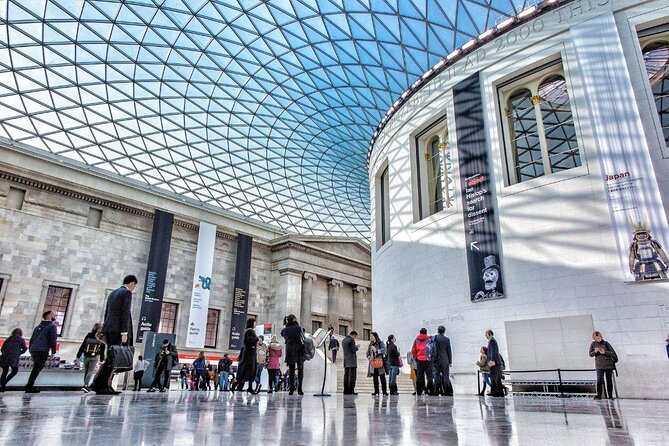
- The Rosetta Stone anchors the Egyptian section, with an explanation of how its inscriptions helped scholars read Egyptian hieroglyphs.
- Anthony Matthews brings an archaeologist’s viewpoint, including discussion of excavation, object history, and how ancient evidence is interpreted.
- The private group can focus on your interests, from Egyptian religion to Greek mythology, Roman history, or a broad museum overview.
- Families get a strong advantage, since the guide uses humor, questions, and stories to hold the attention of children and teenagers.
- Morning timing may help with crowds, especially if your guide can position the group near the entrance before opening.
- The $344.49 price covers up to six people, making the cost easier to justify for a family or group than for one or two guests.
Why a private guide helps at the British Museum

The British Museum can feel less like one attraction and more like a small city of galleries. You can walk past Egyptian coffins, Assyrian reliefs, Greek statues, and Roman objects without understanding how they connect. Labels provide dates and names, but they rarely give you the larger story.
A private guide changes the pace. You can stop and ask why an object matters, how archaeologists know what they think they know, or how an artifact was used. You are not tied to a fixed group route, and the guide can spend more time on Egypt if that is your interest, or shift toward Greece and Rome if those subjects appeal more.
That flexibility matters most in a museum where too much information can become tiring. Anthony is repeatedly praised for making the route efficient and for explaining the key objects without turning the experience into a dry lecture. His background in archaeology gives the tour a practical angle: not only what an object is, but how it was found, read, dated, and understood.
The tour is conducted in English and is private to your group. That makes it a good choice if you want to ask frequent questions or if your party includes children with different interests. You do not have to worry about holding up strangers while your guide explains a hieroglyph or answers a teenager’s question about Roman warfare.
More museums and galleries in London:
- Tower of London and Crown Jewels Exhibition Ticket
★ 4.5 · 6,677 reviews - Chelsea FC Stadium Tours and Museum
★ 5.0 · 1,908 reviews - Official tickets: Moco Modern & Contemporary Art Museum
★ 4.5 · 1,157 reviews
Starting with the Rosetta Stone and ancient Egypt
The Egyptian section provides the clearest opening because the objects connect language, royal power, religion, and death. The Rosetta Stone is the natural first stop. Your guide explains why its repeated text in different scripts mattered and how scholars used it to work toward reading ancient Egyptian.
This is more useful than simply seeing the stone and moving on. The object is famous, but its importance can be hard to grasp without the language problem behind it. With an explanation, you see it not just as a large inscribed slab, but as a tool that helped bridge two different worlds of writing.
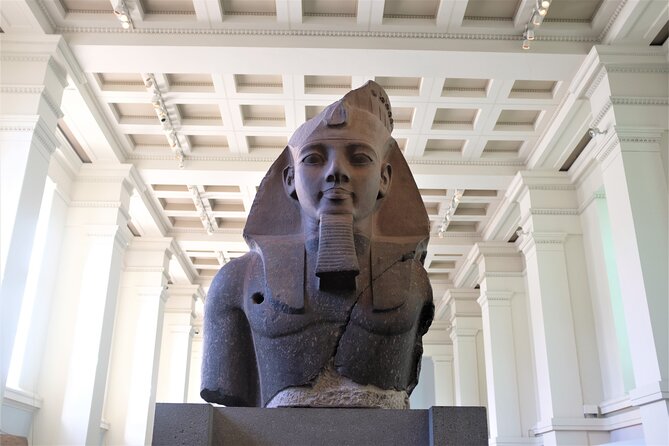
The route also includes a statue of Tutankhamun, with attention to his short life and death. The subject is familiar from popular culture, yet the museum setting lets you place him within the wider story of Egyptian kingship. You may also see sarcophagus motifs, canopic jars, and material connected with the Book of the Dead.
These objects work well together. A sarcophagus shows how the dead were protected and presented. Canopic jars point to the treatment of the body. The Book of the Dead reveals the spells and ideas connected with the journey after death. Instead of viewing isolated displays, you get a basic picture of Egyptian beliefs about the body, the soul, and the next world.
One especially useful detail is Anthony’s ability to read hieroglyphs. That does not mean every inscription becomes a full translation, but it adds a direct connection between the marks on the object and the people who made them. For children, that can turn a wall of symbols into something active and understandable.
Greek sculpture, Amazons, and the human form
The Greek galleries bring a different set of questions. Egyptian art often emphasizes order, ceremony, and the afterlife. Greek art gives more attention to the body, movement, myth, and the ideals of the human figure.
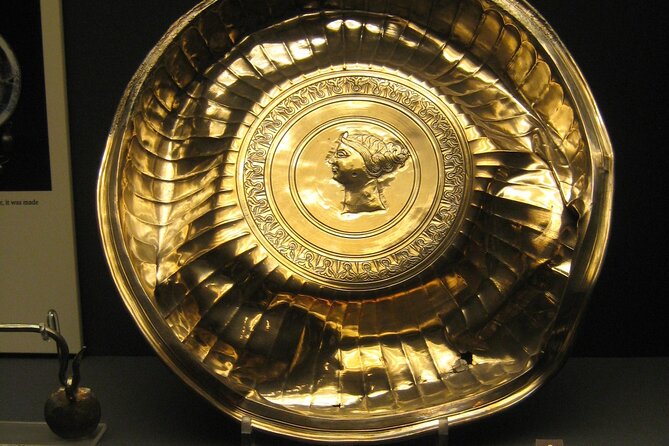
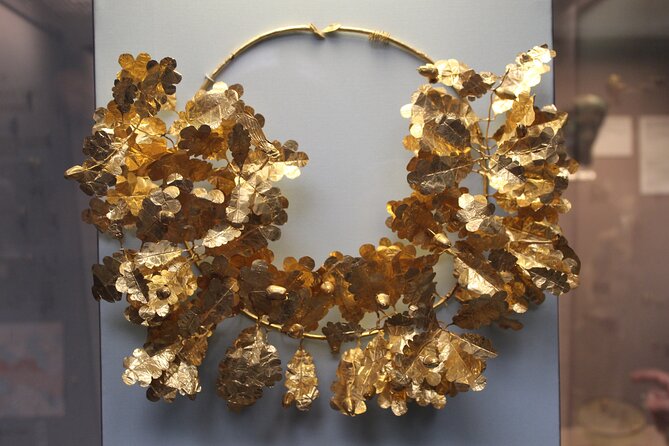
Your route may include Greek statuary, a gold headdress, and scenes of Amazons fighting. These displays offer a chance to discuss how the Greeks pictured heroes, enemies, women warriors, and gods. The point is not just to identify a statue, but to notice how posture, clothing, weapons, and facial expression communicate a story.
A guide is especially useful here because Greek sculpture can look familiar even when its original meaning is not. You might find yourself looking at a beautiful figure without knowing who it represents or why the pose matters. Anthony’s approach, as described by the people who booked him, uses clear stories and questions rather than a long list of dates.
Families seem to gain a lot from this section. Teenagers interested in mythology or ancient warfare have a natural way into the material, and younger children can follow the stories of heroes and battles. The private format lets the guide keep the explanation lively instead of forcing every member of the group through the same level of detail.
The museum’s Greek holdings also invite larger questions about ownership and acquisition. The supplied tour details do not promise a full discussion of museum ethics, so do not book this expecting a dedicated debate on contested objects. Still, you can ask your guide about how particular pieces were excavated and acquired, and the tour’s archaeological focus gives you a useful starting point.
Rome, technology, armor, and gold
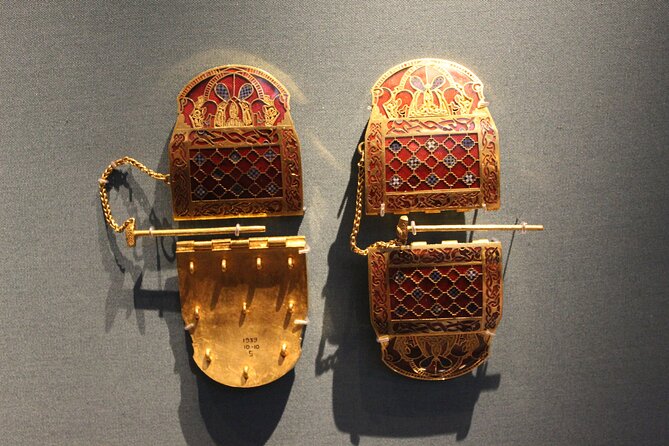
The Roman material adds variety after the formal Greek galleries. The route includes the origins of Rome, Roman technology, glass used for propaganda, alligator armor, and finely worked gold jewelry.
These are good choices because they move beyond the usual image of Rome as emperors and marble statues. Technology shows how practical Roman life could be. Glass can reveal status and political messaging. Armor points to military identity and the reach of Roman power. Gold jewelry brings the discussion back to wealth, taste, and personal display.
The phrase alligator armor is an attention-grabber, especially for younger visitors. It also shows why a guide helps in a collection this large. Strange or unexpected objects can be easy to miss when you are following only the most famous names. A guide can connect an unusual display to the larger story of Roman armies, materials, and trade.
Roman propaganda is another subject that benefits from explanation. A beautiful vessel or image may carry a political message that is not obvious at first glance. Your guide can help you look for the ways rulers used art and luxury goods to present power.
If your party is heading to Rome later in the trip, this section can be particularly useful. One guide has connected the British Museum’s Roman material with sights visitors might later see in Italy. That kind of link helps you treat the museum as preparation for the rest of your trip rather than a separate indoor stop.
A few more London days out to weigh up
- London Big Bus Hop-On Hop-Off Tour with Optional River Cruise
★ 3.5 · 10,803 reviews - London Small Group Tour of Historical Pubs
★ 5.0 · 10,422 reviews - Thorpe Park Admission Ticket
★ 4.0 · 5,915 reviews - London Jack the Ripper Guided Tour with Ripper-Vision
★ 4.5 · 4,840 reviews
Anthony Matthews and the guide’s teaching style
Anthony Matthews is the guide most often identified with this experience. He is described as a Blue Badge guide and retired archaeologist, with further academic work in progress. The strongest praise centers on his ability to combine serious subject knowledge with humor, clear storytelling, and a relaxed manner.
That balance is important. A museum guide can know a great deal and still lose a group in technical detail. Here, the emphasis is on making the object understandable first. Anthony uses anecdotes, questions, and occasional humor, while still giving enough historical context to show why the object matters.
He also appears to be a strong choice for mixed-age groups. Parents describe their children staying engaged for more than two hours, including children as young as eight and teenagers who were especially interested in Egypt, Greece, or Rome. That is not a small achievement in a museum full of glass cases and long labels.
You should still tell the guide what you want before the tour begins. The route can be broad, or it can focus on Egyptology, ancient Greece, Rome, or the museum’s major highlights. If you have only one morning in London, say so. One couple with a tight schedule used the tour to identify the most important objects and avoid spending their limited time wandering.
Communication before the visit is another strength. The guide has handled changes caused by flight delays and adjusted timing when needed. That does not remove the need to check your own confirmation carefully, but it gives you a useful point of contact when plans shift.
Timing, crowds, and the two-hour question
The experience is advertised at about two hours and thirty minutes, while the museum portion in the supplied details is described as two hours. Treat it as a roughly two-and-a-half-hour visit, with the exact pace depending on your interests and the route chosen.
Morning and afternoon departures are available. A morning tour may be the smarter pick if you want the calmest possible start. Anthony has arrived before meeting time for some early groups, allowing them to be near the front when the doors opened. That can provide a short window before the busiest flow reaches the main galleries.
Do not expect an empty museum. The British Museum is a major London sight, and popular objects can draw a crowd. The benefit of a guide who knows the building is not that the crowds vanish. It is that you spend less time deciding where to go and may take a more efficient route between busy displays.
Two and a half hours is enough for a strong introduction, not enough for everything. If you want to spend serious time in Assyrian art, Asian collections, or later European material, you will need another visit or extra time on your own. Several people have booked two sessions back to back for a much longer museum day, which is possible in principle, but it would be demanding.
Is $344.49 good value for up to six people?
The listed price is $344.49 per private group of up to six. That works out to about $57.42 per person if you fill all six places. For two people, the per-person cost is much higher, but you are paying for personal attention rather than a standard group walk.
I see the best value for families and groups of four to six. The guide can keep the route moving, answer individual questions, and prevent the museum from becoming a tiring maze. If the alternative is losing an hour to navigation and then leaving without seeing the objects you cared about, the fee can make sense.
For one or two people who already know the museum well, the price may be harder to justify. You can enter the museum and explore independently, and the itinerary indicates that admission is included. The private tour earns its cost through interpretation, planning, and time management, not through exclusive access to the collection.
The fee includes a licensed, insured guide and entrance ticket. It does not include an air-conditioned vehicle, but that is not a major issue for this experience because the activity centers on the museum and returns to the same meeting point. You are booking a guide, not a London transfer service.
Practical details for families and access needs
Confirmation is provided at booking, and the activity is offered in English. The starting point is in Greater London, with the experience ending back at the meeting point. The supplied information does not give a more precise street address, so check your confirmation for the exact meeting instructions.
Service animals are allowed, and the museum is near public transportation. Most people can take part, though the ancient city and historic museum setting mean that not every area is fully accessible. If someone in your group has specific mobility or access needs, raise them before booking rather than assuming every part of the route will work equally well.
The cancellation rule is generous but time-sensitive. You can receive a full refund if you cancel at least 24 hours before the local start time. Changes or cancellations inside that window are not accepted for a refund.
Who should book this British Museum tour?
I would choose this tour for a family with children or teenagers, a first-time visitor who feels overwhelmed by the museum’s size, or anyone with a strong interest in ancient Egypt, Greece, or Rome. It also suits a short London visit where you want to see the major objects without spending half the day finding your way between galleries.
The tour is less useful if you prefer to wander alone, read every label, or concentrate on collections outside the ancient Mediterranean world. A private guide can adapt the route, but the strongest material described here centers on Egypt, Greece, and Rome.
Book a morning slot if crowds and a tight schedule matter most. Give Anthony your interests in advance, and be clear about the ages in your group. That lets the visit become a focused museum lesson rather than a race through famous objects.
Should you book it?
Yes, if you want the British Museum to make sense quickly. The strongest reason to book is not simply access to famous pieces. It is the combination of a private route, an archaeologist’s perspective, and lively storytelling that connects the Rosetta Stone, Egyptian burial objects, Greek sculpture, and Roman power.
I would hesitate only if you are traveling alone on a strict budget or want a completely independent visit. For a group of up to six, especially one with children, the cost becomes easier to defend, and the time saved can be as valuable as the explanations.
FAQ
How long does the private British Museum tour last?
The experience lasts approximately two hours and thirty minutes. The museum visit is also described as about two hours, so you should plan for a visit in the two to two-and-a-half-hour range.
What does the tour include?
It includes a licensed, insured guide and the entrance ticket.
Is transportation included?
No. An air-conditioned vehicle is not included. The activity takes place at the British Museum and ends back at the meeting point.
How many people can join the private tour?
The price covers one private group of up to six people.
Is the tour offered in English?
Yes. The tour is offered in English.
Can the route be customized?
Yes. The tour can be tailored to your interests and needs, including a focus on Egyptian, Greek, Roman, or general British Museum highlights.
What major objects and subjects are covered?
The route includes the Rosetta Stone, Tutankhamun, sarcophagus motifs, canopic jars, the Book of the Dead, Greek sculpture, Amazons, Roman history and technology, glass propaganda, alligator armor, and gold jewelry.
Are service animals allowed?
Yes. Service animals are allowed.
What is the cancellation policy?
You can cancel at least 24 hours before the local start time for a full refund. Cancellations or changes made less than 24 hours before the start time are not accepted for a refund.
Just added around London
- London Private Jack The Ripper Tour★ 5.0 · 9 reviews
- Private Spy Walking Tour of London★ 5.0 · 6 reviews
- Private Shoreditch Street Photography Workshop★ 4.5 · 4 reviews
- Private Sightseeing Walking Tour of The City Of London★ 5.0 · 3 reviews
- Private 2.5 Hour Taxi Tour of London – London’s Greatest Bits!★ 5.0 · 4 reviews
- Private Round Trip Transfer between London Airports and Hotel★ 3.5 · 56 reviews
- Shakespeare London Walking Tour★ 5.0 · 26 reviews
- Private Prison Van Escape Game – London Immersive Experience★ 4.0 · 15 reviews
Museums, compared.

Tower of London and Crown Jewels Exhibition Ticket
Read our review →

Official tickets: Moco Modern & Contemporary Art Museum
Read our review →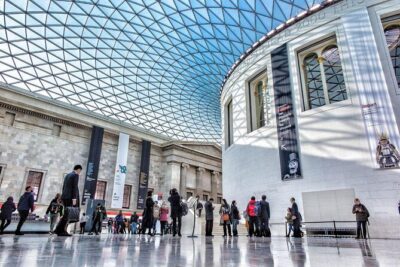
British Museum London Guided Tour Semi-Private 8ppl Max
Read our review →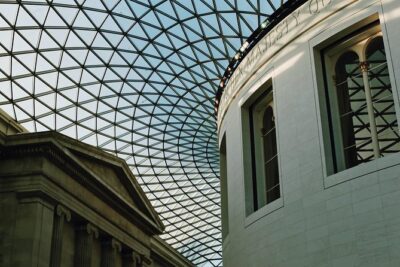
The British Museum London – Exclusive Guided Museum Tour
Read our review →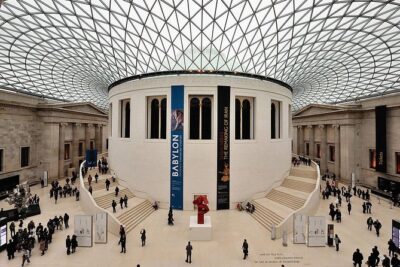
Skip the Line: Liverpool Beatles Museum – The perfect tribute to the Beatles
Read our review →Browse the lists this tour appears in