
Reviewed · MUSEUMS
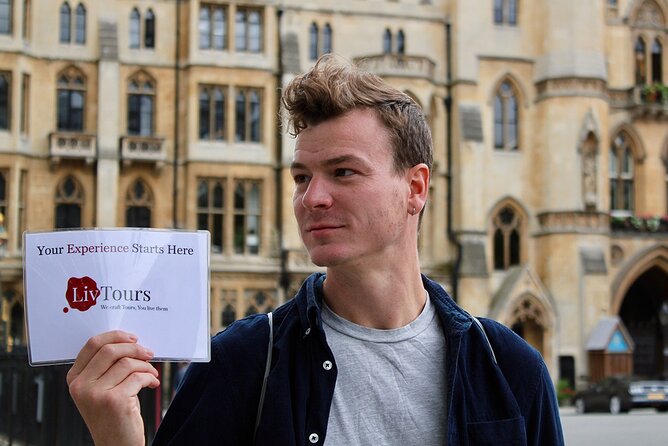
Semi Private Guided tour at British Museum
The British Museum is too large to tackle casually in one morning. This small-group guided tour gives you a clear route through 6,000 years of human history, from Egyptian mummies and Assyrian reliefs to the Rosetta Stone and Easter Island statue. Guides Luca and Cecily have both made a strong impression with their detailed explanations and personal attention.
I like the maximum of six people per guide, which leaves room for questions and makes it easier to stay connected in crowded galleries. I also like the chance to begin with less busy sections, a useful approach noted by Cecily, before moving toward the museum’s most famous objects. The catch is time: two and a half hours is enough for highlights, not every room.
Key points to know before booking

- See the museum’s biggest names: The route includes the Rosetta Stone, Parthenon Marbles, Easter Island statue, Egyptian mummies, Portland Vase, and Sutton Hoo material.
- Small groups matter: Each guide leads no more than six people, although the total activity can reach 15 participants.
- Your guide can shape the visit: The route may include Ancient Egypt, Greece, Rome, Roman Britain, Assyria, medieval Europe, and the Americas according to your interests.
- Plan for a bag-free visit: Bags over 40 by 40 by 50 centimeters or weighing 8 kilos or more are not allowed, and there is no cloakroom service.
- Budget for the guide, not a museum admission charge: The price is $142.98 per person, with food, drinks, tips, and transport not included.
- You finish where you start: Meet at 52 Great Russell Street and return there at the end.
Why a guided visit helps at the British Museum

The British Museum can feel like several museums joined together. You can move from Egyptian funerary objects to Greek sculpture, then across continents and centuries in a matter of minutes. That variety is exciting, but it can also leave you wondering what matters most and why.
A guide gives those objects a human scale. Instead of simply walking past a case, you get the story behind a writing system, a burial, a work of sculpture, or a royal collection. That is especially useful for first-time visitors who want to understand the museum rather than collect a few quick photographs.
I also like the way this tour treats the museum as more than a parade of famous objects. The Rosetta Stone is the obvious star, but the route can also include the Standard of Ur, Lewis Chessmen, Anglo-Saxon helmet, Portland Vase, and Hoa Hakananai’a, the striking Easter Island statue. The exact balance depends on the group and the guide.
The museum is free to enter in general, but this experience charges $142.98 for the guided service. You are paying for direction, context, and a carefully managed two-and-a-half-hour visit. If you already know the collection well or prefer to wander alone, that cost may not make sense. If you have limited time in London, it can be a practical way to avoid spending your morning lost between galleries.
More museums and galleries in London:
- Tower of London and Crown Jewels Exhibition Ticket
★ 4.5 · 6,677 reviews - Chelsea FC Stadium Tours and Museum
★ 5.0 · 1,908 reviews - Official tickets: Moco Modern & Contemporary Art Museum
★ 4.5 · 1,157 reviews
Starting at 52 Great Russell Street
Your meeting point is 52 Great Russell Street, at the British Museum in central London. The tour ends back at the same meeting point, so you do not need to arrange a separate pickup or find your way to a different exit.
The experience is offered in English, with a mobile ticket. Confirmation arrives when you book. The museum is near public transportation, which makes the central location convenient, though hotel pickup and drop-off are not part of the service.
Give yourself enough time to reach the meeting point. The museum covers a large area, and arriving just before the start leaves little room for a wrong turn or a slow walk from the station. One useful detail from the tour is that Cecily saved a place in line and made the meeting easy to find. That kind of coordination can matter at a major museum, particularly at a busy time.
The Enlightenment Gallery sets the stage
The Enlightenment Gallery is included in the tour and makes a sensible opening point. It helps explain how the museum developed as a place for collecting, comparing, and studying objects from different parts of the world.
You can expect the guide to use this space to frame the larger visit. That context is valuable because the British Museum is not arranged like a simple timeline. The objects are grouped by culture, region, and subject, so a guide can help connect what you see in one room with what appears later.
The main benefit here is orientation. Rather than rushing straight to a famous object, you get a sense of the museum’s purpose and the range of material ahead. Since the visit lasts only about 150 minutes, a clear beginning helps keep the route focused.
Ancient Egypt and the Rosetta Stone
Ancient Egypt is one of the museum’s major draws, and this tour includes the Egyptian collection and mummies. A guide can help you look beyond the familiar image of a wrapped body and explain what burial objects reveal about beliefs, status, and daily life.
The Rosetta Stone is the essential stop. Its importance comes from the three scripts carved into the stone, which helped scholars understand Egyptian hieroglyphs. Seeing it in person is memorable, but the object becomes far more meaningful when someone explains how the inscriptions relate to one another.
Expect this gallery to attract plenty of attention. Your guide’s value is not just pointing out the stone. It is helping you understand why this particular slab changed the study of ancient Egypt and how it fits into the larger collection.
The Egyptian section also shows why a small group is helpful. You may have questions about mummies, writing, or religious objects, and a guide leading six people can usually give more attention than a large group tour.
A few more London days out to weigh up
- London Big Bus Hop-On Hop-Off Tour with Optional River Cruise
★ 3.5 · 10,803 reviews - London Small Group Tour of Historical Pubs
★ 5.0 · 10,422 reviews - Thorpe Park Admission Ticket
★ 4.0 · 5,915 reviews - London Jack the Ripper Guided Tour with Ripper-Vision
★ 4.5 · 4,840 reviews
Ancient Greece and the Parthenon Marbles

The Ancient Greece collection includes the Parthenon Marbles, among the museum’s most famous and debated objects. These sculptures originally formed part of the Parthenon in Athens, and their presence in London brings questions of archaeology, ownership, and cultural heritage into the visit.
A good guide can explain both the artistic details and the controversy without reducing the stop to a quick photo opportunity. Look closely at the carved figures, the surviving detail, and the way the pieces were designed for a temple setting.
The Greek galleries are also a useful contrast with Egypt. You move from funerary beliefs and writing to architecture, mythology, and the human form. That shift gives the tour a natural rhythm, although the large collection means you will not examine every room.
Ancient Rome and Roman Britain

The tour includes both Ancient Rome and Roman Britain. That pairing helps you see Rome as a broad political and cultural force, while also considering what Roman rule meant in Britain.
The Ancient Rome rooms can help place familiar ideas such as imperial power, public life, religion, and art into a wider setting. Roman Britain adds a local connection. For someone visiting London, this part of the tour may feel particularly relevant because it links the museum to the history of the country outside its walls.
The route may move quickly here. Two and a half hours cannot give equal time to each collection, so tell your guide early if Rome or Roman Britain is a priority. The tour is meant to be adjusted around personal interests, and a clear request is more useful than hoping the subject appears by chance.
Assyria and the scale of empire

The Assyrian collection offers another change in mood and style. Large reliefs and scenes of royal power show how ancient rulers presented themselves and their victories.
This is a good place to pay attention to detail. The surfaces may look imposing from a distance, but the carved figures and repeated patterns reward a closer look. A guide can point out what to examine and explain how the reliefs functioned in an ancient palace setting.
For me, this is one of the reasons to choose a guided route. The largest objects are easy to notice, but the meaning of a scene is less obvious. A short explanation can turn a wall of carved stone into a record of politics, warfare, and royal image-making.
Sutton Hoo and medieval Europe
The Sutton Hoo ship burial brings the tour into Anglo-Saxon England. The collection is known for objects found in a ship burial, including the famous helmet. It gives you a direct connection to early medieval Britain and shows that the country’s past was shaped by more than Roman rule.
The medieval Europe collection expands that story. You may see material connected with religion, power, craftsmanship, and daily life across a long period. The exact rooms covered depend on the guide and the group’s interests, so visitors especially interested in medieval objects should mention that at the start.
This part of the route is useful for anyone who wants more than the museum’s headline attractions. The Rosetta Stone and Parthenon Marbles may draw the crowds, but Sutton Hoo gives the visit a strong British connection.
The Americas, Easter Island, and the Portland Vase
The included highlights also reach beyond Europe and the Mediterranean. The Aztec and Mayan collection introduces major cultures of the Americas, while Hoa Hakananai’a, the Easter Island statue, offers one of the museum’s most visually arresting stops.
The statue is known for its size and solemn expression, but it also raises questions about how cultural objects are collected and displayed far from their original communities. A guide can help you consider the object in its island setting rather than treating it as an isolated sculpture.
The Portland Vase provides another sharp contrast. This Roman glass vessel is a small, finely made object, and its scale makes it easy to overlook in a large museum. It is exactly the sort of piece that benefits from a guide who knows where to pause.
These stops show the range of the British Museum. You are not getting one narrow subject, but a fast-moving look at objects from many places and periods. That variety is a strength, though it can also feel like a lot to absorb in one morning.
What two and a half hours really gives you
The advertised duration is approximately two hours and 30 minutes. That is long enough for a focused introduction, but not enough to cover every room. The museum itself is too large for that, and the tour makes no promise to visit every gallery.
Think of the experience as a guided first pass. You will see major highlights, hear the stories behind them, and learn which sections deserve a longer return visit. I would not book this expecting quiet, detailed study of every collection.
The guide can tailor the tour to personal preferences, which is one of its most useful features. Tell the guide if you care most about Egypt, Ancient Greece, Roman Britain, medieval Europe, the Americas, or a particular object such as the Lewis Chessmen or Anglo-Saxon helmet.
The strongest guide style here appears to be personal and responsive. Luca is noted for explaining everything the group saw with great depth, while Cecily took time with questions, made meaningful comments, and began in less busy areas. Those details suggest the tour works best when you engage with the guide rather than simply follow along.
Group size, pace, and personal attention
The tour operates with a maximum of six participants per guide. The total activity can reach 15 people, but the important figure for your experience is the guide-to-group ratio. A small group makes it easier to hear explanations, ask questions, and adjust the route.
The pace will still be brisk. The British Museum has many long galleries, and moving between collections takes time. Wear comfortable shoes and keep your focus on the objects rather than trying to cover every corner.
Families can participate, but children must be accompanied by an adult. Most people can take part, and service animals are allowed. If you need a particular pace or have a strong subject preference, raise it with the guide early.
Bags, food, and other practical details
Large bags are not permitted. Anything over 40 by 40 by 50 centimeters or weighing 8 kilos or more cannot enter, and the museum does not offer cloakroom service. Pack lightly and do not arrive assuming you can leave a large suitcase or heavy daypack at the door.
Food and drinks are not included. Plan around the two-and-a-half-hour visit rather than expecting refreshments as part of the tour. Tips are also not included, and transport to or from your hotel is your responsibility.
Free cancellation is available if you cancel at least 24 hours before the local start time. Cancellations or changes made within 24 hours are not accepted for a refund, so check your plans before that deadline.
Is $142.98 a fair price?
At $142.98 per person, this is not a budget museum visit. The British Museum itself does not charge a standard admission fee, so the price is mainly for the guide, small-group format, and organized route.
I see the value if you have one morning, want the major objects explained, and prefer not to plan a route through a huge collection. It is also a good fit if you enjoy asking questions or want the guide to adjust the visit around your interests.
The price is harder to justify if you are happy to explore alone, have several hours available, or already know the museum. Independent visitors can spend nothing on admission and return to the galleries at their own pace. Group discounts may help in some cases, but the supplied details do not specify the discount amount.
Who should book this British Museum tour?
I would choose this tour for a first visit, a short London stay, or a family group that wants a clear introduction without trying to read every label. It also suits anyone who wants the big names, such as the Rosetta Stone and Parthenon Marbles, placed in a wider story.
You should think twice if your main goal is quiet research, photography, or a single collection studied in depth. The guide can tailor the route, but time remains limited and the museum has far more rooms than any two-and-a-half-hour tour can cover.
Should you book it?
Book this semi-private British Museum tour if you want a focused route, direct access to a guide, and a small group capped at six per guide. The strongest reasons are the personal attention, the broad mix of collections, and the chance to see famous objects without wasting your morning on a random path.
Skip it if the $142.98 price feels high for a museum with free general admission, or if you prefer to wander independently. For everyone else, especially first-time visitors with limited time, it offers a sensible way to get oriented and decide what deserves a longer return visit.
FAQ
How long is the British Museum tour?
The experience lasts approximately two hours and 30 minutes.
Where does the tour begin?
The meeting point is 52 Great Russell Street, London WC1B 3BA, UK.
Where does the tour end?
The activity ends back at the meeting point.
What language is the tour offered in?
The tour is offered in English.
How many people are in each guide’s group?
Each guide leads a maximum of six participants. The total activity can have up to 15 travelers.
What major objects are included?
The tour includes the Rosetta Stone, Parthenon Marbles, Easter Island statue, Portland Vase, Egyptian mummies, Sutton Hoo material, and other museum highlights.
Is museum admission included?
The tour includes the guided experience and the listed museum collections. The British Museum admission ticket is shown as free.
Are large bags allowed?
Bags larger than 40 by 40 by 50 centimeters or weighing 8 kilos or more are prohibited. The museum does not offer cloakroom services.
Can I cancel for a full refund?
Yes. You can cancel for a full refund up to 24 hours before the experience start time. Changes or cancellations made less than 24 hours before the start are not accepted for a refund.
Just added around London
- London Private Jack The Ripper Tour★ 5.0 · 9 reviews
- Private Spy Walking Tour of London★ 5.0 · 6 reviews
- Private 2.5 Hour Taxi Tour of London – London’s Greatest Bits!★ 5.0 · 4 reviews
- Private Shoreditch Street Photography Workshop★ 4.5 · 4 reviews
- Private Sightseeing Walking Tour of The City Of London★ 5.0 · 3 reviews
- Private Round Trip Transfer between London Airports and Hotel★ 3.5 · 56 reviews
- Shakespeare London Walking Tour★ 5.0 · 26 reviews
- Private Prison Van Escape Game – London Immersive Experience★ 4.0 · 15 reviews
Museums, compared.
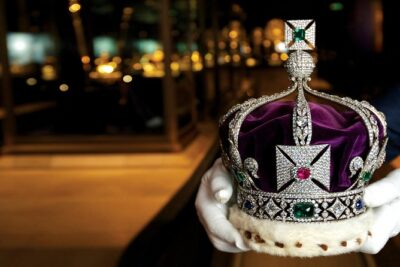
Tower of London and Crown Jewels Exhibition Ticket
Read our review →
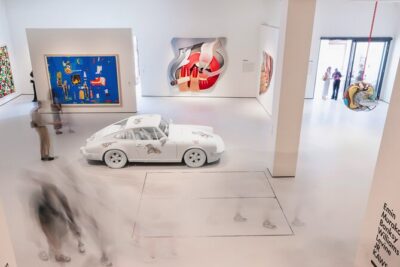
Official tickets: Moco Modern & Contemporary Art Museum
Read our review →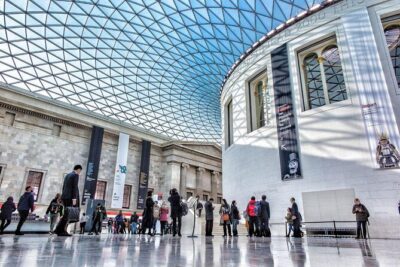
British Museum London Guided Tour Semi-Private 8ppl Max
Read our review →
The British Museum London – Exclusive Guided Museum Tour
Read our review →
Skip the Line: Liverpool Beatles Museum – The perfect tribute to the Beatles
Read our review →Browse the lists this tour appears in