
Reviewed · HISTORICAL TOURS
Pride History of Birmingham Tour
Birmingham’s LGBTQ+ story comes alive through the venues and streets that shaped it. This 5km Pride history tour begins at the original Nightingale Club site and follows the Gay Village through moments of exclusion, acceptance, uncertainty, and change.
I like the focus on real places, including the AIDS and HIV Memorial, Pride House, and long-running venues such as The Fox and The Rhino. I also like the choice between a two-hour walk and a 90-minute run. The main drawback is the $481.69 price, which is high for a short city tour, especially since no admissions are included.
Key points to know
- Starts at the Nightingale Club: Begin at the site of Birmingham’s first gay-friendly venue, which is still operating today.
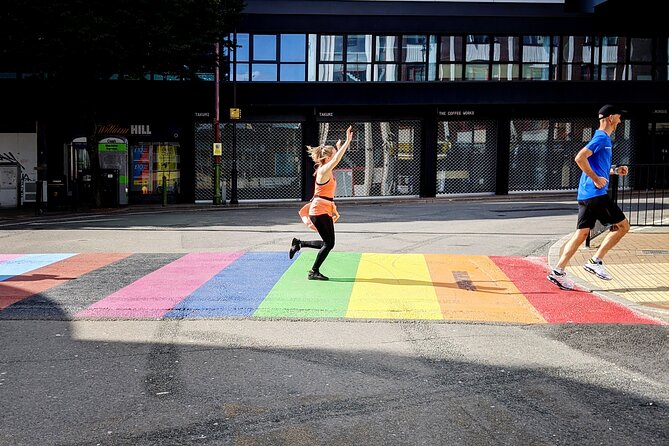
- Covers about 5km: Choose a walking version of roughly two hours or a running version of about 90 minutes.
- Visits important Gay Village sites: See Pride House, the AIDS and HIV Memorial, Eden Bar, Jester, The Fox, Missing Bar, and The Rhino.
- Connects local and global Pride history: The story places Birmingham’s LGBTQ+ scene within wider changes around the world.
- Finishes at Sidewalk before returning: A former car showroom, Sidewalk is one of the tour’s final important venues.
- Small group size: The outing accepts a maximum of 25 people, with a 6:00 pm start.
Birmingham’s LGBTQ+ story starts at the Nightingale Club

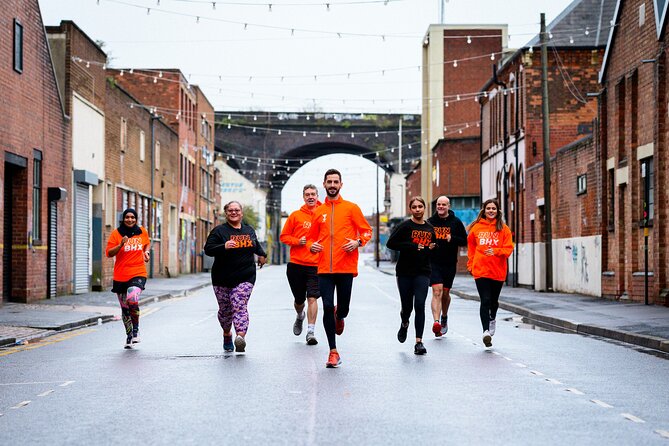
Meet outside the Nightingale Club at 18 Kent Street at 6:00 pm. Look for a guide in orange. That small detail matters in a city centre where several streets and venues can feel alike at first glance.
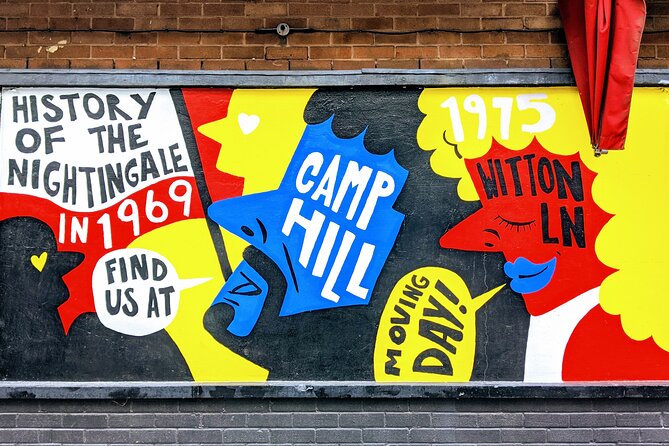
The opening stop is the original Nightingale Club site. Birmingham’s first gay-friendly venue, the club gives the tour a clear starting point. You are not beginning with a broad lecture or a list of dates. You are beginning at a place connected directly to the city’s LGBTQ+ life.
The tour starts its timeline in 1969, just two years after homosexuality was decriminalised in England and Wales. That date gives the story its proper tension. Legal change did not instantly bring safety, acceptance, or equal treatment. The guide uses Birmingham to show how a community can gain room to live openly while still facing pressure and uncertainty.
The first stop lasts about 10 minutes. Admission to the club is not included, so you should think of it as an exterior meeting point and historical marker rather than a nightclub visit. If you hoped for a drink or an indoor look around, check the arrangements before booking.
The Nightingale Club remains important because it links past and present. You can begin by considering what it meant for a gay-friendly venue to operate in Birmingham in the late 1960s, then see how later bars, clubs, festivals, and memorials grew around that early foundation.
More historical tours in Birmingham:
- Birmingham Gangs Nighttime Historical Walking Tour with Pub Stops
★ 5.0 · 53 reviews - 2.5-Hours Walking Tour of Birmingham into Black Heritage Madiba
★ 5.0 · 49 reviews - London Small Group Tour of Historical Pubs
★ 5.0 · 10,422 reviews
Walking through the Gay Village and its key landmarks
After the Nightingale Club, the route moves through Birmingham’s Gay Village. This is the longest part of the experience, taking about one hour and 40 minutes on the walking version. The route includes a series of venues and public places, each helping the guide build a larger story.
You will visit Pride House, Birmingham’s Pride festival location, and the AIDS and HIV Memorial. These stops broaden the tour beyond nightlife. Bars and clubs show where people met and socialised, while a memorial points to grief, public health, activism, and the lives affected by HIV and AIDS.
That balance is one of the tour’s strongest features. A Pride history walk should not reduce LGBTQ+ life to parties and colourful nights out. By including the memorial, the route makes room for loss and remembrance alongside celebration.
The exact time spent at each site is not given, so expect the guide to shape the pacing according to the group. The overall walking route is about 5km. Wear comfortable shoes, and remember that this is an outdoor city walk rather than a seated talk. The tour requires good weather, so rain or poor conditions can lead to a new date or a full refund.
The route also passes Eden Bar, Jester, The Fox, Missing Bar, and The Rhino. These names may seem like a collection of nightlife stops, but they help explain how the Gay Village developed as a connected social area. The guide’s job is to show what each place has contributed to Birmingham’s LGBTQ+ scene.
The tour also promises some unusual local details involving jugs, rhinos, and foxes. That gives the story a lighter edge without removing its serious themes. You will need to hear the guide’s explanation to understand how those words fit into Birmingham’s story, but they suggest a tour built around memorable local references rather than a dry set of dates.
Pride House and the meaning of Birmingham Pride
Pride House and the Birmingham Pride festival location give the tour a public face. The history here is not only about venues where people met privately. It is also about the point at which LGBTQ+ life became visible in a large city centre setting.
Pride events can show progress, but they can also raise questions about who feels included, how public celebration is organised, and what happens when community spaces change. The guide draws on Pride history from around the world while keeping Birmingham at the centre.
That wider context is useful. Birmingham did not develop in isolation, and the tour uses international Pride history to help explain local shifts. You get a sense of how legal change, public attitudes, nightlife, and organised events can affect one another.
The route also spends time around Smithfield’s, described as the home of Birmingham Pride. This part of the story turns toward the future of the Gay Village itself. The final message is not simple triumph. The survival of the village faces increased uncertainty, and the tour asks you to consider what may be lost if established LGBTQ+ spaces disappear.
That forward-looking note adds value. You are not just being shown old venues. You are being asked to think about why physical community spaces still matter, even when social life can take place online or across a wider city.
The bars and clubs that shaped the route
Eden Bar, Jester, The Fox, Missing Bar, and The Rhino form the social core of the walk. The tour does not list entrance to these venues, so plan on seeing them as part of the streetscape and hearing their stories rather than sampling drinks along the way.
This format is useful if you want a quick introduction to Birmingham’s Gay Village. In roughly two hours, you can understand where key venues sit and how they relate to one another. You also get a better sense of the village as a physical district, not just a label used on a map.
The limitation is that the experience is not a pub crawl. There is no stated time for sitting inside each bar, and no admission or drinks are included. If your main aim is nightlife, you may prefer to use the tour as an introduction, then return to the area later on your own.
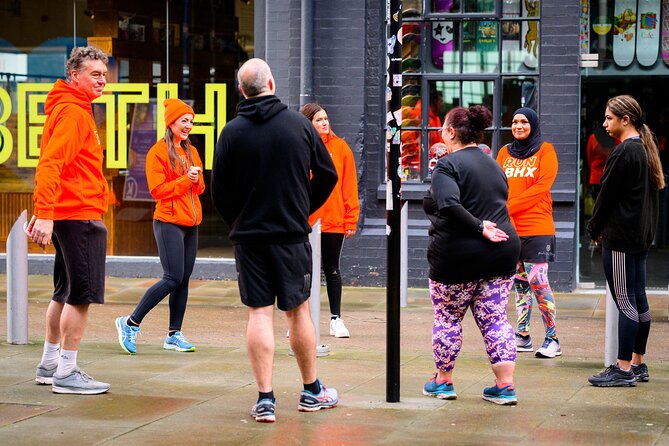
I would also keep the group size in mind. With a maximum of 25 people, the guide can speak to a manageable crowd, but the group is not private. At busy spots, you may need to stand to one side while the guide talks. A smaller private tour would offer more room for personal questions, but this experience does not promise that format.
The running option changes the feel of the route. At about 90 minutes, it suits people who want a quicker circuit and are comfortable hearing the story while moving at a faster pace. The walking version gives you more time to pause, look around, and take in the significance of the sites.
A few more Birmingham days out to weigh up
- Entry ticket to Hoo Zoo and Dinosaur World in Telford
★ 5.0 · 591 reviews - Cadbury World Entry Ticket
★ 3.0 · 524 reviews - Birmingham Walking Tour: Canals, Victorians & Today (1:30pm)
★ 5.0 · 346 reviews - Discovering Birmingham 2 hour Walking Tour to the Jewellery Quarter
★ 5.0 · 333 reviews
Sidewalk, a former car showroom with a place in the story
Sidewalk is the penultimate stop. Its earlier life as a car showroom makes it an unusual piece of the Gay Village story and shows how community venues can occupy buildings not designed for nightlife.
The stop lasts about 10 minutes before the route returns to the Nightingale Club. Like the opening stop, admission is not included. The value here comes from the guide’s explanation and the building’s role in the district, not from an indoor attraction.
Returning to the starting point makes the tour easy to plan. You do not need to arrange a second meeting location or work out how to get back across Birmingham after dark. You finish where you began, at the Nightingale Club.
What the guide adds to the experience
The guide is central to this tour. The route alone would show you a collection of bars, memorials, and event sites, but the guide connects them into a story about exclusion, acceptance, and uncertainty.
Darren is specifically named as a guide associated with this experience. If he leads your outing, expect a personal approach that includes recommendations and help connecting more closely with the city. That can be especially useful if Birmingham is new to you and you want suggestions for what to do after the tour.
The experience has received a top rating from the small number of published ratings available, but you should not treat that as proof that every outing will feel the same. Much depends on the guide, the weather, group pace, and your interest in local LGBTQ+ history.
The best guides make room for questions and adjust their explanations to the group. This tour appears designed for that kind of storytelling, with named venues and local symbols providing plenty of openings for conversation. Still, no set list of guide qualifications or detailed commentary is provided, so book it for the subject and route rather than expecting a formal academic lecture.
Walking, running, timing, and practical comfort
The walking version lasts about two hours and covers about 5km. That is a moderate city walk, but the tour takes place outdoors and includes several stops. Comfortable shoes are a sensible choice, especially if you plan to stay in Birmingham’s centre afterward.
The running version takes around 90 minutes. It is not simply a shorter itinerary. You will cover the same general story at a faster pace, which may leave less time for questions and quiet reflection at places such as the AIDS and HIV Memorial.
The 6:00 pm start suits a visitor who wants to spend the afternoon elsewhere and finish with an evening in the Gay Village. It also means you should consider the weather and daylight for your chosen date. The experience can be cancelled in poor weather, with a different date or a full refund offered.
Most people can take part, and service animals are allowed. The meeting point is near public transportation. The route’s 5km distance and outdoor format still mean you should consider your own comfort before booking, particularly if you prefer shorter walks or need frequent indoor breaks.
Is $481.69 good value?
At $481.69 per person, this is an expensive experience for a 90-minute to two-hour tour. The route includes no stated admission, food, or drinks, and the main product is the guide’s interpretation of Birmingham’s LGBTQ+ past.
That price can make sense only for a particular kind of booking. If you place a high value on a focused LGBTQ+ history experience, want a guide-led route through the Gay Village, and cannot find another tour with this subject, you may consider it worthwhile. The fact that it is described as Birmingham’s only Pride History Tour also gives it a degree of exclusivity.
For a casual city introduction, though, the cost is hard to justify. You are paying a premium for a specialist subject and a local guide, not for a long duration or included attractions. I would compare the price carefully with your total Birmingham budget.
The maximum group size of 25 helps somewhat, since this is not an enormous open group. Still, it is not a private tour. If the price applies equally to a small booking, value may depend heavily on how much personal attention the guide can provide.
Who should book the Pride History of Birmingham Tour?
I would recommend it most strongly to people who want Birmingham’s LGBTQ+ story placed at the centre of their visit. It suits you if you enjoy social history, want to support a specialist local experience, or prefer learning about a city through real community places.
It is also a good fit if you want to understand how Birmingham’s Gay Village developed, rather than simply visit its bars. The Nightingale Club, Pride House, AIDS and HIV Memorial, Smithfield’s, and Sidewalk give the tour a clear arc from early community space to public Pride and future uncertainty.
You may want to skip it if you mainly want nightlife, indoor attractions, or a low-cost sightseeing walk. You should also think twice if a 5km route feels demanding, if you dislike outdoor tours dependent on good weather, or if the price would limit the rest of your trip.
The strongest praise attached to the experience focuses on the guide bringing the stories to life and offering useful recommendations. That is exactly where this tour earns or loses its value. Ask yourself if a personal account of Birmingham’s LGBTQ+ places is worth the premium over exploring the Gay Village independently.
Final verdict: a focused story with a high price
Book this tour if Birmingham’s LGBTQ+ past is a main reason for your visit, or if you want a guide to connect the city’s venues, memorials, and Pride sites into one clear story. The route has real substance, from the 1969 starting point to the future of the Gay Village.
I like its mix of serious and lively material. The AIDS and HIV Memorial gives the tour weight, while the references to local venues, foxes, rhinos, and jugs keep it rooted in Birmingham rather than turning it into a generic Pride talk.
The price is the hard question. At $481.69, this is not an easy recommendation for a general sightseeing budget. For a specialist LGBTQ+ history experience with a strong guide, it may be worth booking. For everyone else, explore the area independently and spend the difference elsewhere.
FAQ
Where does the Pride History of Birmingham Tour start?
It starts at the Nightingale Club, 18 Kent Street, Birmingham, B5 6RD, UK.
What time does the tour begin?
The tour starts at 6:00 pm.
Where does the tour finish?
The activity ends back at the Nightingale Club, where it begins.
How long does the tour last?
The walking version takes about two hours. The running version takes about 90 minutes.
How far is the route?
The route covers approximately 5km.
Can I walk or run the route?
Yes. You can choose a walking version or a running version of the experience.
What places does the tour visit?
The route includes the Gay Village, Pride House, the AIDS and HIV Memorial, Eden Bar, Jester, The Fox, Missing Bar, The Rhino, Smithfield’s, and Sidewalk. It begins and ends at the Nightingale Club.
Is admission to the venues included?
No. Admission tickets are not included for the Nightingale Club or Sidewalk. The listed Gay Village stops have no admission charge.
How many people can join the tour?
The maximum group size is 25 people.
Is the tour suitable for everyone?
Most people can participate, and service animals are allowed. The tour takes place outdoors, covers about 5km, and requires good weather.
Just added around Birmingham
- Heathrow Airport to Birmingham private taxi transfers★ 4.5 · 20 reviews
- Birmingham Gangs Nighttime Historical Walking Tour with Pub Stops★ 5.0 · 53 reviews
- Fun, Flexible Treasure Hunt Around Birmingham with Cryptic Clues & Hidden Gems★ 5.0 · 167 reviews
- Private Birmingham Ghosts and Gallows Walking Tour★ 5.0 · 5 reviews
- Taste of Shrewsbury Food and Drink Tour with Guide★ 5.0 · 22 reviews
- On the Origins of Charles Darwin: A Self-Guided Audio Tour of Shrewsbury★ 4.5 · 16 reviews
- Birmingham Ghost Hunt: Haunted Self-Guide Tour & Quest★ 4.5 · 37 reviews
- 2.5-Hours Walking Tour of Birmingham into Black Heritage Madiba★ 5.0 · 49 reviews
Historical Tours, compared.
Stonehenge and Bath Day Trip from London with Optional Roman Baths Visit
Read our review →
Shadows of York: Ghost Walk and Horrible History.
Read our review →
Fascinating Walking Tours Of Roman Chester With An Authentic Roman Soldier
Read our review →
A Walk Through Time: History of Liverpool Walking Tour
Read our review →
Royal Historic Pubs Walking Guided Tour in London
Read our review →Browse the lists this tour appears in