

Reviewed · WALKING TOURS
Misfits of Covent Garden Walking Tour
Covent Garden’s polished market and theatres are only the front stage. This walking tour takes you behind it, into stories of actors, prostitutes, drinkers, eccentrics, and other misfits who shaped the area. You’ll visit St Paul’s Church, known as the Actor’s Church, then walk through Covent Garden and Seven Dials with a local guide.
I like the small group limit of 15, which makes it easier to hear the guide and ask questions. I also like the route itself: it links famous places with less obvious corners, including Neal’s Yard and Drury Lane Gardens. The main consideration is pace. Two hours covers a lot, and some stops are brief. Entry to St Paul’s Church is also subject to services or events.
Key points to know before booking
- The route connects Covent Garden and Seven Dials, finishing at the historic sundial monument.
- St Paul’s Church is the tour’s only planned interior visit, but entry cannot always be guaranteed.
- The stories focus on overlooked people, including figures from theatre, nightlife, prostitution, and London’s social history.
- Guides such as Charlotte, Cecily, and Ellie are praised for clear storytelling, warmth, and strong local knowledge.
- The tour costs $34.45 per person and lasts about two hours, making it a useful introduction to the district.
- The 3 p.m. start suits a day built around central London sightseeing, theatre plans, or an evening meal.
Why Covent Garden’s polished surface hides a rougher past

Today, Covent Garden is one of London’s easiest areas to visit. The market is attractive, the theatres are grand, and the streets are packed with shops and places to eat. It can also feel carefully presented, as if the district has always been this tidy and entertaining.
It has not. The area has passed through several very different lives, and this walk concentrates on the people who are often left out of standard city tours. You’ll hear about theatre figures, nightlife, prostitution, the Gin Craze, and the crowded Seven Dials district that once had a much harsher reputation.
I like that the tour does not treat history as a list of royal dates and grand buildings. Instead, it uses people and local scandals to explain why the streets developed as they did. Stories connected with Nell Gwyn, Russell Street, the theatres, and everyday life give the route a human scale.
The guides are central to the experience. Charlotte is described as an entertaining storyteller with strong historical detail. Cecily is especially good at tying each stop together and answering questions, while Ellie has been praised for clear speaking and for bringing the characters of the neighborhood to life. Guide availability can vary, but these names give you a useful sense of the tour’s style: personal, researched, and conversational.
More Walking Tours in London
- Tour for Muggles The Ultimate Harry Potter Walking Tour in London
★ 5.0 · 4,684 reviews - London Jack The Ripper Guided Walking Tour
★ 5.0 · 3,131 reviews - Changing of the Guard Guided Walking Tour in London
★ 5.0 · 1,793 reviews
Starting at St Paul’s Church, the Actor’s Church

Meet at 3 p.m. near Covent Garden Underground on Long Acre. The first stop is St Paul’s Church, one of the few surviving buildings from the original Covent Garden Piazza.
The church is known as the Actor’s Church, a fitting beginning for a walk that spends so much time on London’s stage world. You’ll have a short tour inside when access is available, with about 20 minutes planned here. This is the strongest architectural stop on the route, since it gives you a look at an older Covent Garden before the market and theatre district became the polished destination you see today.
There is one important qualification. A service or special event may prevent entry, so the interior visit is not guaranteed. The tour can still continue around the church and piazza, but you should not book it solely for guaranteed access inside.
This is also a good point to set your expectations. The tour is not a long church visit or an art-history lecture. St Paul’s provides a sense of place and a useful opening chapter before the walk moves into markets, theatres, streets, and personal stories.
Reading the Covent Garden Market through time
From the church, the route turns to Covent Garden market. You’ll look around the market building and learn how its purpose changed across the centuries.
The value here is context. Many people see Covent Garden as a shopping and dining area, but the market’s present use makes more sense when you understand how the district changed around it. Your guide connects the building to the wider development of the piazza and explains how the market became part of the neighborhood’s identity.
About 20 minutes is scheduled for this stop. That is enough to orient yourself and hear the main story, but not enough for a detailed tour of every shop, stall, or architectural feature. If you want time for shopping or photographs, plan to return after the walk.
I like this part because it gives you a framework for the rest of the afternoon. Instead of treating Covent Garden as a string of unrelated sights, the guide explains how commerce, theatre, nightlife, and housing overlapped in the same few streets.
Jubilee Market and the district after dark
Jubilee Market receives a shorter visit of around 10 minutes. It is described as the only London market run by traders, and the guide uses it to explain Covent Garden’s nightlife and live entertainment.
This stop is less about seeing a major monument and more about understanding the district’s social life. Covent Garden has long been tied to performance, crowds, and evening activity. The market helps show how trade and entertainment have shared the same space.
Because the stop is brief, you should not expect an extended market browsing session. You’ll get a focused explanation, then move on. That works well for a walking tour, but anyone hoping to shop during the route may find the pace too quick.
The guide’s storytelling matters most here. A well-told account of nightlife can make an ordinary market corner feel connected to the area’s larger story. The strongest comments about the tour repeatedly focus on this ability to make local history entertaining rather than dry.
Same part of England, a completely different sort of day:
- London Big Bus Hop-On Hop-Off Tour with Optional River Cruise
★ 3.5 · 10,803 reviews - London Small Group Tour of Historical Pubs
★ 5.0 · 10,422 reviews - Tower of London and Crown Jewels Exhibition Ticket
★ 4.5 · 6,677 reviews - Thorpe Park Admission Ticket
★ 4.0 · 5,915 reviews
Theatre Royal Drury Lane and the people behind the curtain

The walk continues to the Theatre Royal Drury Lane, where you’ll stop outside the longest-running theatre site in London. Entry is not included, so this is an exterior explanation rather than a theatre visit.
That limitation is worth noting, especially if you are hoping to see an interior. The point is the site’s connection to London’s theatre and social scene. Your guide discusses eccentric characters and the people who moved through this world, giving the building a human story instead of leaving it as a handsome facade.
This should appeal to anyone who enjoys theatre history but does not want a formal performance-focused tour. The discussion reaches beyond famous productions and includes the unusual personalities linked with the district.
The route then reaches the Royal Opera House, another exterior stop. The building once served as the Theatre Royal Covent Garden and now presents opera and ballet throughout the year. You will not attend a performance as part of this experience, but the stop helps explain how the neighborhood’s theatre identity continued and changed.
The two theatre stops work well together. Drury Lane represents one side of the area’s long theatrical life, while the Royal Opera House shows how that tradition remains part of Covent Garden today.
Neal Street, prostitution, and the Gin Craze

Neal Street marks a shift in tone. Here, the guide discusses Covent Garden’s prostitution trade and the Gin Craze before leading you toward Seven Dials.
This is the part that gives the tour its title real meaning. The area’s past was not limited to actors, markets, and elegant buildings. It also included poverty, drinking, sex work, and the difficult conditions of a crowded urban district.
The subject matter is frank, but it is handled as local social history rather than cheap shock. The best guides make clear that streets have layers, and that the people who lived difficult lives deserve attention too. This focus on overlooked figures is one of the tour’s strongest features.
You’ll enter Seven Dials, once one of London’s great slums. The contrast with today’s shops and restaurants is striking, even without a long stop at every street. The guide’s job is to help you picture the earlier district while you walk through the modern one.
This section may be less suitable for very young children, depending on your family’s comfort with discussions of prostitution and alcohol. The tour is designed for most people, but the subject matter is more adult than a basic sightseeing walk.
Neal’s Yard and Drury Lane Gardens

Neal’s Yard is a short five-minute stop. You’ll see one of Covent Garden’s most colorful corners, tucked away from the main streets.
It is a small stop, so you should expect a quick look rather than a long break. Have your camera ready, but listen closely too, since the guide may connect this corner to the broader character of the surrounding district.
The route then reaches Drury Lane Gardens for about 10 minutes. This site was once a graveyard and is linked with Charles Dickens’s Bleak House. It is now a children’s playground and heritage site, and it was the first project of the United Kingdom’s National Trust.
That combination makes Drury Lane Gardens especially useful for understanding how London reuses its past. A former burial ground can become a public space, while the historical associations remain part of the story. It is not a grand monument, but it is exactly the kind of local detail that can be missed if you only visit the main attractions.
If Dickens interests you, this is a good reason to keep the tour in mind. The route does not promise a dedicated Dickens walk, but the connection may encourage you to return and explore the author’s London in greater depth.
Finishing at the Seven Dials sundial

The walk ends at the Seven Dials sundial monument. This is a practical finish because you remain in central London, close to Covent Garden, theatres, restaurants, and public transport.
By this point, the sundial works as more than a photo stop. It marks the point where several streets meet and gives the guide a natural place to close the story of the district. The tour begins with the piazza and market, then moves through theatre, nightlife, social problems, and urban change before finishing in Seven Dials.
The final stop lasts about five minutes, so do not expect a long farewell or free time built into the official schedule. If you want to explore Seven Dials afterward, set aside extra time. The walk is an introduction, not a full afternoon in every neighborhood it touches.
What $34.45 buys you in two hours

At $34.45 per person, this is not the cheapest way to walk around Covent Garden. You can see the market, theatre exteriors, Neal’s Yard, and Seven Dials without paying for a guide.
The value comes from the connections. A local guide explains why these places matter together, adds stories about people who are easy to overlook, and helps you notice areas you might otherwise pass without a second thought. Several stops are free, but the interpretation is the main product.
The small-group limit of 15 improves that value. You should have a better chance of hearing the guide in busy streets and asking a question than you would on a large coach-style walk. Some sessions have been much smaller, even with only two people, though you should not assume that will happen on your date.
The tour is also reasonably compact. Two hours gives you a strong introduction without using the entire day. If you are staying in Covent Garden, it can help you get oriented early in your visit. If you have visited London before, it may show you streets and stories you have not encountered on a standard first-time route.
The main tradeoff is depth. Ten minutes at a theatre or five minutes at Neal’s Yard cannot provide a full study of the site. You pay for a connected overview and lively interpretation, not extended time inside attractions.
Who will enjoy this walk most
I would choose this experience if you enjoy urban history told through characters and local stories. It suits people who want more than the standard list of London landmarks, especially if theatre, Dickens, markets, or social history interests you.
It is also a good fit if you are staying near Covent Garden and want a useful first look at the neighborhood. The route can help you decide where to return for a meal, a show, shopping, or a longer independent walk.
You may want something else if you prefer museums, long interior visits, or a slow photography tour. Most of the attractions are viewed from outside, and the schedule keeps moving. St Paul’s Church is the exception, and access there depends on the church’s events.
Wear comfortable shoes and allow for London weather. The experience requires good weather, and a cancellation caused by poor conditions offers a different date or a full refund. You can cancel for a full refund up to 24 hours before the 3 p.m. start, but late cancellations and late changes are not accepted.
Service animals are allowed, the route is near public transport, and most people can participate. The operator also requires a minimum number of participants, so a cancellation is possible if that minimum is not reached.
Should you book the Misfits of Covent Garden walk?
Book it if you want a lively, human-scale introduction to Covent Garden and Seven Dials, with theatre history, market changes, scandals, and overlooked local characters in the mix. The strongest reason to go is the storytelling, particularly if you can join a guide such as Charlotte, Cecily, or Ellie.
Skip it if you need guaranteed church entry, theatre interiors, or a slow visit at each attraction. For $34.45, you are paying for the guide’s research, connections, and delivery rather than admission tickets.
For most visitors, I see this as a good-value orientation walk, especially early in a London stay. It gives you enough background to make the familiar streets more interesting, while leaving plenty of time afterward to explore Seven Dials on your own.
FAQ
How long is the Misfits of Covent Garden Walking Tour?
The tour lasts approximately two hours.
What time does the tour start?
The tour starts at 3 p.m.
Where does the tour begin?
It begins at Covent Garden Underground Ltd on Long Acre, London WC2E 9JT.
Where does the tour finish?
The walk ends at the sundial monument in Seven Dials, London WC2H.
Is entry to St Paul’s Church included?
A short interior visit is included when available, but entry is not guaranteed if the church has a service or event.
Does the tour enter the Theatre Royal Drury Lane?
No. The Theatre Royal Drury Lane is an exterior stop, and admission is not included.
How large is the group?
The tour has a maximum of 15 participants.
What language is the tour offered in?
The tour is offered in English.
Can I cancel for a full refund?
Yes. You can cancel at least 24 hours before the start time for a full refund. Cancellations or changes made less than 24 hours before the tour are not accepted, and poor weather or failure to meet the minimum group size may lead to a different date or a full refund.
Just added around London
- London Private Jack The Ripper Tour★ 5.0 · 9 reviews
- Private Spy Walking Tour of London★ 5.0 · 6 reviews
- Private Sightseeing Walking Tour of The City Of London★ 5.0 · 3 reviews
- Private 2.5 Hour Taxi Tour of London – London’s Greatest Bits!★ 5.0 · 4 reviews
- Private Shoreditch Street Photography Workshop★ 4.5 · 4 reviews
- Private Round Trip Transfer between London Airports and Hotel★ 3.5 · 56 reviews
- Shakespeare London Walking Tour★ 5.0 · 26 reviews
- Private Prison Van Escape Game – London Immersive Experience★ 4.0 · 15 reviews
Walking Tours, compared.
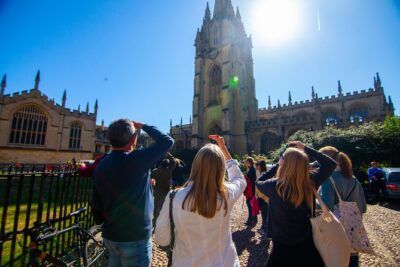
Oxford University Walking Tour With University Alumni Guide
Read our review →
Tour for Muggles The Ultimate Harry Potter Walking Tour in London
Read our review →
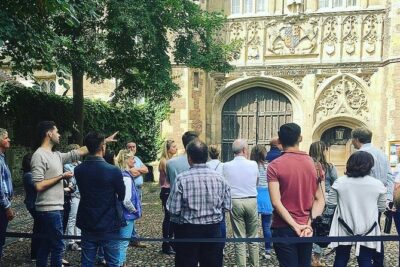
Cambridge University Walking Tour by Alumni™ Kings College Option
Read our review →
Blackbeard to Banksy – The Ultimate Walking Tour of Bristol
Read our review →
Air Raid Shelter + St. Nicholas Market Walking Tour
Read our review →
Walking Tour of Bath with Blue Badge Tourist Guide
Read our review →
Changing of the Guard Guided Walking Tour in London
Read our review →Browse the lists this tour appears in