
Reviewed · MUSEUMS
Private Tour, The British Museum, popular with Families & Small Groups
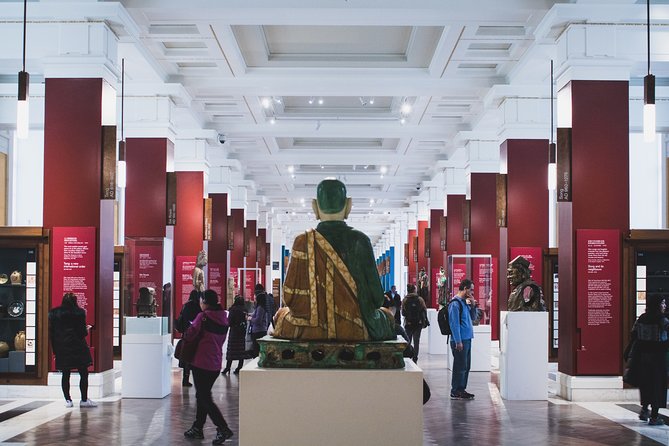
The best thing about this private British Museum tour is its clear route through a huge collection. With a Blue Badge guide, you move from the Rosetta Stone and Egyptian mummies to Assyrian lion hunts, Greek sculpture, Sutton Hoo, Roman Britain, and even a display of medicine tablets without trying to plan the museum yourself.
I like the family focus, especially the hieroglyphic quiz, gory stories, and questions built into the walk. I also like the private format, since Lucy, Marina, Lawrence, Denisa, or Ainura may be able to give your group their full attention, rather than steering a large crowd through packed galleries.
The main drawback is time. Two hours is enough for highlights, not the whole museum, and the price of $286.41 per person is a serious commitment unless you value a private guide and are traveling with a group that benefits from shared attention.
Key points to know before you book
- Rosetta Stone first: The tour normally begins in the Egyptian galleries, with a simple hieroglyphic challenge that helps children look closely.
- Family-friendly storytelling: Expect questions, quizzes, mummies, lion hunts, and some deliberately gory details rather than a dry lecture.
- Private attention: Only your group takes part, so you can ask questions and adjust the pace within the fixed tour time.
- Planned comfort break: A short pause is built into the route before the tour continues upstairs among the mummies.
- Wide range of highlights: You’ll cover Egypt, Assyria, Athens, Britain, Roman culture, and a modern medical display.
- Meeting point matters: Your guide waits at the main museum gates, beside the phone box opposite the Museum Tavern.
Why a private British Museum route helps
The British Museum is free to enter, but it is not simple to use. Galleries spread across several floors, and famous objects sit among thousands of items that can blur together after an hour. A private guide gives you a route and a human explanation for why each stop matters.
This tour is built for families and small groups. Instead of asking children to listen to a long account of ancient civilization, the guide can ask them to find the hieroglyph for cat, decide who would win between a human king and an animal king, or guess how many tablets a person consumes over a lifetime.
That approach has real value. A child who answers a question will usually look harder at the object in front of them. You also get a sense of movement through time, from ancient Egypt and Assyria to Athens, Roman Britain, and a modern display connected with medicine.
The private format is particularly useful if your group includes different ages. Younger children may need a faster pace and visual stories. Adults may want context about empire, engineering, religion, or art. You can ask follow-up questions without holding up a larger group.
There is one practical limit. The route is broad, so you should not expect detailed coverage of every gallery. Think of this as an organized introduction to major highlights, not a specialist tour of one collection.
More museums and galleries in London:
- Tower of London and Crown Jewels Exhibition Ticket
★ 4.5 · 6,677 reviews - Chelsea FC Stadium Tours and Museum
★ 5.0 · 1,908 reviews - Official tickets: Moco Modern & Contemporary Art Museum
★ 4.5 · 1,157 reviews
Meeting your guide at the main gates
Your guide meets you at the allocated start time at the main museum gates, next to the phone box opposite the Museum Tavern. Take this instruction seriously. One earlier meeting problem reportedly caused a rough start before guide Lucy got the day back on track.
I would arrive with enough time to identify the entrance and meeting landmark. The tour depends on finding the guide promptly, and a private tour cannot begin smoothly if your group is still searching around the block.
The experience is offered in English, and the guide is a Blue Badge professional. A Blue Badge guide is a reassuring choice for visitors who want someone used to explaining London attractions clearly and managing a timed visit.
The tour is private, so only your group participates. That does not mean you can spend unlimited time in every room, but it does mean your questions stay relevant to your own family or small group.
The Great Court gives you an instant orientation
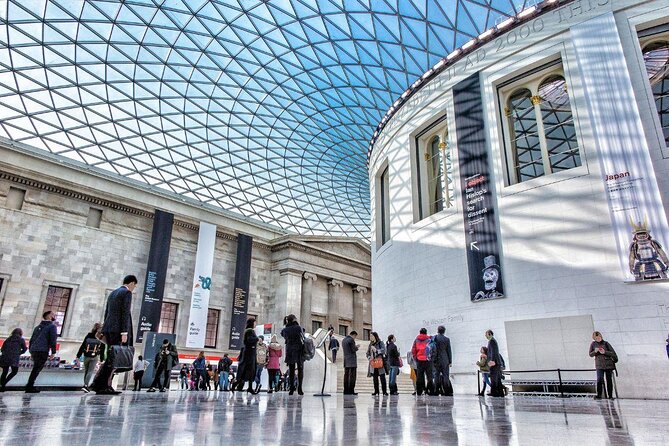
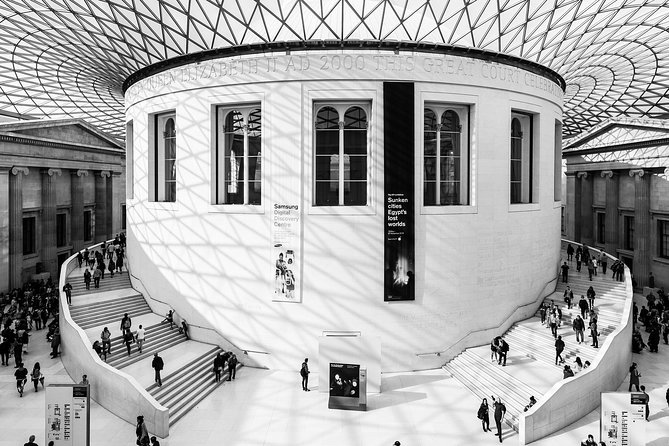
Once inside, the Great Court provides a dramatic opening view. Its wide central space is also a natural place for family photographs before the group heads into the galleries.
This first moment matters because the British Museum can feel like too much at once. The Great Court gives you a visual reference point, and the guide’s route helps you understand where you are going next.
The tour normally starts on the ground floor. Beginning there keeps the first part of the visit focused on large, recognizable objects and major ancient cultures. You are not left to guess which direction leads to the most important rooms.
Egyptian galleries and the Rosetta Stone
The first major stop is usually the Egyptian collection and its famous Rosetta Stone. The stone is important because its inscriptions helped scholars work out Egyptian hieroglyphs. You do not need a background in Egyptology to enjoy the stop, since the guide turns the writing into a simple observation exercise.
Can you find how the word cat is written? That small challenge gives children a task and encourages everyone to examine the markings rather than simply take a photograph and move on.
The Egyptian section also sets up one of the tour’s strongest features: comparison. Later, upstairs, you look at mummies and compare different approaches to mummification. The guide can connect objects that might otherwise feel like separate displays.
Families should be aware that the tour uses gory stories as part of its appeal. That may keep older children interested, but younger children or anyone sensitive to death and bodily remains may find some parts uncomfortable.
A few more London days out to weigh up
- London Big Bus Hop-On Hop-Off Tour with Optional River Cruise
★ 3.5 · 10,803 reviews - London Small Group Tour of Historical Pubs
★ 5.0 · 10,422 reviews - Thorpe Park Admission Ticket
★ 4.0 · 5,915 reviews - London Jack the Ripper Guided Tour with Ripper-Vision
★ 4.5 · 4,840 reviews
Assyria, winged bulls, and royal lion hunts
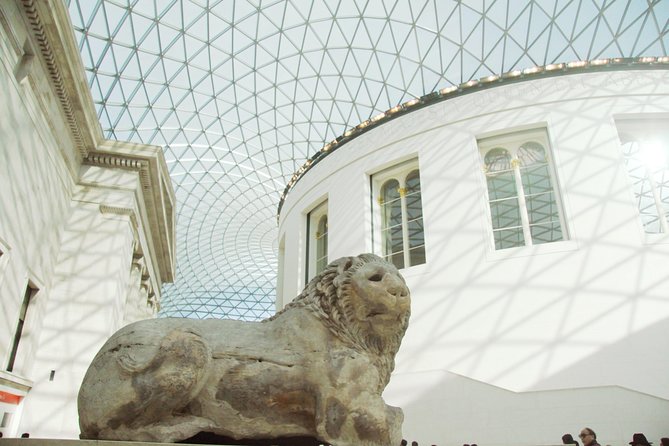
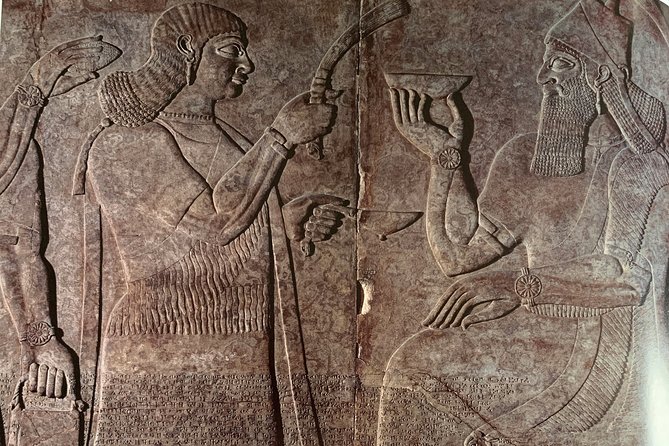
From Egypt, the route moves toward Assyria, another major ancient empire. Here you encounter winged bulls that guarded royal cities and scenes of kings hunting lions.
These objects work well on a family tour because the visual drama is immediate. The guide can ask you to think about the human king against the animal king, then explain how these images showed royal strength and control.
The Assyrian galleries also show how museums communicate power. A huge guardian figure is not just decoration. Its size, hybrid body, and position at an entrance all send a message to anyone approaching the palace.
This section is a good example of why a guide can help. Without context, you might see a large sculpture. With a few pointed questions, you start thinking about who made it, who was meant to see it, and what the ruler wanted the image to say.
Athenian sculpture and the Elgin Marbles
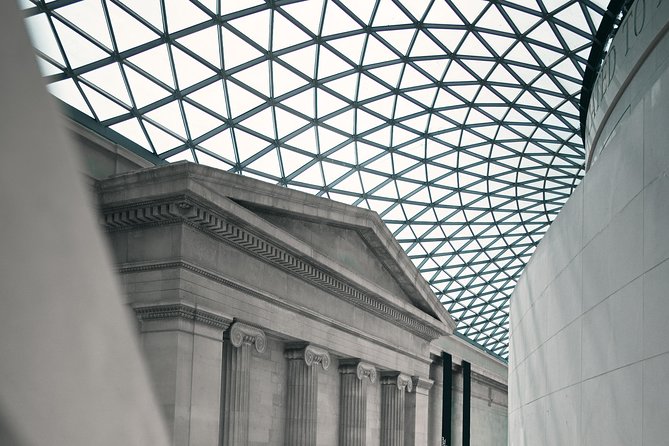
The route then turns to Athenian artifacts in the Duveen galleries, where the Elgin Marbles are displayed. The guide addresses a basic question that often confuses first-time visitors: the Acropolis and the Parthenon are not the same thing.
The Acropolis is the hilltop site. The Parthenon is the major temple on that site. That distinction is simple, but it helps you place the sculptures in their original setting.
The gallery offers an opportunity to discuss ancient Greek art, architecture, and the way museum collections were formed. The tour information does not promise a full treatment of the ownership debate surrounding the marbles, so do not expect a long specialist discussion of that subject within this short route.
Still, seeing these sculptures alongside Egyptian and Assyrian works helps you compare different artistic traditions. The private guide can keep the explanation focused on what your group wants to understand.
The comfort break is a practical part of the plan
After the ground-floor galleries, the tour includes a quick comfort and refreshment break. Food and drinks are not included, so plan to pay for anything you choose to have during the pause.
I like that the break is built into the schedule. Museum visits require more energy than people expect, especially for children. A short pause lets you sit down, use the facilities, and reset before the upstairs galleries.
The break also keeps the tour from becoming a two-hour march. You can return to the collection with more attention instead of simply counting the minutes until the end.
The timing is still fairly tight. If your group needs a long meal or a slow rest, you may need to choose between that and seeing all the planned highlights.
Upstairs with Egyptian mummies

After the pause, you return to the Egyptian collection upstairs to see mummies. This part gives you a chance to compare two styles of mummification and look for less obvious examples.
The guide may challenge you to find the mummy of an ibis, a baboon, or a young woman. That search turns the gallery into a visual puzzle. It also shows that mummification was not limited to one kind of person or one type of body.
The mummies can be the most memorable section for children, but they are also the part most likely to unsettle some visitors. The tour’s family focus does not mean every object is gentle or lighthearted. The stories can be graphic, so consider your group’s comfort level before booking.
Sutton Hoo and Britain’s own treasures
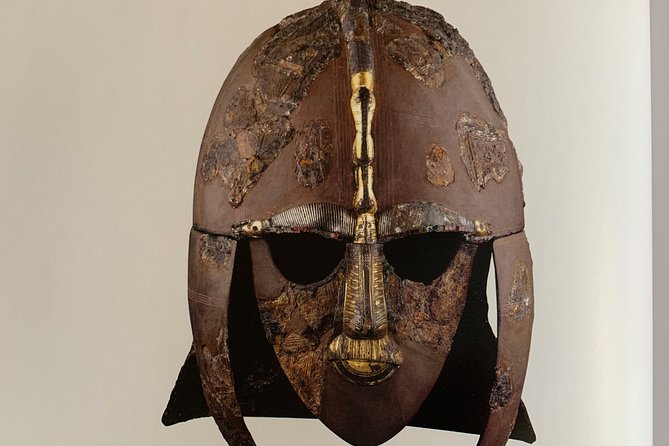
The tour then turns closer to home with the Sutton Hoo treasure. This is an important change of pace. After Egypt, Assyria, Athens, and other ancient cultures, you get a reminder that Britain has its own major archaeological story.
Sutton Hoo is especially useful for families because it raises questions about burial, status, craftsmanship, and the people who lived in early Britain. The tour does not treat the museum as a collection only of overseas objects.
That local connection also makes the next section on Roman Britain easier to follow. You begin to see Britain as part of the wider Roman world, rather than as an isolated island.
Roman galleries and practical ancient engineering
The Roman galleries show how advanced Roman culture was in building, engineering, and art. The tour’s questions include the familiar prompt of what the Romans did for us, but the museum objects give that idea more substance.
You may find this section especially useful if your family has studied Rome or plans to visit Roman sites elsewhere in Britain. The guide can point out how construction, design, and artistic skill worked together in Roman society.
The strength of the route is its range. You are not spending the entire visit on one famous object. You are comparing empires and cultures, then seeing how Roman influence shaped these isles.
The tradeoff is depth. Two hours cannot explain every Roman gallery in detail. If Rome is your main interest, ask the guide early if more time can be given to that section, though the full route may need to be adjusted.
A modern twist with medicine tablets
Near the end, the tour shifts from ancient empires to more recent times with a display of medicine tablets. You are asked to guess how many tablets the average person consumes during a lifetime, then see them arranged in front of you.
This is a clever closing idea because it connects the museum’s objects to ordinary modern life. After seeing royal sculpture, mummies, temples, and Roman artifacts, you finish with something that feels familiar and slightly surprising.
It also gives children another guessing game near the end, when attention may be fading. The display is a reminder that museums are not only about distant civilizations. They can also make you look differently at habits and objects from your own time.
Ending back in the Great Court
The tour ends at the Great Court, back where the visit began. You can sit, look back across the space, and think through the many cultures covered in a short period.
That ending is useful because the route has moved quickly. You have seen Egypt, Assyria, Athens, Britain, Rome, and a modern medical display. A final pause helps the experience feel like a connected story rather than a string of rooms.
You may also want to continue exploring independently afterward. The tour ends at the meeting point, so you are in a good position to revisit a favorite gallery or see something the route did not include. The experience itself lasts about two to two and a half hours, with the stated itinerary describing roughly two hours.
Is $286.41 per person good value?
At $286.41 per person, this is not a budget museum visit. The British Museum itself has free admission, so the price pays for private guiding, a planned route, family-focused storytelling, and guaranteed access with the Blue Badge guide.
The value improves when several people in your party genuinely want the same guided experience. A private group can ask questions, keep the pace suitable for children, and avoid spending the first hour simply finding the famous objects.
The price is harder to justify if you are a confident museum visitor who enjoys reading labels and choosing your own route. You can see the museum without paying for a private guide, though you will need to organize the visit yourself.
The strongest case for booking comes from the quality of the guiding. Specific guides praised for clear storytelling and strong subject knowledge include Lucy, Marina, Lawrence, Denisa, and Ainura. You cannot assume a particular guide will be assigned, but these names show the kind of personal approach the operator aims to provide.
The experience has a 4.8 rating from five available ratings, with special praise for storytelling, family engagement, and seeing more within a limited time. One booking also had an initial meeting problem, so confirm the meeting point carefully and arrive early.
Who should book this British Museum tour?
I would choose this tour for families who want a lively introduction without having to plan the museum alone. It also suits small groups with only half a day, older relatives who prefer a seated break, and first-time visitors who want the major highlights explained in a sensible order.
It is less suitable for visitors who want a slow, specialist study of one collection. It may also be a poor fit for anyone uncomfortable with mummies, death-related displays, or graphic stories.
The tour is offered in English. A mobile ticket is provided, service animals are allowed, and most people can participate. It is near public transportation, although the supplied details do not identify specific stations or routes.
Free cancellation is available up to 24 hours before the local start time. Cancellations or changes made less than 24 hours before the experience are not refunded or accepted.
Should you book it?
Book this private British Museum tour if you want a family-friendly route through major highlights, personal attention, and a guide who can turn objects into questions and stories. The Rosetta Stone, lion hunts, mummies, Sutton Hoo, Roman galleries, and medicine tablets make a lively two-hour sampler.
Skip it if the high per-person cost outweighs the convenience, or if you prefer to wander slowly and choose your own galleries. For most first-time families with limited time, the guide solves the museum’s biggest problem: too much to see and no obvious place to start.
FAQ
How long does the British Museum tour last?
The experience lasts approximately two to two and a half hours. The described route is planned for about two hours and includes a short comfort and refreshment break.
Is this a private tour?
Yes. Only your group participates, allowing you to ask questions and receive the guide’s undivided attention.
What language is the tour offered in?
The tour is offered in English.
Where do I meet the guide?
Meet at the main museum gates at your allocated start time. The guide waits next to the phone box opposite the Museum Tavern.
What is included in the price?
A Blue Badge guide and guaranteed access to skip the long lines are included. Food and drinks are not included.
Can I cancel for a full refund?
Yes, if you cancel at least 24 hours before the experience start time. Cancellations or changes made less than 24 hours before the start are not accepted, and the amount paid is not refunded.
Just added around London
- London Private Jack The Ripper Tour★ 5.0 · 9 reviews
- Private Spy Walking Tour of London★ 5.0 · 6 reviews
- Private Shoreditch Street Photography Workshop★ 4.5 · 4 reviews
- Private Sightseeing Walking Tour of The City Of London★ 5.0 · 3 reviews
- Private 2.5 Hour Taxi Tour of London – London’s Greatest Bits!★ 5.0 · 4 reviews
- Private Round Trip Transfer between London Airports and Hotel★ 3.5 · 56 reviews
- Shakespeare London Walking Tour★ 5.0 · 26 reviews
- Private Prison Van Escape Game – London Immersive Experience★ 4.0 · 15 reviews
Museums, compared.

Tower of London and Crown Jewels Exhibition Ticket
Read our review →
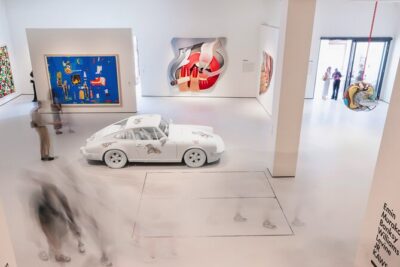
Official tickets: Moco Modern & Contemporary Art Museum
Read our review →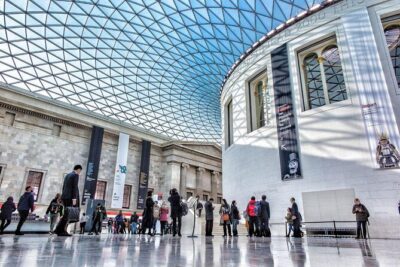
British Museum London Guided Tour Semi-Private 8ppl Max
Read our review →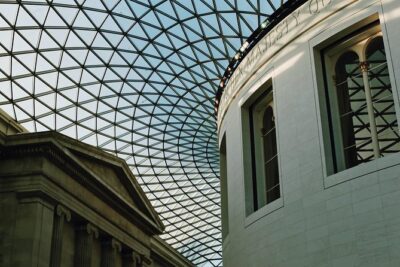
The British Museum London – Exclusive Guided Museum Tour
Read our review →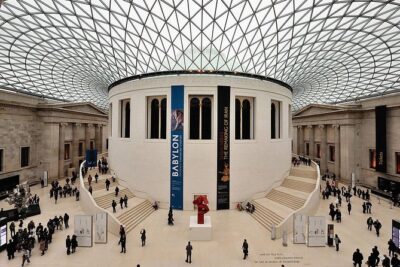
Skip the Line: Liverpool Beatles Museum – The perfect tribute to the Beatles
Read our review →Browse the lists this tour appears in