

Reviewed · HISTORICAL TOURS
Walkabout Durham History Tour
Durham’s best introduction is on foot, and this tour follows a smart route through the city’s most memorable sights. You begin in Market Place, cross the old Framwellgate Bridge, walk beside the River Wear, then climb through the university Bailey to finish at Durham Cathedral. The route links views, buildings, legends, and city life instead of treating each sight as a separate photo stop.
I like the way Peter keeps the history personal, mixing major events with local stories and his own research. I also like the practical finish: you end at the cathedral doors, with a better sense of what to see next. The main drawback is the hilliness. Ninety minutes on Durham’s slopes can feel brisk, especially in rain or cold weather.
Key points to know
- Market Place to Durham Cathedral: The tour crosses the historic center and ends at the cathedral’s main doors.
- Peter’s style: Expect a friendly, engaging guide who welcomes questions and uses facts, myths, and local anecdotes.
- Seven compact stops: The route includes old bridges, riverbanks, medieval walls, university buildings, and Palace Green.
- Small group size: The maximum is 20 people, enough for a personal feel without making the walk private.
- Good for a first visit: You get your bearings quickly and receive suggestions for what to do afterward.
- Dogs are welcome: Service animals are allowed, and dogs are specifically invited.
Why this 90-minute walk works so well in Durham
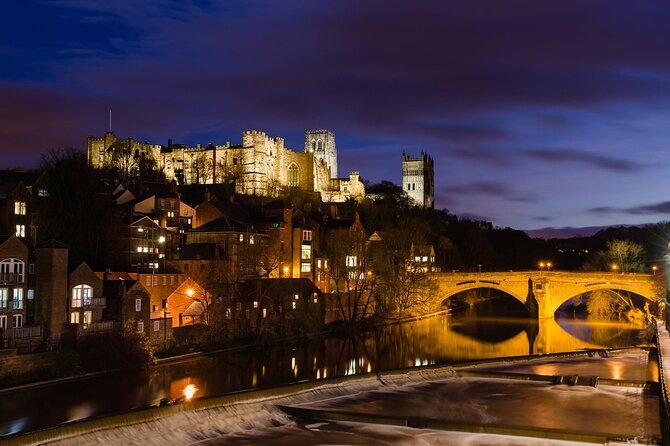
Durham can seem easy to cover because its old center is compact. In practice, its history is layered across steep lanes, river bends, college buildings, churchyards, and viewpoints. A guide helps you connect those pieces before you start exploring on your own.
This is not a tour built around entering a long list of attractions. Admission is free at every listed stop, and the value comes from the storytelling and the route. You are paying for a clear introduction to the city, not for tickets or a long indoor visit.
The timing is useful. At roughly one hour and 30 minutes, the walk is long enough to explain Durham’s past without taking over your day. You can schedule it early in your visit, then return to the cathedral, museums, university areas, or riverside paths with a better idea of where you are.
The group limit of 20 matters, too. It is not a private tour, but it should be easier to hear the guide and ask questions than on a large coach-style outing. Peter’s approach is conversational, so the format suits people who like to stop and ask about a detail rather than simply follow a script.
One practical note: the supplied location summary lists Middlesbrough, but the meeting point, route, and ending point are all in Durham. Use Durham Market Place as the key location when planning your day.
More historical tours in England:
- London Small Group Tour of Historical Pubs
★ 5.0 · 10,422 reviews - Stonehenge and Bath Day Trip from London with Optional Roman Baths Visit
★ 5.0 · 2,028 reviews - Soho Music & Historic Pubs Tour
★ 5.0 · 1,993 reviews
Market Place begins with Durham’s public face
The tour starts at Durham Market Place, in the center of the city. This is a useful meeting point because it puts you straight into Durham’s civic story rather than beginning at a distant transport stop or outside a single attraction.
Here you look at the 19th-century Town Hall and Guildhall, St. Nicolas’ Church, and statues linked to the city and county. The opening section takes about 20 minutes, giving you time to understand the people and institutions that shaped Durham.
I like this start because it sets up a contrast that continues through the walk. Durham is not only a cathedral city. It has a civic center, working streets, local government, and everyday life alongside its medieval religious and academic past.
The statues also give the guide a natural way to explain important figures. Rather than hearing a list of dates, you get a sense of who mattered and why the city developed as it did. That is especially useful if you arrive with little background on Durham.
From Market Place, the route makes a short walk toward Framwellgate Bridge. Comfortable shoes are a sensible choice from the start. The distance is manageable, but Durham is hilly, and the tour does not stay on flat ground.
Framwellgate Bridge frames the castle and cathedral
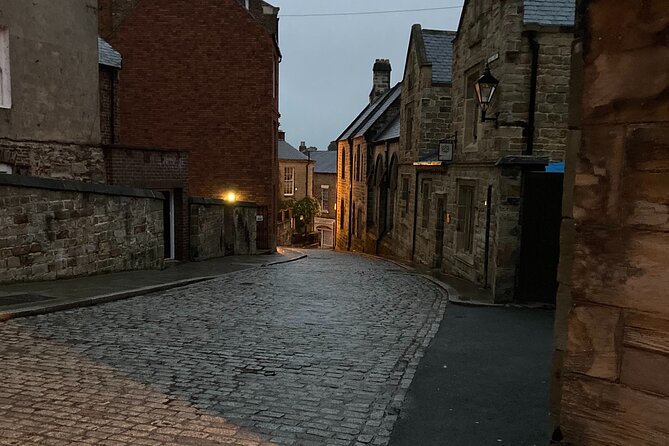
Framwellgate Bridge is described as the oldest of Durham’s bridges, and it gives you one of the strongest views on the route. From here, Durham Castle and Durham Cathedral rise above the River Wear, making the city’s setting immediately clear.
This is where the story turns toward the Prince Bishops of Durham and the role of the castle. The combination of bridge, river, castle, and cathedral helps explain why the city grew in this particular place. You are not just looking at a scenic view. You are seeing the physical setting behind Durham’s power and identity.
The stop lasts about 15 minutes. That is enough time for the guide to explain the main story and let you take in the view without turning the tour into a photo session. If the weather is good, this will likely be one of the best points for pictures.
From the bridge, you follow a riverside path toward Prebends Bridge. The walk takes about five minutes, but the route can feel more demanding in wet weather. Rain did not prevent the tour from running in the experiences described, but it did make the guide’s job harder and the walk less comfortable. Bring a waterproof layer if the forecast is uncertain.
The River Wear adds mills, paths, and cathedral views
The short section to Prebends Bridge brings in Durham’s riverbanks and mills. This part gives the walk a change of pace. After civic buildings and a high bridge, you are beside the water, looking at the city from below.
Prebends Bridge is known for its view of Durham Cathedral. The stop itself is listed at about five minutes, but its visual impact is larger than that short timing suggests. The cathedral appears as part of the surrounding river setting, not as an isolated building in a square.
I find this kind of viewpoint valuable because it helps you read Durham as a whole. The river bends around the historic center, and the high ground above it explains why the city can feel both enclosed and dramatic. You also begin to notice how much of the tour is about changing your angle on familiar buildings.
There is a small tradeoff here. The river walk is scenic, but the route continues to climb later. If you have limited mobility, you may want to ask about the terrain before booking, since the tour description emphasizes that most people can participate but does not promise a step-free route.
A few more England days out to weigh up
- Guided Walking Tour of Durham & its Infamous Characters
★ 5.0 · 248 reviews - Durham Food Tour
★ 5.0 · 137 reviews - Vera Tour of Northumberland TV Locations
★ 5.0 · 55 reviews
St Cuthbert’s Society leads into the university Bailey
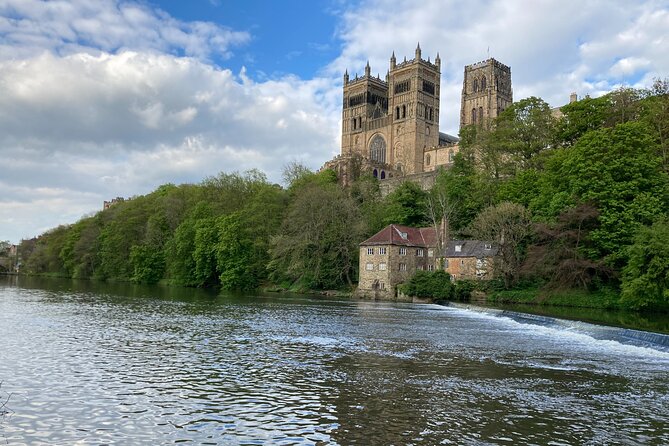
From Prebends Bridge, the route continues toward St Cuthbert’s Society and Durham University. On the way, you encounter part of the medieval city wall and hear about Durham’s rivalry with the Scots.
This section broadens the story beyond churches and bishops. The walls point to Durham’s position in a contested border region, while the Bailey introduces the university that now occupies much of the historic center. The result is a useful connection between medieval defense and modern student life.
The stop takes about 15 minutes. It is a good place for the guide to explain how old buildings have been reused and how Durham University fits into the city’s daily character. You are walking through an active academic area, not a preserved stage set.
The Bailey can feel more atmospheric than the main shopping streets. It has a strong sense of age, but it is also part of a working university. Listen closely here, because the route and the stories do more than point out façades. They show how Durham has kept its old core in use.
St Mary the Less brings legends into the walk
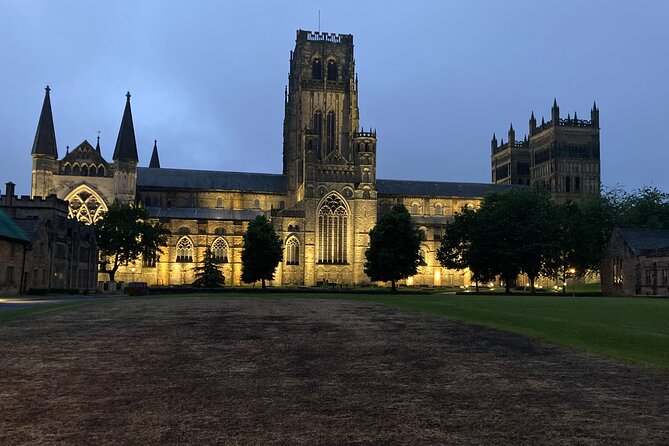
St Mary the Less is now affiliated with St. John’s College, and the stop adds another layer to the university side of Durham. The church has connections with local legends, giving Peter room to move between documented history and traditional stories.
That mix seems central to the tour’s appeal. The guide does not stick only to formal dates and famous names. You can expect facts, myths, and local anecdotes, with time to ask questions. Several comments about the experience single out the easy conversation and the willingness to explain things clearly.
The stop lasts around 10 minutes. You will also have time to look at the architecture of the Bailey as you move through the area. This is not an extended church visit, so anyone wanting a detailed examination of the interior should plan a separate visit if entry is available.
For me, this is where the walking format earns its price. A guide can point out a building that you might otherwise pass without noticing, then explain why it matters. You come away with more than a set of photographs because the surrounding story gives the place context.
Bow Lane follows St Cuthbert toward Saddler Street

At Bow Lane, the route reaches the eastern side of the cathedral. The focus shifts to early medieval Durham and stories connected with St. Cuthbert, along with more information about Durham University’s colleges.
The walk along the Bailey continues toward the top of Saddler Street. This part helps you understand the city’s layout. The cathedral is not simply placed beside the old town. The streets, colleges, walls, and river all gather around it, and the route shows how those parts fit together.
The 10-minute stop is short, so do not expect a full lesson on every college or every aspect of St. Cuthbert’s story. Instead, you get a well-chosen introduction that prepares you for the final approach to Palace Green.
Saddler Street also brings you closer to the busy commercial side of the center. That makes the contrast with the quiet Bailey and river paths more noticeable. One minute you are hearing medieval stories in a college setting, and soon you are near the city’s shops and everyday traffic.
Palace Green finishes at Durham Cathedral
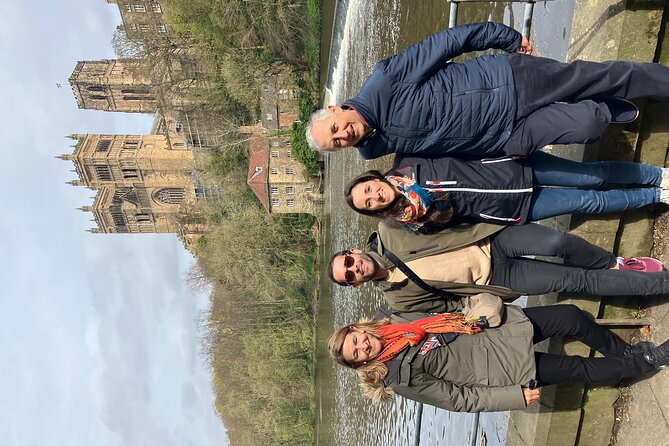
The final 15-minute section takes you onto Palace Green, at the heart of Durham’s UNESCO World Heritage site. Here the buildings around the green provide the setting for stories of battles, tragedies, and miracles.
The tour finishes at the main doors of Durham Cathedral. This is a strong ending because it gives you the cathedral as a destination, not just another stop among many. You can decide afterward whether to go inside, return later, or continue exploring the World Heritage area.
Do note that the tour does not include the cathedral tower. One person specifically felt the experience would have been even better with tower access, but the published route ends at the doors. If climbing the tower is important to you, treat that as a separate plan and check the cathedral’s own arrangements.
The ending also makes the tour useful as a first activity of the day. You finish in the place most visitors want to understand, with the surrounding university and old center already mapped in your mind. Peter also offers tips on other things to see and do after the walk.
Peter’s guiding style and the small-group feel
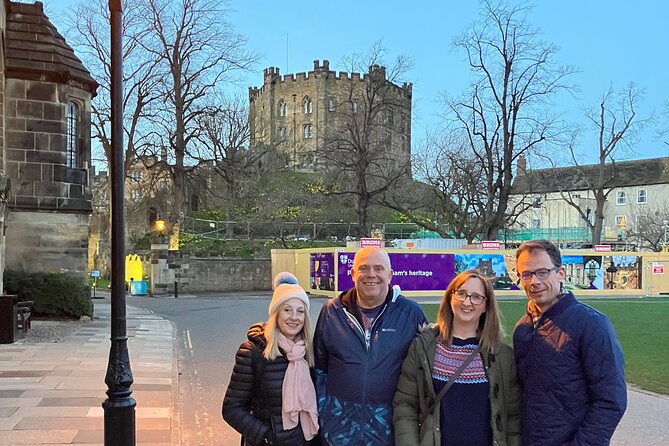
Peter is the named guide associated with the tour, and the descriptions of his work consistently point to a warm, well-prepared approach. He has a background as a geography teacher and brings extra research, local perspective, and stories beyond the most obvious facts.
That does not mean the walk is a formal lecture. The strongest feature is the balance between information and conversation. You can ask questions, and the guide is happy to explain details rather than rushing to the next stop. The tone should suit families, couples, solo visitors, and anyone who wants a gentle introduction rather than an academic seminar.
The group maximum is 20 people. That is small enough for interaction, though the experience will feel different with six people than with a full group. Since all stops are outdoors, the guide’s ability to keep the group together and audible matters. The available comments suggest that the explanations remain clear and engaging even when conditions are less than perfect.
The tour is offered in English. It is also dog-friendly, with service animals allowed and dogs more than welcome. That is a real advantage if you are traveling with a dog, though Durham’s hills and uneven historic paths are worth keeping in mind for both you and your pet.
Is $22.20 good value for 90 minutes?
At $22.20 per person, this is a moderate price for a guided city introduction. Every listed stop has free admission, so the fee pays for the route, the guide’s preparation, and the chance to ask questions.
I would consider it good value if Durham is new to you and you want to make sense of the city quickly. In 90 minutes, you cover the civic center, two bridges, the river, medieval walls, university buildings, the Bailey, Palace Green, and the cathedral approach. Recreating that route alone would be easy, but finding the same connections and stories would take much longer.
It is less useful if you only want to enter attractions or spend most of your time inside the cathedral. This is an outdoor walking tour, and its main reward is orientation and interpretation. You should also budget for your own cathedral visit if that is a priority.
The tour is booked an average of 15 days ahead, so planning early is sensible if your schedule is fixed. Free cancellation is available up to 24 hours before the start time. Changes or cancellations inside that period are not accepted for a refund.
Who should book this Durham walk?
I would choose this tour for a first visit, a short stay, or a day when you want a clear introduction before exploring independently. It is especially suitable if you enjoy local stories, old buildings, and views more than a checklist of indoor admissions.
It also works well if you have only one night in Durham. The route gives you a useful overview in a short time, then leaves the rest of your visit open. Families can join, dogs are welcome, and the guide’s relaxed response to questions makes it suitable for mixed ages.
I would think twice if steep streets are a serious concern, if you need a fully step-free route, or if you want a specialist cathedral tour. The description says most people can participate, but Durham is hilly and the experience involves outdoor walking between several historic areas.
Final call: a smart first step in Durham
Book the Walkabout Durham History Tour if you want Durham to make sense before you explore it on your own. Peter’s friendly delivery, the mix of facts and legends, and the route from Market Place to the cathedral give you a strong introduction for $22.20.
Skip it only if you already know the city well or want a tour centered on cathedral interiors and tower access. For most first-time visitors, this is a practical, personable way to get your bearings, see the key views, and leave with a better plan for the rest of the day.
FAQ
Where does the Walkabout Durham History Tour start?
The tour starts at Durham Market Place, Durham DH1 3NJ, in the United Kingdom.
Where does the tour end?
The walk ends at the main doors of Durham Cathedral, Durham DH1 3EH.
How long does the tour take?
The tour lasts approximately one hour and 30 minutes.
What is the price?
The price is $22.20 per person.
Is the tour offered in English?
Yes. The tour is offered in English.
Is the cathedral entrance included?
The route ends at Durham Cathedral’s main doors. The listed stops have free admission, but the tour does not include cathedral tower access.
Are dogs allowed?
Yes. Dogs are more than welcome, and service animals are allowed.
How large is the group?
The tour has a maximum of 20 participants.
Just added around England
- London Private Jack The Ripper Tour★ 5.0 · 9 reviews
- Private Spy Walking Tour of London★ 5.0 · 6 reviews
- Private Shoreditch Street Photography Workshop★ 4.5 · 4 reviews
- Private Sightseeing Walking Tour of The City Of London★ 5.0 · 3 reviews
- Private 2.5 Hour Taxi Tour of London – London’s Greatest Bits!★ 5.0 · 4 reviews
- Private Round Trip Transfer between London Airports and Hotel★ 3.5 · 56 reviews
- London to Southampton Cruise Port Including Stonehenge★ 5.0 · 13 reviews
- Shakespeare London Walking Tour★ 5.0 · 26 reviews
Historical Tours, compared.
Stonehenge and Bath Day Trip from London with Optional Roman Baths Visit
Read our review →
Shadows of York: Ghost Walk and Horrible History.
Read our review →

Fascinating Walking Tours Of Roman Chester With An Authentic Roman Soldier
Read our review →
A Walk Through Time: History of Liverpool Walking Tour
Read our review →
Royal Historic Pubs Walking Guided Tour in London
Read our review →Browse the lists this tour appears in