Reviewed · WALKING TOURS
Walking tour of Lancaster – Execution Slavery Industry
Lancaster’s past gets darker and more interesting as this walk moves from castle executions to the city’s links with the international slave trade. Along the way, you’ll hear about witchcraft, vanished princes, forensic murder-solving, canal industry, and the money that financed local buildings.
I like the easy-to-find start outside Lancaster Castle and the way the route joins famous sights with less obvious corners. I also like the human scale: guide Barrie tells stories with humor, asks you to picture the old quayside, and keeps the group moving through a manageable route.
The main thing to consider is stamina. Three hours means plenty of walking and standing, and the tour runs in normal weather rather than sheltered rooms. One booking also had a reported guide no-show, so check the operating date and meeting details carefully, especially in winter.
Key points to know before you book

- Lancaster Castle opens the story: Start with prisoners, trials, executions, and the castle’s role beyond its impressive walls.
- The River Lune reveals Lancaster’s slave-trade links: Saint George’s Quay connects the city to overseas commerce and the people involved in it.
- Barrie is the key personality: His style combines detailed local research, humor, anecdotes, and room for questions.
- Nine stops cover more than famous buildings: The route includes royal stories, witchcraft, forensic science, canals, industry, charity, and education.
- Expect a small-to-medium group: Numbers are capped at 20, which should make it easier to hear and ask questions.
- It is good value for a first visit: At $20.81 for about three hours, the tour costs less than many paid attractions while giving you a useful map of the city.
Why Lancaster’s darker stories make a good walking tour

This is not a gentle parade of attractive buildings with dates attached. Its central themes are execution, slavery, crime, power, and the ways money shaped Lancaster. That gives the walk a sharper edge than a standard city introduction.
You begin at Lancaster Castle, where the first question is not simply how old the building is. The guide uses the castle to explain prisoners, trials, and executions, including famous and less famous people caught up in its legal system. The short stop lasts about 20 minutes, but it sets the tone for the rest of the afternoon.
I like this approach because Lancaster’s history is not kept in separate boxes. A castle connects to law. The quay connects to trade. A grand building connects to private wealth. By walking between them, you see how the city worked rather than just collecting isolated facts.
The tour is also built around stories that are easy to remember. A missing prince, a lost shoe, a murder solved by forensic science, and a government payment to slave owners give you memorable hooks. You may not remember every date, but you should leave with a stronger sense of how Lancaster developed.
More walking tours in England:
- Oxford University Walking Tour With University Alumni Guide
★ 5.0 · 6,905 reviews - Tour for Muggles The Ultimate Harry Potter Walking Tour in London
★ 5.0 · 4,684 reviews - London Jack The Ripper Guided Walking Tour
★ 5.0 · 3,131 reviews
Castle Approach and the opening 20 minutes
The meeting point is at Castle Approach, outside Lancaster Castle, with the address Lancaster LA1 1YN. This is a practical place to begin if you are new to the city because the castle is a clear landmark and the tour ends at the same meeting point.
The castle stop lasts roughly 20 minutes. You will learn about trials and executions, as well as prisoners whose names are better known and others who have largely slipped from public memory. The focus is on the castle’s place in local history, not simply its architecture.
Because this is an outdoor walking tour, the castle visit does not mean a full indoor castle tour or admission to every part of the building. The supplied details list no admission charge for the stop, so treat it as an exterior and historical introduction unless the guide tells you otherwise.
This is a useful starting point for anyone planning to visit the castle separately. The walk can help you decide which places deserve more of your own time later, rather than asking you to spend the whole afternoon inside one attraction.
Saint George’s Quay and the difficult side of trade
From the castle, the route reaches Saint George’s Quay, an eighteenth-century harbor on the River Lune. The stop lasts about 15 minutes and shifts the subject from punishment to commerce.
Here, the important story is Lancaster’s connection to the international slave trade. The guide also introduces characters linked with the quay, helping you connect a broad historical subject to a specific local place. The waterfront is not just scenery. It is evidence of how goods, money, and people moved through the city.
This is one of the strongest parts of the walk because it asks you to look at Lancaster honestly. A handsome old quay can invite romantic thoughts about sailing ships and trade, but the tour also points toward the human cost behind that wealth. The history is more useful when both sides are kept in view.
You should expect to stand outdoors here. In cold or wet conditions, this may be one of the less comfortable stops, but it is also the place where a little imagination can make the past feel most immediate. You can picture ships alongside the waterfront while listening to how the port’s activity connected Lancaster to events far beyond Lancashire.
Judges’ Lodgings, witchcraft, and the oldest house

The next stop is Judges’ Lodgings, described as Lancaster’s oldest house. The visit lasts about 10 minutes and adds another layer to the city’s legal past.
The guide explains who owned the house and its link with witchcraft. That subject fits neatly after the castle, but the focus shifts from formal trials and executions to the people and beliefs that shaped accusations. It is a reminder that justice in earlier centuries was not guided by modern forensic standards.
This stop should appeal to you if you enjoy local stories that sit between documented history and old fears. The house gives those stories a physical setting, which is far more effective than hearing a general account of witchcraft in a classroom.
As with the other stops, you should not assume that the tour includes a full indoor visit. The supplied description presents Judges’ Lodgings as a place to explain, not as a separately ticketed attraction within the walk.
Same part of England, a completely different sort of day:
- Stonehenge, Windsor Castle, and Bath from London
★ 4.5 · 18,662 reviews - London Big Bus Hop-On Hop-Off Tour with Optional River Cruise
★ 3.5 · 10,803 reviews - London Small Group Tour of Historical Pubs
★ 5.0 · 10,422 reviews - Beatles Magical Mystery Tour
★ 5.0 · 9,266 reviews
Church Street and a vanished prince

Church Street brings a royal mystery into the route. The story concerns a prince who goes missing and the possibility that he could have become king of England.
The stop lasts around 10 minutes. It is a useful change of pace after the heavier subjects of executions, slavery, and witchcraft. You get a story of uncertainty and political possibility, tied to a real Lancaster street rather than a distant royal palace.
This is the sort of episode that helps keep a long walking tour lively. You are not only looking at buildings. You are listening for the local setting behind a national question: who might have ruled England if events had turned out differently?
The guide’s humor matters here. Barrie’s style, as described by the experience details, includes amusing anecdotes alongside a large store of facts. That combination should suit you if you want history delivered as a conversation rather than a formal lecture.
Market Street and two royal princes

On Market Street, the tour tells two royal stories separated by about 300 years. One prince raises a banner, while another loses a shoe. The details are deliberately vivid, giving you small physical images to carry away from the stop.
This 10-minute pause shows how Lancaster’s streets can hold several periods at once. The route does not treat royal history as one continuous block. Instead, it compares two different moments and lets you see how the city’s role changed over time.
The stop also adds variety. After legal history and a missing prince, you get symbols of rebellion, movement, and royal drama. If you enjoy odd details more than long lists of dates, this part of the walk should work well.
Dalton Square and the first forensic murder case

Dalton Square brings the tour back to crime, but with a more modern twist. You’ll hear about a murder solved through forensic science and the government bonus paid to slave owners.
Those two subjects might seem unrelated at first. Together, they show how Lancaster’s history moves between policing, public policy, business, and private wealth. The forensic story points toward changing methods of investigation. The compensation payment exposes how government decisions helped preserve the interests of slave owners when slavery was abolished.
This is a particularly useful stop for understanding how local history can challenge a polished civic image. A public square may look orderly and respectable, yet its stories can involve murder, state money, and the consequences of slavery.
The stop lasts roughly 10 minutes. The short format keeps the route moving, though anyone who wants a long discussion of either topic may wish to ask questions as the group walks.
Lancaster Canal, White Cross Mill, and industrial change

The route then reaches the Lancaster Canal and White Cross Mill. Here, the focus turns to the Storey brothers and the canal’s most productive period.
This section explains how the canal supported industry and how local business families shaped the city. You’ll hear about the heyday of this coastal canal, which helps place Lancaster within a wider story of transport, manufacturing, and trade.
I like this part because it prevents the walk from becoming only a procession of crime and royal gossip. Canals reveal how ordinary work and transport changed a town. They also show why Lancaster grew where it did and how goods could move through the area.
The canal stop lasts about 10 minutes. It may be especially useful if you are considering further exploring Lancaster after the tour, since the guide points out places you might otherwise pass without understanding their purpose.
Penny’s Almshouses and charity that still functions
Penny’s Almshouses offer a quieter but revealing stop. You’ll see an almshouse that still functions today and learn who founded it and how it was financed.
This is a valuable contrast to the grander buildings on the route. Instead of focusing on rulers, prisoners, or merchants, the story turns to organized charity and the practical support given to residents. The fact that the almshouse remains in use gives the history a direct connection with the present.
The stop lasts around 10 minutes. It is a good reminder that old buildings do not always survive as museums or decorative landmarks. Some continue to serve the purpose for which they were created.
The Storey and Lancaster’s educational tradition
The final listed stop is The Storey, another 10-minute visit. It began as an educational institute funded by donations and later became a forerunner of the university tradition in the city.
This closing subject rounds out the tour. You have seen how Lancaster dealt with punishment, trade, crime, industry, and charity. The Storey adds education and public giving to the picture.
It also gives you a useful way to understand the city beyond its medieval image. Lancaster’s identity was shaped not only by a castle and old streets, but also by institutions created through civic support and shared funds.
After this stop, the walk returns to the original meeting point. That makes the tour easy to fit into a day trip or a longer Lancashire visit. You do not need to arrange transport back from a distant ending point.
What the walking pace and group size are really like
The listed stops add up to roughly 105 minutes, while the total experience lasts about three hours. The remaining time is spent walking between locations, listening on the move, and allowing the guide to connect one story to the next.
You should expect gentle walking rather than a strenuous hike, but the route still includes plenty of standing. One participant described being tired by the end, and another noted that there is no break from the weather. Wear comfortable shoes and bring clothing suited to Lancaster’s conditions.
The maximum group size is 20. That is large enough to create a social atmosphere but small enough that you should be able to hear the guide and ask questions. The experience is offered in English and uses a mobile ticket.
It is described as suitable for most people, and service animals are allowed. The route is near public transportation, which helps if you are visiting Lancaster without a car. Specific accessibility details beyond that are not provided, so contact the operator if you have mobility needs that require a precise answer.
Barrie’s guiding style and the value of local detail
Barrie is named as the guide, and his approach is central to the experience. He is described as using humor, unusual details, anecdotes, and a strong supply of local facts. He also appears willing to handle questions, which is important on a route covering so many subjects.
That style will suit you if you like a guide who tells stories with energy rather than reading a script. It may be less suitable if you prefer a slow architectural tour with long periods spent inside buildings.
Several parts of the route rely on storytelling rather than major attractions. The missing prince, the shoe, the forensic murder, and the slave-owner payment all need explanation to become meaningful. A strong narrator makes the difference, and this experience is clearly built around Barrie’s ability to connect small details to wider events.
Is $20.81 good value for three hours?
At $20.81 per person, I consider this a strong-value introduction to Lancaster. You receive about three hours of guided interpretation, a route through nine historical locations, and a useful orientation for planning the rest of your visit.
The value is not in admission savings because the listed stops have no separate ticket charge as part of the walk. You are paying for the guide’s research, organization, local knowledge, and storytelling. That makes the tour most worthwhile if you would otherwise pass these places without understanding them.
It is also a practical add-on for a wider Lancashire trip. If Lancaster is one stop among several, this walk lets you cover a lot without spending a full day arranging separate visits.
The main limitation is pace. Nine stops in three hours means some subjects receive only 10 minutes. You get breadth and connections, not a long museum-style treatment of each topic.
Booking, weather, and one practical caution
Confirmation is sent when you book, and free cancellation is available up to 24 hours before the start time. Cancellations inside that window are not refunded, and changes are not accepted inside 24 hours.
The tour requires good weather. If poor conditions force cancellation, you are offered another date or a full refund. It also requires a minimum number of participants, with a different date or a full refund offered if that minimum is not reached.
One booking problem was reported in the available information: a customer waited at the meeting point and the guide did not arrive. The provider said the tour did not operate on winter Wednesdays and offered a free alternative date. I would check the exact day, season, and start time before setting out, especially if your plans are tight.
Who should book this Lancaster walk?
I would choose this tour if you want a fast but thoughtful introduction to the city. It suits history fans, first-time visitors, people interested in crime and royal stories, and anyone who wants Lancaster’s connection to slavery treated as part of the city’s story rather than ignored.
It is also a good first activity because the guide points out places you may want to revisit. Book it early in your stay if possible, though you should leave enough energy for three hours on foot.
You may want something else if you need an indoor tour, have difficulty standing for long periods, or prefer one subject explored in depth. The route covers a lot, and its strength is variety.
Should you book it?
Yes, if you want excellent value and a lively local guide. For $20.81, you get castle history, slave-trade connections, royal mysteries, crime, canals, charity, and education in one compact route.
Book with weather and stamina in mind, and verify the operating day before you go. If those points work for you, this is one of the most useful ways to get your bearings in Lancaster while learning why the city is far more complicated than its handsome streets first suggest.
FAQ
How long does the Lancaster walking tour last?
The tour lasts approximately three hours.
How much does the tour cost?
The listed price is $20.81 per person.
Where does the tour start?
It starts at Castle Approach, Lancaster LA1 1YN, outside Lancaster Castle.
Where does the tour finish?
The tour returns to the original meeting point at Castle Approach.
What language is the tour offered in?
The tour is offered in English.
How large is the group?
The activity has a maximum of 20 participants.
Which places are included?
The route includes Lancaster Castle, Saint George’s Quay, Judges’ Lodgings, Church Street, Market Street, Dalton Square, Lancaster Canal, Penny’s Almshouses, and The Storey.
Is the tour suitable for most people?
The supplied information says most people can participate. Service animals are allowed, and the route is near public transportation.
Can I cancel for a full refund?
Yes. You can cancel at least 24 hours before the start time for a full refund. Cancellations or changes made less than 24 hours before the start are not accepted for a refund.
Just added around England
- London Private Jack The Ripper Tour★ 5.0 · 9 reviews
- Private Spy Walking Tour of London★ 5.0 · 6 reviews
- Private 2.5 Hour Taxi Tour of London – London’s Greatest Bits!★ 5.0 · 4 reviews
- Private Shoreditch Street Photography Workshop★ 4.5 · 4 reviews
- Private Sightseeing Walking Tour of The City Of London★ 5.0 · 3 reviews
- Private Round Trip Transfer between London Airports and Hotel★ 3.5 · 56 reviews
- London to Southampton Cruise Port Including Stonehenge★ 5.0 · 13 reviews
- Shakespeare London Walking Tour★ 5.0 · 26 reviews
Walking Tours, compared.
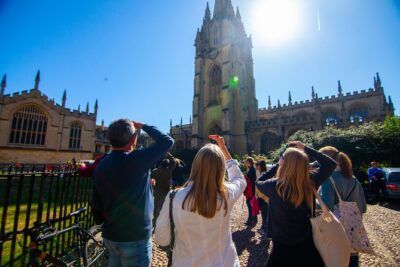
Oxford University Walking Tour With University Alumni Guide
Read our review →
Tour for Muggles The Ultimate Harry Potter Walking Tour in London
Read our review →
Cambridge University Walking Tour by Alumni™ Kings College Option
Read our review →
Blackbeard to Banksy – The Ultimate Walking Tour of Bristol
Read our review →
Air Raid Shelter + St. Nicholas Market Walking Tour
Read our review →
Walking Tour of Bath with Blue Badge Tourist Guide
Read our review →