
Reviewed · MUSEUMS
British Motor Museum Entry Ticket in Gaydon
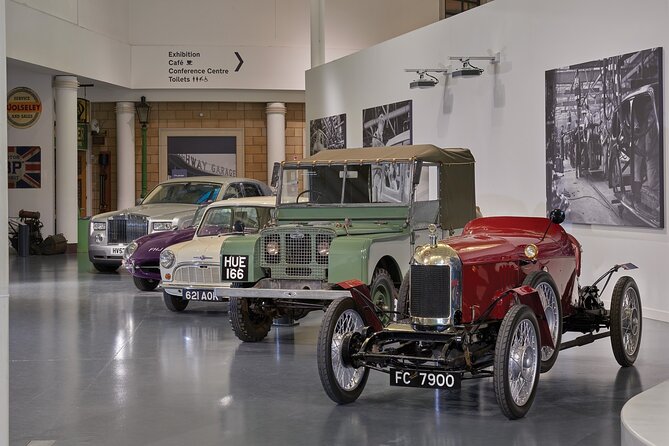
The British Motor Museum in Gaydon packs an astonishing sweep of British motoring into two spacious buildings. You move from early designs and everyday family cars to Jaguars, Land Rovers, prototypes, and famous film vehicles. It is not just a room of polished old cars. It explains how British cars changed, and how those cars became part of ordinary life.
I like the wide mix of vehicles, since you can admire an exotic prototype and then recognize a Mini, Ford, Morris Minor, or Land Rover from your own past. I also like the friendly staff, who can add stories that a display label cannot. The main drawback is simple: a quick visit can feel rushed, especially if you read every panel or stop for a café break.
Key things to know before you go
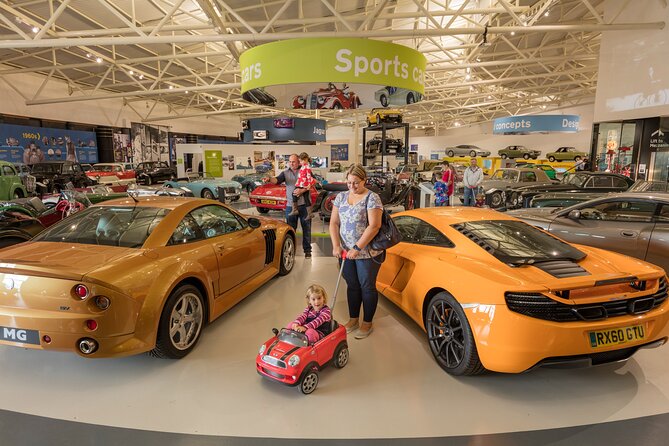
- Two buildings hold a huge collection: Give yourself at least two hours, and longer if cars are a serious interest.
- British motoring is the main story: The displays cover changing design, manufacturing, daily life, prototypes, and production cars.
- The Jaguar collection is a major highlight: Allow extra time if you are interested in Jaguar models and heritage vehicles.
- The displays include film cars and unusual prototypes: This adds variety beyond a standard classic-car museum.
- Staff can bring the cars to life: You can ask questions, and some guided visits include especially engaging commentary.
- The café and free parking make this an easy half-day outing: The museum works well as a stand-alone stop in the English Midlands.
Why Gaydon’s museum is worth your time

The strongest reason to visit is the range. Many car museums focus on one marque, one racing era, or a small set of luxury models. Here, you see the broader story of British car making. That means familiar cars sit beside rare machines, and the collection makes sense even if you are not able to identify every engine by sight.
You can follow the changing shape of the motor car across the decades. The displays show how design moved from practical early models to sleeker family cars, specialist vehicles, luxury machines, and experimental concepts. The labels explain the cars and their place in the British motor industry, so you do not need a technical background to follow along.
I find that this makes the museum useful for two kinds of visitors. A serious enthusiast can spend time examining details, while someone who simply remembers an old Mini, Ford, Morris Minor, or Land Rover can enjoy a personal trip through the past. The collection gives you plenty of points of recognition without limiting itself to familiar cars.
The museum also connects motoring to society. Cars changed where people could live, how families spent weekends, and how workers reached jobs. A visit here is partly about machines, but it is also about design, work, popular culture, and memory.
More museums and galleries in England:
- Tower of London and Crown Jewels Exhibition Ticket
★ 4.5 · 6,677 reviews - Chelsea FC Stadium Tours and Museum
★ 5.0 · 1,908 reviews - Official tickets: Moco Modern & Contemporary Art Museum
★ 4.5 · 1,157 reviews
Start with the collection, not the café
Admission begins at the British Motor Museum, with a suggested start time of 10:00 am. Your mobile ticket is useful for getting through the entrance without arranging a separate paper ticket, and you can then explore at your own pace.
The museum is designed for independent visiting. That matters because car enthusiasts rarely move at the same speed. You may want ten minutes with a Jaguar while a child prefers the strangest prototype in the room. You can separate, browse, and meet again without being tied to a tightly timed group.
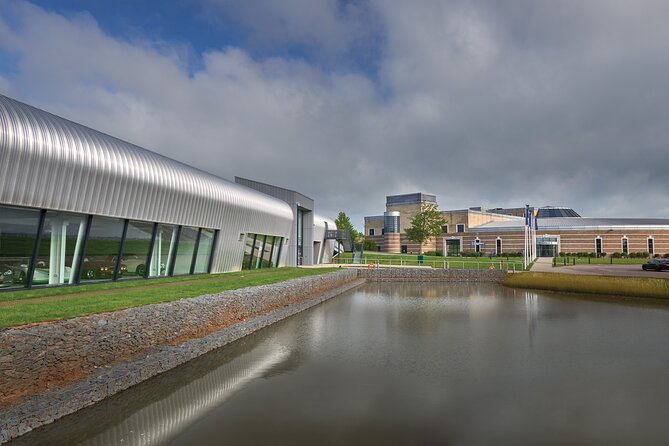
The buildings are spacious and clean, with cars arranged so you can work through the displays rather than wander through a cramped storage area. One especially useful feature is the clear progression from prototypes to production models and then through the decades. It gives the collection a sense of order.
Still, do not assume you will see everything in a quick hour. Two hours is a sensible minimum for a purposeful visit. If you read the information panels, speak with staff, and stop for refreshments, plan closer to three or four hours.
Prototypes, production cars, and everyday memories
The early and development displays help explain how a car becomes a finished product. Prototypes show ideas that may never have reached a showroom, while production cars reveal what manufacturers actually built for the public.
This contrast is one of the museum’s most useful lessons. A prototype can look futuristic, but the final road car must meet practical needs, production limits, and public taste. Seeing both types together helps you understand why some bold ideas remained one-off designs.
The production cars are where the museum becomes personal. You may recognize a model that sat in your family driveway, appeared on your school run, or was once a dream purchase. Several cars prompt that kind of memory, including older Minis, Ford models, Morris Minors, and Land Rovers.
I would slow down here rather than treating the familiar cars as filler between the rare ones. The everyday vehicles show what British motorists actually drove. They also help you measure how much cars have changed in size, shape, comfort, and purpose.
For families, this section gives younger visitors a way into the collection. A teenager who already likes cars can compare models across the years, while a parent or grandparent can explain which cars they once owned. That shared conversation is one of the museum’s real strengths.
The Jaguar collection deserves extra time
The Jaguar display is one of the clearest reasons to visit even if you have already seen other British car collections. It brings together vehicles from a marque known for stylish design and performance, and it gives the visit a more focused strand within the larger museum.
Allow extra time if Jaguars are your main interest. Staff members in this area are happy to answer questions, and the collection rewards close looking. You might find yourself comparing design details, body shapes, and the different roles the cars were built to fill.
The museum can also be a good choice for someone who is less familiar with Jaguar. The surrounding displays place the marque within the wider British industry, so the collection does not feel isolated from the rest of the story.
One of the most useful tips is to ask staff questions instead of relying only on the labels. The museum’s team and volunteers are keen to talk about the vehicles. On some visits, a staff member may know a small detail about a car’s use, design, or history that makes the display much more memorable.
More attraction tickets in England:
- Thorpe Park Admission Ticket
★ 4.0 · 5,915 reviews - Alton Towers Resort 1 Day Admission Ticket
★ 3.5 · 5,501 reviews - 1 Day Admission to LEGOLAND Windsor Resort
★ 3.0 · 5,329 reviews - The London Eye Entry Ticket
★ 4.0 · 3,498 reviews
Film cars and unusual vehicles break up the history
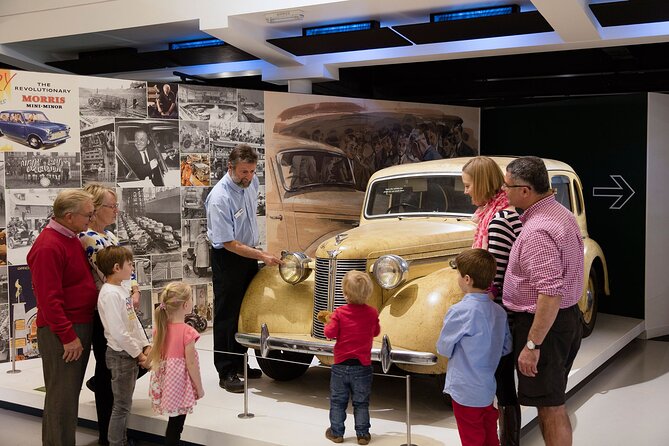
The collection is not limited to formal motoring history. Iconic film cars and unusual prototypes add a playful side to the visit. These displays help keep the museum engaging for companions who are not interested in production dates or mechanical details.
Film vehicles work because they connect cars with popular culture. You may recognize a car from a screen appearance even if you would not normally stop to study that model in a showroom. The prototypes provide a different kind of surprise, showing ideas that look experimental, elegant, strange, or all three.
This variety also prevents the visit from becoming too repetitive. You can move from a familiar family car to an ambitious concept, then to a Jaguar or a film vehicle. The museum keeps changing its focus as you walk through it.
The layout is easy to follow, but the sheer number of cars can be a drawback for anyone who wants to inspect every detail. I suggest choosing a few themes before you begin: British design, cars you remember, Jaguars, film vehicles, or prototypes. You will enjoy the visit more than if you try to give every car the same amount of attention.
Staff, talks, and the value of a human explanation
The museum is set up for self-guided visits, but the staff add real value. They are available to answer questions, explain cars, and help you make sense of parts of the collection that may otherwise seem technical.
A guided experience can make the visit more personal. One guide named Jim has been praised for his stories, car knowledge, and amusing anecdotes. Under his supervision, some visitors have even been allowed to sit in or on selected vehicles. Do not assume this is part of every admission, but if a talk or guided option is available on your date, it may be worth joining.
Another guided talk has been described as particularly informative, with a strong explanation of the cars and their place in motoring history. The quality of the visit therefore depends partly on how much you want to interact. If you prefer to browse alone, you can. If you enjoy stories and questions, speak with the people stationed near the displays.
That flexibility suits mixed groups. A car expert can examine details without waiting for a talk, while a newcomer can ask for a simple explanation without feeling out of place.
Plan two to four hours, with a useful café break
The stated visit length is roughly two to four hours. I think that range is realistic. A fast walk through the main displays may take around two hours, while a slower visit with reading, questions, and a café stop can fill most of a half-day.
The onsite café serves hot and cold meals, snacks, and drinks. It is more than a place to buy a quick coffee, with several visitors praising the food, cakes, and mince pies. That makes it practical for families and for anyone who does not want to leave the museum in the middle of the visit.
The café also gives older visitors a chance to rest. The collection is spread through spacious buildings, but a large number of cars and information panels can still be tiring. A short break helps you return to the displays with more attention.
Free parking is available at the site, and the museum has plentiful spaces. The complex is easy to find once you reach Gaydon, though it is a little away from the usual tourist route. For a driving enthusiast, that feels fitting. You are making a deliberate stop rather than passing a museum in the middle of a crowded town center.
The buildings are warm and the facilities are clean, which matters on an English day when outdoor plans are less appealing. Service animals are allowed, and most people can take part in the visit.
Is the $24.95 admission good value?
At about $24.95 per person, this is not the cheapest quick attraction. It is good value if you give the museum enough time to see the full collection, rather than treating it as a one-hour stop.
The price makes more sense when you consider the breadth of the displays. You are not paying to see a handful of classic cars. You are getting access to a large collection covering British manufacturers, prototypes, production vehicles, Jaguars, film cars, and the social story of motoring.
The café is also a plus because you can make the museum your main half-day activity. Free parking keeps the extra cost down, and you do not need to arrange a separate attraction nearby.
I would question the value only if you have little interest in cars, industrial design, or social history. The museum has enough background material to welcome a newcomer, but it remains a car museum first. If your group includes one enthusiastic car fan and several reluctant companions, plan a comfortable café break and do not expect everyone to spend equal time at every display.
Booking ahead is sensible, especially since the ticket is mobile and the experience is commonly arranged around twelve days before the visit. You also have some flexibility: free cancellation is available until 24 hours before the start time. Cancellations or changes made inside that window are not accepted for a refund.
Who will enjoy this most?
I would recommend the museum to anyone who likes classic cars, British design, engineering, or the story of ordinary family life. It is especially good for a parent, grandparent, or car enthusiast taking a child or teenager who is starting to develop an interest.
It also suits people restoring older vehicles. The collection includes several Land Rovers and other older models that can help you compare shapes and details with a vehicle at home. You may not find every exact version, but the displays can still give useful visual context.
Film fans, Jaguar fans, and people who enjoy unusual prototypes have clear reasons to come. Families benefit from the open layout, café, parking, and the ability to explore at different speeds.
I would be less keen to recommend it to someone seeking a short, highly guided attraction with one central masterpiece. The museum is broad rather than narrowly focused. Its rewards come from moving through the collection, making connections, and allowing time for cars that trigger your own memories.
Should you book the British Motor Museum?
Book it if you want a substantial look at British motoring rather than a small display of famous classics. The combination of everyday cars, Jaguars, prototypes, film vehicles, helpful staff, and a good café makes this an easy half-day outing in the Midlands.
Give yourself at least two hours, and use the staff to add stories to the labels. If Jim or another guide is offering a talk, consider joining it, especially if you want more than an independent walk around.
Skip it only if cars hold no interest for anyone in your group. For everyone else, $24.95 buys a broad, well-presented collection with enough variety to keep both serious enthusiasts and curious newcomers engaged.
FAQ
Where is the British Motor Museum?
The museum is in Gaydon, England.
How much does admission cost?
The admission price is $24.95 per person.
How long should I allow for the visit?
Plan for approximately two to four hours, depending on how closely you study the cars, read the displays, speak with staff, and use the café.
What time does the experience start?
The listed start time is 10:00 am.
Is the ticket available on a mobile device?
Yes. The experience includes a mobile ticket.
Is the visit guided?
The museum is designed for independent exploration. Staff and volunteers can answer questions, and guided talks or tours may also be available. A guide named Jim has led especially engaging visits.
What can I see at the museum?
You can see historic British cars, prototypes, production models from different decades, Jaguar vehicles, Land Rovers, older Minis, Ford models, Morris Minors, and iconic film cars.
Is there somewhere to eat?
Yes. An onsite café serves hot and cold meals, snacks, drinks, cakes, and seasonal items.
Can I cancel for a refund?
Yes. You can cancel at least 24 hours before the experience start time for a full refund. Cancellations or changes made less than 24 hours before the start time are not accepted.
Just added around England
- London Private Jack The Ripper Tour★ 5.0 · 9 reviews
- Private Spy Walking Tour of London★ 5.0 · 6 reviews
- Private Shoreditch Street Photography Workshop★ 4.5 · 4 reviews
- Private Sightseeing Walking Tour of The City Of London★ 5.0 · 3 reviews
- Private 2.5 Hour Taxi Tour of London – London’s Greatest Bits!★ 5.0 · 4 reviews
- Private Round Trip Transfer between London Airports and Hotel★ 3.5 · 56 reviews
- London to Southampton Cruise Port Including Stonehenge★ 5.0 · 13 reviews
- Shakespeare London Walking Tour★ 5.0 · 26 reviews
Museums, compared.

Tower of London and Crown Jewels Exhibition Ticket
Read our review →
Official tickets: Moco Modern & Contemporary Art Museum
Read our review →
British Museum London Guided Tour Semi-Private 8ppl Max
Read our review →
The British Museum London – Exclusive Guided Museum Tour
Read our review →
Skip the Line: Liverpool Beatles Museum – The perfect tribute to the Beatles
Read our review →Browse the lists this tour appears in