
Reviewed · MUSEUMS
British Museum Private Tour: Ancient Daemons and Timeless Beauty
The most useful thing about this British Museum tour is its clear purpose: it gives you a human guide through a museum so large that choosing where to begin can be half the battle. You move from the Rosetta Stone to Egyptian mummies, Sutton Hoo, the Lewis chessmen, and Shiva Nataraja while an art specialist connects the objects into an understandable story.
I like the private format, since your group can ask questions without competing with strangers for the guide’s attention. I also like the flexible approach reported with guides Richard and Yuliya Ousarenko, including time spent on areas that mattered most to the group and, in one case, an extra half hour at no added charge.
The main consideration is time. Two to three hours can introduce you to the museum’s great hits, but it cannot cover a collection of more than 8 million objects. Also, the supplied details differ on group size, saying up to 8 in one place and up to 6 in another, so confirm the limit before booking.
Key points to know before you book
- A private route through a huge museum: You explore with only your own group rather than joining a large shared party.
- Named guides with a personal approach: Richard and Yuliya Ousarenko are praised for clear explanations, detailed object knowledge, kindness, and flexibility.
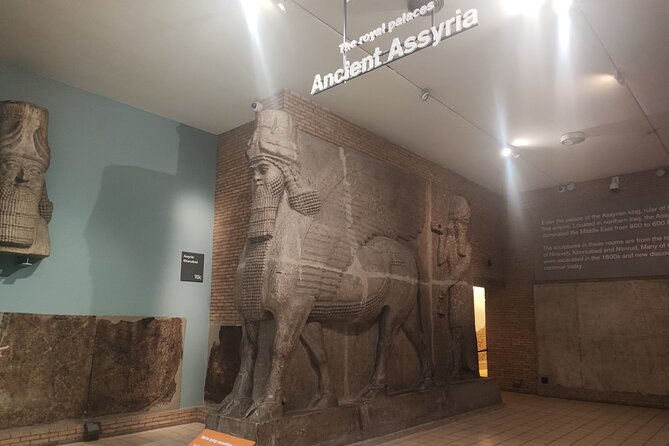
- Major objects across many cultures: The route can include the Rosetta Stone, Parthenon Marbles, Egyptian mummies, Sutton Hoo, Lewis chessmen, and Shiva Nataraja.
- A useful choice for first-time visitors: Expert direction helps you avoid wandering past important galleries without knowing what you are seeing.
- About two hours of guided touring: The full activity is described as roughly two to three hours, with the guided portion listed at about two hours.
- Good value for a small group: At $203.65 per group, the cost makes more sense when shared among several people who want a focused visit.
Why a guide helps inside the British Museum
The British Museum is not a small collection that you can casually browse between lunch and a train. It holds more than 8 million artifacts, spread across galleries covering many civilizations and periods. You can easily spend an hour finding the entrance, orienting yourself, and walking past important objects without understanding why they matter.
That is where this tour earns its keep. Your guide gives the visit a shape. Instead of treating each gallery as a separate room, you can follow ideas that cross cultures: writing, empire, death, beauty, strategy, religion, and the ways people imagined the universe.
The tour is led in English by an art specialist storyteller. That matters if you prefer explanations that make complicated material easy to follow. The experience is not simply a march from display case to display case. The stated theme of ancient daemons and timeless beauty suggests a route that mixes mythology, belief, human appearance, and the objects people made to explain life.
You should still expect a selective visit rather than a complete museum survey. Even a full day would not cover everything. A private guide is most useful when you accept that you are choosing a strong introduction, not trying to conquer the entire collection.
More museums and galleries in London:
- Tower of London and Crown Jewels Exhibition Ticket
★ 4.5 · 6,677 reviews - Chelsea FC Stadium Tours and Museum
★ 5.0 · 1,908 reviews - Official tickets: Moco Modern & Contemporary Art Museum
★ 4.5 · 1,157 reviews
Meeting the Rosetta Stone and the problem of forgotten languages
The Rosetta Stone is an ideal opening point because it gives you a direct connection to one of the biggest puzzles in the ancient world: how people read a language after its meaning has been lost.
The stone is famous because its inscriptions helped scholars understand Egyptian hieroglyphs. A guide can turn that basic fact into a larger story about writing, translation, power, and the survival of ideas. You are not just looking at a dark stone slab. You are considering how a single object helped bridge different systems of communication.
This is also a good example of why the private format helps. You can ask simple questions without feeling rushed, or take the conversation toward another subject, such as how ancient rulers presented themselves. The guide can explain the object at a level that works for your group instead of delivering a fixed speech.
The Rosetta Stone is one of the museum’s busiest attractions, so do not expect a quiet, empty viewing area. The value here comes from having someone help you notice what matters, even when other people are gathered around the case.
The Parthenon Marbles and the difficult story of empire
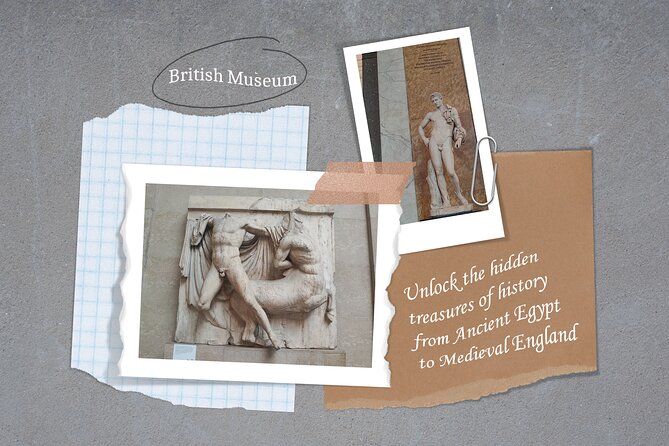
The Parthenon Marbles bring beauty and controversy into the same gallery. These ancient sculptures once formed part of the Parthenon in Athens, and their presence in London raises important questions about collecting, ownership, empire, and the movement of cultural objects.
The tour description frames them as a chance to recall the glory of past empires, but you can also use the stop to ask harder questions. What did these sculptures mean in their original setting? How were they removed? Why are they still the subject of debate? A strong guide should help you look beyond the polished stone and consider the modern story as well as the ancient one.
You may appreciate this stop most if you want your museum visit to include context rather than a list of dates. The marbles are visually impressive, but their importance is not only artistic. They show how museums can preserve, display, and argue over the past at the same time.
Do not expect the tour to settle every debate. Two hours is not enough for a full discussion of museum ethics, Greek cultural heritage, and British collecting. It can, however, give you the basic framework you need to look at the sculptures with more care.
Egyptian mummies and the human side of death
The Egyptian galleries offer a change in mood. Here, the focus moves from public monuments and political power to bodies, burial, belief, and the hope of continuing life after death.
The sight of mummies can be striking, but it is easy to treat them as spectacle. A guide can help you think about the people behind the wrappings and the rituals that shaped their final journey. Egyptian objects often reveal how closely daily life, religion, family, and the afterlife were connected.
This part of the tour may suit you if you like museums that raise personal questions. Why did people preserve the body? What did they believe happened after death? How did status affect burial? The objects offer clues, and the guide helps place those clues in order.
The wording of the route, with Egyptian mummies resting in silence, is atmospheric, but the actual experience will depend on how much time your guide spends in the galleries and what your group asks about. If mummies are your main reason for visiting, tell the guide at the start so this section receives enough attention.
A few more London days out to weigh up
- London Big Bus Hop-On Hop-Off Tour with Optional River Cruise
★ 3.5 · 10,803 reviews - London Small Group Tour of Historical Pubs
★ 5.0 · 10,422 reviews - Thorpe Park Admission Ticket
★ 4.0 · 5,915 reviews - London Jack the Ripper Guided Tour with Ripper-Vision
★ 4.5 · 4,840 reviews
Sutton Hoo and the last voyage of an Anglo-Saxon warrior
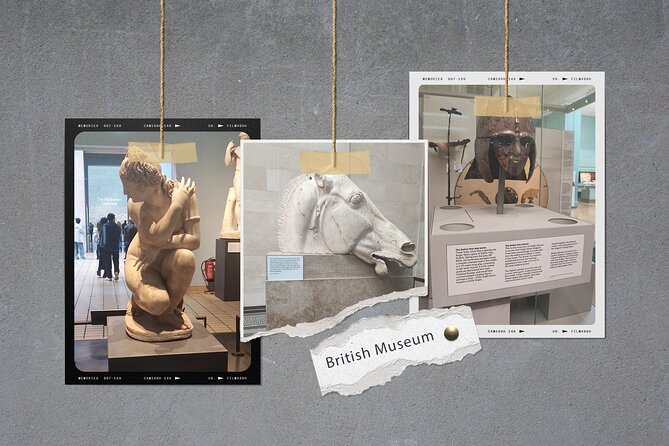
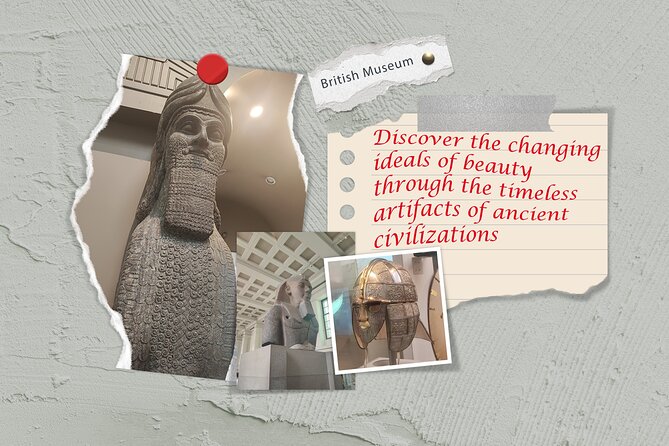
Sutton Hoo offers one of the museum’s most memorable changes of scale. The objects connect you with an Anglo-Saxon burial and the question of who the person was, how he lived, and why such a remarkable burial was prepared for him.
The reference to a warrior’s last voyage gives this stop a strong story. You are not simply looking at metalwork or burial goods. You are trying to reconstruct a life from objects left behind. The display invites questions about leadership, ceremony, travel, belief, and the relationship between the living and the dead.
This is one of the places where an art specialist’s storytelling can make a real difference. A case of artifacts can seem quiet until you understand how the pieces fit together. The guide can point out details that might otherwise blur into a general impression of old gold, weapons, and decoration.
Sutton Hoo is also useful for families and mixed-age groups because it has a clear narrative. If some people in your party prefer stories about people and places, while others prefer art and design, this stop gives both groups something to follow.
The Lewis chessmen, strategy, and small faces with big personalities
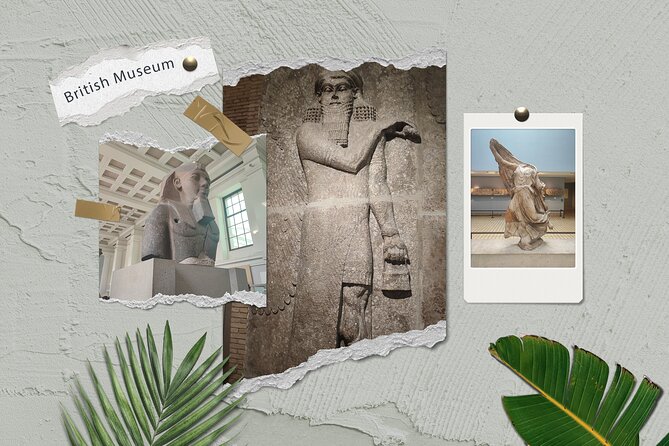
The Lewis chessmen are among the easiest objects to remember after a museum visit. Their small carved faces and expressive poses make them feel surprisingly personal, even though they are centuries old.
The tour presents them through tales of strategy and wit. That is a smart way to approach them. You can look at the pieces as a board game, but you can also consider craftsmanship, status, leisure, trade, and the spread of ideas across regions.
This stop usually works well for children because the objects are instantly readable. You can recognize the game, the figures, and the playful expressions. Adults may find more to discuss in how the pieces reflect medieval society and the value placed on skilled carving.
The Lewis chessmen also provide a useful pause in a route that includes monumental sculpture, royal objects, and human remains. Their scale is modest, but their character is strong. A good guide can use them to show that museum importance is not always measured by size.
Shiva Nataraja and the cosmic dance
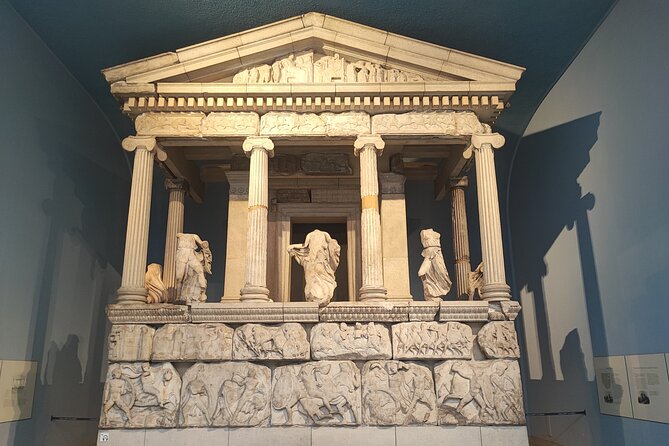
The image of Shiva Nataraja introduces a very different way of thinking about creation and destruction. Shiva’s cosmic dance brings together movement, power, renewal, and the cycle of existence in a single sculptural form.
This is a stop where a short explanation can change what you see. Without context, you may notice the pose, the multiple arms, and the circle of flames. With context, the sculpture becomes a visual expression of forces that are difficult to put into words.
The tour’s range is one of its strongest features. In a single visit, you can move from Egyptian ideas about death to Anglo-Saxon burial customs and then to Hindu religious imagery. The point is not to claim that all cultures believed the same thing. It is to notice how different societies used art to approach questions that remain familiar: What is life? What is death? What changes, and what continues?
This section is especially valuable if you want more than the most familiar European objects. It broadens the visit and keeps the tour from becoming a quick parade of famous British Museum pieces.
Ancient sculpture and changing ideas of beauty
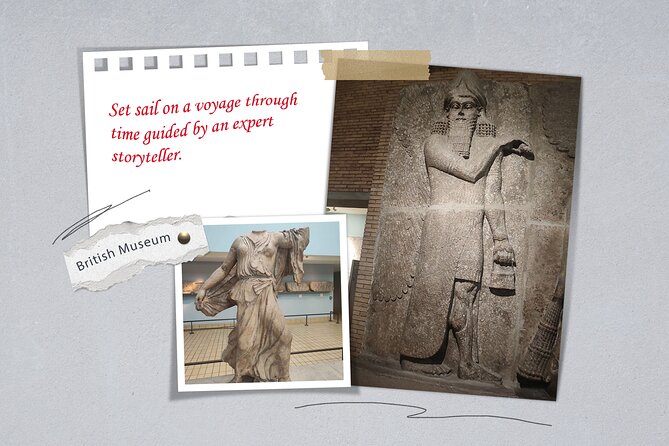
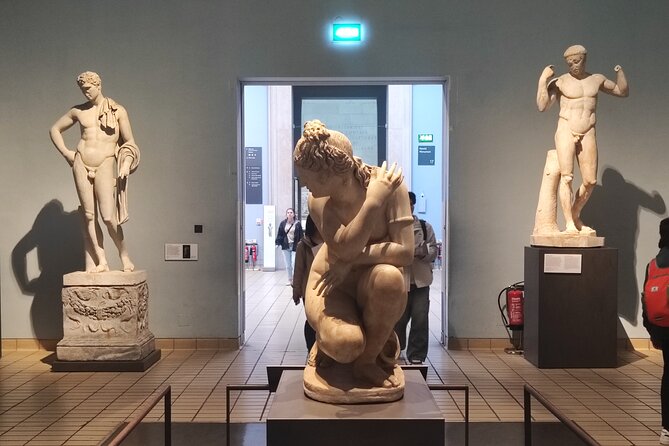
The tour also looks at how standards of beauty have changed through time. Ancient sculptures can seem familiar because later artists and modern advertising have borrowed their forms, but the original meaning may be more complex.
You might compare how bodies, faces, clothing, posture, and ideal proportions appear in different cultures. The guide can help you notice that beauty is not a fixed rule. It reflects belief, status, gender, religion, politics, and the purpose of the object.
This theme gives the tour a personal angle. You are not only studying distant societies. You are also asking why certain bodies and faces are praised in your own time, and why those standards change. That makes the sculpture galleries easier to connect with, even if ancient art is not normally your main interest.
Because the tour is private, you can say if you prefer sculpture, mythology, portraiture, or social history. The guide can spend more time where your group is most engaged instead of giving equal time to every room.
How the private format changes the visit
A private tour is different from a standard group walk in several practical ways. You can ask questions as they occur to you, stop when an object catches your eye, and tell the guide what your group wants to see. The experience is offered for one group only, not a mixed crowd of strangers.
Richard is praised for adjusting the route to a family’s interests and extending the visit by about 30 minutes at no extra charge on one occasion. That does not guarantee extra time on every booking, but it does show the kind of flexibility you can ask about.
Yuliya Ousarenko is also named as a guide connected with the experience. She is described as especially detailed, kind, accommodating when a group arrived a little late, and able to make the movement between exhibits feel easy. These personal touches matter in a museum where timing and orientation can otherwise become tiring.
The private setup should not be confused with unlimited access. You still have the museum’s opening arrangements, gallery conditions, and the group’s allotted time. Fast-track entry is included in the tour details, but the experience does not promise that every object will be available without crowds.
Is $203.65 good value for your group?
The listed price is $203.65 per group, not per person. That makes the arithmetic fairly attractive for a small party. Split among four people, it works out to about $51 per person. Split among six, it is about $34 per person. With eight, it is about $25 per person, though you should confirm the permitted group size because the information gives both six and eight as limits.
The price includes the guided museum tour and fast-track entry. Food and drinks are not included, but that is a minor issue for a museum visit of roughly two to three hours. You can plan a snack or meal separately.
I would see the price as good value if you are visiting the British Museum for the first time, have limited time in London, or want a guide who can adapt the route. It is less compelling if you enjoy wandering alone, already know the museum well, or want to spend a full day examining one narrow collection.
The biggest value is not the number of objects covered. It is the time saved and the context gained. You pay to avoid aimless walking and to make the famous pieces easier to understand.
Practical details for meeting and booking
The meeting point is on Montague Place in London, and the activity ends back at that meeting point. The location is near public transportation, so it should fit into a central London sightseeing day.
A mobile ticket is provided, and confirmation arrives when you book. The tour is offered in English. Most people can participate, according to the supplied details, but no separate accessibility information is provided, so ask the operator if your group has specific mobility needs.
The tour lasts about two to three hours, with the guided portion described as about two hours. Plan your day around the shorter figure and treat any additional time as a bonus rather than something to depend on.
Free cancellation is available if you cancel at least 24 hours before the local start time. Changes or cancellations inside that window are not accepted for a refund.
Who should book this British Museum tour?
I would recommend it to first-time visitors, families, small groups of friends, and anyone who feels overwhelmed by the museum’s size. It also suits people who want a story-led visit rather than a silent walk through galleries.
You should consider it if your group has mixed interests. The route can move from writing to empire, burial, medieval games, religion, and sculpture, so you are likely to find several entry points into the collection.
I would be more cautious if you want a specialist tour devoted only to Egypt, Greece, or South Asian art. The experience covers many civilizations, which is a strength for a broad introduction but may feel too wide for a focused academic visit.
Should you book it?
Book this tour if you want the British Museum’s major sights arranged into a clear, human story, and if you value the chance to shape the route around your group. The private format, English-speaking art guide, fast-track entry, and strong reports about Richard and Yuliya Ousarenko add real value.
Skip it if you prefer complete independence or plan to spend many hours exploring one department on your own. For most first visits, though, $203.65 shared across a small group is a reasonable way to make sense of an enormous collection without wasting your limited London time.
FAQ
How long does the British Museum private tour last?
The experience lasts approximately two to three hours. The guided portion is listed as about two hours.
How much does the tour cost?
The listed price is $203.65 per group. The supplied details describe the group limit both as up to 6 and up to 8 people, so confirm the exact maximum before booking.
What language is the tour offered in?
The tour is offered in English.
What objects might I see on the tour?
The route can include the Rosetta Stone, Parthenon Marbles, Egyptian mummies, Sutton Hoo, the Lewis chessmen, Shiva Nataraja, and ancient sculptures. The exact time spent at each area can be shaped around your group’s interests.
Where does the tour begin and end?
The tour begins at Montague Place in London and ends back at the meeting point.
Can I cancel for a full refund?
Yes. You can cancel for a full refund if you cancel at least 24 hours before the experience start time. Changes or cancellations made less than 24 hours before the start time are not accepted for a refund.
Just added around London
- London Private Jack The Ripper Tour★ 5.0 · 9 reviews
- Private Spy Walking Tour of London★ 5.0 · 6 reviews
- Private Shoreditch Street Photography Workshop★ 4.5 · 4 reviews
- Private Sightseeing Walking Tour of The City Of London★ 5.0 · 3 reviews
- Private 2.5 Hour Taxi Tour of London – London’s Greatest Bits!★ 5.0 · 4 reviews
- Private Round Trip Transfer between London Airports and Hotel★ 3.5 · 56 reviews
- Shakespeare London Walking Tour★ 5.0 · 26 reviews
- Private Prison Van Escape Game – London Immersive Experience★ 4.0 · 15 reviews
Museums, compared.

Tower of London and Crown Jewels Exhibition Ticket
Read our review →
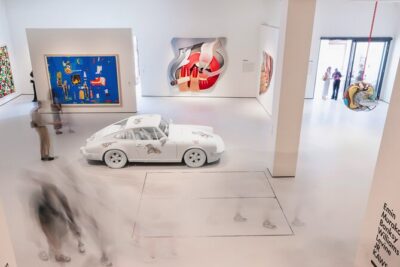
Official tickets: Moco Modern & Contemporary Art Museum
Read our review →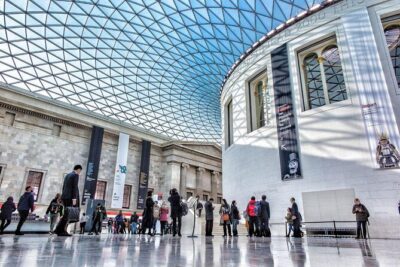
British Museum London Guided Tour Semi-Private 8ppl Max
Read our review →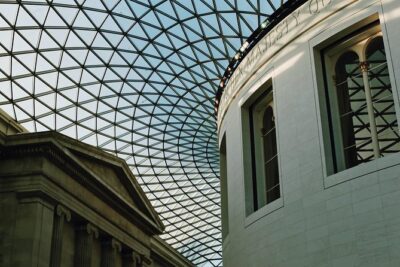
The British Museum London – Exclusive Guided Museum Tour
Read our review →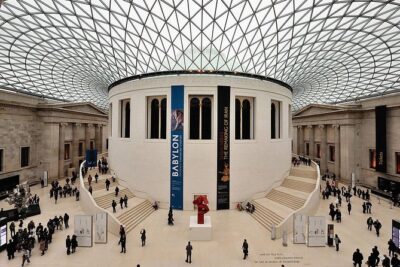

Skip the Line: Liverpool Beatles Museum – The perfect tribute to the Beatles
Read our review →Browse the lists this tour appears in