
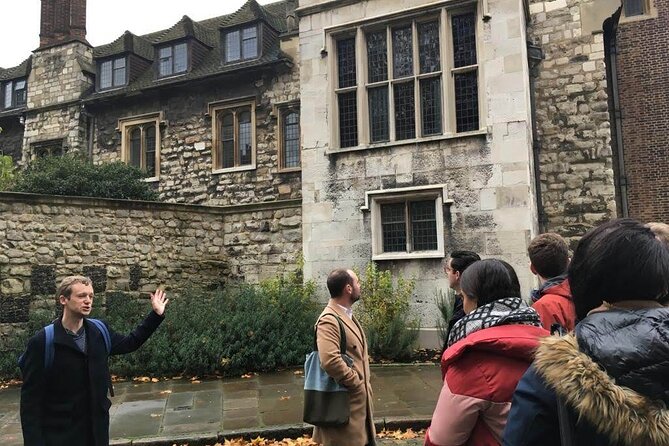
Reviewed · WALKING TOURS
Burnings, Butchery & Black Death: A Walking Tour of London’s Bloody Past
London’s darkest stories are often tucked beside ordinary streets. This two-hour walk takes you from a medieval plague pit and a thousand-year-old meat market to an old sewer, a church older than most of the city, and a pub reached by a narrow alley. It is a lively way to see how violence, disease, fire, and bad sanitation shaped London.
I like the small group size, capped at 15, because Tom can answer questions and keep everyone close. I also like the route’s focus on places many city tours skip, especially Cloth Fair, the Charterhouse, and the Golden Boy of Pye Corner. The main caution is pace: ten stops in about two hours means plenty of standing and walking, with little time for long visits inside.
Key points to know before you book

- Smithfield supplies the grim center of the story: The old meat market connects medieval executions, disease, food, and modern city life.
- Tom brings a strong local focus: He mixes major events with small details about bomb damage, filming locations, pubs, and old institutions.
- The route covers more than murder tales: You’ll hear about plague, the Knights Hospitallers, the Great Fire, Victorian sanitation, and the Blitz.
- Small groups make a real difference: The maximum of 15 helps you hear the guide on busy streets.
- The walk reveals overlooked London: Quiet alleys and old buildings often provide the best moments.
- The $27.73 price is fair for a focused two-hour tour: You pay for interpretation and access to a part of central London that is easy to miss on your own.
Why this dark London walk works

This is not simply a parade of grisly facts. The route uses London’s bloody past to explain how the city grew. Plague pits tell you about crowded medieval life. Smithfield shows how food, animals, punishment, and trade once shared the same urban space. Holborn Viaduct reveals what happened when a river became an open sewer.
That wider view is the tour’s strength. You still get burnings, executions, ghost stories, and tales of disease, but they are tied to real streets and surviving buildings. I prefer this approach to a tour that chases only famous names and sensational crimes.
Tom is the named guide in the supplied tour details, and the comments about his work point to a clear style: approachable, quick with a joke, and able to explain complicated events in plain language. He also adds side notes about filming locations and the origins of St John Ambulance, so the walk can move beyond its advertised theme.
You should expect plenty of storytelling rather than a long series of formal admissions. Most stops are viewed from outside, and each is allocated roughly ten minutes. The Church of St Bartholomew the Great is the listed included admission, giving the route one important interior visit.
More Walking Tours in London
- Tour for Muggles The Ultimate Harry Potter Walking Tour in London
★ 5.0 · 4,684 reviews - London Jack The Ripper Guided Walking Tour
★ 5.0 · 3,131 reviews - Changing of the Guard Guided Walking Tour in London
★ 5.0 · 1,793 reviews
Starting at Aldersgate and entering the Charterhouse
The meeting point is at Underground Ltd on Aldersgate Street, near Barbican. This places you in a part of London where modern offices sit beside medieval foundations and old religious institutions. The tour begins with the Charterhouse, a fourteenth-century monastery that later became associated with a plague pit.
That first stop sets the tone. The Charterhouse is not just an old building. It connects religious life with one of the most frightening public-health disasters in London’s past. A plague pit also reminds you that the city’s dead were not always buried in the orderly churchyards you see today.
You have about ten minutes here, so do not expect a full interior visit. The value is in the explanation and the setting. Look closely at how much history can sit behind a quiet wall or gate, especially in an area you might otherwise cross on the way to the Barbican.
Smithfield Market and the hard facts of medieval London
Smithfield Market is one of the route’s strongest stops. It has been associated with meat trading for around a thousand years, and its story brings together commerce, animals, public punishment, and urban crowding.
The market helps explain why this part of London mattered. Food markets were essential, but they also created noise, waste, smells, and health risks. The tour places those practical details beside the darker events linked to Smithfield, making the area feel less like a postcard and more like a working city with rough edges.
This is also a good place to pay attention to modern surroundings. You are not visiting a preserved medieval village. You are standing in a functioning part of London, where old uses survive in altered form. That contrast is one reason the tour feels useful for repeat visitors who have already seen the Tower, Westminster, and St Paul’s.
St John’s Gate and Cloth Fair’s quiet alley

St John’s Gate was once home to the medieval Knights Hospitallers. The stop opens a window onto the religious and military groups that helped shape medieval London. It also gives the route a change of mood after the market.
You’ll hear about the old order and its role in the city, then move toward Cloth Fair, a narrow alley with an unusually loud past. The name sounds harmless, but this is one of those places where the physical setting does much of the work. A small lane can hold stories of crowds, conflict, trade, and survival.
Cloth Fair is a useful reminder to keep your eyes up and slow down. On your own, you might pass through without noticing why it matters. With a guide, the lane becomes a piece of evidence, not just a shortcut.
Same part of England, a completely different sort of day:
- London Big Bus Hop-On Hop-Off Tour with Optional River Cruise
★ 3.5 · 10,803 reviews - London Small Group Tour of Historical Pubs
★ 5.0 · 10,422 reviews - Tower of London and Crown Jewels Exhibition Ticket
★ 4.5 · 6,677 reviews - Thorpe Park Admission Ticket
★ 4.0 · 5,915 reviews
William Wallace and London’s oldest surviving parish church

The William Wallace Memorial adds a familiar name to the walk. Wallace, often known as Braveheart, is remembered here in a London setting that may surprise you. The stop is brief, but it helps show how the city has long been tied to political violence beyond its own borders.
Next comes the Church of St Bartholomew the Great, described as London’s oldest surviving parish church. This is the one stop with listed admission included, and it gives you a chance to step inside a building with a very different atmosphere from the streets outside.
The church is especially valuable because it anchors the stories in a surviving interior. After hearing about institutions, punishment, and disease, you get a sense of the religious world that once dominated daily life. The ten-minute allocation still makes this a short visit, but it is an important pause in the route.
The Golden Boy and the fire that stopped here

The Golden Boy of Pye Corner marks the point where the Great Fire of 1666 finally died out. It also links to eighteenth-century ghost hysteria, giving the stop a blend of disaster, public memory, and fear.
This small memorial carries more weight than its size suggests. The Great Fire is often taught as a single dramatic event, but the marker helps you think about how London remembered the fire afterward. People needed a physical point where the destruction ended, and that point became part of the city’s story.
The ghost connection adds a lighter, stranger note. It also shows how quickly disaster can produce rumors and supernatural explanations. Tom’s style, as described in the supplied material, includes these unusual side stories, so you should expect the route to move between major history and odd local details.
Holborn Viaduct and the River Fleet

At Holborn Viaduct, the tour reaches one of its most useful urban-history stops. The River Fleet once ran through this area and became Victorian London’s largest open-air sewer.
That fact changes how you see the street. A viaduct and busy road can seem like pure transport infrastructure, but beneath the modern city is the story of a river buried, polluted, and forced into a new role. The stop explains how London’s growth created problems that eventually demanded major engineering work.
I especially like this part of the route because it connects the past to everyday city planning. Disease was not only a matter of individual behavior. Water, waste, markets, housing, and crowded streets all shaped public health. You leave with a better sense of why Victorian sanitation mattered.
Ye Olde Mitre and the final museum stop

Ye Olde Mitre is a pub down an alleyway, and it gives the walk a welcome change of rhythm. The tour does not list food or drinks as included, so treat it as a historic stop rather than a guaranteed meal break. Still, it is a natural place to continue the evening if you want to linger after the walk.
The supplied details specifically point to cheese toasties and pork pies as popular choices there. I would not build the booking decision around lunch, but the pub can be a practical place to eat after the tour if it suits your plans.
The final listed stop is the Museum at St Bartholomew’s Hospital, the oldest surviving hospital in the country. It brings the route back to care, illness, and medicine after the earlier focus on plague pits and sewers. That gives the walk a sensible arc: disease is not only a story of death, but also of institutions trying to respond.
As with the other stops, the time is limited. You should expect an introduction and selected context rather than a full museum visit. If you want to explore at length, plan a separate return visit.
What the two-hour format means for you
Ten stops in approximately two hours creates a brisk but manageable structure. You will usually spend about ten minutes at each place, with walking time between them. The route is designed for stories, not for sitting down at every site or studying every display.
That format works well if you want a strong introduction to the Smithfield and Holborn area. It is less suitable if you prefer long museum visits, detailed architectural inspection, or a slow photographic walk.
The group maximum of 15 is important here. London streets can be noisy, and a large group would make it harder to hear details. A smaller party also gives you more room to ask about places that catch your attention.
The tour is offered in English and uses a mobile ticket. Most people can take part, service animals are allowed, and the meeting point is near public transportation. The route ends on Ely Place, around the corner from Farringdon Station, which makes it convenient for continuing into another part of central London.
Wear shoes suited to a city walk, and check the forecast. The experience requires good weather. If poor weather forces cancellation, you can receive a different date or a full refund.
Is $27.73 good value?
At $27.73 per person, this is a reasonable price for a guided two-hour walk in central London. The sites themselves are mostly viewed without extra admission, so you are paying mainly for the guide’s research, storytelling, route design, and ability to make overlooked places meaningful.
That matters in this part of the city. You can walk past a market, a memorial, a viaduct, or a church without understanding why it belongs in London’s story. A well-run guide turns those surfaces into connections.
The price is less attractive if you want extensive interior access. Only the church’s admission is specifically included, and the tour gives most locations around ten minutes. But if you want a compact introduction to a less familiar corner of London, the cost compares well with many city activities.
The tour is often booked well ahead, with an average booking time of about 47 days in advance. If your dates are fixed, booking early is sensible, especially because the group is limited to 15.
Who should book this London history walk?
I would choose this for someone who has already seen the main sights and wants a different side of the city. It also suits first-time visitors who enjoy history but do not want another standard royal or royal-residence tour.
You will get the most from it if you enjoy:
- Medieval and Victorian London
- Public health, disease, and urban change
- Old churches, markets, alleys, and pubs
- Stories about executions, fires, ghosts, and bomb damage
- A guide-led walk with frequent stops
- Small groups and time for questions
The tone is grisly, but it is not limited to gore. The route also covers religion, medicine, engineering, trade, and the way London remembers disaster. If you want a gentle sightseeing stroll, choose something else. If you enjoy serious history with some dark humor and strange local tales, this is a good match.
Free cancellation is available up to 24 hours before the start time for a full refund. Changes or cancellations inside that period are not accepted for a refund.
Should you book Burnings, Butchery & Black Death?
Book it if you want London to feel less polished and more human. The strongest parts are the places you might miss alone: the Charterhouse, Cloth Fair, the Golden Boy, the River Fleet site, and the alley leading to Ye Olde Mitre.
Tom’s role matters because the route covers a lot of ground in little time. His reported mix of clear explanation, humor, local detail, filming references, and answers to questions gives the walk personality rather than making it a list of dates.
Skip it if your priority is a long museum visit, a relaxed pace, or a tour focused on one famous crime. For everyone else, the $27.73 fee buys a compact lesson in how plague, punishment, fire, food, religion, and sewage helped shape London. That is a fair deal, and the small group makes it easier to hear the story properly.
FAQ
Where does the tour start?
It starts at Underground Ltd on Aldersgate Street, Barbican, London EC1A 4JA, UK.
Where does the tour finish?
It ends on Ely Place, around the corner from Farringdon Station.
How long does the walking tour last?
The tour lasts approximately two hours.
What language is the tour offered in?
The tour is offered in English.
How many people can join the tour?
The maximum group size is 15 people.
Is admission included?
The tour is included, and admission to the Church of St Bartholomew the Great is listed as included. The other listed stops have no admission charge.
What does the tour cost?
The listed price is $27.73 per person.
Can I cancel for a full refund?
Yes. You can cancel at least 24 hours before the experience start time for a full refund.
What happens if bad weather cancels the tour?
If poor weather causes cancellation, you will be offered a different date or a full refund.
Just added around London
- London Private Jack The Ripper Tour★ 5.0 · 9 reviews
- Private Spy Walking Tour of London★ 5.0 · 6 reviews
- Private Shoreditch Street Photography Workshop★ 4.5 · 4 reviews
- Private Sightseeing Walking Tour of The City Of London★ 5.0 · 3 reviews
- Private 2.5 Hour Taxi Tour of London – London’s Greatest Bits!★ 5.0 · 4 reviews
- Private Round Trip Transfer between London Airports and Hotel★ 3.5 · 56 reviews
- Shakespeare London Walking Tour★ 5.0 · 26 reviews
- Private Prison Van Escape Game – London Immersive Experience★ 4.0 · 15 reviews
Walking Tours, compared.
Oxford University Walking Tour With University Alumni Guide
Read our review →
Tour for Muggles The Ultimate Harry Potter Walking Tour in London
Read our review →
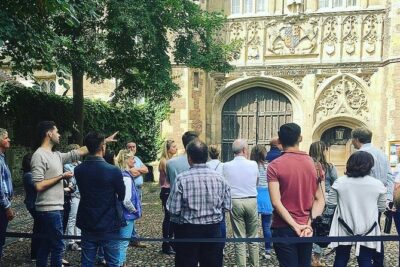
Cambridge University Walking Tour by Alumni™ Kings College Option
Read our review →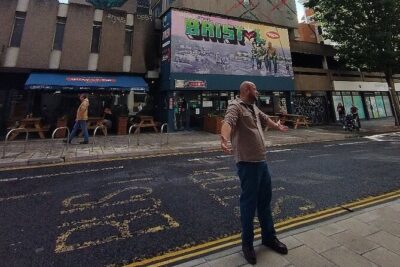
Blackbeard to Banksy – The Ultimate Walking Tour of Bristol
Read our review →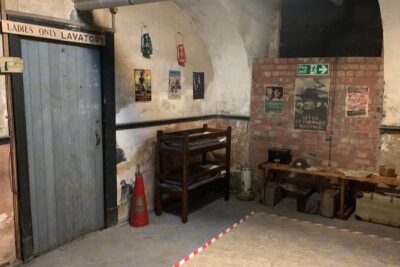
Air Raid Shelter + St. Nicholas Market Walking Tour
Read our review →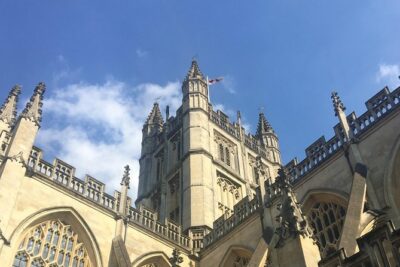
Walking Tour of Bath with Blue Badge Tourist Guide
Read our review →
Changing of the Guard Guided Walking Tour in London
Read our review →Browse the lists this tour appears in