
Reviewed · WALKING TOURS
London: Churchill & World War 2 Walking Tour
Winston Churchill’s wartime London comes into focus on this walk from Embankment to the heart of government. You’ll connect his speeches, marriage, favorite pub, offices, and political life with places such as Downing Street and Parliament Square. I like the route’s focus on real streets and memorials, not just a famous name. I also like that it explains Britain’s government alongside the war itself.
The price is low for a guided walk, and the group is capped at 25 people. The main catch is important: the Churchill War Rooms are exterior only, so you must buy a separate ticket if you want to enter the bunker. The route also involves steady walking and is not suitable for prams or people with mobility difficulties.
Key points before you book

- The War Rooms visit is not included: The tour ends outside the Churchill War Rooms, where you can enter separately with your own admission ticket.
- You see London’s wartime government district: Downing Street, Parliament, the Ministry of Defence, HM Treasury, and the Cenotaph all fit into the route.
- The walk includes personal details about Churchill: St Margaret’s Church is where Churchill married Clementine Hozier in 1908.
- It gives women and airmen their due: The Women of World War II Memorial and Battle of Britain Memorial add more than a single-leader story.
- The route starts at Embankment: Meet at Embankment station at 1:30 pm and finish at King Charles Street.
- The $19.01 price covers the guide, not museum entry: That makes it a useful introduction, but your final cost rises if you add the War Rooms.
What this Churchill walk actually gives you
This is an outdoor walking tour about Churchill and Britain during World War II. Over roughly two to three hours, a professional guide leads you through central London, pausing at political buildings, statues, memorials, and churches.
You are not simply moving from one Churchill statue to another. The route links the man to the machinery around him: Parliament, the Treasury, the Ministry of Defence, Downing Street, and the public memorials that shaped Britain’s memory of war.
That wider view is one of the tour’s best features. Churchill is the headline, but the subject is really wartime Britain. You hear about leadership, government, military defense, civilian work, and remembrance in one compact walk.
The tour is offered in English and uses a mobile ticket. With a maximum of 25 people, it is not a private experience, but the group size should be more manageable than a large city walk. You will want comfortable shoes, since most of the value comes from moving between sites and listening outdoors.
More Walking Tours in London
- Tour for Muggles The Ultimate Harry Potter Walking Tour in London
★ 5.0 · 4,684 reviews - London Jack The Ripper Guided Walking Tour
★ 5.0 · 3,131 reviews - Changing of the Guard Guided Walking Tour in London
★ 5.0 · 1,793 reviews
Starting at Embankment and walking toward power
Meet at Embankment station at 1:30 pm. This is a practical starting point near public transportation, and it places you close to the central London streets that lead toward Westminster.
The walk ends outside the Churchill War Rooms at King Charles Street. That direction matters: you finish with the option of visiting the underground museum immediately afterward, provided you arrange and pay for your own ticket.
The exact timing at each stop can vary, but the planned pauses are generally short. Some last about five minutes, while Downing Street, Parliament, St Margaret’s Church, and HM Treasury receive closer to ten minutes. Think of this as a guided outdoor overview rather than a series of long site visits.
You should also keep the pace in mind. The tour is specifically not suitable for people with walking or mobility difficulties, and prams, buggys, and strollers are not suitable for the activity. Service animals are allowed.
Churchill War Rooms: an important distinction
The Churchill War Rooms are the natural climax of the route, but the walk does not take you inside. You see the exterior and finish in front of the entrance, with admission tickets excluded.
The underground complex served as the nerve center of British operations during World War II. It sheltered Churchill and his staff from bombing and housed the work of running the war. That makes it far more than a standard museum stop.
You can treat the walk as a useful introduction before visiting the museum on your own. The guide provides context for why the bunker mattered, then you can decide if you want to spend more time underground with the exhibits.
Allow for the extra cost and time. At $19.01, the tour price is attractive, but it does not include the museum. If your main goal is to explore Churchill’s underground headquarters, this experience alone will not meet it. If you want the streets and government buildings explained first, it can make a separate museum visit more meaningful.
Downing Street and Britain’s wartime government

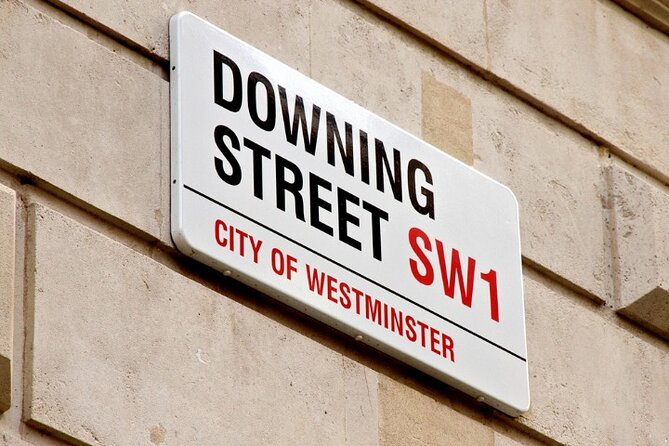
The route pauses at 10 Downing Street, home of the British Prime Minister, with 11 Downing Street serving as the residence of the Chancellor of the Exchequer. Downing Street has been linked with British government since the 18th century.
You should expect an exterior viewing rather than entry. The value here comes from the address itself and from the guide’s explanation of how political leadership operated during wartime.
This stop helps move the story beyond battles. Britain’s war effort depended on decisions made at the center of government, and Downing Street gives you a clear place to picture that leadership. It also gives you a short, memorable look at one of London’s best-known political addresses without spending time inside a museum.
Same part of England, a completely different sort of day:
- London Big Bus Hop-On Hop-Off Tour with Optional River Cruise
★ 3.5 · 10,803 reviews - London Small Group Tour of Historical Pubs
★ 5.0 · 10,422 reviews - Tower of London and Crown Jewels Exhibition Ticket
★ 4.5 · 6,677 reviews - Thorpe Park Admission Ticket
★ 4.0 · 5,915 reviews
Churchill in Parliament Square

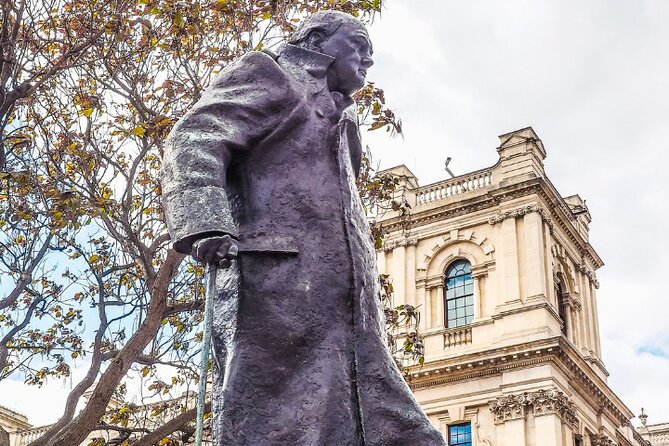
The Winston Churchill statue is in Parliament Square near the Houses of Parliament. The bronze figure shows Churchill in a military overcoat, leaning on his cane in a determined pose.
It is an easy stop to understand, but the guide can add meaning by connecting the statue to Churchill’s wartime role and the speeches that helped rally the country. You get a good chance to pause, take photographs, and consider how public memory presents him.
The statue also provides a useful transition into Parliament. Churchill was not only a wartime personality. He worked within Britain’s political system, and the buildings around the square show where that system continued operating under pressure.
The Houses of Parliament and wartime resilience

The Houses of Parliament played an important part in Britain’s response to World War II. Air raids damaged the complex, including the Commons chamber in 1941, yet parliamentary sessions continued.
This is one of the strongest stops for understanding the idea of political continuity. Churchill delivered major wartime speeches in Parliament, and the building’s continued use sent a clear message that government would not simply stop because London was under attack.
You will view the exterior and hear the story from the street. There is no included entrance to the building, so do not expect an indoor tour of the chambers. Still, the setting gives the guide a useful backdrop for discussing democracy, war leadership, and the pressure placed on public institutions.
The Houses of Parliament are also close to several other stops, which keeps this part of the route focused. You are not spending your walking time crossing half of London. Instead, several connected pieces of the wartime story appear in one compact area.
The Battle of Britain Memorial
The Battle of Britain Memorial honors the Royal Air Force pilots who defended Britain during the air campaign. Its bronze monument includes a detailed frieze showing scenes from the battle, along with the names of airmen who served.
This stop widens the story beyond Churchill’s speeches. Churchill became the public voice of the period, but the defense of Britain depended on pilots and aircrews facing the German air campaign directly.
Take a moment to examine the monument rather than treating it as a quick photo stop. The names and sculpted scenes give the memorial a human scale. You may find this especially useful if your knowledge of the Battle of Britain is limited, since the guide can explain how the air campaign fits into the larger wartime story.
The supplied schedule does not give a separate duration for this stop, so the time spent there can vary. As with the other memorials, it is an outdoor pause, not an indoor attraction.
The Women of World War II Memorial
The Women of World War II Memorial recognizes women who served in civil defense, military services, and wartime industries. A bronze figure in overalls represents women working in essential roles.
This is an important balance to the Churchill-centered theme. A walk focused only on a prime minister and military leaders could leave out the labor that kept Britain functioning. This memorial brings civilian work and women’s service into the route.
The stop is brief, about five minutes, but its subject is broad. You can use it as a reminder that the war affected workplaces, homes, emergency services, and factories as well as battlefields and government offices.
The Cenotaph and the work of remembrance
The Cenotaph is a solemn memorial to British and Commonwealth soldiers who died in the two World Wars and later conflicts. It is also the focus of the annual Remembrance Day ceremony on November 11.
The guide’s job here is not just to identify the monument. The Cenotaph helps explain how Britain publicly remembers sacrifice. Its location among government buildings makes the connection between national policy and the human cost of war hard to miss.
This is a short stop, around five minutes, and the mood is more reflective than conversational. You will want to be respectful, especially if a ceremony or other formal remembrance is taking place.
The Ministry of Defence and HM Treasury
The Ministry of Defence occupies the historic Main Building and oversees Britain’s armed forces and defense policy. From the outside, it may seem less visually dramatic than a statue or Gothic church, but it adds an important piece to the route.
You get a sense of the administrative side of national defense. Military operations require offices, planning, policy, and coordination, not just soldiers in the field. The building helps make that part of the story visible.
The walk also reaches HM Treasury, which played a major role in managing Britain’s wartime finances and administration. Its basement served as an emergency hub during air raids, while officials worked to keep resources moving for military and civilian needs.
I like these stops because they show the war as a national system. The Treasury paid for the effort, the Ministry of Defence organized defense, Parliament continued political work, and Downing Street directed government. That is a more useful lesson than simply collecting famous names.
Neither building includes an indoor visit. Their value comes from location and explanation, so pay attention to the guide rather than expecting an attraction you can enter.
St Margaret’s Church and Churchill’s private life
St Margaret’s Church on Parliament Square dates back to the 12th century and is known as the Church of the House of Commons. Churchill married Clementine Hozier there in 1908.
This stop adds a personal note to a route filled with state buildings and war memorials. You see a connection to Churchill before World War II and before he became the figure most people associate with wartime leadership.
The church also links Churchill to Parliament in a different way. It reflects his personal, political, and spiritual connections to the Westminster area. The visit is exterior unless you arrange any separate entry, so the guide’s explanation carries much of the stop’s value.
At about ten minutes, it receives more attention than the brief statue and memorial pauses. That gives you time to take in the building and understand why it belongs in a Churchill walk.
How much value do you get for $19.01?
At $19.01 per person, this is a modestly priced introduction to central London’s Churchill and World War II sites. You are paying for a professional English-speaking guide, a planned route, and context at locations that are free to view from public streets.
The value is strongest if you would otherwise walk past these buildings without knowing their wartime connections. A guide can turn Downing Street, the Cenotaph, and HM Treasury from quick photographs into parts of one connected story.
The price is less of a bargain if you expect a museum visit or access inside government buildings. The Churchill War Rooms admission is not included, and the tour ends outside the entrance. Add that separate expense when comparing the total cost of your afternoon.
A maximum of 25 people also matters. This is not a private walk, but the cap prevents the group from becoming enormous. Since the tour includes several short stops, staying near the guide will help you hear the explanations and keep up with the route.
Timing, practical details, and who should book
The start time is fixed at 1:30 pm, and the walk lasts approximately two to three hours. Since the experience is outdoors, plan for London weather and wear shoes suitable for sustained walking.
The tour is offered in English and uses a mobile ticket. Confirmation is provided when you book, and the route is near public transportation at the starting point.
I would recommend it to:
- First-time visitors who want an easy introduction to Westminster’s wartime connections
- Churchill enthusiasts who want the streets and public memorials around the War Rooms
- People interested in how government, finance, military planning, and civilian work fit together
- Visitors planning a separate Churchill War Rooms visit afterward
- Anyone who prefers a short guided walk to a long indoor museum visit
I would think twice if your only goal is to enter the underground bunker, since the tour does not include admission. I would also skip it if a long walking route is difficult for you or if you need a stroller.
Free cancellation is available when you cancel at least 24 hours before the local start time. Changes made inside that period are not accepted, and the activity requires a minimum number of participants.
Should you book this Churchill walking tour?
Book it if you want context before the museum. For $19.01, you get a focused route through the government district, with Churchill’s statue, Parliament, Downing Street, the Cenotaph, the Women of World War II Memorial, and other wartime sites explained along the way.
Do not book it expecting entry to the Churchill War Rooms. Buy this for the outdoor story and the guide’s connections between Churchill, government, military defense, women’s work, and remembrance. If you can walk comfortably and plan to add the underground museum separately, it makes a practical and reasonably priced afternoon in Westminster.
FAQ
How long does the Churchill and World War II walking tour last?
The tour lasts approximately two to three hours.
Where does the tour begin?
It begins at Embankment station, Embankment Place, London WC2N 6NS.
What time does the tour start?
The scheduled start time is 1:30 pm.
Where does the tour end?
It ends in front of the Churchill War Rooms at King Charles Street, London SW1A 2AQ.
Is admission to the Churchill War Rooms included?
No. The tour covers the exterior only, and entrance tickets to the Churchill War Rooms must be purchased separately.
Is the tour available in English?
Yes. The experience is offered in English.
Is the tour suitable for people with mobility difficulties or strollers?
No. It is not suitable for people with walking or mobility difficulties, prams, buggys, or strollers. Service animals are allowed.
Just added around London
- London Private Jack The Ripper Tour★ 5.0 · 9 reviews
- Private Spy Walking Tour of London★ 5.0 · 6 reviews
- Private Shoreditch Street Photography Workshop★ 4.5 · 4 reviews
- Private Sightseeing Walking Tour of The City Of London★ 5.0 · 3 reviews
- Private 2.5 Hour Taxi Tour of London – London’s Greatest Bits!★ 5.0 · 4 reviews
- Private Round Trip Transfer between London Airports and Hotel★ 3.5 · 56 reviews
- Shakespeare London Walking Tour★ 5.0 · 26 reviews
- Private Prison Van Escape Game – London Immersive Experience★ 4.0 · 15 reviews
Walking Tours, compared.
Oxford University Walking Tour With University Alumni Guide
Read our review →
Tour for Muggles The Ultimate Harry Potter Walking Tour in London
Read our review →
Cambridge University Walking Tour by Alumni™ Kings College Option
Read our review →
Blackbeard to Banksy – The Ultimate Walking Tour of Bristol
Read our review →
Air Raid Shelter + St. Nicholas Market Walking Tour
Read our review →
Walking Tour of Bath with Blue Badge Tourist Guide
Read our review →
Changing of the Guard Guided Walking Tour in London
Read our review →Browse the lists this tour appears in