
Reviewed · WALKING TOURS
London Crimes And Punishment Private Walking Tour
London’s darker past is not locked away in one museum. It is marked on pub walls, tucked behind churchyards, hidden under old market roofs, and woven into ordinary streets. This private tour follows that trail from Whitechapel to Borough, linking Jack the Ripper, the Kray twins, public executions, prisons, poverty, war, and religious change.
I like the way the route connects famous names with lesser-known places, especially the Golden Boy of Pye Corner, Crossbones Graveyard, and the old debtors’ prison tied to Charles Dickens. I also like the private format, which lets Stephen Liddell adjust his pace and detail for your group. The drawback is clear: 30 stops in about three hours means many visits are brief outdoor talks, not long site visits.
Key points to know before you book
- A full East End to South Bank route: The tour starts near Whitechapel Road and finishes on Borough High Street, covering a wide slice of central London.
- Stephen Liddell leads the experience: His style is built around detailed stories, careful attention, and links between crime, poverty, politics, religion, and daily life.
- Jack the Ripper is only one part of the story: You also hear about the Krays, William Wallace, the Peasants’ Revolt, the Great Fire, the Blitz, Dickens, and historic prisons.
- Expect a fast-moving walk: Most stops last five to ten minutes, with Crossbones Graveyard receiving the longest listed visit at 15 minutes.
- It is private for your party: You do not share the guide with a larger group, and the route can be taken at your group’s pace.
- The price reflects private guiding: At $247.73 per person, value depends on your group size and interest in detailed historical storytelling rather than paid admissions.
Why this London crime walk feels different
Many dark-history walks focus almost entirely on murders. This one takes a broader view. Crime is the doorway, but the tour also asks why London’s poorest people lived where they did, how religious communities changed buildings over time, and what punishment looked like before modern courts and prisons.
You begin at 9:30 a.m. at 277 Whitechapel Road. From there, the route moves west through the City of London and then south of the Thames, ending at Borough High Street. That point-to-point design gives the tour a useful sense of movement. You are not simply circling one neighborhood and returning to the start.
The private setup matters here. With only your party, you can ask about a particular criminal case, a church, Dickens, or the history of the East End without waiting for a large group. Stephen Liddell is praised for the care and detail he brings to his tours, so this suits you if you prefer stories that explain connections rather than a quick list of dates.
There is a practical tradeoff. Thirty stops cannot all receive equal attention. Some are quick street-side explanations, and most buildings are viewed from outside. Think of this as a guided historical walk with many stopping points, not a series of museum visits.
More Walking Tours in London
- Tour for Muggles The Ultimate Harry Potter Walking Tour in London
★ 5.0 · 4,684 reviews - London Jack The Ripper Guided Walking Tour
★ 5.0 · 3,131 reviews - Changing of the Guard Guided Walking Tour in London
★ 5.0 · 1,793 reviews
Whitechapel, the Krays, and Jack the Ripper
The first stop is the former Whitechapel Bell Foundry, linked with Big Ben and the Liberty Bell. You also hear how Big Ben got its name. The foundry adds useful context before the tour turns toward crime, since this was a working part of London where industry and dense housing shaped daily life.
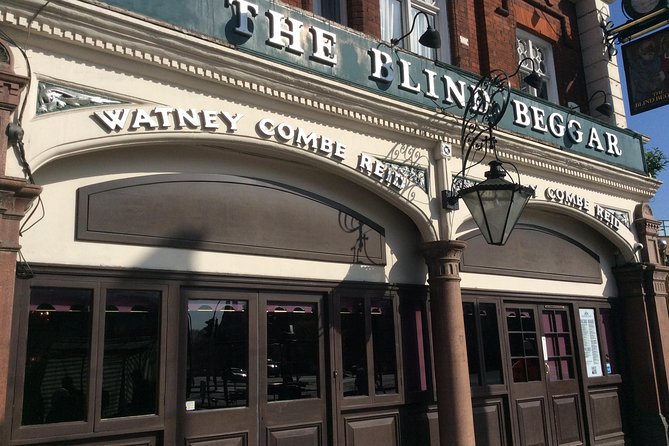
At the Blind Beggar public house, the subject shifts to the Krays. The pub is associated with a notorious gangland shooting in the 1960s, and the tour presents the twins as London’s answer to American-style organized crime figures. You spend about ten minutes here, enough for the setting and the main story rather than a long pub stop.
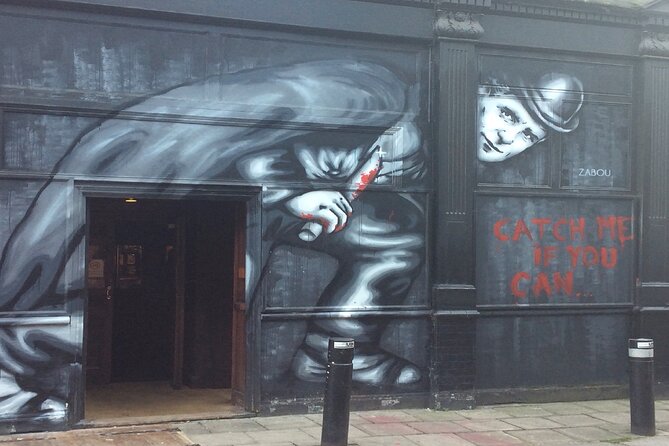
The Ten Bells is the best-known Ripper-related pub on the route. It is closely linked with the case and sits near streets connected with the killer. At the White Hart, you hear about another pub associated with Jack the Ripper, followed by the site of a possible Ripper killing farther up the road.
These places are valuable because the stories are tied to real street corners and businesses. Still, you should keep your expectations in check. The tour does not promise entry into every pub, and the listed admission at these stops is not included. The focus is on the guide’s explanation of the setting.
Brick Lane and the changing East End
Brick Lane brings the route into a part of London that looks very different today. You see the curry restaurants and modern street life while hearing about the poverty and pressure of Victorian Whitechapel. This contrast is one of the strongest parts of the tour. The same street can be fashionable, busy, poor, and dangerous at different points in its past.
At Brick Lane Jamme Masjid, the guide traces the building through several communities. It was a Protestant church for French refugees, later a synagogue during the Jack the Ripper era, and is now a mosque. That single building gives you a compact lesson in migration, faith, and the changing population of the East End.
The stop at the Golden Boy of Pye Corner offers a welcome change from murders and prisons. The small golden statue recalls the Great Fire of London and sits in a quiet street where many people would pass without knowing why it is there. I like this kind of stop because it rewards attention to small details rather than only famous landmarks.
Christ Church Spitalfields then brings you to one of the area’s grandest buildings. The church was at the center of Victorian life, close to the market and brewery, yet also near a street known for extreme poverty. The contrast helps explain how wealth, trade, religion, and deprivation existed side by side.
Markets, soup kitchens, and the machinery of punishment
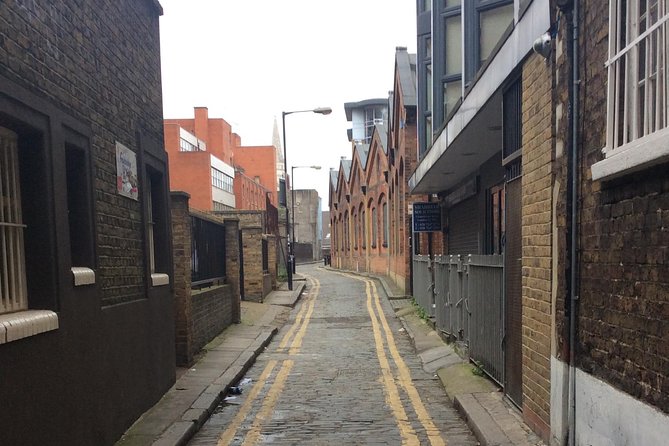
The former soup kitchen for the Jewish poor shifts the story toward charity and survival. You see the site of one of the first, and one of the last, Jewish soup kitchens in the East End. This is not a story about a single crime. It is about the conditions that shaped the neighborhood and the attempts to help people who had very little.
Old Spitalfields Market is a short stop beneath its Victorian roof. The market has changed from an industrial trading place to a modern market, but the building helps you picture the commercial life of the district. You may wish you had more time here, since five minutes is enough for a talk but not for browsing.
Smithfield Market turns the discussion toward London’s meat trade. Its past includes public punishment as well as food production, making it one of the route’s grimmer historical settings. The subject is direct and may not suit young children or anyone uncomfortable with violent history.
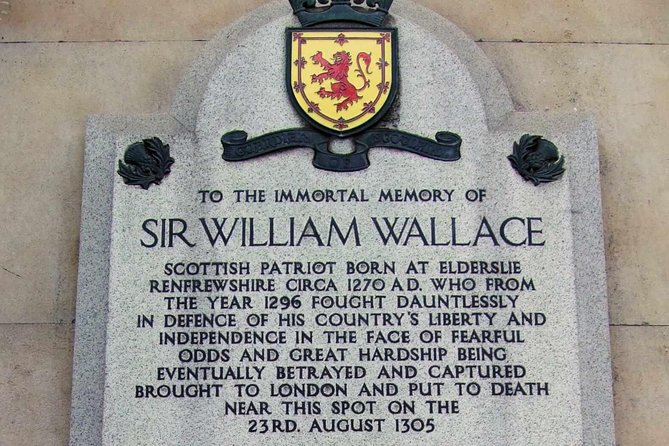
At the William Wallace Memorial, you hear about the execution of William Braveheart Wallace, who was hanged, drawn, and quartered. Nearby stories add further context. The Peasants’ Revolt plaque then widens the picture again, showing how protest and punishment helped shape later political life in Western countries.
The churchyard at St. Bartholomew the Great offers a small, atmospheric stop. You hear about the secrets connected with the graveyard and the old church. Since the stop is listed at only five minutes, it is more of a pointed introduction than a full church visit.
Same part of England, a completely different sort of day:
- London Big Bus Hop-On Hop-Off Tour with Optional River Cruise
★ 3.5 · 10,803 reviews - London Small Group Tour of Historical Pubs
★ 5.0 · 10,422 reviews - Tower of London and Crown Jewels Exhibition Ticket
★ 4.5 · 6,677 reviews - Thorpe Park Admission Ticket
★ 4.0 · 5,915 reviews
St. Paul’s, the Old Bailey, and condemned prisoners
St. Paul’s Cathedral appears as an exterior landmark. The guide explains how it avoided destruction during the Second World War, a useful reminder that London’s violent past did not end with medieval executions or Victorian murder cases.
The Viaduct Tavern is tied to the old execution grounds nearby. Its cellars are associated with holding cells where condemned men spent their final night. This is one of the clearest places on the walk for understanding punishment as a public process, not just a sentence handed down in a courtroom.
At Holy Sepulchre, you hear more grim stories connected with the church. The Old Bailey follows as the working court where serious criminal cases are still heard. It is described as perhaps the oldest court in the Western world, and even an exterior look gives the crime-and-punishment theme a modern legal endpoint.
Christchurch Greyfriars Church Garden adds a different kind of memory. The ruins and small garden honor those affected by the Blitz. The National Firefighters Memorial continues that thread, remembering firefighters who died protecting London and other cities during the bombing and fires of the Second World War.
These stops show why the tour is broader than a Ripper walk. London’s story includes murder, but also state punishment, social protest, war, and the people who tried to protect others.
London Bridge, Shakespeare, and the Clink
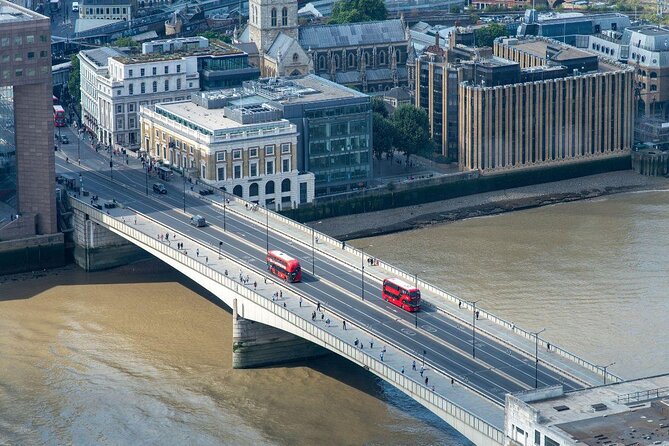
At London Bridge, the guide explains the ceremonial spike once used to display the heads of executed people as a warning to those entering the city. The modern bridge itself is not the medieval structure, but the location helps you understand how the river crossing worked as a symbolic gateway.
The view from Millennium Bridge introduces another uncomfortable chapter. You hear about a former suicide spot and the sexist design or rules that shaped who was allowed to use it. This short stop has no gore, but it adds a social-history angle that keeps the route from becoming a parade of sensational tales.
Shakespeare’s Globe marks the transition into the old entertainment district south of the Thames. Today it is a major theater, but in Shakespeare’s time this part of London was associated with drinking, prostitution, theaters, and rough amusement. The comparison to Amsterdam of its day captures the area’s reputation, though the short stop means the guide must keep the story moving.
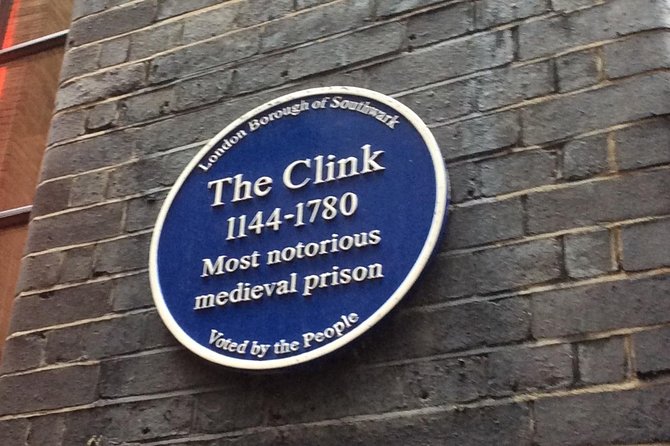
Outside the Clink Prison Museum, you learn why this part of Southwark had such a bad reputation. The tour does not enter the museum, and admission is not part of the experience. You get the authentic exterior setting and the surrounding story, but you should book a separate museum visit if you want cells, displays, and a longer indoor stop.
Winchester Palace adds the remains of a bishop’s residence and another account of power used badly. The palace was damaged by one of London’s major fires, and the guide connects the site with the conduct of its former bishop.
Dickens, debt, and Crossbones Graveyard
Borough Market takes you into the London associated with Charles Dickens and Oliver Twist. The market’s roots reach back to Roman times, and its location helps you picture the crowded commercial world that Dickens turned into fiction.
The Marshalsea Prison South Wall is one of the most meaningful stops for anyone interested in Dickens. This was a debtors’ prison, and its conditions had a lasting effect on him. The tour ends its main route in the area, giving the final section a strong link between personal experience, poverty, and literature.
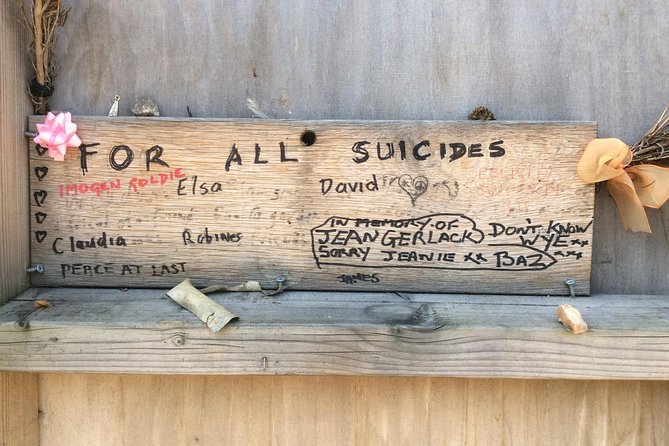
Crossbones Graveyard and Garden of Remembrance is the longest listed stop, at 15 minutes. It recalls a burial ground used for criminals, prostitutes, plague victims, and people who died by suicide. The site is both grim and quiet, and it gives the tour an emotional finish without relying only on famous names.
The final stop at Red Cross Cottages and Garden turns toward early welfare work. You hear about one of the first attempts to improve life for London’s poorest residents. That ending matters. It suggests that the city’s story is not only about crime and punishment, but also about reform and care.
What the $247.73 price gets you
The stated price is $247.73 per person. That is a serious cost for a three-hour walk, but this is a private tour, not a standard group outing. If you are traveling with several people, the price may make more sense because you share the guide’s time with your own party.
The value comes from the route and the guide, not from included admissions. The local professional guide is included, along with hotel pickup and drop-off on foot or by London Underground. Transportation to and from attractions is not included, and most stops are exterior views. Old Spitalfields Market admission is included as listed, while many other stops do not include entry.
I would book it for a group that wants a tailored, story-led morning and does not mind paying for private attention. I would skip it if you mainly want to enter historic buildings, spend time at museums, or move at a slow photography pace.
Wear proper clothing for the weather. The tour operates in all weather, and you need a moderate level of fitness for a long urban walk with multiple stops. A mobile ticket is available, and service animals are allowed.
Who will enjoy this tour most
This is a strong choice if you like London’s lesser-known corners, crime stories with social context, Dickens, Victorian life, churches, old markets, and the history of punishment. It also works well for repeat visitors who have already seen the standard sights and want a route that links the East End, the City, and Southwark.
It is less suitable if your main goal is a full visit to St. Paul’s Cathedral, the Clink Museum, or Shakespeare’s Globe. Those places appear as part of the route, but the tour generally uses them as outdoor story points.
Families should consider the subject matter carefully. Executions, murders, gang violence, prostitution, plague, suicide, and harsh prison conditions are central themes. The private format does let you ask the guide to give more or less detail, but the overall subject remains dark.
Should you book the London Crimes and Punishment tour?
Book it if you want a private guide with strong storytelling, a wide route, and a London history lesson that goes far beyond Jack the Ripper. Stephen Liddell’s detailed approach is especially useful when you want the links between crime, poverty, religion, politics, war, and literature explained clearly.
Do not book it expecting 30 leisurely attractions in three hours. You will move quickly, stop briefly, and view many places from the street. For the right group, that pace is the point: you cover a huge amount of ground and finish with Crossbones Graveyard, Marshalsea Prison, and the streets of Dickensian Southwark still fresh in your mind.
Free cancellation is available up to 24 hours before the 9:30 a.m. start time. Changes or cancellations made within 24 hours are not accepted for a refund.
FAQ
Where does the tour start?
The tour starts at 277 Whitechapel Road, London E1 1BY, United Kingdom.
What time does the tour begin?
The scheduled start time is 9:30 a.m.
Where does the tour finish?
The tour ends on Borough High Street, London SE1 1JX.
How long does the experience last?
The tour lasts about three hours.
Is this a private tour?
Yes. Only your party participates in the private activity.
Is hotel pickup available?
Yes. Hotel pickup and drop-off are offered on foot or by London Underground.
Is transportation included?
Transportation to and from attractions is not included. The tour information lists hotel pickup and drop-off on foot or by London Underground.
Does the tour enter the Clink Prison Museum?
No. The tour visits the outside of the Clink Prison Museum and does not go inside the museum itself.
Does the price include admission tickets?
Most listed stops do not include admission. Old Spitalfields Market, several free outdoor sites, and the tour service itself are included as specified, but the tour price does not provide general entry to attractions.
Can I cancel for a full refund?
Yes. You can cancel at least 24 hours before the local start time for a full refund. Cancellations or changes made less than 24 hours before the start are not refunded.
Just added around London
- London Private Jack The Ripper Tour★ 5.0 · 9 reviews
- Private Spy Walking Tour of London★ 5.0 · 6 reviews
- Private Shoreditch Street Photography Workshop★ 4.5 · 4 reviews
- Private Sightseeing Walking Tour of The City Of London★ 5.0 · 3 reviews
- Private 2.5 Hour Taxi Tour of London – London’s Greatest Bits!★ 5.0 · 4 reviews
- Private Round Trip Transfer between London Airports and Hotel★ 3.5 · 56 reviews
- Shakespeare London Walking Tour★ 5.0 · 26 reviews
- Private Prison Van Escape Game – London Immersive Experience★ 4.0 · 15 reviews
Walking Tours, compared.
Oxford University Walking Tour With University Alumni Guide
Read our review →
Tour for Muggles The Ultimate Harry Potter Walking Tour in London
Read our review →
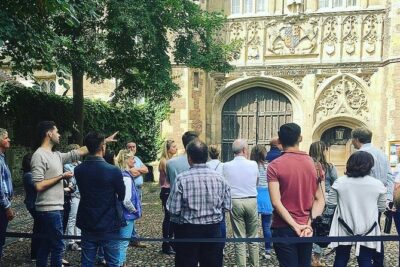
Cambridge University Walking Tour by Alumni™ Kings College Option
Read our review →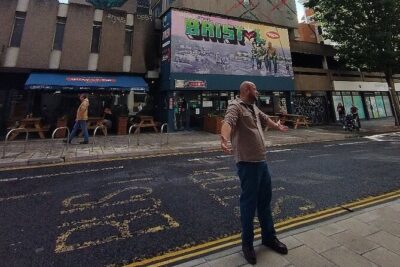
Blackbeard to Banksy – The Ultimate Walking Tour of Bristol
Read our review →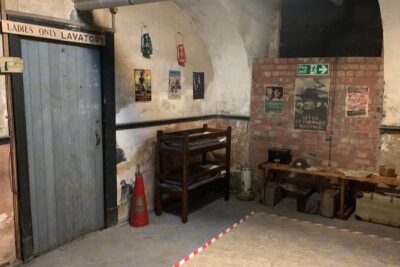
Air Raid Shelter + St. Nicholas Market Walking Tour
Read our review →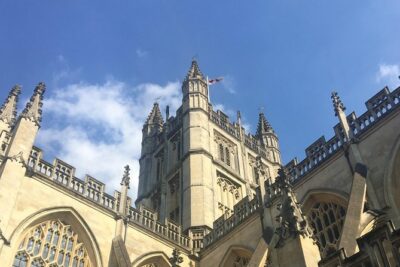
Walking Tour of Bath with Blue Badge Tourist Guide
Read our review →
Changing of the Guard Guided Walking Tour in London
Read our review →Browse the lists this tour appears in