
Reviewed · WALKING TOURS
London Serial Killers – The Blood and Tears Walk
London’s darker past comes sharply into focus on this brisk evening walk, which links real murder sites, old courts, hospital lore, and sinister alleyways across the City and Holborn. Guide and Bloody London author Declan McHugh covers ten serial killers, not just Jack the Ripper, and uses questions, profiling exercises, and storytelling to keep the group involved.
I like the unusual route, since it takes you to East End and Fleet Street locations that standard sightseeing walks often skip. I also like the mix of grim case files with lighter material, including a horror-film vote and a visit to the ornate Princess Louise pub.
The main caution is pace. You cover about 2 miles (3.2 km) in two hours, often briskly, and the walk runs in all weather. The subject matter is also graphic and unsettling, so this is not a gentle London history tour.
Key points at a glance
- Ten serial killers in two hours: The program ranges from obscure Victorian criminals to famous figures tried at the Old Bailey.
- Declan McHugh leads the walk: He is the author of Bloody London and builds the tour around case details, questions, and audience participation.
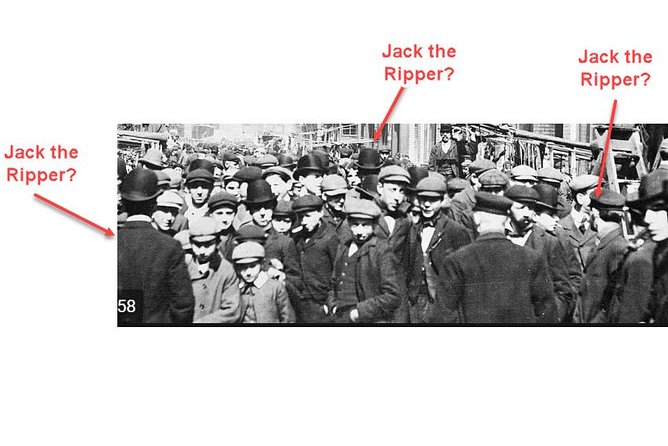
- Jack the Ripper gets only part of the evening: You hear McHugh’s case for a specific suspect, but the tour covers much more than the Ripper.
- The route includes genuinely eerie places: A narrow alley near St. Dunstan in the West is used for a murder-scene exercise and psychic experiment.
- You finish at the Princess Louise: The tour ends beside one of London’s finest Victorian pub interiors, though the final story may make entering feel slightly less inviting.
- Plan for speed and weather: Start at 7:00 p.m., allow extra Underground time, and wear shoes and clothing suited to two miles outdoors.
Why this walk feels different from a standard London tour
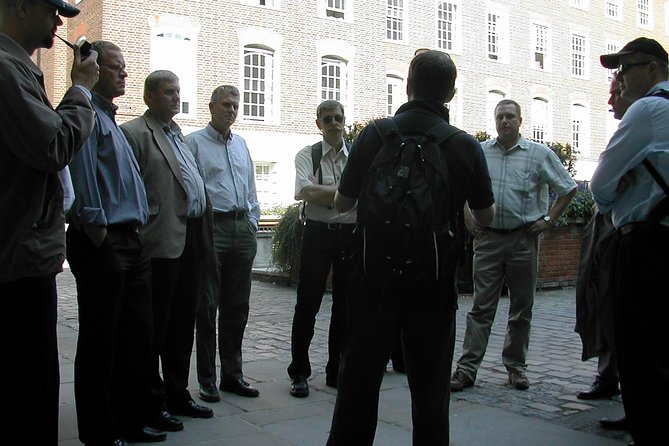
Many London walks rely on famous landmarks and broad historical themes. This one uses the city as a case file. A church, hospital, court, alley, and pub each become the setting for a different story.
That approach gives you a more personal sense of place. Instead of hearing about a killer in an abstract lecture, you stop near the locations where victims were found, criminals lived, or trials took place. The places are not all grand. Some are ordinary streets, which is part of the effect.
Declan McHugh is the central character of the evening as much as the locations are. He has led the walk for many years, wrote Bloody London, and presents the material with a mix of facts, dark humor, and questions. You may be asked to profile a killer, guess an answer, or share your reaction to a particularly grim setting.
That interactive style works well if you enjoy being part of a group discussion. It may feel more like a classroom if you prefer to stand quietly and listen. One criticism of the format is that the questioning can feel schoolteacher-like, especially for anyone who does not enjoy being put on the spot. The positive side is that the session is rarely a flat stream of names and dates.
More Walking Tours in London
- Tour for Muggles The Ultimate Harry Potter Walking Tour in London
★ 5.0 · 4,684 reviews - London Jack The Ripper Guided Walking Tour
★ 5.0 · 3,131 reviews - Changing of the Guard Guided Walking Tour in London
★ 5.0 · 1,793 reviews
Starting at St. Bartholomew the Great
The walk begins near Aldersgate Street, close to Barbican, at 7:00 p.m. The first stop is the Church of St. Bartholomew the Great, where McHugh tells the story of an uncaught killer linked to the murders of two young girls.
The cases are separated by seven years, and the similarities form the basis of an early exercise in criminal profiling. This opening sets the tone: the focus is not only on what happened, but also on how investigators might compare behavior, timing, and victim selection.
You do not need prior knowledge of British crime. The material is explained as part of the story. Still, the first account is disturbing, particularly because of the victims’ ages.
Grave robbing and the economics of death
At Holy Sepulchre London, the subject shifts from murder to the business created by dead bodies. McHugh explains how grave robbing and medical training could overlap, with doctors at St. Bartholomew’s Hospital willing to obtain bodies from people society considered disposable.
This short stop adds useful context. Crime did not happen in isolation from London’s institutions. Hospitals, courts, prisons, cemeteries, and poor neighborhoods all played a part in the city’s history of violence.
The stop lasts only about five minutes, so expect a compact story rather than a full history of medical education or burial customs. Its value comes from showing the grim economics around death and from connecting the church, hospital, and criminal world.
The Old Bailey and four notorious trials
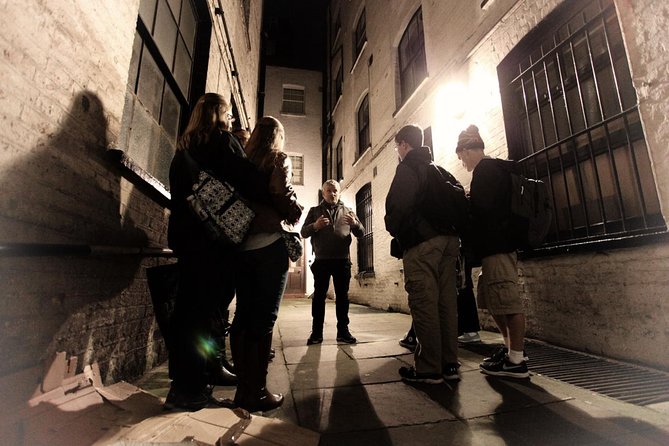
The Old Bailey is one of the most important stops on the route. This is London’s Central Criminal Court, and the walk uses it to discuss several serial killers whose cases reached its courtroom.
The first story concerns a man who appeared at the court twice. He helped send an innocent person to their death before later admitting that he had murdered several women. That combination of false accusation, courtroom drama, and delayed confession makes this one of the walk’s strongest examples of how a killer can manipulate the justice system.
The second case concerns a man who murdered 13 women and created fear for more than five years. McHugh places the crimes within the wider atmosphere of the period, giving you a sense of how sustained public terror can develop.
You return to the Old Bailey later in the tour through two more cases. One killer murdered 15 boys and men. The other is presented as a possible candidate for the title of the most dangerous woman in the world.
The court itself is a powerful backdrop, even though the visit is an exterior stop rather than a courtroom tour. You are there to hear the stories tied to the building, not to enter and watch legal proceedings.
Same part of England, a completely different sort of day:
- London Big Bus Hop-On Hop-Off Tour with Optional River Cruise
★ 3.5 · 10,803 reviews - London Small Group Tour of Historical Pubs
★ 5.0 · 10,422 reviews - Tower of London and Crown Jewels Exhibition Ticket
★ 4.5 · 6,677 reviews - Thorpe Park Admission Ticket
★ 4.0 · 5,915 reviews
A six-minute horror-film breather
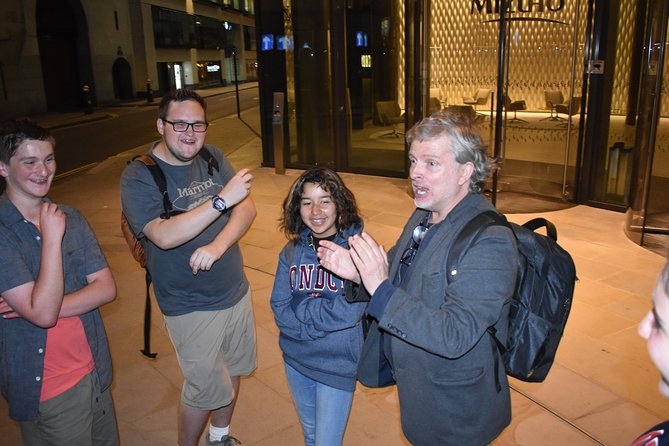
At Printer Street, the tone briefly lightens. McHugh asks the group to consider the scariest horror films ever made and reveals the top ten choices accumulated over 23 years of the walk.
This is more than a random change of subject. After several violent case histories, a short pause gives you room to reset. It also shows how people turn real fear into entertainment.
The film discussion includes an obscure title recommended by many men but not by a single woman in the accumulated voting. McHugh also suggests a roughly 60-year-old cult horror film that is free to watch on YouTube. If you enjoy old horror cinema, this may be one of the most memorable lighter moments.
If you want a strictly serious crime lecture, the film section may feel like a detour. I think it helps the evening breathe, particularly because the main subject matter can become emotionally heavy.
A Victorian killer who lived on two continents
Red Lion Court brings the walk back to true crime with the story of a little-known Victorian serial killer who murdered on two continents and lived at this location.
This is the kind of case that gives the tour its strongest sense of discovery. You may arrive familiar with Jack the Ripper, but the route spends time on criminals whose stories are less often covered in popular documentaries.
McHugh presents the case as a story with several turns and ends with a question based on the evidence. The point is not simply to memorize a killer’s name. You are asked to judge what the details suggest and reach your own conclusion.
The stop lasts about ten minutes. That is enough time for a dramatic account, but not enough for every legal or social detail surrounding the murders. The fast structure keeps the evening moving, though you may want to read more afterward.
Jack the Ripper near Fleet Street

At Hare Place, you get the evening’s main Jack the Ripper section. Rather than treating the Ripper as the whole subject, McHugh focuses on a specific suspect who lived near Fleet Street and explains why he believes this man was responsible.
This is one of the more useful parts for people who already know the standard Ripper story. You hear a particular argument, not just a list of familiar victims and locations. McHugh has devoted a full chapter of Bloody London to the suspect, so the presentation reflects a long-running personal theory.
The stop also includes the walk’s toughest question. Only a very small number of participants answer it correctly, according to McHugh’s long-term record. You do not need to treat this as a test, but the challenge adds energy to the group.
The drawback is that 15 minutes is a short time for a case with so many competing theories. Think of this as a focused argument rather than the final word on the Ripper’s identity.
The alley at St. Dunstan in the West
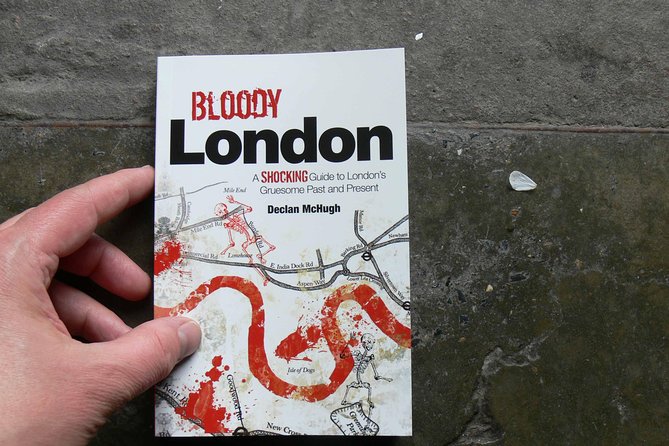
The stop at St. Dunstan in the West may be the most atmospheric part of the evening. The group enters a narrow, dingy, isolated alley, where McHugh stages a psychic experiment around a murder scene.
He also tells the story of two serial killers who operated in the area. The setting matters here. A dark, confined passage can make old crimes feel less distant than they do beside a large public building.
McHugh warns that this is not a pleasant place, and that warning should be taken seriously. The walk deals with murder throughout, but this stop relies most heavily on mood and personal reaction.
The atmosphere will change with the season. In summer, it may not yet be fully dark at the start of the tour, while winter brings more darkness and a colder setting. The tour operates in all weather, so rain can make this section less comfortable and make it harder to hear or take photographs.
A participant-focused stop at the Royal Courts
At the Royal Courts of Justice, McHugh turns the attention toward the group. The exact activity is deliberately kept as a surprise, but it is described as an interesting and sometimes startling part of the walk.
This stop breaks up the storytelling pattern. Instead of simply receiving another case, you become part of the presentation. It is a good example of why this tour suits people who enjoy participation rather than a quiet audio-guide experience.
The Royal Courts also reinforce the link between crime and the institutions that judged it. The route moves from streets and alleys to the formal setting of British law, keeping the city’s legal past in view.
Two more killers at Portugal Street
Portugal Street returns to the two serial killers connected with trials at the Old Bailey. One murdered 15 boys and men. The other is described as potentially the most dangerous woman in the world.
This section expands the tour beyond the male criminals commonly associated with London’s murder stories. It also helps tie together the earlier stop at the Old Bailey, giving you a second look at cases already introduced in a different part of the route.
The subject matter is severe, and McHugh’s presentation includes humor elsewhere in the walk. That balance will suit you if you need occasional relief from grim details, but it may not suit you if you want an entirely solemn tone.
Ending at the Princess Louise pub
The final stop is the Princess Louise, at 208 High Holborn. The pub is known for its ornate Victorian interior, and it gives the walk a pleasant physical ending after two hours outdoors.
Before you settle in, McHugh tells one last story about a well-known British serial killer. The detail is said to come from the head of forensics involved in the case and is not commonly covered in books or documentaries. That final piece of information is designed to leave you with one more unsettling fact as the tour ends.
McHugh sells signed copies of Bloody London for $10 in cash or through PayPal. The personal message makes the book a useful souvenir if you enjoyed his approach and want the cases in a longer format. It is optional, not part of the ticket price.
Holborn Underground station, on the Central and Piccadilly lines, is about 60 seconds from the pub. That makes the ending convenient, especially after a late evening walk.
Price, timing, and group comfort
At about $27.74 per person, the tour offers two hours of live guiding, ten criminal cases, and a route through several central London areas. I consider that fair value if you are interested in true crime and want a focused evening activity rather than a major museum visit.
The value comes from McHugh’s research and presentation. You are not paying for entry to attractions, since the stops are viewed from public streets and admission is free. You are paying for the structure, local context, storytelling, and access to a route you might not create for yourself.
The group can be as large as 45 people, though bookings are limited to 20 people per booking. A larger crowd can make it harder to hear in noisy streets, while a smaller group should make the questions and profiling exercises easier.
You should allow at least 20 extra minutes for Underground delays. The meeting point is Underground Ltd on Aldersgate Street, near Barbican, and arriving at exactly 7:00 p.m. is risky. Late arrivals can miss the opening story or have trouble finding the group once it moves.
Wear comfortable shoes and bring protection from rain or heat. The pace is fairly quick, and the walk covers about 3.2 kilometers without a long seated break.
The minimum age is 12, with children aged 12 to 14 required to attend with an adult. Service animals are allowed. Anyone with mobility or major health concerns should choose a slower walk, since the brisk pace is a core part of fitting ten cases into two hours.
Who should book this London walk?
I would book this if you enjoy true crime, horror films, old court cases, and London stories that go beyond the usual royal and literary subjects. It is especially well suited to people who like a strong storyteller and do not mind being asked questions in front of a group.
Families with older children can also enjoy it, provided everyone is comfortable with murder, child victims, grave robbing, and other disturbing material. The age minimum is 12, but parental judgment matters because the content is much darker than a typical history walk.
I would skip it if you dislike graphic crime stories, prefer a slow pace, or need frequent stops. I would also avoid booking during poor weather if you are not prepared to walk outdoors for two hours.
The very strong 4.9 rating from 672 ratings reflects how well the format works for most people. Still, the occasional lower assessment points to real issues: the pace can be demanding, and McHugh’s interactive style can feel too forceful if you prefer a quiet lecture. Those are not minor details. They should guide your decision.
Should you book The Blood and Tears Walk?
Book it if you want a lively, fact-heavy look at London’s criminal past, led by someone who has spent years researching the subject. The best parts are the range of cases, the strange locations, the Old Bailey connections, and the unnerving alley near St. Dunstan in the West.
Do not book it simply because you want a Jack the Ripper walk. Jack is only one section of a much broader program. Choose it for the full mixture of famous and obscure killers, audience challenges, dark humor, and city streets after sunset.
With comfortable shoes, a little extra arrival time, and the right attitude toward grisly material, this is a distinctive and well-priced night in London.
FAQ
Where does the walk start?
The walk starts at Underground Ltd on Aldersgate Street, near Barbican, London EC1A 4JA. The start time is 7:00 p.m.
Where does the walk end?
It ends at the Princess Louise pub at 208 High Holborn, London WC1V 7EP. Holborn Underground station, served by the Central and Piccadilly lines, is about 60 seconds from the pub.
How long is the tour?
The walk lasts approximately two hours and covers about 2 miles, or 3.2 kilometers.
What age is allowed on the tour?
The minimum age is 12. Children aged 12 to 14 must be accompanied by an adult, while participants aged 15 and older are classed as adults.
Does the tour run in bad weather?
Yes. The walk operates in all weather, so you should dress appropriately for rain, cold, or summer heat.
Can I cancel for a full refund?
You can cancel for a full refund up to 24 hours before the scheduled start time. Changes or cancellations made less than 24 hours before the start are not accepted for a refund.
Just added around London
- London Private Jack The Ripper Tour★ 5.0 · 9 reviews
- Private Spy Walking Tour of London★ 5.0 · 6 reviews
- Private Shoreditch Street Photography Workshop★ 4.5 · 4 reviews
- Private Sightseeing Walking Tour of The City Of London★ 5.0 · 3 reviews
- Private 2.5 Hour Taxi Tour of London – London’s Greatest Bits!★ 5.0 · 4 reviews
- Private Round Trip Transfer between London Airports and Hotel★ 3.5 · 56 reviews
- Shakespeare London Walking Tour★ 5.0 · 26 reviews
- Private Prison Van Escape Game – London Immersive Experience★ 4.0 · 15 reviews
Walking Tours, compared.
Oxford University Walking Tour With University Alumni Guide
Read our review →
Tour for Muggles The Ultimate Harry Potter Walking Tour in London
Read our review →
Cambridge University Walking Tour by Alumni™ Kings College Option
Read our review →
Blackbeard to Banksy – The Ultimate Walking Tour of Bristol
Read our review →
Air Raid Shelter + St. Nicholas Market Walking Tour
Read our review →
Walking Tour of Bath with Blue Badge Tourist Guide
Read our review →
Changing of the Guard Guided Walking Tour in London
Read our review →Browse the lists this tour appears in