
Reviewed · MUSEUMS
Private Highlights Tour of the British Museum
The best thing about this British Museum tour is its personal route through a huge collection. You tell the guide what interests you, then follow a focused path through famous objects, strange finds, and difficult questions about how museums acquired them. The tour includes major sights such as the Rosetta Stone, Egyptian mummies, the Parthenon Sculptures, and the Lewis Chessmen.
I like the private format, especially for families or a group of friends, and I like that the guide does not dodge hard subjects such as disputed ownership. The three-hour length gives you a useful first look without turning the entire day into a museum march. The main drawback is price: $468.78 is a strong value for 8 to 10 people, but expensive for a couple or a small group.
Key points about this British Museum tour
- Your interests shape the route: Tell the guide which periods, places, or galleries matter most to you.
- Major objects are included: Expect the Rosetta Stone, Parthenon Sculptures, Sutton Hoo, Lewis Chessmen, mummies, and more.
- Tough history is part of the tour: The guide discusses controversy around objects rather than presenting a polished, simple story.
- The group is private: Only your party participates, with space for up to 10 people.
- Three hours covers a lot: You get a structured introduction to the museum instead of wandering without a plan.
- The price works best for larger groups: At full capacity, the cost is about $46.88 per person.
A smart way to enter the British Museum
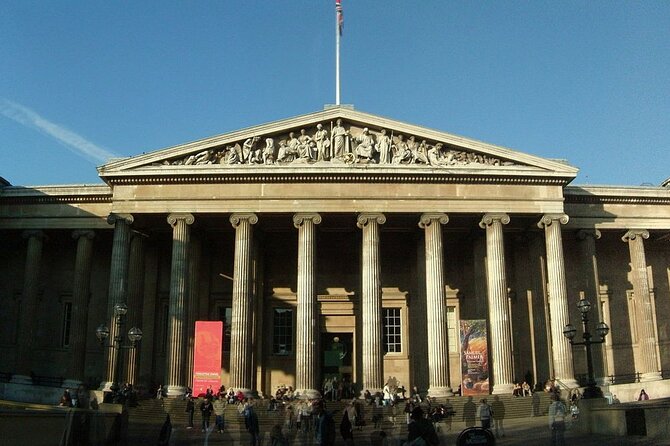
The tour begins at Montague Place, outside the British Museum. You receive a mobile ticket, and the guide uses a lesser-known entrance to get the visit moving. That small detail matters in a museum this large. A clear meeting point and direct entry save time that could otherwise disappear in queues or in trying to find the right door.
You finish inside the museum at Great Russell Street. That is useful if you plan to keep exploring after the guided portion. You can stay with a favorite gallery, return to an object that caught your eye, or simply leave when you are ready without retracing the tour route.
The British Museum can feel like several museums joined together. Its collection spans many continents and thousands of years. Without a plan, it is easy to spend too long in one room and miss objects that are central to the museum’s identity. A private guide gives you a thread to follow.
At the start, the guide asks what you want from the visit. You might focus on ancient Egypt, archaeology, the British Isles, art, religion, warfare, or the more unusual objects. If you have a specific gallery or subject in mind, say so before the tour. The experience is designed to change around your interests rather than force every group through the exact same script.
More museums and galleries in London:
- Tower of London and Crown Jewels Exhibition Ticket
★ 4.5 · 6,677 reviews - Chelsea FC Stadium Tours and Museum
★ 5.0 · 1,908 reviews - Official tickets: Moco Modern & Contemporary Art Museum
★ 4.5 · 1,157 reviews
The Rosetta Stone and the problem with simple stories
The Rosetta Stone is one of the museum’s essential stops. Its importance comes from the use of three scripts on the same stone, which helped scholars make progress in reading Egyptian hieroglyphs. You will see a famous object, but the value of a guide is in explaining why it matters instead of treating it as a celebrity artifact.
This is also a good early example of how the tour handles context. Objects in a museum can look self-explanatory behind glass, yet their discovery, movement, and interpretation often raise hard questions. The guide is expected to discuss those questions directly.
That approach makes this tour a good match for history buffs who want more than dates and labels. You are not simply collecting photos of famous displays. You are encouraged to think about who made an object, what purpose it served, how it reached London, and what its presence in the museum means today.
Parthenon Sculptures and contested ownership
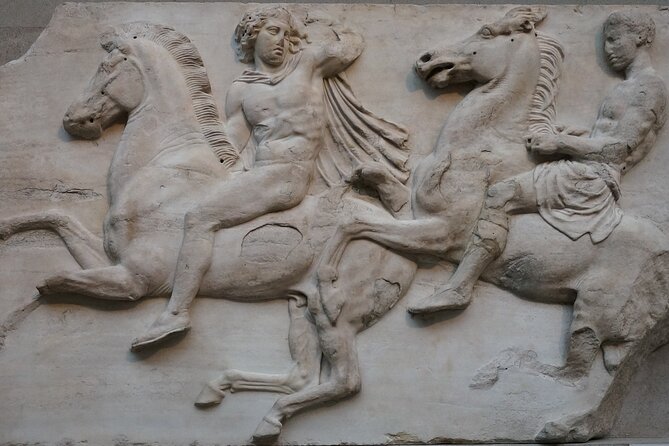
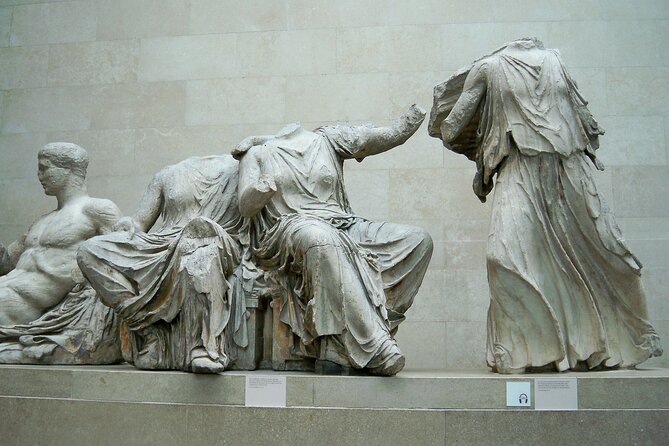
The Parthenon Sculptures, often called the Elgin Marbles, bring one of the museum’s most familiar disputes into view. The tour does not treat the objects as free from controversy. That is an important strength for anyone who wants a frank account of museum collecting.
The guide can help you separate the artistic achievement from the political and ethical questions surrounding removal and ownership. You can admire the carving while still asking whether the sculptures should remain in London. Those two responses are not in conflict.
A short visit cannot settle a long-running debate, and you should not expect a final answer in three hours. What you can expect is a more useful framework for thinking about the issue. The guide’s role is to give you context and let you see why the subject remains sensitive.
From Sutton Hoo to the Lewis Chessmen
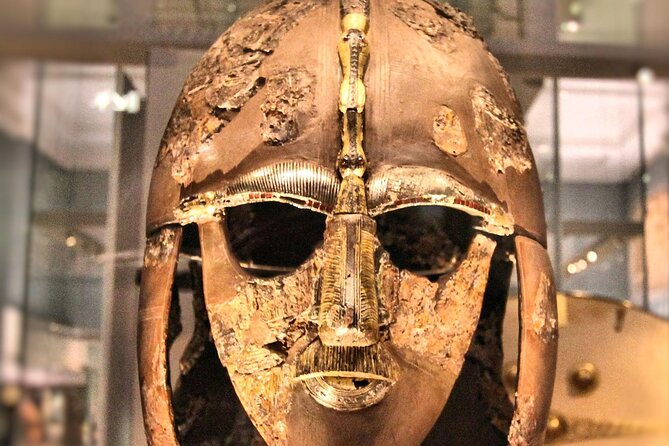
Sutton Hoo offers a powerful look at early medieval Britain. The objects connect archaeology with burial customs, status, craftsmanship, and long-distance contact. They also help correct the idea that Britain’s story begins with the better-known Roman and Tudor chapters.
The Lewis Chessmen bring a different mood. Their small scale and expressive faces make them easy to enjoy, yet they also reveal trade, play, design, and the movement of objects across the medieval North Atlantic world. They are among the museum’s most approachable objects, especially for families and younger members of a private group.
A guide can make these stops work for different ages at once. One person may care about excavation and historical evidence, while another simply wants to know why a carved chess piece looks so memorable. A strong explanation gives both people a reason to pay attention.
A few more London days out to weigh up
- London Big Bus Hop-On Hop-Off Tour with Optional River Cruise
★ 3.5 · 10,803 reviews - London Small Group Tour of Historical Pubs
★ 5.0 · 10,422 reviews - Thorpe Park Admission Ticket
★ 4.0 · 5,915 reviews - London Jack the Ripper Guided Tour with Ripper-Vision
★ 4.5 · 4,840 reviews
The Vindolanda Tablets and everyday ancient life
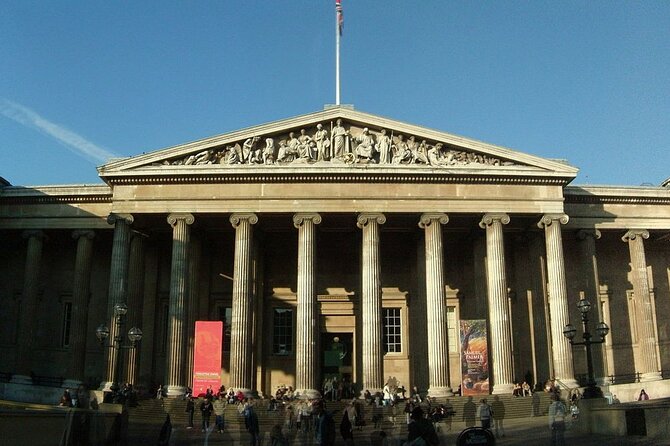
The Vindolanda Tablets are valuable because they bring ancient life down to human scale. Rather than focusing only on rulers, temples, or grand monuments, these written records offer a glimpse of ordinary concerns and communication.
That shift is one reason I like the museum’s collection. The grand objects attract you into the building, but smaller objects often change how you picture the past. A guide can connect a tablet to the broader Roman world while keeping the discussion grounded in individual lives.
The tour’s flexible design helps here. If you prefer daily life and personal stories to military conquest, tell the guide. The route can give those objects more attention instead of treating them as quick stops between famous monuments.
The Standard of Ur and the sweep of the ancient world
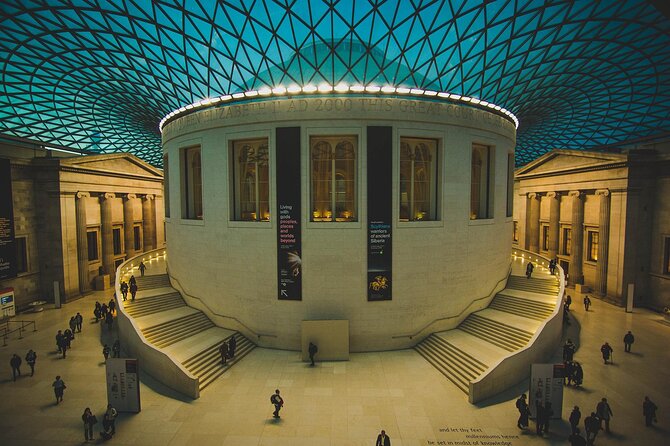
The Standard of Ur represents the tour’s wider geographic reach. The British Museum is not limited to the history of Britain or Western Europe. You move across inhabited continents and encounter objects shaped by different political systems, beliefs, technologies, and artistic traditions.
That global reach is exciting, but it can also be hard to absorb in one visit. Three hours is long enough to see a broad selection, yet not long enough to understand every civilization in equal depth. I would treat this tour as an informed introduction, not a complete education in world history.
The guide’s job is to make connections without flattening cultures into a list of dates. Ask questions if a particular region interests you. The private setup gives you more freedom to pause, redirect the conversation, or spend a little longer with an object that speaks to your group.
Egyptian mummies and the macabre side of the collection
Egyptian mummies are among the museum’s most recognizable displays. They also raise questions about death, ritual, preservation, scientific study, and modern ideas about displaying human remains.
This tour openly makes room for the strange and macabre. That does not mean the visit becomes a parade of gruesome curiosities. It means the guide can address why certain objects fascinate us, how ancient people understood death, and how modern museums should handle human remains.
Families should use their own judgment here. The tour is suitable for most people, but the material is not limited to light entertainment. If your group includes children or anyone sensitive to this subject, tell the guide what level of detail works best.
Aztec serpent, Ife Head, and objects beyond Britain
The Aztec Double-Headed Serpent adds a striking example of Mesoamerican art and symbolism. It is visually memorable, but a guide can give it more weight by discussing its material, purpose, and cultural setting rather than reducing it to an exotic showpiece.
The Ife Head offers another change of region and style. It helps show the range of African art represented in the museum and challenges the old habit of treating Africa as a single historical category. Specific objects make that point better than a general lecture.
The Statue of Tara and Hoa Hakananai’a continue the route across Asia and the Pacific. These stops are useful if you want the museum to feel truly global. They also make the tour’s customization important. You may prefer to spend more time with non-European collections than with the familiar British and Egyptian rooms.
Portland Vase, Assyrian guards, and Ramesses II
The Portland Vase shows a different side of the collection, with delicate workmanship and a long story of admiration, damage, repair, and display. It is a good reminder that museum objects are not always grand monuments. Fine detail can reward a slower look.
The Assyrian guards provide scale and drama. Large protective figures can dominate a gallery, but their meaning goes beyond visual impact. They connect to royal power, palace design, protection, and the way ancient rulers presented themselves.
Ramesses II gives you another encounter with monumental royal imagery. A guide can help you read the statue as both art and political communication. You see the ruler as a person, an idealized sovereign, and a symbol of a state that wanted to project permanence.
The FeeJee Mermaid and the museum’s stranger stories
The FeeJee Mermaid is one of the tour’s oddest possible stops. Its appeal lies in the story around it as much as in the object itself. It belongs to the museum’s stranger side, where curiosity, belief, performance, and deception can overlap.
Including unusual objects keeps the tour from becoming a march through only the greatest hits. You get a sense of how museums preserve not just masterpieces, but also objects tied to popular fears, tall tales, and changing ideas about what counts as evidence.
If your group enjoys the weird and unexpected, make that clear at the beginning. The guide can give those displays more attention. If you prefer archaeology and established historical evidence, the route can lean in that direction instead.
What the three-hour format really gives you
Three hours is a useful middle ground. It is long enough for a guide to build a coherent route through major galleries, but short enough that you can still visit another London sight afterward. The museum is large, so you should not expect every room or object to receive equal attention.
The tour promises the major highlights listed above, along with insider information about the museum and London. That is a substantial amount for one session. You will get the most from it if you arrive with two or three priorities rather than a long wish list.
The private format changes the pace. Your group can ask questions without worrying about strangers, and the guide can adjust explanations for adults, teenagers, or people with different interests. One group of 10 family members, including teenagers, worked well with guide Jessica, who brought the objects to life through stories and kept the context balanced. That is a useful sign for multigenerational groups.
Still, private does not mean leisurely at every display. With so many highlights to cover, some stops will be brief. If one object matters most to you, identify it at the start and ask the guide to protect time for it.
Price, group size, and who gets the best value
The total price is $468.78 for a private group of up to 10 people. At 10 people, that works out to about $46.88 each. For 8 people, it is about $58.60 each. For 4 people, the cost rises to about $117.20 per person, and for 2 people it is about $234.39 each.
That makes the tour much easier to recommend for a family, reunion, or group of friends. You are paying for a private guide, a customized route, and three hours of focused attention. If you are alone or traveling as a couple, the price is harder to justify unless the personalized format matters greatly to you.
Entry to the British Museum itself is free, so the charge is for the guided service rather than admission. You are buying help with selection, context, and navigation through a very large collection. I would compare the cost with how much you value saving time and avoiding a self-guided visit built from scattered labels.
Practical details before you book
The tour is offered in English and includes a professional guide with advanced degrees in Cultural Heritage and Museum Studies. That background fits the tour’s focus on interpretation, collecting, and difficult history.
Most people can take part, and service animals are allowed. The meeting point is near public transportation. You should plan around the stated three-hour duration and remember that the tour finishes inside the museum, not back at Montague Place.
You can cancel for a full refund up to 24 hours before the start time. Changes or cancellations made less than 24 hours before the start time are not accepted for a refund, and the cut-off follows London local time.
Should you book this British Museum experience?
Book it if you want a private, flexible introduction to the British Museum and your group has a mix of interests. It is especially well suited to families, history buffs, London locals who want fresh context, and anyone who would rather discuss difficult subjects than skim past them.
Think twice if you are a solo visitor or a couple watching every pound. The fixed price favors larger groups, and three hours cannot give every gallery equal attention. In that case, a self-guided visit may offer better value if you are happy to plan your own route.
For a group of 8 to 10, I think the math is strong. You get famous objects, less familiar treasures, a guide who can adjust the visit, and an honest discussion of how museums tell the story of the past. Tell the guide your priorities at the start, and this tour can turn a massive collection into a clear and memorable morning or afternoon.
FAQ
How long is the private British Museum tour?
The tour lasts approximately three hours.
Where does the tour begin?
It begins at Montague Place, London, outside the British Museum.
Where does the tour finish?
The tour finishes inside the British Museum at Great Russell Street.
Is admission to the British Museum included?
Entry to the museum is free, and the experience includes entry through a lesser-known entrance.
How many people can join the private tour?
The price covers a private group of up to 10 people.
What language is the tour offered in?
The tour is offered in English.
Can the tour be customized?
Yes. The guide asks about your interests at the beginning, and you can request a specific topic or gallery.
Which British Museum objects may be included?
The route includes major objects such as the Rosetta Stone, Parthenon Sculptures, Lewis Chessmen, Sutton Hoo, Vindolanda Tablets, Standard of Ur, Egyptian mummies, Aztec Double-Headed Serpent, Portland Vase, Assyrian guards, Ramesses II, Statue of Tara, Ife Head, Hoa Hakananai’a, and FeeJee Mermaid.
Can I cancel for a full refund?
Yes. You can cancel at least 24 hours before the experience start time for a full refund. Cancellations or changes made less than 24 hours before the start time are not accepted for a refund.
Just added around London
- London Private Jack The Ripper Tour★ 5.0 · 9 reviews
- Private Spy Walking Tour of London★ 5.0 · 6 reviews
- Private Shoreditch Street Photography Workshop★ 4.5 · 4 reviews
- Private Sightseeing Walking Tour of The City Of London★ 5.0 · 3 reviews
- Private 2.5 Hour Taxi Tour of London – London’s Greatest Bits!★ 5.0 · 4 reviews
- Private Round Trip Transfer between London Airports and Hotel★ 3.5 · 56 reviews
- Shakespeare London Walking Tour★ 5.0 · 26 reviews
- Private Prison Van Escape Game – London Immersive Experience★ 4.0 · 15 reviews
Museums, compared.

Tower of London and Crown Jewels Exhibition Ticket
Read our review →
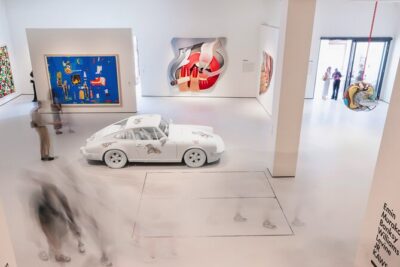
Official tickets: Moco Modern & Contemporary Art Museum
Read our review →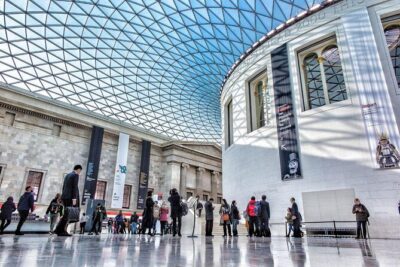
British Museum London Guided Tour Semi-Private 8ppl Max
Read our review →
The British Museum London – Exclusive Guided Museum Tour
Read our review →

Skip the Line: Liverpool Beatles Museum – The perfect tribute to the Beatles
Read our review →Browse the lists this tour appears in