
Reviewed · WALKING TOURS
Roman Ruins to Blitz Bombings: A Walking Tour of London’s Fiery History
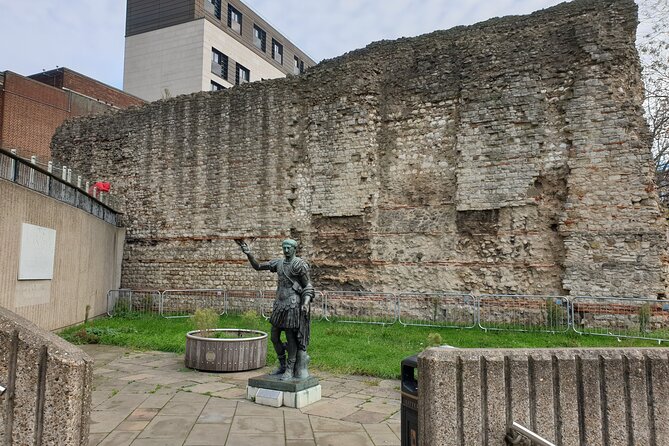
London’s past is stacked in plain sight on this walk. You move from the Tower of London and medieval church ruins to the Great Fire of 1666, the Bank of England, St. Paul’s Cathedral, and the remains of wartime London. The route makes the city’s disasters and rebuilds easier to understand, rather than treating each sight as an isolated photo stop.
I like the small group of no more than 15 and the way guide Tom connects famous places with side attractions, free museums, Roman remains, and artifacts nearby. I also like the clear two-hour shape and the handy ending at Ye Olde Cheshire Cheese on Fleet Street. The main drawback is simple: this is a fairly long walking tour, so it may not suit you if you have mobility concerns.
Key points to know before you book
- London’s disasters shape the route: You follow the city through the Great Fire of 1666 and the destruction of the Second World War.
- Seven central London stops: The route links the Tower of London, St. Dunstan in the East, the Monument, London Stone, the Bank of England, Guildhall, and St. Paul’s Cathedral.
- Tom is the named guide: He is praised for clear storytelling, strong historical knowledge, and useful advice for places to visit after the walk.
- Small-group format: The maximum group size is 15, which gives you a better chance to ask questions.
- About two hours on foot: Wear comfortable shoes and plan for a steady walk between stops.
- Attractions are viewed from outside: The tour fee includes the guide and walk, but admission to paid sights is not included.
From the Tower of London to London’s fiery past
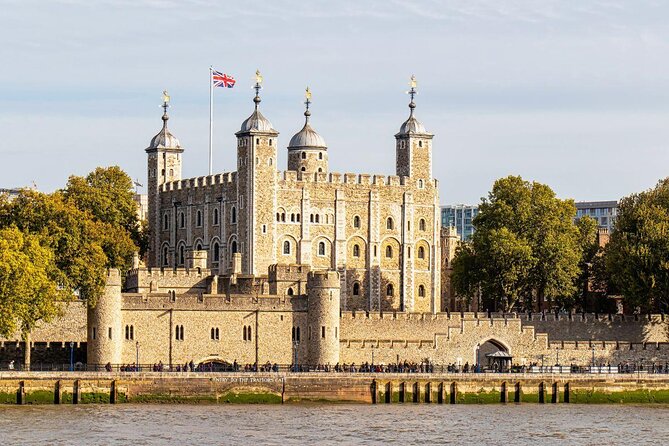
The meeting point is at 38 Trinity Square, near the Tower of London. This puts you at a strong starting point: the Tower is one of London’s most recognizable historic buildings and is described as Europe’s oldest surviving royal palace.
The stop itself is listed for about five minutes, so you should not expect an interior visit or a full Tower tour. Admission is not included. Instead, the guide uses the Tower as an opening chapter, helping you place London’s royal power, defenses, and long political story before moving into the City.
I like this approach for a first look at London. The Tower is familiar, but a short explanation can give the rest of the walk a useful frame. If you want to explore the Crown Jewels, medieval rooms, or the Tower grounds, allow separate time and buy admission independently.
From here, the route turns toward the City of London, where the streets hold layers from different periods. This is where the tour’s main idea becomes clear: London was repeatedly damaged, rebuilt, and altered, yet traces of earlier centuries remain close together.
More Historical Tours in London
- London Small Group Tour of Historical Pubs
★ 5.0 · 10,422 reviews - Soho Music & Historic Pubs Tour
★ 5.0 · 1,993 reviews - Royal Historic Pubs Walking Guided Tour in London
★ 5.0 · 803 reviews
St. Dunstan in the East, a church turned garden
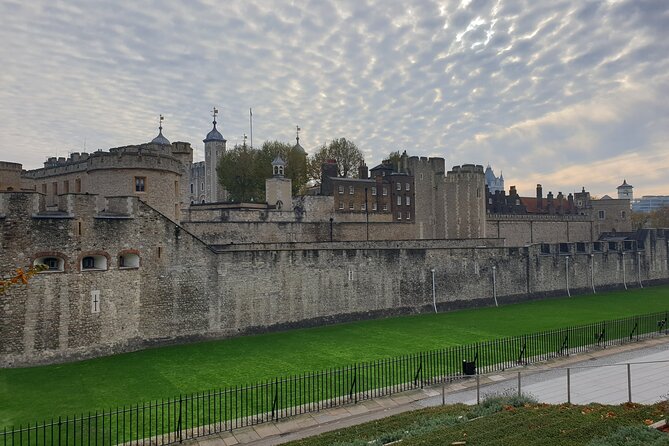
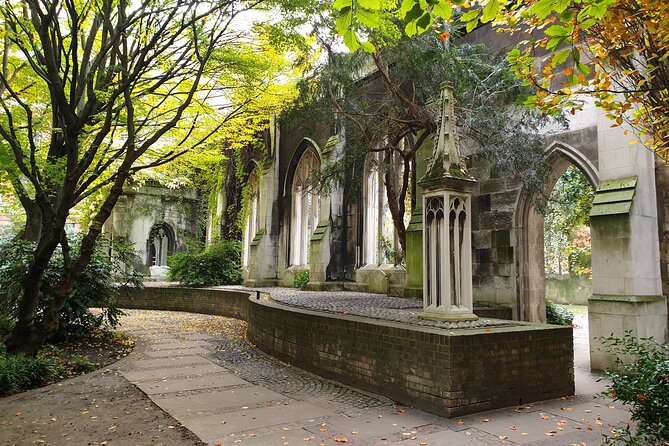
St. Dunstan in the East is one of the most atmospheric stops. The medieval church was destroyed during the Second World War, while its surviving walls now form a garden. The visit is free, and the listed stop lasts about five minutes.
That short time is enough to understand the basic story, though you may want to look carefully before the group moves on. The place works because it is not a polished reconstruction. It shows damage left visible and given a new use.
This is also where the title’s reference to Blitz bombings becomes more than a theme. You can connect wartime destruction with the later decision to preserve part of the ruined church rather than erase every mark of what happened.
I appreciate stops like this because they make history physical. A date in a book can feel remote. A damaged wall, left in place among plants and paths, gives the past a shape you can see.
The Monument and the Great Fire of 1666
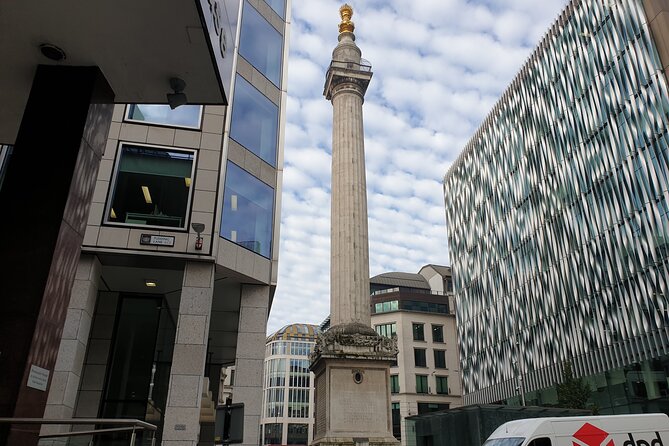
The Monument to the Great Fire of London marks the disaster that destroyed much of the City in 1666. It is a paid attraction, and admission is not included in the tour.
The stop is scheduled for about five minutes, so the focus is on the monument and the story behind it, not on climbing or spending a long time inside. If you want to visit the Monument as a separate attraction, check its admission details and set aside extra time.
The Great Fire matters here because it changed London on a huge scale. This is not just a tale of flames. It is a story about how the city rebuilt itself, how streets and buildings changed, and how later London grew over the remains of earlier London.
A short guide-led explanation can help you notice details you might otherwise pass without a thought. One of the most useful features of this tour is that Tom points out nearby attractions and free museums with Roman ruins and artifacts. You get more from the route if you keep your eyes open between the official stops.
London Stone and the city’s old legends
The London Stone is a free stop with a small footprint and a large set of legends attached to it. The stone has been linked to old stories about London’s identity and power, though the tour presents it as a place of fascinating legends rather than a single proven explanation.
This is a good reminder that city history includes folklore as well as documents and buildings. A guide can explain why an ordinary-looking object became important, and Tom’s style is suited to this kind of stop. He is praised for answering questions with enthusiasm and for making overlooked places feel worth noticing.
Do not expect a grand monument here. The appeal is the story, not the size. If you prefer dramatic interiors and large displays, London Stone may feel modest. If you enjoy the odd detail that changes how you see a street, it earns its place on the walk.
More Walking Tours in London
- Tour for Muggles The Ultimate Harry Potter Walking Tour in London
★ 5.0 · 4,684 reviews - London Jack The Ripper Guided Walking Tour
★ 5.0 · 3,131 reviews - Changing of the Guard Guided Walking Tour in London
★ 5.0 · 1,793 reviews - The Great British Rock and Roll Walking Tour
★ 5.0 · 1,371 reviews
The Bank of England and the working City
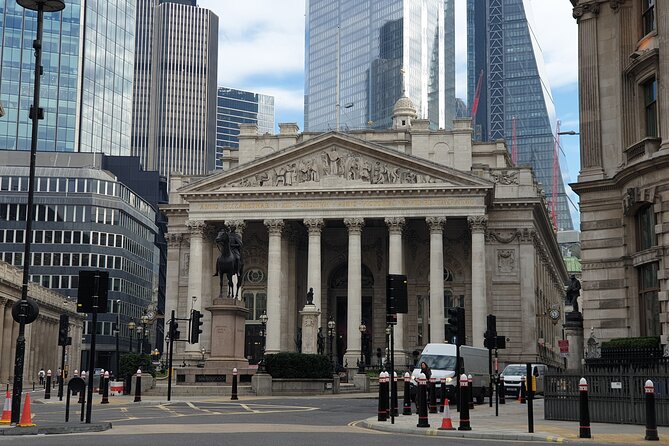
The route continues to the Bank of England Museum, home to the United Kingdom’s central bank. Admission is not included, and the stop is listed for about five minutes.
The museum adds an economic layer to the walk. After royal authority, fire, and wartime damage, you encounter the institution tied to Britain’s money and financial system. The guide can give you a useful sense of why this part of London became so important.
You should treat this as an outside orientation stop unless you arrange a separate museum visit. The information provided does not promise an interior tour, and the short timing would not allow a full museum visit.
This is one of the route’s strengths. London’s story is not only kings, churches, and ruins. It is also the story of commerce, banking, government, and the institutions that kept the city working after catastrophe.
Guildhall and Roman traces beneath modern London
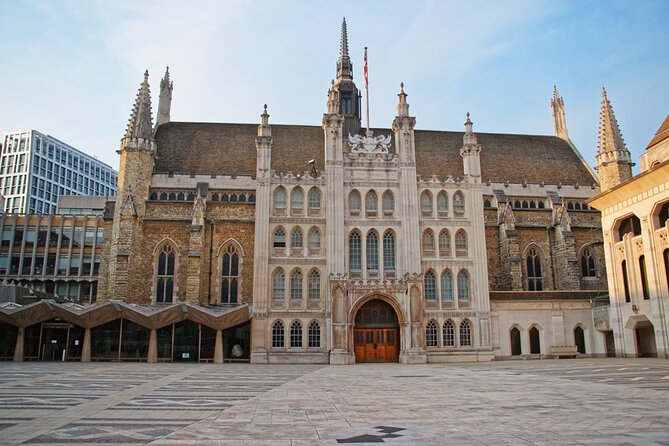
Guildhall is a fifteenth-century hall and the home of the Corporation of London. Admission is not included, and the stop is planned for around five minutes.
The site brings together civic power and older layers of the city. The tour also points you toward nearby free museums, Roman ruins, and artifacts, giving you options to continue exploring after the walk. You will want to ask Tom about these suggestions if Roman London is your main interest.
This part of the route may reward curious walkers more than people looking for a long visit at every stop. Five minutes is enough for a quick explanation and orientation, but not for a full look inside each paid attraction.
I like the way Guildhall broadens the story. London was not shaped only by the monarchy. Its civic institutions, business interests, and local government also helped determine how the City developed.
St. Paul’s Cathedral and Christopher Wren’s London
The walk reaches St. Paul’s Cathedral, Christopher Wren’s seventeenth-century cathedral. Admission is not included, and the listed visit lasts about five minutes.
St. Paul’s is a major visual finish to the central part of the route. It also connects directly to the story of rebuilding after the Great Fire. Wren’s cathedral represents a new version of London rising after a major urban disaster.
Again, this is an outside stop rather than a cathedral visit. If you want the interior, crypt, galleries, or dome, plan a separate visit and allow much more time. The tour gives you context, not a full admission experience.
For me, this is an effective point to pause and consider the route as a whole. You have seen royal London, a church damaged in the Second World War, a monument to the Great Fire, a legendary stone, the financial district, and the civic center. St. Paul’s ties those subjects together through architecture and rebuilding.
What Tom adds to the walk
Tom is the guide named in the available tour details, and his role is a major part of the experience. He is praised for strong knowledge of London’s past, engaging storytelling, and a friendly manner that makes questions easy.
That matters on a route with several short stops. The buildings cannot do all the work in five minutes. You need the guide to explain what happened, why the site matters, and how it connects to the next place.
Tom also gives practical suggestions for further sightseeing and local places to enjoy after the tour. That is useful because the walk introduces more subjects than two hours can cover. You may leave with a better plan for the rest of your day, especially if you want to find Roman ruins, free museums, or additional City sights.
The comments about his style are consistent: he keeps the group engaged, makes history easy to follow, and does not bury the walk under too much information. That balance is important. London has endless dates and names, but a good guide knows which details will stick.
Is $27.78 a fair price?
At $27.78 per person, this is a reasonable price for a two-hour guided walk, especially with a group capped at 15 people. You are paying for the guide’s explanation, route planning, and local context rather than for entry to the Tower, Monument, Bank of England Museum, Guildhall, or St. Paul’s Cathedral.
That distinction matters. The tour is not a package of attraction tickets. It is a walking introduction to London’s central historic district. If you want to go inside several of the buildings, you will need to budget for separate admission and extra time.
I see the best value here if you are new to the City of London or if you often walk past old buildings without knowing what they mean. The guide helps you use your limited sightseeing time well. You can then return to the places that interest you most.
The price is less compelling if you already know the City of London well or prefer to explore entirely at your own pace. Still, the small group and guide-led connections give it an advantage over simply following a map between famous buildings.
Timing, meeting point, and walking demands
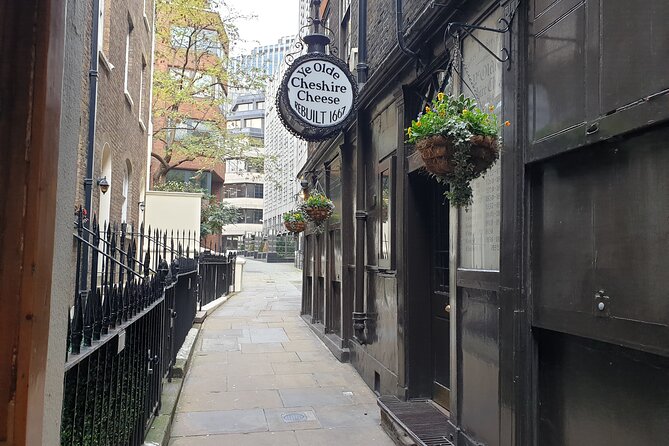
The tour lasts about two hours. It begins at 38 Trinity Square, London EC3N 4DJ, near the Tower of London, and ends outside Ye Olde Cheshire Cheese at 145 Fleet Street, London EC4A 2BP, not far from Blackfriars Station.
The end point is practical. You finish near public transportation and close to a historic Fleet Street pub, so you can continue sightseeing, find food, or make your way elsewhere in London.
The walk is described as suitable for most people, and service animals are allowed. Still, do not mistake a two-hour city walk for a gentle indoor tour. One direct caution is worth taking seriously: the route may not be suitable if you have mobility issues. Ask about the walking demands before booking if that is a concern.
Wear comfortable shoes and expect to remain on foot for much of the experience. The information provided does not give an exact distance or a detailed accessibility breakdown, so you should contact the operator if you need specific advice.
The tour is offered in English and includes a mobile ticket. Confirmation arrives when you book, which makes it easy to keep the details on your phone.
Who will enjoy this London history walk?
This is best for you if you like history presented through streets, buildings, ruins, and short stories. It suits first-time visitors who want a clear introduction to the City of London, as well as returning visitors who want to notice places they previously passed without stopping.
It is especially useful for people interested in the Great Fire, wartime London, Roman remains, royal history, and the development of the financial district. You do not need to be a specialist. The guide’s job is to make the details manageable.
Families with older children may appreciate the mix of disasters, legends, churches, money, and royal power. The walk is more varied than a single-building tour, though younger children may find two hours of historical explanation tiring.
You should choose another activity if you want long interior visits, a slow pace, or guaranteed access to every attraction named along the route. This experience gives you an informed walk and a strong overview, not a series of full admissions.
Should you book it?
Book this tour if you want London’s history explained as one connected story, from royal power and Roman traces to the Great Fire and Blitz damage. The small group, English-speaking guide, and named guide Tom’s lively teaching style make it a good choice for curious first-time visitors.
Skip it if mobility is a concern, if you dislike steady walking, or if you want to spend most of your time inside the Tower, St. Paul’s, the Monument, or the museums. At $27.78, it offers solid value as a guided orientation, but you should treat paid admissions as separate plans.
The strongest reason to book is the chance to see ordinary streets differently. Tom helps turn places you might normally pass into pieces of London’s long, often fiery story.
FAQ
How long is the walking tour?
The tour lasts approximately two hours.
Where does the tour start?
It starts at 38 Trinity Square, London EC3N 4DJ, near the Tower of London.
Where does the tour finish?
It ends outside Ye Olde Cheshire Cheese at 145 Fleet Street, London EC4A 2BP, not far from Blackfriars Station.
What language is the tour offered in?
The tour is offered in English.
What is the price per person?
The listed price is $27.78 per person.
Are admission tickets included?
No. Admission is not included for the Tower of London, the Monument to the Great Fire of London, the Bank of England Museum, Guildhall, or St. Paul’s Cathedral. St. Dunstan in the East and London Stone are free stops.
How large is the group?
The tour has a maximum of 15 participants.
Is the tour suitable for people with mobility issues?
Most people can participate, but the experience involves an extended walk. The available information specifically cautions that it may not suit people with mobility issues.
Are service animals allowed?
Yes, service animals are allowed.
Can I cancel for a full refund?
Yes, you can cancel up to 24 hours before the experience start time for a full refund. Cancellations or changes made less than 24 hours in advance are not accepted for a refund.
Just added around London
- London Private Jack The Ripper Tour★ 5.0 · 9 reviews
- Private Spy Walking Tour of London★ 5.0 · 6 reviews
- Private Shoreditch Street Photography Workshop★ 4.5 · 4 reviews
- Private Sightseeing Walking Tour of The City Of London★ 5.0 · 3 reviews
- Private 2.5 Hour Taxi Tour of London – London’s Greatest Bits!★ 5.0 · 4 reviews
- Private Round Trip Transfer between London Airports and Hotel★ 3.5 · 56 reviews
- Shakespeare London Walking Tour★ 5.0 · 26 reviews
- Private Prison Van Escape Game – London Immersive Experience★ 4.0 · 15 reviews
Walking Tours, compared.
Oxford University Walking Tour With University Alumni Guide
Read our review →
Tour for Muggles The Ultimate Harry Potter Walking Tour in London
Read our review →
Cambridge University Walking Tour by Alumni™ Kings College Option
Read our review →
Blackbeard to Banksy – The Ultimate Walking Tour of Bristol
Read our review →
Air Raid Shelter + St. Nicholas Market Walking Tour
Read our review →
Walking Tour of Bath with Blue Badge Tourist Guide
Read our review →
Changing of the Guard Guided Walking Tour in London
Read our review →Browse the lists this tour appears in