

Reviewed · MUSEUMS
The British Museum: a highlights tour with a TV historian
The best thing about this British Museum tour is its access to the stories behind the displays. Loona, a former British Museum staff guide, leads you from the Rosetta Stone and Egyptian mummies to Sutton Hoo, Assyrian carvings, and the Parthenon Sculptures. He has even supervised museum sleepovers with the mummies, a detail that tells you this is not a guide who only memorized the labels.
I like the private format, since your group gets the guide’s full attention, and I like the family-friendly approach, with Harry Potter, Hollywood, and modern life used to make old objects easier to grasp. The main drawback is that museum entry is free but not automatic: you must book a separate timed ticket, and getting inside can take about 30 minutes.
Key points
- Former British Museum staff guide: Loona brings first-hand experience of the museum and its collections.
- Three hours of major objects: Expect the Rosetta Stone, Parthenon Sculptures, Sutton Hoo, Lewis Chess pieces, Benin Bronzes, and more.
- Stories beyond the labels: Learn how hieroglyphs and cuneiform were translated, and how some famous objects were acquired.
- Private attention: Only your group takes part, making it easier to ask questions and adjust the pace.
- Good for families: Harry Potter, films, and modern examples help keep younger visitors involved.
- Free museum entry, paid guiding: Book your timed museum ticket directly before the tour.
Why this British Museum tour works
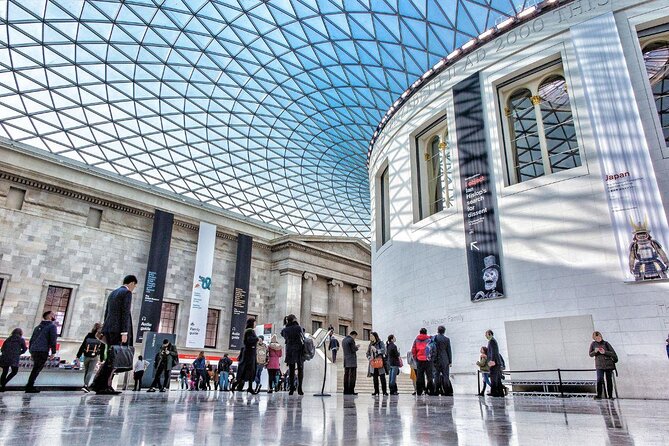
The British Museum can feel like a small city of objects. Its galleries cover ancient Egypt, Mesopotamia, Greece, Rome, Asia, Africa, the Americas, and Britain. With only a few hours, you need a plan. Otherwise, it is easy to spend too long admiring one case and miss the pieces you came to see.
This tour gives you that plan without reducing the museum to a quick parade of famous names. You will see major highlights, but you will also hear how scholars read ancient writing, how museums decide what is genuine, and how objects reached London. That last point matters. A visit to the British Museum is not only about beauty and age. It is also about collecting, empire, ownership, and the difficult questions attached to famous displays.
The tour lasts about three hours, though one account describes a visit lasting three and a half hours. I would allow a little flexibility rather than treating the end time as exact. The guide can make time for short breaks, questions, and a closer look at objects that catch your attention.
Because this is a private activity, only your own group participates. That makes the experience a better fit if you prefer asking questions, have children with different attention spans, or want the guide to adjust the route. It also means the value depends heavily on the guide. Here, Loona’s previous work inside the museum is a strong reason to consider it.
More museums and galleries in London:
- Tower of London and Crown Jewels Exhibition Ticket
★ 4.5 · 6,677 reviews - Chelsea FC Stadium Tours and Museum
★ 5.0 · 1,908 reviews - Official tickets: Moco Modern & Contemporary Art Museum
★ 4.5 · 1,157 reviews
Meeting Loona inside the museum
The meeting point is the British Museum Reading Room on Great Russell Street. The scheduled start is 11:00 in the morning, with the tour ending at the museum, near the Mummies gallery.
Give yourself plenty of time before 11:00. You need a separate, free timed-entry ticket from the British Museum’s own website, and admission procedures can take about 30 minutes. A late arrival could shorten an already carefully planned tour, so I would not aim to reach the museum at the last possible minute.
The experience includes guiding services only. Souvenirs, fees, and taxes are not included, and the museum ticket must be arranged by you. Since the museum itself does not charge admission, the price you pay for this experience is for the guide’s time, planning, interpretation, and private service rather than for entry.
That is a sensible way to judge the cost. If you are comfortable reading labels and choosing your own route, a free self-guided visit may be enough. If you want to understand why objects matter, keep children interested, and see a carefully chosen set of galleries in limited time, the guide may offer better value.
The Rosetta Stone and the start of written history
The Rosetta Stone is an ideal opening highlight. It is famous not simply because it is an impressive slab of dark stone, but because its inscriptions helped scholars decipher Egyptian hieroglyphs. You will hear how the writing was translated and why that breakthrough changed the study of ancient Egypt.
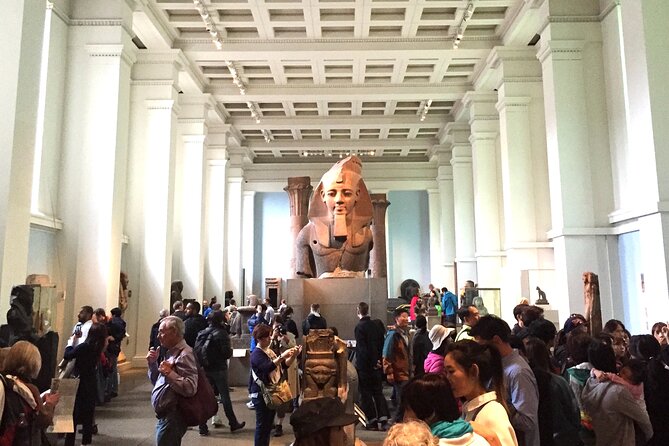
Nearby, the bust of Rameses II gives you a chance to consider royal image-making. The point is not only that the sculpture is large or recognizable. It shows how rulers wanted to be remembered and how museums use individual objects to explain an entire period.
The tour also includes the oldest library and cuneiform, along with the story of how cuneiform was translated. These subjects connect writing to administration, power, and daily life. You are not just looking at marks cut into stone or clay. You are seeing some of the earliest ways people recorded information and preserved stories.
That link continues with the world’s oldest epic story. Hearing about an early epic beside the writing that preserved it gives the ancient galleries a stronger human scale. Kings and gods are part of the story, but so are fear, ambition, loyalty, and the need to tell stories that last.
False artifacts and the problem of trust
One of the more unusual parts of the route is the section on fakes. Crystal skulls and mermaids provide a useful break from the standard list of ancient masterpieces. They also make an important point: age and exotic appearance do not prove that an object is authentic.
This is especially helpful for children and first-time museum visitors. Instead of treating the museum as a place where every object has an unquestioned story, the guide can show you how experts test claims and separate real history from clever invention. That makes the visit more engaging and more honest.
The subject also changes the way you look at the rest of the museum. After seeing examples of false objects, you may pay closer attention to labels, evidence, and the wording used to describe an artifact. In a museum filled with famous treasures, that habit of questioning is valuable.
A few more London days out to weigh up
- London Big Bus Hop-On Hop-Off Tour with Optional River Cruise
★ 3.5 · 10,803 reviews - London Small Group Tour of Historical Pubs
★ 5.0 · 10,422 reviews - Thorpe Park Admission Ticket
★ 4.0 · 5,915 reviews - London Jack the Ripper Guided Tour with Ripper-Vision
★ 4.5 · 4,840 reviews
Sutton Hoo, Celtic jewelry, and Britain’s early past
The Anglo-Saxon Sutton Hoo treasures are among the most appealing stops for many visitors. The collection connects burial customs, craftsmanship, trade, status, and belief. It is also a good section for anyone interested in Britain before the medieval period.
Celtic jewelry adds another view of early European art and identity. These pieces can be easy to pass quickly when you are focused on larger sculptures or famous stones. A guide helps put smaller objects into the wider story, showing why workmanship, materials, and symbols matter.
The Lewis Chess pieces offer a different kind of connection. They are immediately understandable because you can recognize the game, yet they also carry clues about the people who made, owned, and used them. This is the sort of stop that works well for families: you do not need much background to begin asking questions.
Egypt, Mexico, and the Americas
The tour includes Aztec jewelry associated with Montezuma and Mayan carvings. These objects broaden the visit beyond the Egyptian, Greek, and Roman pieces many people expect to see first.
The Aztec material can prompt questions about royal display, precious materials, and the way European accounts shaped later understanding. The Mayan carvings show how writing, ceremony, and political power were recorded in another part of the world. You should expect the guide to connect the objects rather than treat each culture as an isolated stop.
For families, these galleries may be particularly useful because the guide can relate distant societies to familiar ideas such as status, storytelling, symbols, and technology. The activity specifically allows the use of Harry Potter references, Hollywood, and contemporary life, so the explanations are not limited to formal academic language.
Assyria, human rights, and the Benin Bronzes
The Assyrian war machine brings military power into view. Assyrian reliefs and related objects can seem imposing, but the important question is what they were designed to communicate. Images of warfare were not only records. They also projected authority and warned viewers about the strength of the ruler.
The tour also includes what is described as the first declaration of human rights. That phrase gives the stop a strong modern connection, but it is worth listening carefully to the historical context rather than assuming ancient ideas match modern legal rights in every detail. A good explanation should help you see both the connection and the limits of the comparison.
The Benin Bronzes add another essential layer. Their display raises questions about how museums acquired objects and what happens when cultural treasures are taken during colonial violence. Since this tour specifically covers acquisition as well as appearance, this is one of the most important places to ask questions.
These subjects make the tour more than a procession of beautiful things. They ask you to consider who made an object, who controlled it, who removed it, and why it is now displayed in London. For many people, that context is worth paying for.
The Parthenon Sculptures and contested ownership
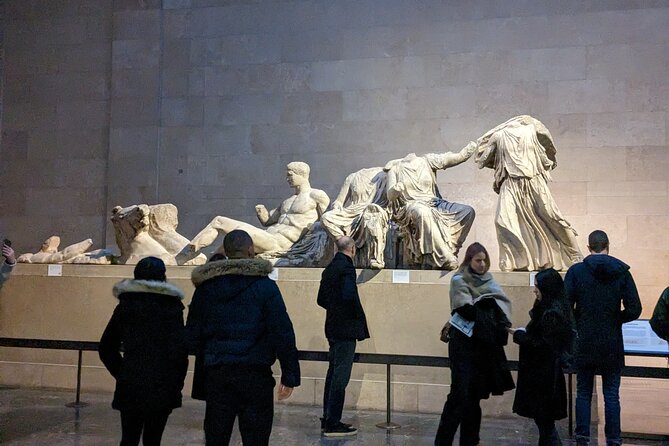
The Parthenon Sculptures, often called the Elgin Marbles, are among the museum’s most famous displays. Their scale and craftsmanship make them a major stop, but their ownership remains contested. The tour promises attention not only to the sculptures themselves but also to their acquisition.
This is a place where a guide can help you separate the artistic achievement from the political debate. You will see why the sculptures are admired, while also considering why Greece has sought their return and why the museum continues to display them.
That balance is important. You should not expect a simple answer or a sales pitch. The value lies in hearing the background and having a clearer basis for forming your own view.
Easter Island, China, and India
The route continues to an Easter Island statue, a Chinese Buddha, and a Shiva statue from India. These stops add strong visual variety after the stone reliefs and ancient writing.
The Easter Island statue raises questions about distance, movement, and how a large cultural object becomes part of a London collection. The Chinese Buddha offers a chance to look at religious art and representation, while the Shiva statue introduces Hindu imagery and the many ways a deity can be shown through form and gesture.
The tour’s range is ambitious. In three hours, you cannot study every gallery in detail. You will instead get a guided sweep across major cultures and periods, with the guide choosing the objects that best explain the museum’s larger themes. If you want a slow, specialist examination of one region, this is not the right format. If you want a clear route through many civilizations, it makes sense.
Who will get the most from this experience
I would choose this tour if you have one day for the British Museum and want to use your time well. It is also a strong option for families, since the guide can make difficult subjects easier to follow without turning the museum into a childish attraction.
It suits first-time visitors who want the famous pieces but also want help with translation, authenticity, and ownership. The private format is useful for couples, families, or a small group that prefers conversation over a large scheduled group.
You may not need it if you already know the museum well, have several days to explore, or prefer to wander at your own pace. The tour covers a lot, so anyone hoping to sit quietly with a single object for an hour will find the schedule too broad.
Service animals are allowed, the museum is near public transportation, and most people can participate. The information provided does not give a specific route for every mobility need, so contact the operator if you require detailed access guidance.
Booking details and cancellation
Book the free museum ticket directly through the British Museum before arranging your day around the tour. Timed tickets can fill up, and you should allow about 30 minutes to enter.
The tour offers free cancellation up to 24 hours before the local start time. Cancellations or changes made inside that 24-hour window are not refunded or accepted. The experience also requires a minimum number of participants. If that minimum is not reached and the activity is canceled, you will be offered another date or experience, or a full refund.
Should you book this British Museum tour?
Book it if you want the Rosetta Stone, Sutton Hoo, Benin Bronzes, Parthenon Sculptures, and Lewis Chess pieces explained by someone who previously worked inside the museum. Loona’s personal connection to the building, plus his ability to use family-friendly references, gives this tour a clear advantage over simply following a map.
Skip it if you are happy to explore independently and do not want to pay for guiding in a museum with free admission. For everyone else, the private format and carefully chosen route make the experience a practical way to turn a huge museum into a readable story. Just secure your timed ticket early and arrive well before 11:00.
FAQ
How long is the British Museum highlights tour?
The tour lasts about three hours. One account describes the experience as lasting three and a half hours, so allow some flexibility for questions and breaks.
Who guides the tour?
The guide is Loona, a former British Museum staff tour guide who has also supervised sleepovers with the mummies.
What can I see on the tour?
The route includes the Rosetta Stone, bust of Rameses II, Aztec jewelry associated with Montezuma, crystal skulls and mermaids, the oldest library, Sutton Hoo, the world’s oldest epic story, Mayan carvings, an early declaration of human rights, Assyrian material, cuneiform, Benin Bronzes, Celtic jewelry, the Lewis Chess pieces, the Parthenon Sculptures, an Easter Island statue, a Chinese Buddha, and a Shiva statue from India.
Is museum admission included?
No. British Museum admission is free, but you must book your own free timed-entry ticket directly through the museum’s website.
Is this a private tour?
Yes. Only your own group participates in the activity.
Where does the tour start?
The meeting point is the British Museum Reading Room on Great Russell Street in London. The scheduled start time is 11:00 in the morning.
Can I cancel for a refund?
Yes, if you cancel at least 24 hours before the experience start time. Cancellations or changes made less than 24 hours in advance are not refunded.
Just added around London
- London Private Jack The Ripper Tour★ 5.0 · 9 reviews
- Private Spy Walking Tour of London★ 5.0 · 6 reviews
- Private Shoreditch Street Photography Workshop★ 4.5 · 4 reviews
- Private Sightseeing Walking Tour of The City Of London★ 5.0 · 3 reviews
- Private 2.5 Hour Taxi Tour of London – London’s Greatest Bits!★ 5.0 · 4 reviews
- Private Round Trip Transfer between London Airports and Hotel★ 3.5 · 56 reviews
- Shakespeare London Walking Tour★ 5.0 · 26 reviews
- Private Prison Van Escape Game – London Immersive Experience★ 4.0 · 15 reviews
Museums, compared.
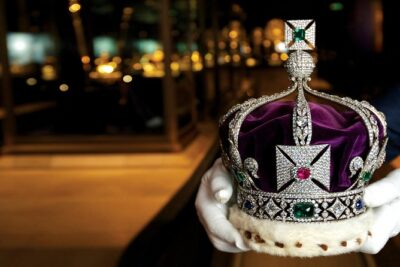
Tower of London and Crown Jewels Exhibition Ticket
Read our review →
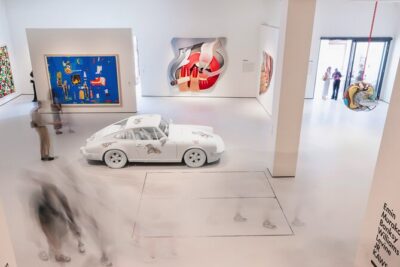
Official tickets: Moco Modern & Contemporary Art Museum
Read our review →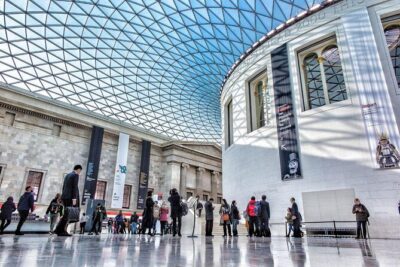
British Museum London Guided Tour Semi-Private 8ppl Max
Read our review →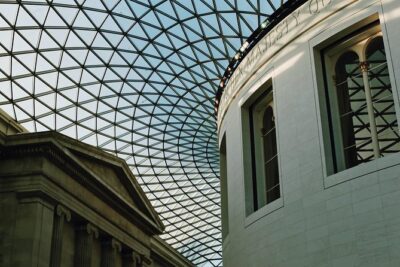
The British Museum London – Exclusive Guided Museum Tour
Read our review →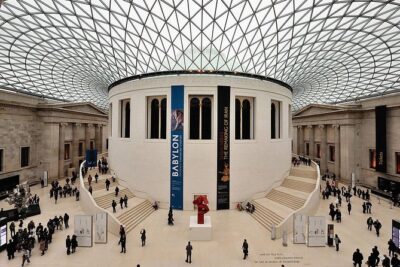

Skip the Line: Liverpool Beatles Museum – The perfect tribute to the Beatles
Read our review →Browse the lists this tour appears in