
Reviewed · WALKING TOURS
The Heart of Chester Walking Tour – Guided Walk
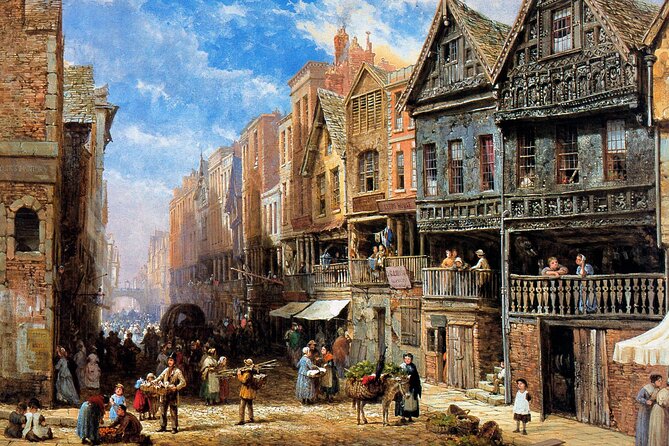
Chester’s past is unusually close to the surface. On this walk, you move from the site of a Roman fortress to medieval shopping Rows, then up onto city walls that later became a grand promenade. You may even look at a café or shop and learn that Roman remains lie beneath your feet. The hidden Roman traces give the city a depth that is easy to miss on your own.
I like the compact route and the small group, capped at 15 people. Caroline and Phil are both praised for clear explanations, a good pace, and a knack for making long stretches of history easy to follow. The main consideration is that this is an overview, not a tour of the interiors of Chester’s historic buildings, and there are steps along the way.
Key points to know before you book
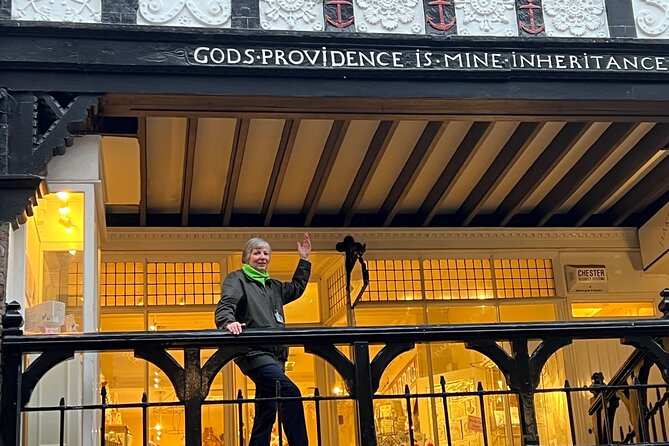
- Roman ruins under the modern city: The walk connects Chester’s present-day streets with its past as a major legionary base.
- The Rows make sense at last: You’ll learn why Chester’s unusual two-level shopping galleries developed and how merchants used them.
- A small group of 15: The size is useful when you want to hear the guide and ask questions.
- A clear 90-minute introduction: The route gives you a firm sense of direction before you explore alone.
- Guides with different strengths: Caroline is praised for a measured speaking pace and broad knowledge, while Phil brings an easy, humorous style.
- No admission fees included: You see historic buildings from outside, but entry to interiors is not part of the tour.
Why Chester rewards a guided walk
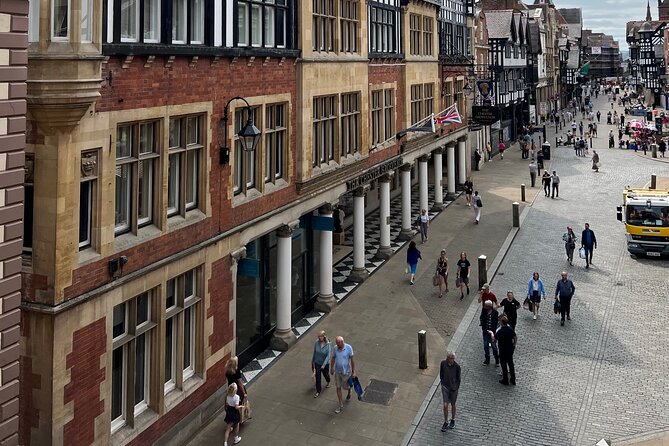
Chester is compact, but it is not simple. Roman streets, medieval buildings, Victorian alterations, Tudor and Georgian houses, modern shops, and a busy city centre all share a fairly small area. Without context, the city can look like a pleasant collection of old façades. With a guide, the streets become a record of changing power, trade, defence, and daily life.
This tour focuses on the heart of Chester rather than trying to cover every attraction. That is a sensible choice for a 90-minute walk. You get the main landmarks, a little local colour, and enough history to help you make better choices for the rest of your visit.
The price is $16.65 per person. For that amount, you are paying for a professional Green Badge Guide, a planned route, and the interpretation that connects separate sights. You are not paying for admission to the cathedral or other historic buildings, so budget separately if you want to go inside them.
The tour begins at 1:00 pm outside the Chester Visitor Information Centre by the Town Hall on Northgate Street. It ends at 2 Bridge Street, in the centre of town. That makes it useful as an afternoon orientation, especially if you are new to Chester and want to understand the layout before choosing where to shop, eat, or return for a closer look.
More walking tours in Chester:
- Fascinating Walking Tours Of Roman Chester With An Authentic Roman Soldier
★ 5.0 · 1,232 reviews - Medieval Walking Tour of Chester
★ 5.0 · 155 reviews - Haunted Chester and its Ghosts: A Self-Guided Walking Tour
★ 5.0 · 19 reviews
Northgate Street and the Town Hall square
The opening stop sets up Chester’s story in one place. Around the Town Hall square, the guide introduces the city as a Roman fortress, a medieval religious centre, and a modern city with an impressive Gothic-style town hall.
This is a good place to begin because the themes keep returning throughout the walk. Chester was built for military purpose, shaped by trade, and altered by religious and political change. The introduction helps you look beyond the present appearance of Northgate Street.
You receive about ten minutes here. That is enough to take photographs and hear the basic outline without getting bogged down at the first stop. The free admission note matters because the tour begins outside, with no entry ticket needed.
Chester Cathedral and its many chapters
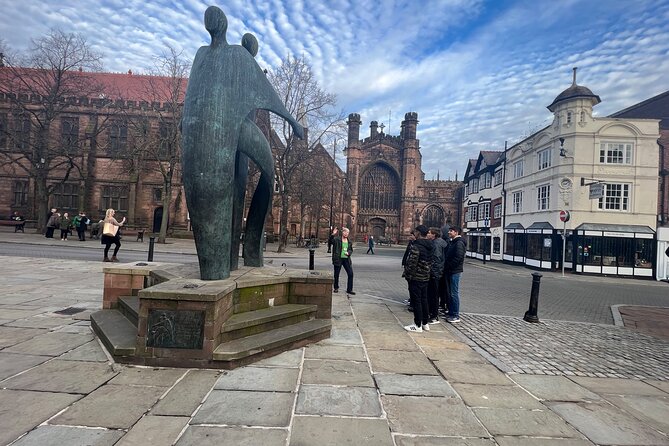
The cathedral area brings together stories from several periods. You hear about a Mercian princess, a talking goose, a Norman earl, and the wolf associated with the power to make and break laws. These details add human drama to what could otherwise be a formal architectural stop.
The cathedral also survived the Dissolution of the Monasteries, the sweeping religious changes that dismantled many English religious houses. Later, the building received a Victorian facelift. That combination of survival and alteration is useful to notice: Chester’s historic buildings are not frozen in one period.
The tour does not include admission inside Chester Cathedral. If the cathedral interior is important to you, treat this stop as an introduction, then plan a separate visit. The walk gives you the story and setting, but not a full examination of the building’s interior.
Watergate Street, from ordinary homes to grand houses
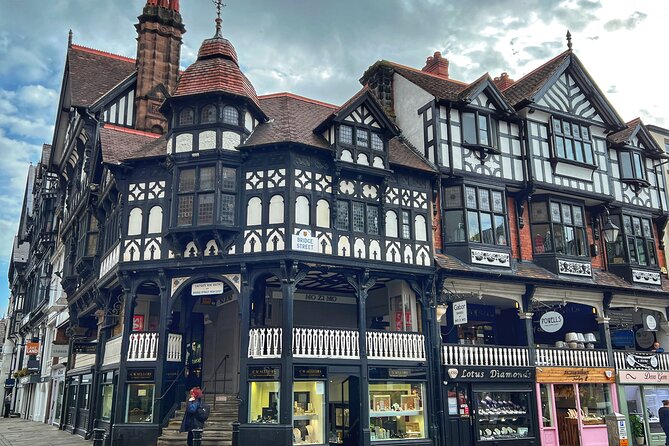
Watergate Street shifts attention from institutions to people. Here, the guide explains the houses of everyday medieval residents and contrasts them with the townhouses and mansions built for the landed gentry.
That contrast helps you read Chester’s façades as social evidence. Size, position, and decoration could signal wealth and rank. You get a sense of how the city worked not only as a fortress and trading centre, but also as a place where different classes lived, worked, and displayed their status.
This is one of the points where a guide adds real value. You can photograph an old building by yourself, but you may not know why its location or form mattered. The stop turns architecture into a story about work, money, and ambition.
A few more Chester days out to weigh up
- Admission Ticket to Sick To Death in Chester
★ 4.5 · 384 reviews - Snowdonia & Chester Day Tour from Manchester Including Admission
★ 5.0 · 173 reviews - Fun, Flexible Treasure Hunt Around Chester with Cryptic Clues & Hidden Gems
★ 5.0 · 162 reviews - Chester Food Tour: Unique Food With Drinks & Sightseeing
★ 5.0 · 152 reviews
Four main streets leading to The Cross

The route then takes you through Chester’s four main streets toward The Cross. Historically, these roads helped shape the city as a trading hub and military base. The guide places the streets in several settings: a medieval city, a Roman headquarters, a fortress for a legion, and a base for later armies.
You will not simply walk from one landmark to the next. The point is to understand how the street plan connects the city’s different eras. Roman military purpose influenced the shape of Chester, while later commercial life filled those routes with shops, houses, and markets.
The ten-minute stop is brief, so expect a brisk overview rather than a long lecture. That is a strength if you want a first look at the centre without spending half a day on one subject. If you already know Roman Chester well, you may want a more specialised experience afterward.
Eastgate and the famous clock

Eastgate Clock is one of Chester’s most recognisable sights and a natural photo stop. The guide explains the clock and the surrounding area, then takes you onto the city walls.
The walls were first defensive. Their purpose was to keep enemies out, not to provide a scenic stroll. Later, they became a grand promenade, changing from military infrastructure into a public way to see the city. That shift neatly captures Chester’s wider story: old structures were reused as the city’s needs changed.
The walls also give you a different view of the streets below. You can connect the compact centre with the defensive ring and better understand how Chester operated as a fortified place. Take the physical warning seriously, though. There are steps on the walk, and you should be comfortable with a moderate level of activity.
Chester Rows and the city’s unusual shopping streets
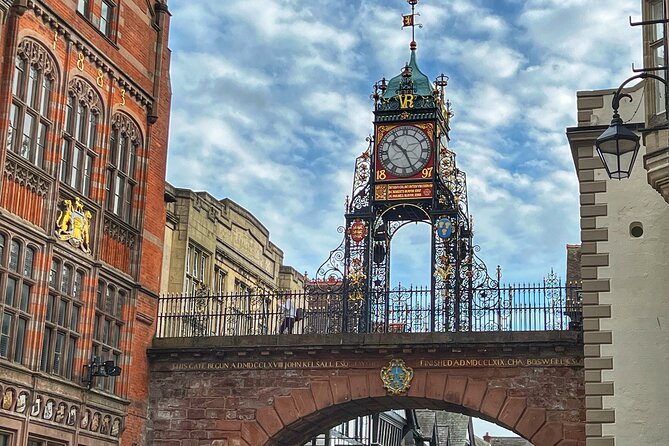
The Rows are the centrepiece for many people. These covered galleries create an upper level of shops and walkways above lower-level premises. Their appearance is distinctive, but the reason for their design is even more useful to understand.
The guide explains how the Rows relate to medieval merchants and the changing use of Chester’s buildings. One level could serve commercial needs while the street itself continued below. Once you hear that background, the Rows stop looking like a decorative curiosity and start making sense as part of the city’s economic life.
This is also one of the best places to pause for photographs. The architecture is close, varied, and easy to examine while you walk. The tour does not include shopping time, so note down any shop, café, or building you want to revisit after the group moves on.
The Rows show how Chester combines old and new. Today, shops, bars, and restaurants operate in historic buildings. You get the pleasure of seeing a living city rather than a preserved set of empty façades, although the modern activity can make it harder to hear if the centre is busy.
The Chester Cross and the market centre
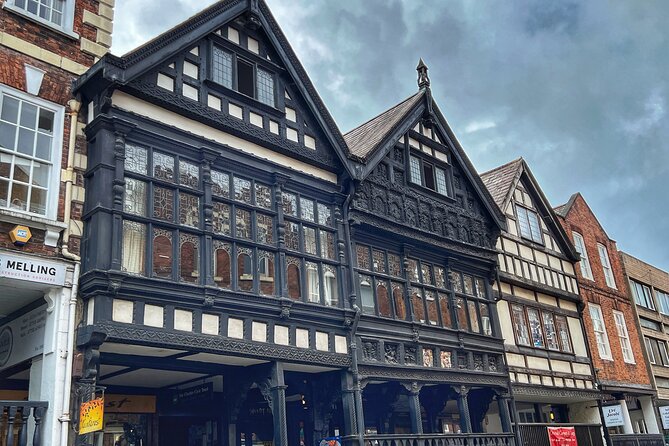
At Chester Cross, the walk reaches the centre of the old city. Medieval markets once made this a place of trade and public activity. The guide also connects the area with Roman headquarters, cock-and-bull stories, and the buskers who perform there today.
That mixture of fact, folklore, military purpose, and modern street life is typical of the tour. You are not given only a list of dates. You also hear the stories that help explain how places gain meaning over time.
The Cross is a useful orientation point for exploring independently. From here, you can better understand the relationship between the main streets, the Rows, and the surrounding historic centre. The tour ends nearby, so it is easy to stay in the area and continue your afternoon.
Eastgate Street, Bridge Street, and Chester as a city of love
The final section covers Eastgate Street and Bridge Street. The theme here is Chester as a city of love, with attention to the romantic side of this ancient centre.
That theme gives the walk a softer ending after the military and defensive material earlier in the route. Chester is not only Roman walls and medieval trade. Its streets, buildings, and stories have also inspired affection, local pride, and plenty of photographs.
The ending at 2 Bridge Street is practical. You finish in the centre rather than at an isolated transport point, so you can continue sightseeing, find a meal, or return to one of the buildings that caught your attention. The tour does not include a return transfer because the entire experience is on foot.
How the guides shape the experience
Caroline and Phil are the named guides associated with this experience. The strongest praise focuses on their clear delivery, broad grasp of Chester’s past, and ability to answer questions while keeping the group moving.
Caroline is especially suitable if you are concerned about following an English-language tour. She is described as speaking slowly and clearly, which can help if English is not your first language. She is also noted for keeping a comfortable pace, an important point in a walking tour with steps.
Phil brings an informed and sometimes humorous style. His approach connects Roman, medieval, and modern Chester without making the walk feel like a classroom lesson. If you enjoy asking questions, the small group should make that easier than a large coach tour.
The guide matters because much of Chester’s interest is not obvious at street level. A well-explained undercroft, wall, or townhouse can change what you notice for the rest of the day.
Who will get the most from this tour
I would choose this walk if you are visiting Chester for the first time, have limited time, or want a sensible introduction before exploring alone. It also suits local residents who know the streets but want the stories behind familiar buildings. One local participant learned new facts despite already living in Chester, which says something about how much detail the city can hide.
It works well for history fans who like seeing several periods in one short route. Roman military history, medieval trade, religious change, social history, architecture, and modern city life all appear.
It is also a good fit if you prefer a small group. A maximum of 15 people is intimate enough for the guide to be heard and for questions to feel manageable.
You should think twice if you want extensive time inside the cathedral or other buildings. You should also be prepared for steps and a moderate level of walking. The experience is in English, and while Caroline is praised for speaking clearly for non-fluent English speakers, private tours in other languages may be requested separately rather than assumed on this public walk.
Practical details that affect your day
Confirmation arrives when you book, and mobile tickets are accepted. The tour is offered in English and runs for about 90 minutes. It is near public transportation, and service animals are allowed.
The booking pattern suggests that people often reserve around 23 days ahead. That does not guarantee that every date will sell out, but it is sensible to book early if your Chester visit is fixed, especially since the group limit is 15.
Cancellation is flexible up to 24 hours before the 1:00 pm start for a full refund. Cancellations or changes made within 24 hours are not refunded or accepted. The cut-off uses Chester’s local time.
Bring shoes suitable for walking and steps. Give yourself a little time to find the Chester Visitor Information Centre at the Town Hall on Northgate Street, since arriving late can be awkward once a small walking group has moved away from the meeting point.
Is The Heart of Chester Walking Tour worth booking?
At $16.65, this is good value if you want context rather than a quick photo circuit. In 90 minutes, you cover the cathedral area, Rows, city walls, Eastgate Clock, Chester Cross, and the main streets, with a guide explaining how Roman, medieval, and modern Chester fit together.
I would book it early in a Chester visit. The route gives you your bearings, points out details you might miss, and leaves you with time to return to the places that interest you most. Just remember that building entry is not included, the tour is in English, and steps are part of the route.
Book this walk if you want a clear, friendly introduction to Chester’s main historic areas. Skip it only if you prefer to explore entirely alone or want a detailed interior tour of the cathedral and other buildings.
FAQ
How long does The Heart of Chester Walking Tour last?
The walk lasts approximately 1 hour and 30 minutes.
What time does the tour start?
The tour starts at 1:00 pm.
Where does the tour meet?
The meeting point is the Chester Visitor Information Centre at the Town Hall, Northgate Street, Chester CH1 2HJ, UK.
Where does the tour finish?
The tour finishes at 2 Bridge Street, Chester CH1 1NP, in the city centre.
What sights are covered?
The route includes Northgate Street, Chester Cathedral, Watergate Street, Chester’s four main streets, Eastgate and Eastgate Clock, Chester Rows, Chester Cross, Eastgate Street, and Bridge Street.
Is admission to the historic buildings included?
No. This is a guided walking tour, and admission to historic buildings is not included.
How large is the group?
The tour has a maximum of 15 travelers.
Can I cancel for a full refund?
Yes. You can cancel at least 24 hours before the start time for a full refund. Cancellations or changes made less than 24 hours before the start are not accepted, and the amount paid is not refunded.
Just added around Chester
- Private Chester Self-Guided Tour★ 4.0 · 23 reviews
- Hello Chester! Private Walking Tour★ 5.0 · 3 reviews
- North Wales and Caernarfon Castle day tour from Chester★ 5.0 · 11 reviews
- Haunted Chester and its Ghosts: A Self-Guided Walking Tour★ 5.0 · 19 reviews
- CHESTER: North Wales Adventure – Sightseeing Day Trip Tour★ 4.5 · 137 reviews
- Medieval Walking Tour of Chester★ 5.0 · 155 reviews
- City Sightseeing Chester Hop-On Hop-Off Bus Tour★ 4.5 · 147 reviews
- Chester Food Tour: Unique Food With Drinks & Sightseeing★ 5.0 · 152 reviews
Walking Tours, compared.

Oxford University Walking Tour With University Alumni Guide
Read our review →
Tour for Muggles The Ultimate Harry Potter Walking Tour in London
Read our review →
Cambridge University Walking Tour by Alumni™ Kings College Option
Read our review →
Blackbeard to Banksy – The Ultimate Walking Tour of Bristol
Read our review →
Air Raid Shelter + St. Nicholas Market Walking Tour
Read our review →
Walking Tour of Bath with Blue Badge Tourist Guide
Read our review →
Changing of the Guard Guided Walking Tour in London
Read our review →Browse the lists this tour appears in